

In mixed Haifa, weary residents face near-constant Iranian and Hezbollah missile fire
Christian, Muslim and Jewish businesses suffer alike as customers stay away, leaving many gasping for air — and grasping for their next paychecks
 Add ToI as a Preferred Source on Google
Sue Surkes is The Times of Israel's environment reporter
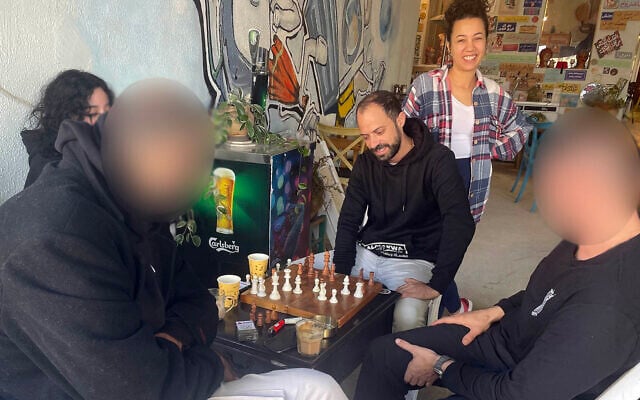
At Haitam Suleiman’s Almakwa laundry and cafe on the usually bustling thoroughfare of Jaffa Road in downtown Haifa, there was nothing to do on Monday except play chess.
Like so many other businesses in this mixed Jewish, Christian, and Muslim commercial area in the north of the city, there have been no customers since Israel and the United States began airstrikes targeting the Iranian regime on February 28.
Israel has been targeted with near-constant salvos of indiscriminate Iranian missile fire, while on the northern border with Lebanon, the Hezbollah terror group has fired rockets and missiles into Israel as well, sending residents across the country scrambling for shelter.
Suleiman, 36, whose background is both Christian and Muslim, set Almakwa up eight years ago, and has weathered the coronavirus crisis, the two-year conflict in Gaza, and last June’s 12-day war with Iran.
Now, he has a partner, Maysoon, 34, and an 18-month-old son, Tsari, to worry about. At least Maysoon, who works in the special needs sector, is slowly returning to hybrid work — a portion in person, and some on Zoom.
Suleiman said he had no idea how much longer he could hold onto the business. “We’re not getting help from anyone,” he added.
“There’s also no emotional or social support,” Maysoon chipped in. “We’re a young couple with a child. How can we continue?”
While Suleiman and Maysoon have a protected room in their home in which to shelter during siren alerts, they have to run from the cafe to a nearby underground parking lot, popularly known as Minus Three, which also served Haifa residents during the last Iran war.
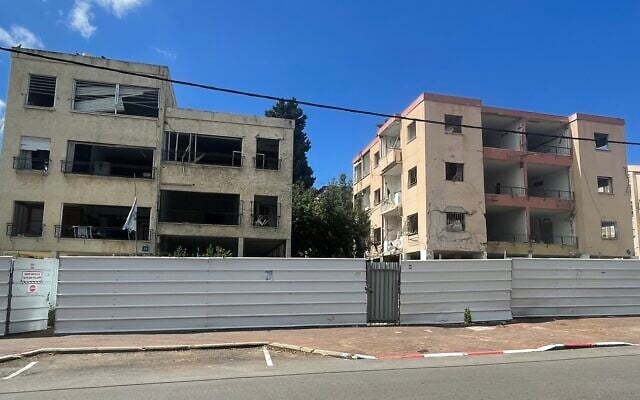
Less than a year has passed since the last time Iranian missiles rained down on this city, causing damage to residential and public buildings, and hitting Haifa Bay’s Bazan oil refineries, where three workers died in a missile-related fire.
Two apartment blocks gutted by shockwaves from an Iranian missile on June 18 still stand, eyelessly awaiting demolition.
‘I can’t pressure clients to pay, so I just spend’
Just a few blocks away from the Almakwa laundry and cafe, Muslim lawyer Samy Faisal was buying a cellphone for his mother.
“All court decisions have been delayed to April 14,” he said. “I can’t pressure my clients to pay, so I just spend money.”
Nearby, the usually bustling streets of the largely Christian Arab Wadi Nisnas were deserted, save for a few cafe and store workers idling on their cellphones in the sunshine outside.
The neighborhood is known for its colorful December festival marking Christmas and Hanukkah.
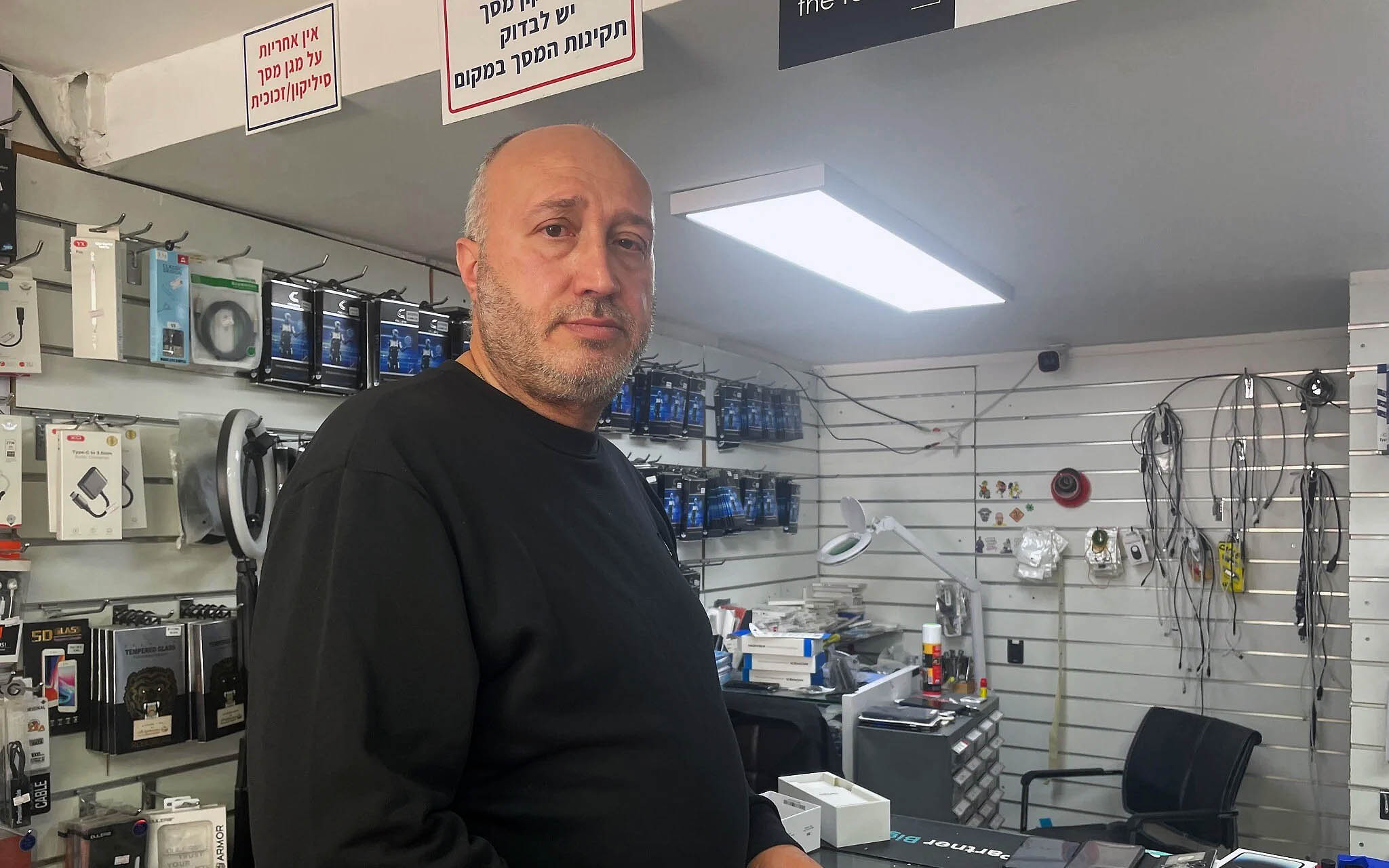
Faez Shkara sat quietly in the hair salon he has run for 35 years.
“People are frightened to go out,” he said.
Shkara’s day consists of sitting alone waiting for clients who never come, and going back and forth to a bomb shelter along the street when the sirens wail.
“We don’t worry the government,” he said, adding that he’s no longer interested in the news, is focusing on survival, and only keeps the TV on for the siren alerts.

He went on, “I still have to take responsibility for paying the banks, taxes, and city rates, and supporting my family,” a wife, a 25-year-old daughter living at home, and a 24-year-old married son.
“They’ve delayed the date for VAT payments, but just from March 15 to March 26,” he said.
“We citizens are the ones paying for this war,” he continued. “Do you think that the Knesset members’ salaries stop during wartime?”
On a trendy street in the Hadar neighborhood, Asia Cherepkina and Noam Orr sat sipping coffee and smoking rolled cigarettes.
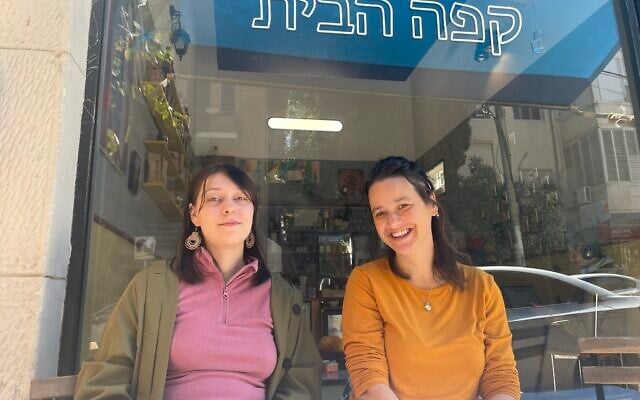
Chrepkina, 27, immigrated five years ago from Odessa, mainly to escape the clutches of a family member who had been abusing her since childhood.
She suffers from what she said was genetic bipolar disorder.
Orr, 29, a chef, originally from northern Israel’s Western Galilee, only returned to work a few months ago after a severe car crash in southern Israel four years ago that required brain surgery and lengthy rehabilitation.
Orr said the accident had left her with post-traumatic stress disorder and a fear of crowded places, such as her neighborhood bomb shelter, which she was considering not going to anymore.
She said her fiancé also suffered from the disorder following an incident in the IDF during which his commander was killed, and two teammates were injured by friendly fire.
“All his friends are in reserve duty, and he’s too depressed to join them, but feels awful for not doing so,” she said.
Both women said they were numbed by the ongoing war.
“If only we could have a real peace agreement,” said Orr, “but I don’t think anybody in this government wants it. This war will end, but there will be another round in a few years.”
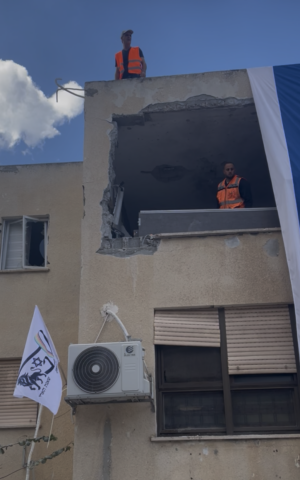
In Nesher, a city that abuts Haifa and overlooks its port, surveyors were meanwhile onsite on Monday to assess damage from a nighttime cluster bomb and interceptor on a four-apartment block.
Two of the apartments, home to a couple and a single man, were rendered unfit for habitation, while four other residents were already back home after a few hours. All seven people were in the building’s bomb shelter during the attack, and none were hurt.
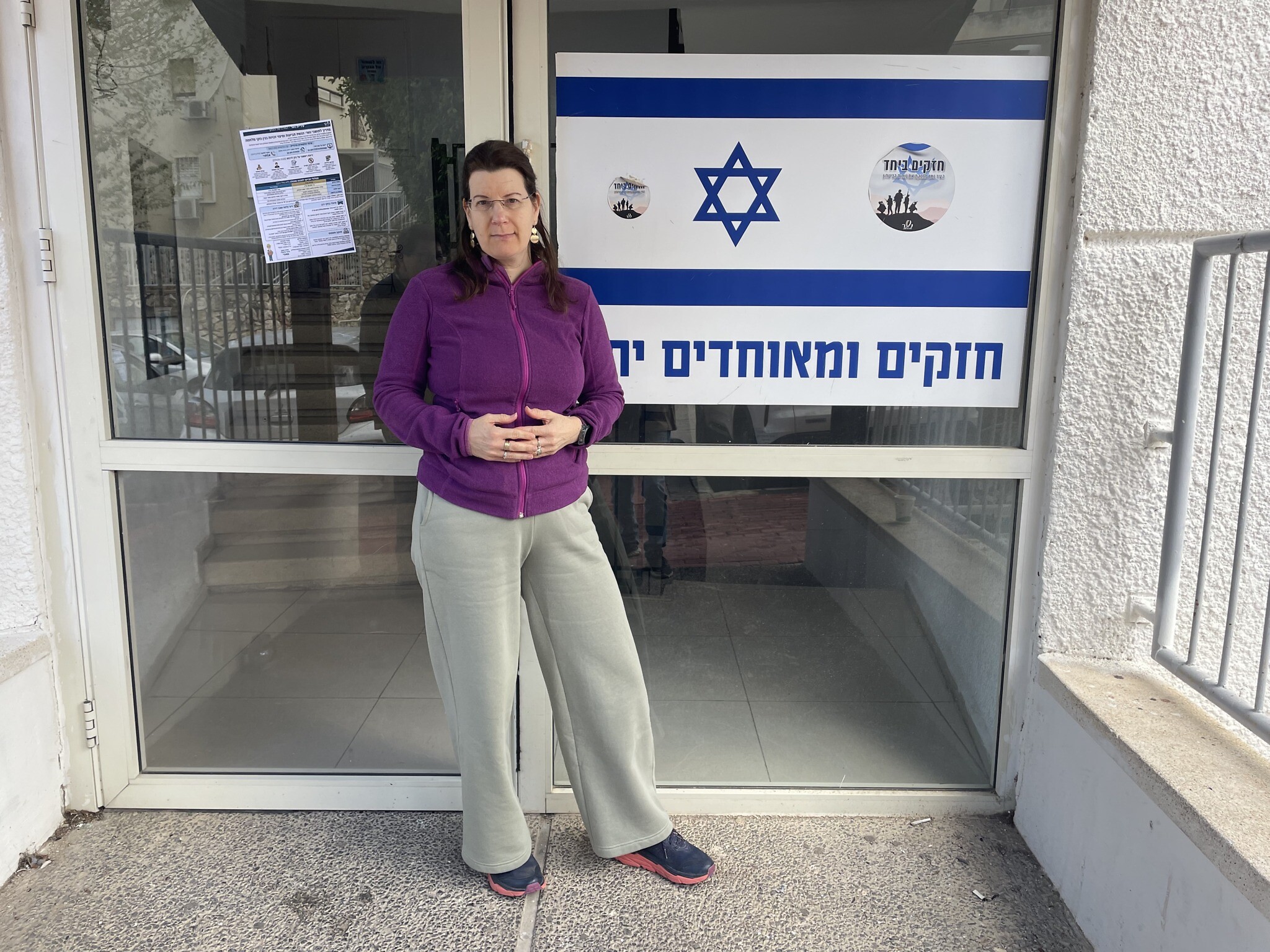
As this reporter spoke to a neighbor, Galit Barkan, in the building opposite, a siren began to blare, sending some 15 people, including three small children and a dog, into Barkan’s building’s bomb shelter.
Asked about US President Donald Trump’s reported talks with Iran on ending the current round of war, Barkan said, “We need to continue until we get hold of their [enriched] uranium and destroy them completely.”
Asked what he thought, one man in the shelter said, “I’m just tired.”
Another said, “I’m trying to remain optimistic. If I weren’t optimistic, I’d say we should flatten them all.”



The Times of Israel Community.