

In Polish town where locals burned Jews alive, ‘alternate memorial’ denies complicity
Far-right activist erected history-falsifying plaques at site of 1941 Jedwabne massacre ahead of last week’s commemoration, smearing Jewish victims and exonerating Polish perpetrators
 Add ToI as a Preferred Source on Google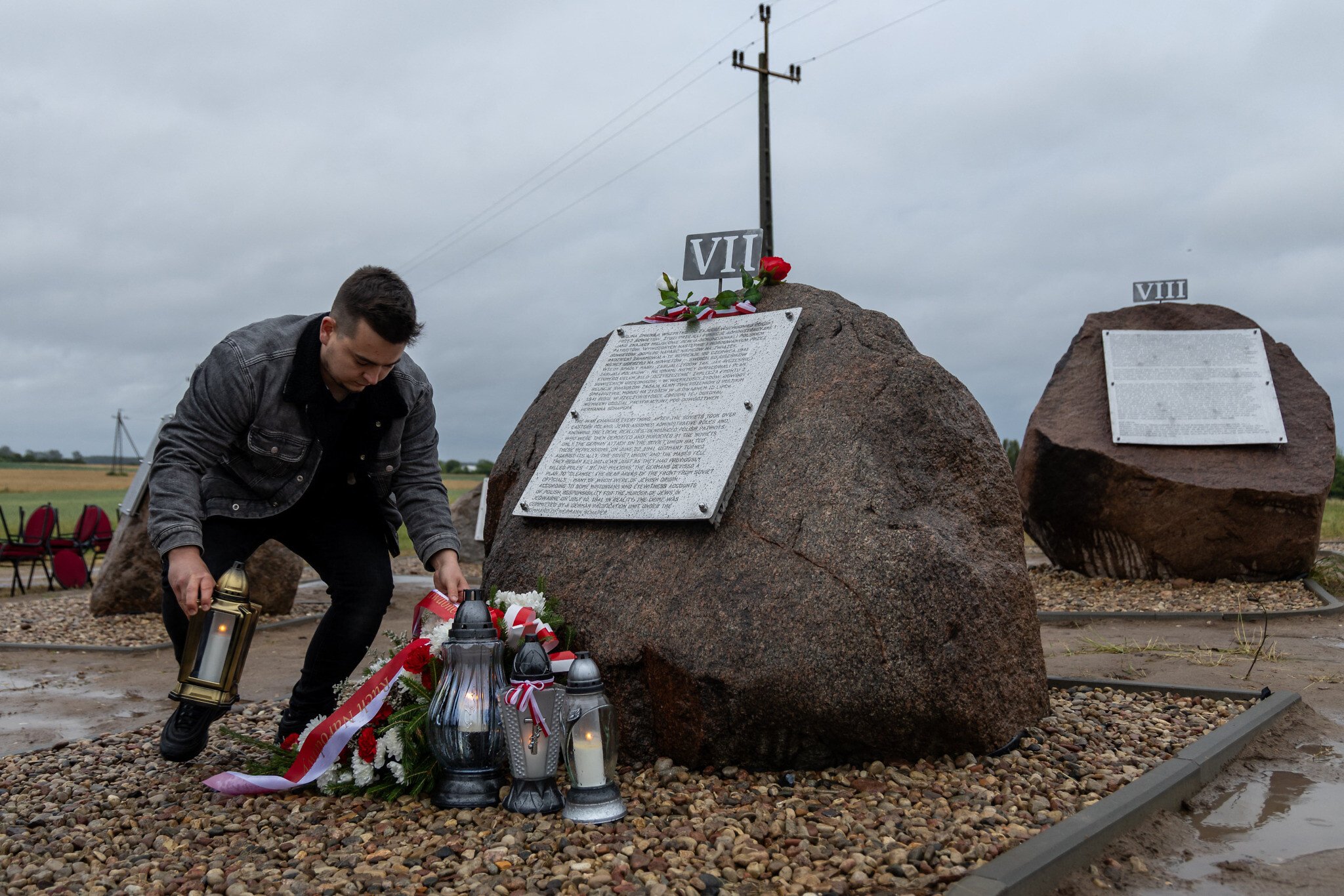
JTA — When Jews gathered last week for the anniversary of a World War II massacre in the Polish town of Jedwabne, they saw a new installation — one that denied a historical consensus about the grievous events that unfolded there.
At the same time, a far-right lawmaker interrupted the memorial gathering — and triggered a police investigation by calling the gas chambers at Auschwitz “fake.”
Thursday marked 84 years since the crimes in Jedwabne, a town of less than 2,000 people northeast of Warsaw. In 1941, local residents killed hundreds of their Jewish neighbors, most of them in a barn where they were burned alive.
The story gained recognition through “Neighbors,” a 2000 book by historian Jan Tomasz Gross. It became a symbol of Polish collaboration in the Holocaust and prompted a presidential apology in 2001.
An official investigation by Poland’s Institute of National Remembrance confirmed in 2002 that the murder was carried out by Poles. But Jedwabne has become a flashpoint in Polish politics, with some far-right politicians claiming it was Germans who perpetrated the massacre and characterizing research on Polish complicity as part of an effort to slander their nation.
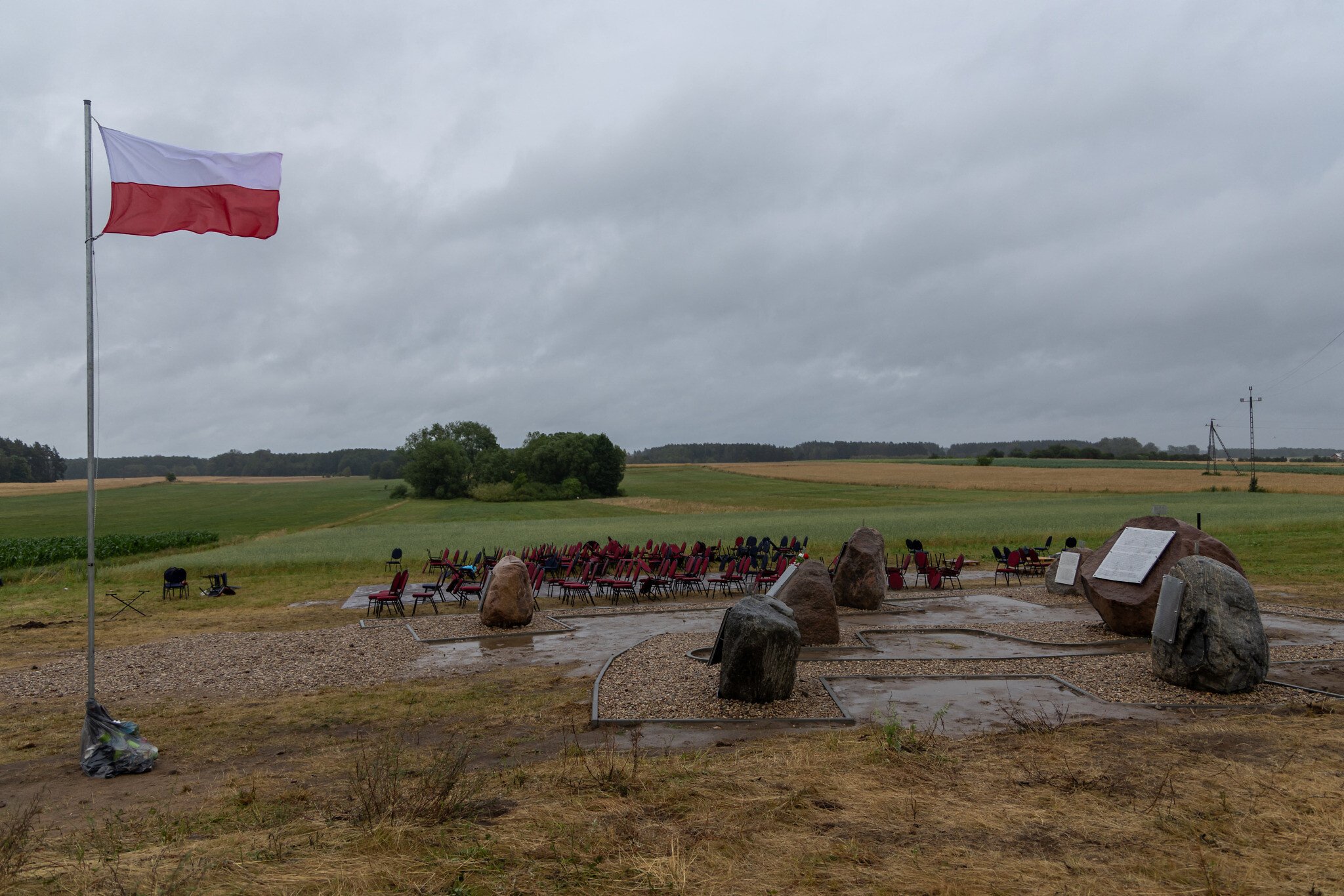
Shortly before the anniversary ceremony in Jedwabne, an installation appeared with an alternative version of history. Near the monument that marks the site of the barn where Jews were killed, seven boulders with metal signs in Polish and English detailed a series of false claims, according to the Polish newspaper Gazeta Wyborcza.
One of these plaques dismissed the evidence of Polish perpetrators, saying, “In reality, the crime was committed by a German pacification unit.”
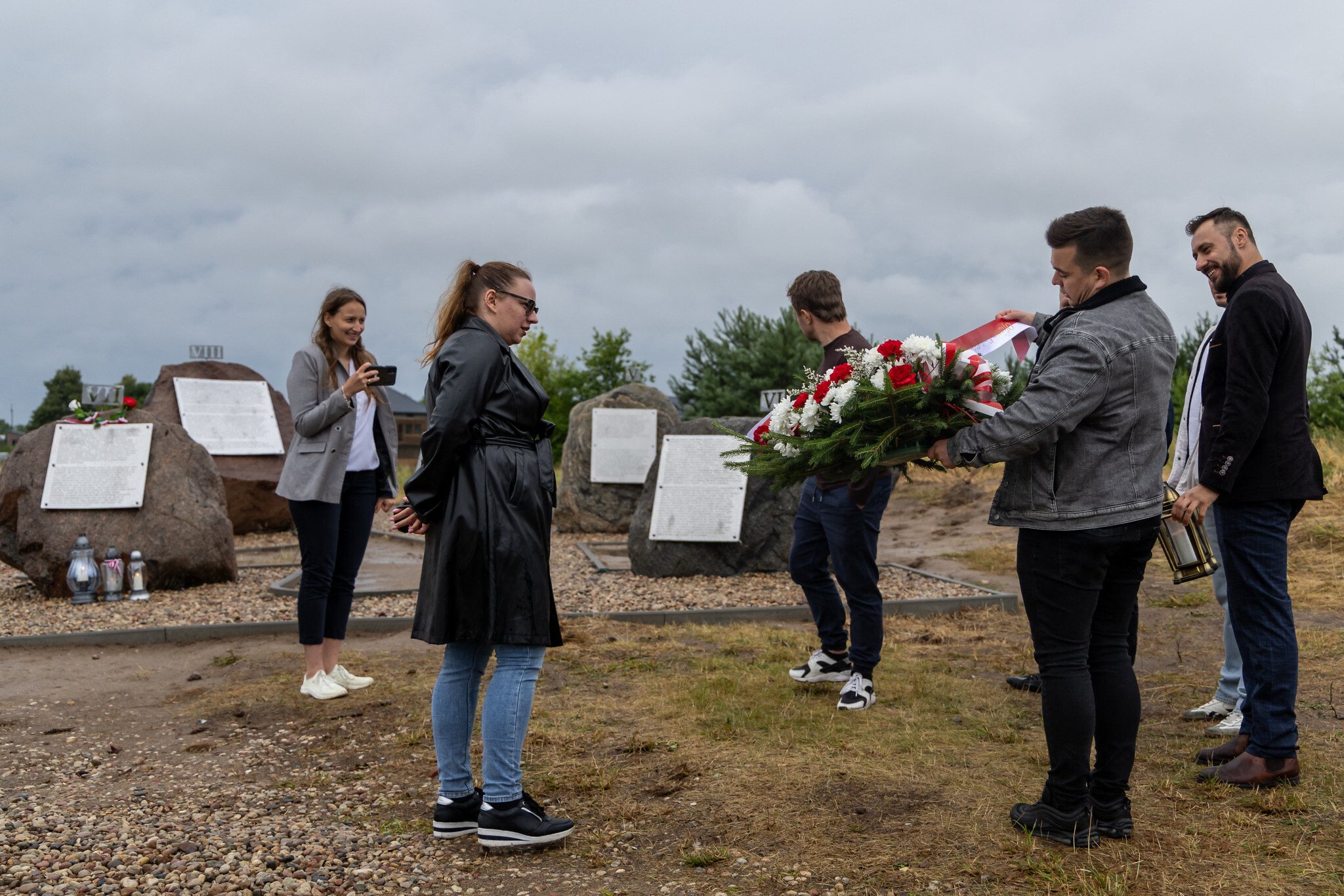
Another cited the partition of Poland in 1795 as “an unimaginable tragedy for Poles” that “turns out to be a source of satisfaction for many Jews.” This narrative continued with the interwar period, when “many Jews openly sympathized with communism” and “identified with the Soviets, who were hostile to Poland,” which “did not help Poles and Jews to come closer together.”
Wojciech Sumlinski, a right-wing activist, has taken credit for the installation, saying on X that he had built it with the help of crowdfunding. Standing some 100 feet from the official memorial, the signs are on private property.
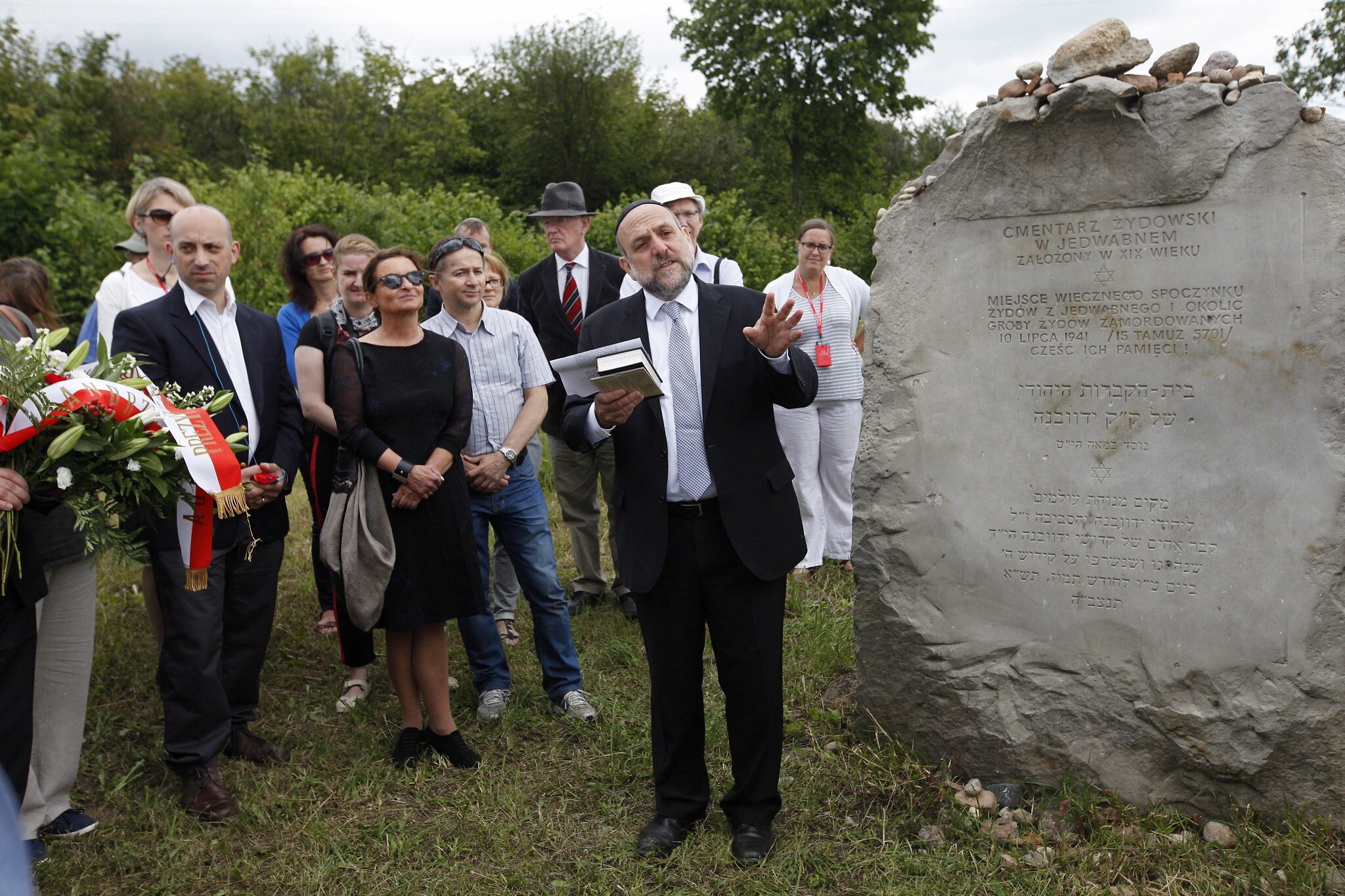
This alternate memorial was not the only disruption to Thursday’s commemoration, hosted by Poland’s Chief Rabbi Michael Schudrich and the board of the Jewish Community of Warsaw. After the ceremony, groups of nationalist activists stopped Schudrich and other visitors from leaving by blocking their cars.
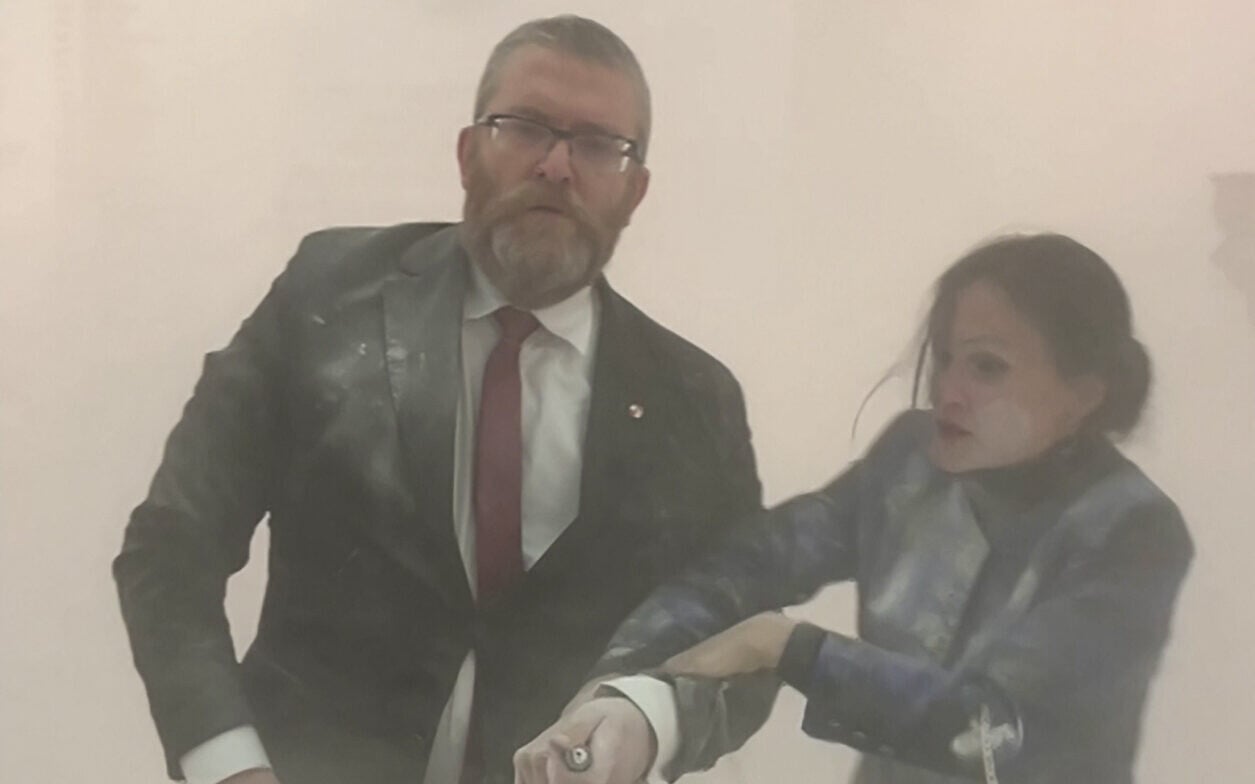
Far-right MEP Grzegorz Braun, who recently ran an openly antisemitic presidential campaign, was among the protesters denying Polish responsibility and demanding exhumations of Jedwabne. Earlier attempts to exhume the site were stopped because Jewish law forbids disturbing the dead.
Several dozen police officers broke up the protest and allowed cars to leave, according to local media.
Ahead of the ceremony, Schudrich called the new plaques in Jedwabne a “disgrace” and “an expression of the disease of antisemitism.”
Yad Vashem, Israel’s Holocaust memorial authority, said on Thursday that it was “profoundly shocked and deeply concerned by the desecration of historical truth and memory at the Jedwabne memorial site in Poland.” The institution called on Polish authorities to remove the installation.
The Auschwitz Memorial condemned Braun on X for a different reason on Thursday — denying the existence of gas chambers at the concentration camp where more than 1 million Jews were murdered — but did not weigh in on the incidents at Jedwabne. Police say they are investigating Braun’s comments as a possible crime.
The incident comes just weeks after Polish voters narrowly elected Karol Nawrocki, a Holocaust revisionist historian, to become the next president. His election was a victory for the Law and Justice Party, which led Poland from 2015 to 2023. During that time, the party promoted historical narratives about Polish victimhood and resistance to the Nazis, while delegitimizing research on Polish antisemitism or Poles who killed Jews, and even passed a law that outlawed accusing Poland or the Polish people of complicity in Nazi crimes.
“What happened today in Jedwabne is not only a disgrace to the memory of the victims, it is a test for Poland’s democracy,” the American Jewish Committee’s Central Europe director Agnieszka Markiewicz said in a statement. “The normalization of antisemitism, especially from elected officials like Grzegorz Braun, demands more than silence. It demands moral clarity, legal accountability, and swift political response. Remembrance without responsibility is not remembrance at all.”




The Times of Israel Community.