

In post-Brexit Scotland, Jews warm up to leaving UK
Scottish National Party’s Nicola Sturgeon woos Jewish community as members lose confidence in an ‘anti-Semitic’ Labour Party
 Add ToI as a Preferred Source on Google
Cnaan Liphshiz was a Jewish World reporter at The Times of Israel
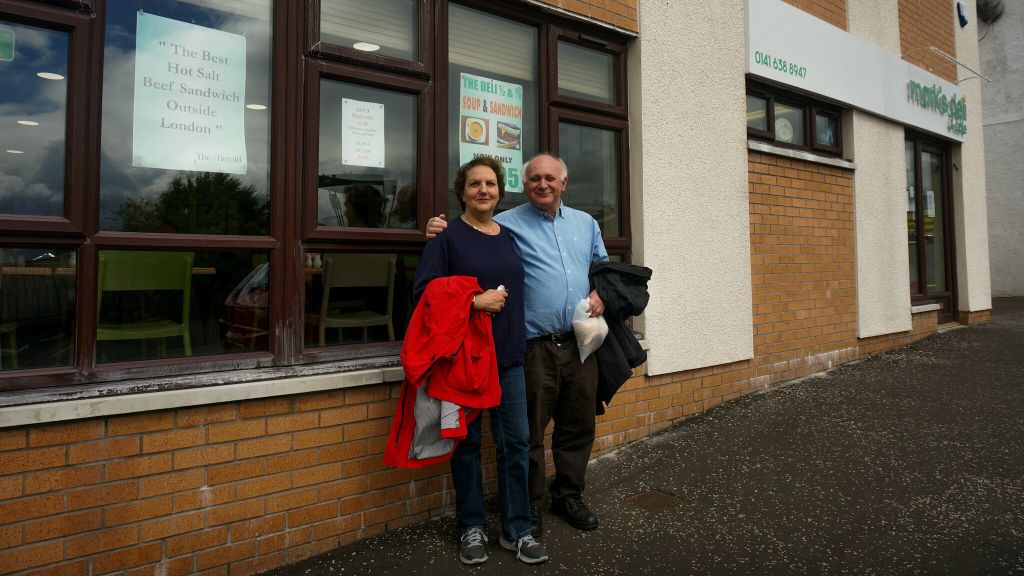
EDINBURGH, Scotland (JTA) — The last time that Scotland voted on whether to become independent from the United Kingdom, most of its 7,000 Jews thought doing so was a bad idea.
Worried that Scottish independence would encourage nationalism and embolden an already aggressive anti-Israel movement with deep roots in the pro-independence camp, Jews here were relieved when, during a 2014 referendum, 62 percent of Scottish voters supported remaining in the United Kingdom.
Less than two years after that supposedly definitive vote, Scotland and its Jews are preparing for yet another UK independence vote. This time around Scottish Jews may be more receptive to such a vote, thanks in part to anger over the June 23 Brexit referendum in which the UK voted to leave the European Union.
The head of Scotland’s government, Nicola Sturgeon, has called another UK independence vote “highly likely,” thanks to the Brexit results.
In contrast to English voters, who favored Brexit, most Scots voted to remain part of the EU, and Scotland’s ruling Scottish National Party has said it would not allow Scots to lose their EU citizenship.
Many Scottish Jews are now more at ease with the idea of a split from the UK due to vigorous trust-building actions by Sturgeon, who heads the ruling Scottish National Party, or SNP — an offshoot from Labour that is now Britain’s third-largest party.
“They have certainly engaged with the Jewish community very strongly,” Ephraim Borowski, director of the Scottish Council of Jewish Communities, or ScoJeC, said of SNP, which Sturgeon came to lead in 2014.
‘I don’t want to live in a country in which Jewish people feel that they want to leave or hide their identity’
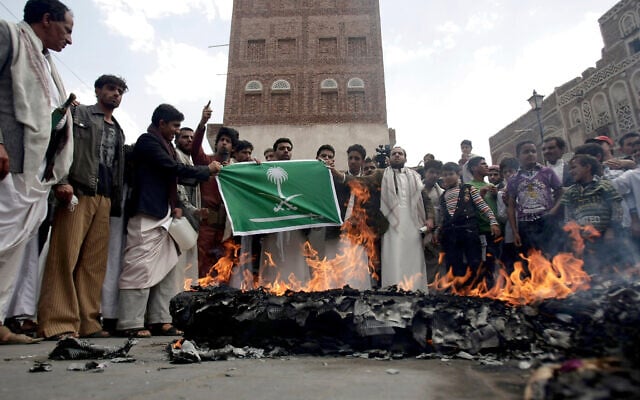
Under Sturgeon’s predecessor, the former SNP party leader Alex Salmond, the city councils of Glasgow and Fife flew the Palestinian flag during Israel’s 2014 war in Gaza — a move many Jews interpreted as an act of solidarity with the terrorist group Hamas. At that year’s Edinburgh Fringe Festival, a popular arts festival, two Israeli troupes canceled their performances in response to pro-Palestinian protests.
Citing police figures, ScoJeC reported a record 50 anti-Semitic incidents in 2014 in Scotland and an “unprecedented number of Jewish people who expressed anxiety about their perception of increased anti-Semitism in Scotland.” The rise in hostility cannot “be excused as merely political protest” against Israel, the group’s report said.
At the Edinburgh Hebrew Congregation — a large Orthodox synagogue located at the foot of a range of green hills — the staple prayer for the safety of Israeli soldiers was dropped at least once that year so as not to offend non-Jews during the conflict.
“Discretion is the better part of valor,” Rabbi David Rose said at the time.

Salmond, who had called for applying sanctions against Israel, largely ignored pleas by Jewish community representatives to curb the vitriol, according to Howard Singerman, former treasurer of the Glasgow Jewish Representative Council.
But Sturgeon, his successor, is taking action, according to Borowski. He cited her “extremely strong message” during a conference on hate crime co-organized last year by the Chief Constable and the head of Scotland’s prosecution service.
“I don’t want to be the first minister, or even live in a country, in which Jewish people feel that they want to leave or hide their identity,” she said then.
‘I don’t want to be the first minister, or even live in a country, in which Jewish people feel that they want to leave or hide their identity’
She also distanced the SNP from “the unsavory and horrible creeds that call themselves nationalism.” If you choose to live in Scotland, she said, “it doesn’t matter where you’re from; it’s not about identity but about everyone who lives here sharing the responsibility to make Scotland as good as it can be.”
Sturgeon told Borowski she wanted her ministers “seen engaging with the Jewish community, not merely making statements.”
She met with Israelis in Scotland, and attended Jewish communal events and met with Jewish students concerned about vitriol on campus.
Under Sturgeon’s leadership, ScoJeC saw its budget increased twice, once by 28% and then again by 20% on top of that.
Last year, the Community Security Trust, or CST, British Jewry’s watchdog on anti-Semitism, criticized an SNP lawmaker in the Scottish parliament, Sandra White, for retweeting an anti-Semitic caricature. It featured a sow labeled “Rothchild” nursing piglets labeled as Islamist terrorist groups, the CIA and Israel. Sturgeon called the incident “abhorrent” and apologized for it, as did White.
“Clearly, the Scottish leadership have realized that the anti-Semitism issue is a litmus test of sorts for Scottish society and we are seeing serious efforts to address the community’s concerns,” said Mark Gardner, the Glasgow-born director of communications of CST.

Other European parties “could do far worse than follow their example,” Gardner said.
Ahead of SNP’s bid for a second independence vote, Sturgeon’s Jewish charm offensive puts her on better footing with Scottish Jews than Salmond ever enjoyed.
Frustration over the vote for a British exit is palpable on the streets of Edinburgh, the capital of Scotland, where 74% voted against leaving the EU. Many locals have hung Scottish and EU flags on the windows, and 52% of respondents to a Sunday Times poll said they would vote for independence from the UK following Brexit.
Many young Scots have taken to wearing a safety pin on their jackets — a gesture against the xenophobic rhetoric that the Brexit vote unleashed in England (but not in Scotland). Others placed placards reading “Everyone’s welcome” on windows overlooking Edinburgh’s narrow, cobbled and winding streets.
Edinburgh’s Rabbi Rose says members of his congregation are “taking out European passports” to make sure they remain EU citizens — an option open to many Scottish Jews because, unlike older UK Jewish communities, most of them are descended from Jews who left Eastern Europe from the 19th century onward. Some Jews in England are doing the same, The Independent reported.
At a breakfast at the Edinburgh Hebrew Congregation, Rose collects fees from about 12 congregants who’ve come for Sunday salmon, bagels and coffee.
“This used to be worth a lot more last week,” he remarks with annoyance about the cup full of British pounds.
Following Brexit, the pound had its sharpest-ever two-day decline against the dollar, reaching $1.31 — a level not seen since 1985.
With the economy and political establishment in disarray, “Nicola Sturgeon is suddenly the only dependable figure for many Scottish Jews,” Howard Singerman of Glasgow remarked.
‘Nicola Sturgeon is suddenly the only dependable figure for many Scottish Jews’
A former Labour voter who has rejected that party over a series of anti-Semitic and anti-Israel remarks by various Labour leaders, he said he is considering voting SNP for its strong social platform. He never would have done so under Salmond, he said.
Scotland’s major Jewish groups have taken a formal position neither on Brexit nor on independence. For Singerman and many other Jews who define themselves as proud Scots, independence would be going a step too far.
Some Scottish Jews, Borowski said, have an instinctive aversion to anything called or perceived as nationalist. Others simply think independence is either too costly or impractical. Many think their bid for separate EU membership would be blocked by members wary of their own separatist movements, including Spain, France, Belgium and Italy.
“As a Scottish Jew you can feel more trust toward Sturgeon,” said Evy Yedd, a co-president of the Glasgow Jewish Representative Council. But she remains suspicious of other SNP lawmakers and said she’s convinced that “the independence thing is a total and foolish waste of time.”




The Times of Israel Community.