

Jewish seniors offer to hide carers as 350,000 Haitians face deportation from US
CEO of Florida aged care home says residents, some of them Holocaust survivors, share ‘kindred bond’ with Haitian staff, who will lose right to work and live in US from Tuesday
 Add ToI as a Preferred Source on Google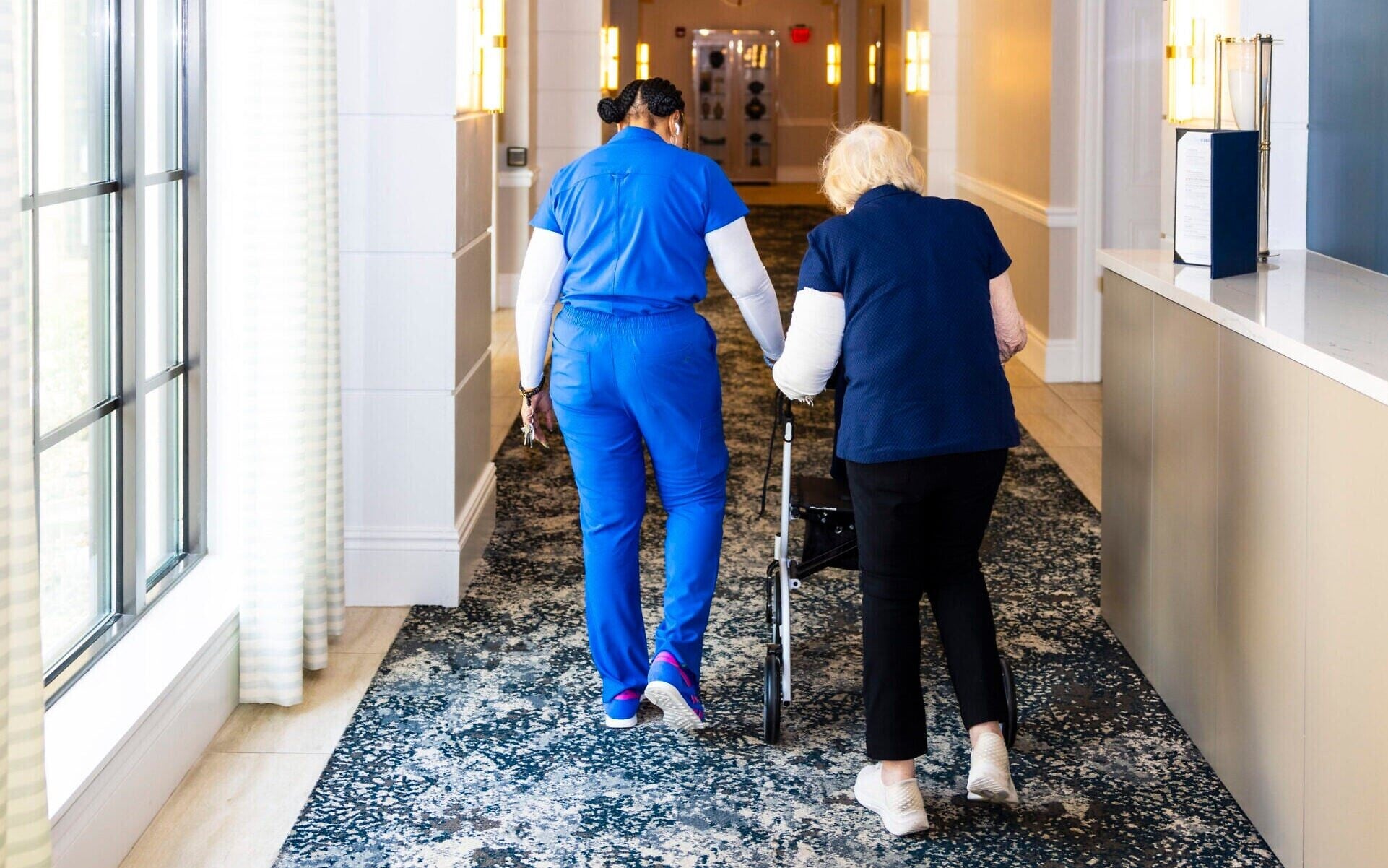
JTA — About 500 seniors live at Sinai Residences in Boca Raton, Florida, including many Holocaust survivors. Recently, some of them asked if they could hide the building’s Haitian staff in their apartments.
“That reminds me of Anne Frank,” Rachel Blumberg, president and CEO of the center, told the Jewish Telegraphic Agency. “There’s a kindred bond between our residents being Jewish and seeing the place that the Haitians have gone through.”
The seniors were aware of something that is only beginning to dawn on the rest of the country: that, in addition to the aggressive immigration enforcement operations underway in Minnesota and elsewhere, the Trump administration has moved to cancel Temporary Protected Status for immigrants from a handful of countries once deemed too unsafe to return to.
Earlier this week, a judge paused the end of TPS for Venezuelans. But barring any 11th-hour changes, about 350,000 Haitians will lose their status on Tuesday — ending their right to live and work in the United States legally and putting them at risk of immediate detention and deportation.
The deadline has sent waves of panic through communities with many Haitian immigrants, including in Ohio — where the Trump team took aim at Haitians in 2024 — and in South Florida.
While the effects will be sharpest for the immigrants themselves, the end of TPS for Haitians is sure to have a ripple effect. At Sinai Residences, for example, 9% of staff members are Haitians with TPS, and they won’t be able to work after Tuesday. (In total, 69% of the center’s staff are foreign-born; caregiving industries are heavily dependent on immigrant workers.)

To make up for the expected losses, the center is redoubling its hiring efforts. Representatives from other Jewish senior living homes say they will need to turn to temp agencies, suggesting a growing inconsistency in senior care. Whatever happens, residents are likely to see their own costs go up as a worker shortage is exacerbated.
But the blows will be felt in other ways, too. Seniors in long-term care facilities develop deep bonds with their staff. Blumberg’s residents, she said, “can relate to not being wanted, to being kicked out and coming to America for salvage and freedom and safety and shelter. And they want to be able to protect the Haitians.”
Temporary protected status for Haitians and similar communities dates back to the Reagan administration. Because it was offered by executive action, it can be undone without congressional approval.
“Temporary means temporary,” Homeland Security Secretary Kristi Noem has said about the administration’s decision to end the status. Late Wednesday, a federal judge ruled that Noem had exceeded her authority by ending the status, but additional court intervention would be needed before Tuesday to delay or deter the action.
With a rapidly aging American population, experts say, the country’s seniors will especially feel the effects of restricting immigrant laborers. The policy, to those who come face to face with the workers and those they serve every day, makes no sense.
“We have a workforce filled with people who weathered COVID in a nursing home. This is no small thing. And now you’re saying they don’t deserve to be in this country? I don’t think so,” one Jewish senior living director, who requested anonymity so as not to draw attention to the center and its workers, told JTA. “There will be no caregivers in this country if our isolationist policies are all enforced.”
Some argue that Jews, especially, should be attuned to these dynamics.
“The Jewish community employs these populations to care for the most vulnerable among us. And it creates major challenges,” said Reuben Rotman, president and CEO of the Network of Jewish Human Services Agencies. Many Jewish social services agencies also serve immigrants as clients, he noted: “This is part of our Jewish identity and ethos, to serve our full community with Jewish values and welcoming the stranger. So this is all connected.”

Rotman continued: “The Jewish community depends on these populations. And for them to feel so vulnerable that they’re afraid to go to work because they might get picked up and deported, or they might get picked up and sent to a Texas detention center, nobody should have to live with that fear.”
Ruth Katz, president and CEO of the Association for Jewish Aging Services, told JTA that senior living executives have no choice now but to familiarize themselves with the federal immigration system.
“They’re feeling the need to share as much information as possible, get as smart about immigration policy and immigration enforcement as they can,” Katz said. “Because they’re all worried about this.”
Back at Sinai, residents aren’t waiting for careful plans to be laid. Every worker soon to lose their status is receiving “$2,000 and a hug” from the center; many residents are contributing more out of their own pockets.
Residents mounted a letter-writing campaign to Washington (only Rep. Jared Moskowitz, the Florida Jewish Democrat, responded, Blumberg said). They are asking what more they can do.
Some Sinai residents will be attending a weekend protest against ICE being held at a local Home Depot, where ICE agents across the country have been seizing day laborers.
And, of course, there is the Anne Frank offer. Others — including, this week, the governor of Minnesota — have drawn criticism for invoking the Holocaust’s most famous victim in connection with Trump’s immigration policies. But given what awaits those who are deported, Blumberg said, the comparison makes sense.
“The Haitians cannot go back to Haiti. They’ll be murdered,” she said. “The gangs have taken over the country, and it is life-threatening for them. And our residents do recognize and realize that.”









The Times of Israel Community.