

Motivation of neo-Nazi probed as Charlottesville killer goes on trial
Prosecutor says James Fields was driven by anger when he plowed his car into counter-protesters, killing Heather Heyer, but lawyer claims he was ‘scared to death’
 Add ToI as a Preferred Source on Google
CHARLOTTESVILLE, Virginia (AFP) — An American neo-Nazi was motivated by “anger” when he plowed his car into a group of counter-protesters at a white supremacist rally last year in Charlottesville, prosecutors said Thursday as survivors recounted harrowing testimony.
The trial comes 15 months after James Alex Fields Jr drove his Dodge Challenger into a crowd of activists in the Virginia city, killing 32-year-old paralegal Heather Heyer.
Fields, 21, from Ohio, is accused of first degree murder and faces hit-and-run charges and eight counts of causing serious injury. His lawyer said Thursday he had been ‘scared to death’ when he drove his car into the counter-protesters.
Hundreds had descended on Charlottesville on the day of Heyer’s death, August 12, 2017, either to march in or rail against a “Unite the Right Rally.”
Unrest quickly flared as riot police and national guard troops flooded the city’s downtown to contain clashes between white far-right supporters and counter-protesters that led to a state of emergency being called.

The violence capped two days of confrontations over the removal of a Confederate statue that shook the country, and became a symbol of the growing audacity of the far right under President Donald Trump.
Prosecutor Nina Antony told the jury that a mountain of photographic and video evidence would show Fields’s actions were pre-meditated and not motivated by a desire to protect himself, as the defense would argue.
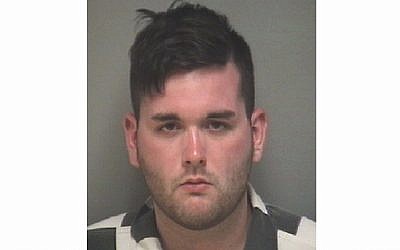
These included two images, she revealed, that were posted by Fields to Instagram in May 2017.
“And in both those images you’ll see a group being struck, described as protesters,” she said.
“On August 12, James Alex Fields Jr was here in Charlottesville with anger and images of violence fixed in his mind. The case is about his decision to act on that anger and those images.”
‘Bodies going everywhere’
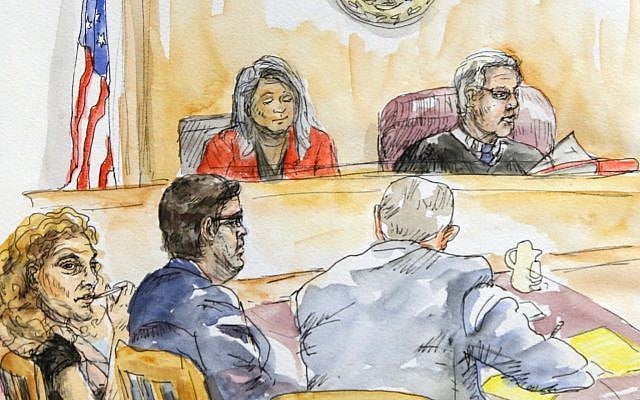
Heyer’s mother Susan Bro was present in the front row of the court, where opening arguments and testimony was heard after three full days of jury selection involving hundreds of prospective jurors.
A few feet away, Fields watched the proceedings attentively, wearing glasses, a blue sweater and a light blue shirt.
The court heard from witnesses including Marcus Martin, the subject of a Pulitzer-prize winning photograph that became synonymous with the incident, in which he is seen launched into the air after being struck by the car.
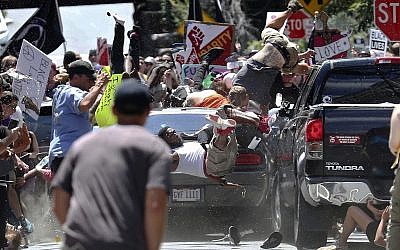
Martin told the court he had decided to attend the rally with his fiancee Marissa Blair, whom he has since married, another friend and Heyer, who worked with Blair at a law firm.
“She was a great person,” he said of Heyer, visibly overcome with emotion.
Martin recalled looking down at his phone when Fields began his charge on the group.
“The only thing I was thinking about is getting my wife out of the way,” he said.
“I pushed her and that’s when I got hit.” The impact shattered Martin’s left leg and broke his ankle, forcing him to wear a medical boot for eight months.
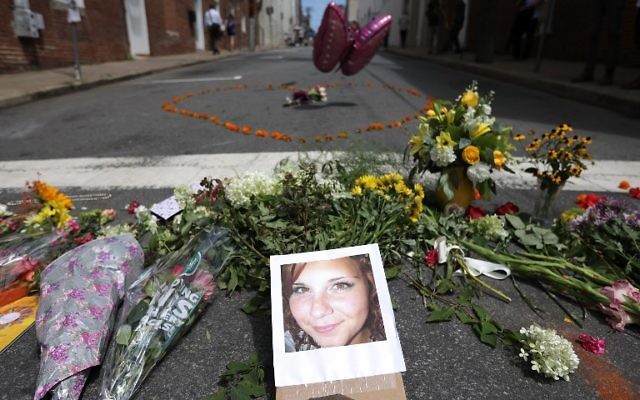
Another witness, Brendan Gilmore, said he had gone with a group of friends to join the counter-protest and began filming on his phone when he saw the rampage unfolding.
“I heard a sickening sound and saw bodies going everywhere,” he said.
“I wasn’t sure at the time if I pressed record or not. I didn’t know until later that I had caught it all on video,” he added.
State of Mind
Earlier, both the prosecution and defense had agreed that the basic facts of the case were not disputed, but that Fields’s intent was the key issue.
“This is not a whodunnit case. This is not where we need to figure (out) who was in that car,” said defense attorney John Hill.
The lawyer painted a picture of chaos as the opposing sides, some of whom were armed with guns, fought pitched battles.
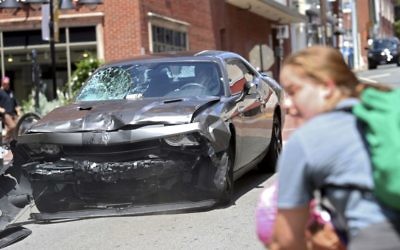
After Fields was detained, he expressed remorse and told police he “feared for his safety and that he was scared to death,” Hill said.
Antony, the prosecutor, disputed the characterization.
Shortly before Fields drove his gray car into the crowd, she said, he came to a “full and complete stop a distance from the group” and began revving his engine while watching the counter-protesters.
“There was no one around the car. There was no one behind the car,” Antony told the jury.
While others were able to jump clear or hit glancingly, Heyer was “directly in the defendant’s path, unable to get out of the way.
“The defendant (was) able to get away with her blood and her flesh still on his vehicle.”









The Times of Israel Community.