

 From the Liveblog of
Saturday, November 28, 2026
Netanyahu says he’ll let Eisenkot serve as first prime minister in rotation deal for unity government
 Add ToI as a Preferred Source on Google
Lazar Berman is The Times of Israel's diplomatic reporter
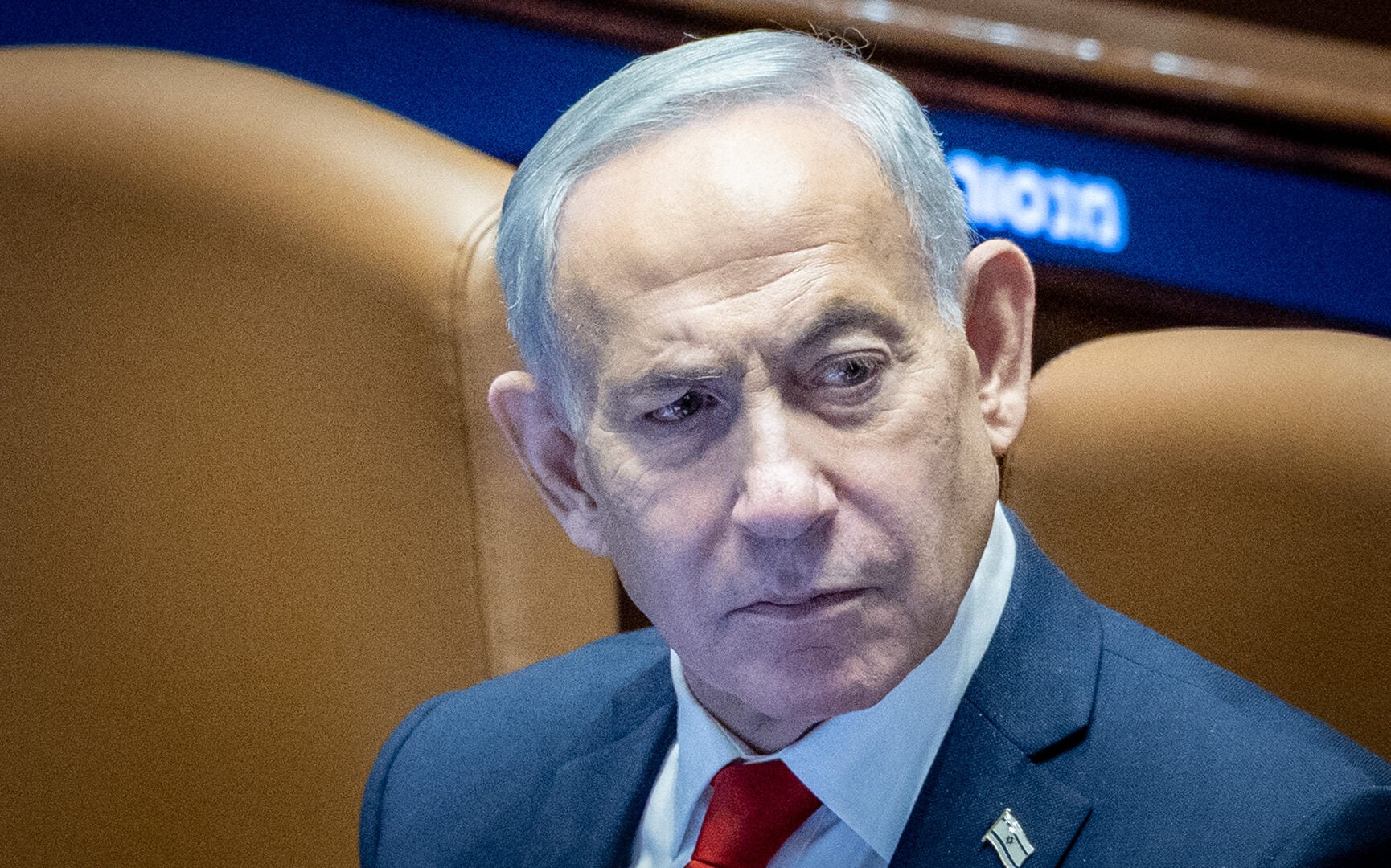
Prime Minister Benjamin Netanyahu says he is willing to go second as premier in a rotation agreement with Gadi Eisenkot, as the Yashar chair makes strides toward forming a government without him.
Netanyahu presents his new position as a concession for the sake of the country’s welfare:
“In light of the magnitude of the existential danger and the possibility that a government without the ability to confront this danger will be formed, my responsibility as a leader requires me to put everything aside, including the principle of the largest party, and agree that Gadi Eisenkot will serve first as prime minister, and I will serve at the beginning of the term as alternate prime minister,” he says in a statement.
Netanyahu, whose coalition lost its majority in the October 27 election, asserts that “naturally” he ought to lead a unity government, or at least serve first in a rotation agreement, since Likud is the largest party, as had been his position until tonight.
“The Likud under my leadership is the largest party in the country, by a large margin of a quarter of a million more voters than Eisenkot’s party,” Netanyahu says. “Naturally, I should lead the unity government, or at least be first in a rotation.” (Likud won 27 seats in the election, with Yashar the second-largest party with 21 seats.)
However, President Isaac Herzog gave Eisenkot, not Netanyahu, a 28-day mandate on November 8 to form a government, since 67 of the 120 MKs recommended Eisenkot for prime minister, compared to 48 for Netanyahu, with the seven-strong United Torah Judaism not recommending any candidate.
In light of his new readiness to serve second as prime minister, Netanyahu says he expects Eisenkot’s bloc to immediately launch “open, genuine, honest and accelerated negotiations” in which it will show “similar readiness for compromise and concessions…to establish a national unity government that will repel the dangers and ensure Israel’s security and future.”
As he has done over the past few weeks, Netanyahu paints the Arab-majority Joint List and Ra’am parties as terror supporters, seeking to forestall any coalition agreement between them and Eisenkot.
He recounts witnessing “shocking scenes in the Knesset,” including Arab lawmakers walking out of the hall during the national anthem, and lawmakers “turning their backs on wounded veterans, and slamming the door in the face of bereaved families.”
He says that “without firing a single bullet, hostile elements will take over the country from within.”
Netanyahu claims that the Arab parties — which he calls “supporters of terrorism” — “plan to grant Israeli citizenship to hundreds of thousands of Palestinians who will enter Israel from Judea, Samaria, Gaza and neighboring countries under the claim of family reunification.”
Then, he claims, they will establish Arab autonomous zones in the Negev and the Galilee, withdraw from the Israeli-controlled buffer zones in Gaza, Syria and Lebanon, and “bring the terrorists back to the doorsteps of our communities.”
“Ultimately,” he insists, they will “establish a Palestinian state under Iranian sponsorship on the ruins of Israel.”
“Some members of the terror-supporting parties speak soft words in Hebrew, while in Arabic they all express complete support for the terrorist organizations and for the destruction of Israel,” Netanyahu insists.
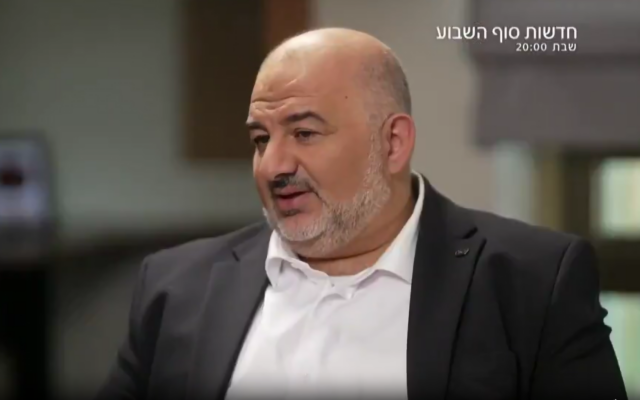
He makes the remarks two hours before Ra’am chair Mansour Abbas is expected to declare in an interview with Channel 12 that Hamas is a terrorist organization — one of Eisenkot’s demands for any party to join his government.
“This unity is the order of the hour,” says Netanyahu. “We have to confront immediate dangers that threaten our very existence.”
“The only way to do this is by combining all the parties that see Israel as the nation-state of the Jewish people,” a formula meant to include non-Zionist Haredi parties.
He promises to reach agreement with the ultra-Orthodox parties on army conscription, something he was unable to do in the previous government.






The Times of Israel Community.