

In major concession, Netanyahu offers Eisenkot first turn as PM in unity government
Both politicians to meet on Sunday, as Eisenkot also nears coalition with Haredi, Arab parties; Bennett pushes for cautious talks with Likud; Lapid and Golan reject offer as a ruse; UTJ divided on idea
 Add ToI as a Preferred Source on Google
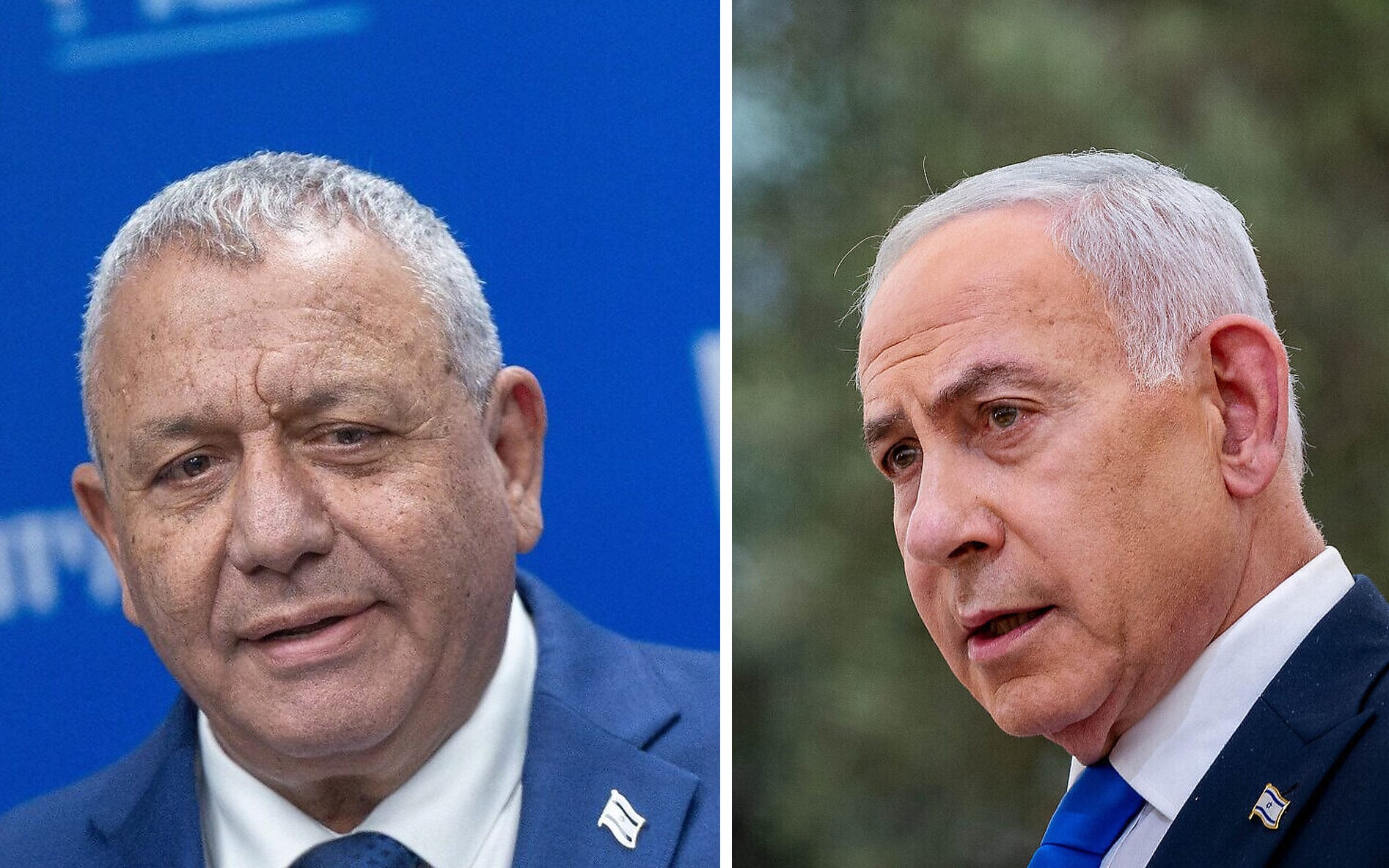
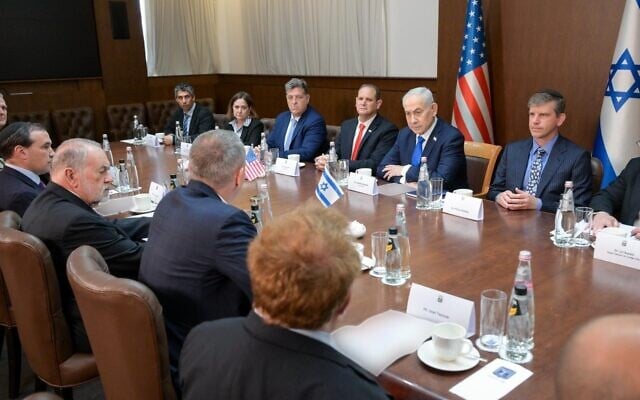
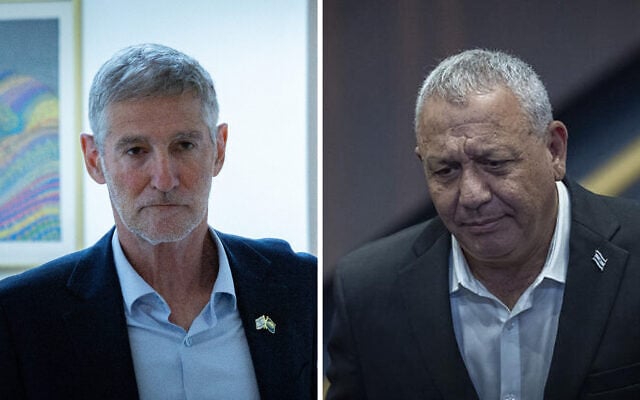
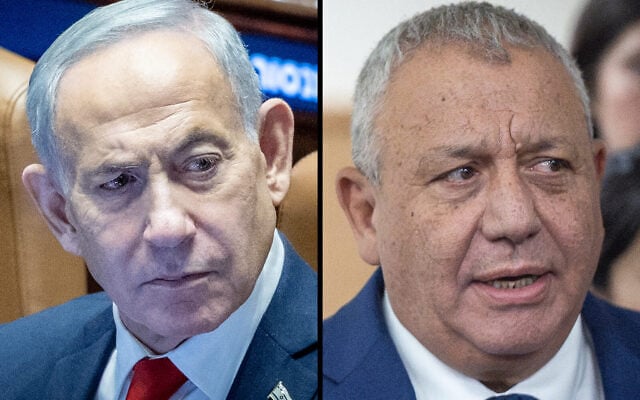
Caretaker Prime Minister Benjamin Netanyahu said Saturday that he was willing to go second as premier in a rotation agreement for a unity government led first by Yashar party chair Gadi Eisenkot, offering a significant concession and appearing to drive cracks in the bloc of parties aiming to establish a new government without Netanyahu’s Likud.
Eisenkot responded by giving Netanyahu and his Likud party 24 hours to reach an agreement, and invited the prime minister to start direct talks. The two leaders were set to meet for negotiations on Sunday.
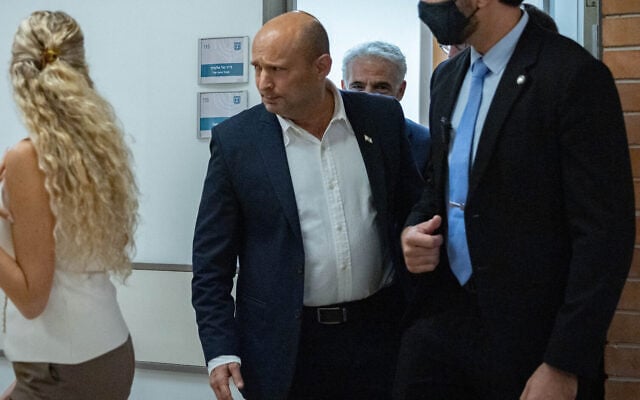
While Likud ministers and lawmakers rushed to offer their support for the proposal, members of Eisenkot’s bloc were divided on how to respond to the offer. B’Yachad party leader Naftali Bennett, who is the keenest in the bloc on unity with Netanyahu, urged cautious negotiations. However, his No. 2, Yair Lapid, along with Democrats party leader Yair Golan, both rejected Netanyahu’s offer as a trick, warning that Likud was trying to disrupt Eisenkot’s so-called change bloc from swearing in a new government without him.
The offer came as Eisenkot makes major strides toward forming a government without Netanyahu, in the wake of last month’s inconclusive election. He has not yet signed an agreement with B’Yachad.
Even with Bennett’s B’Yachad, Eisenkot’s four-party bloc holds only 48 seats, well short of a 61-seat majority. To fill the gap, Eisenkot can either rely on the support of the two Arab-led parties, the two ultra-Orthodox parties, or some mixture of the four. Reports have indicated he intends to swear in a government backed by the Haredi United Torah Judaism (UTJ) party and the Arab-led Ra’am.
Netanyahu presented his new negotiating position as a concession for the sake of the country’s welfare, repeating his assertions about the folly in forming a government with the Arab-majority parties, which he again accused of seeking Israel’s destruction.
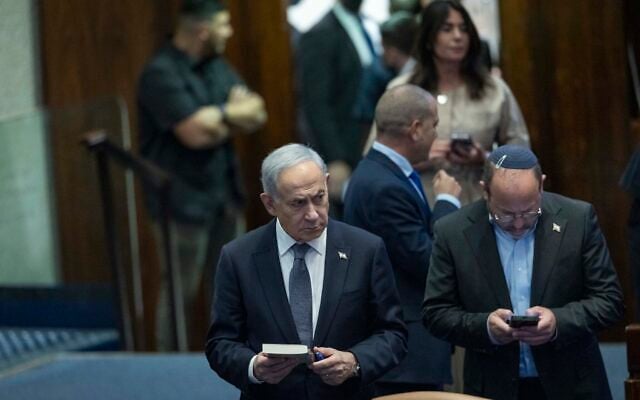
“In light of the magnitude of the existential danger and the possibility that a government without the ability to confront this danger will be formed, my responsibility as a leader requires me to put everything aside, including the principle of the largest party, and agree that Gadi Eisenkot will serve first as prime minister, and I will serve at the beginning of the term as alternate prime minister,” he said in a statement.
Netanyahu, whose coalition lost its majority in the October 27 election, asserted that “naturally” he ought to lead a unity government, or at least serve first in a rotation agreement, since Likud is the largest party, in a repeat of what had been his position until making the fresh compromise.
Likud won 27 seats in the election, with Yashar the second-largest party with 21 seats.
However, President Isaac Herzog gave Eisenkot, not Netanyahu, a 28-day mandate on November 8 to form a government, since 67 of the 120 MKs recommended Eisenkot for prime minister, compared to 46 for Netanyahu, with the seven-strong United Torah Judaism not recommending any candidate.
In light of his new readiness to serve second as prime minister, Netanyahu said he expects Eisenkot’s bloc to immediately launch “open, genuine, honest and accelerated negotiations.”
As he has done over the past few weeks, Netanyahu painted the Arab-majority Joint List and Ra’am parties as terror supporters, seeking to forestall any coalition agreement between them and Eisenkot.
“Ultimately,” he insisted, they will “establish a Palestinian state under Iranian sponsorship on the ruins of Israel.”
Netanyahu clarified that his proposed unity government would include the ultra-Orthodox UTJ and Shas parties. He promised to reach agreement with the ultra-Orthodox parties on army conscription, something he did not achieve in the previous government, which prompted his long-time ally UTJ to drift away toward Eisenkot.
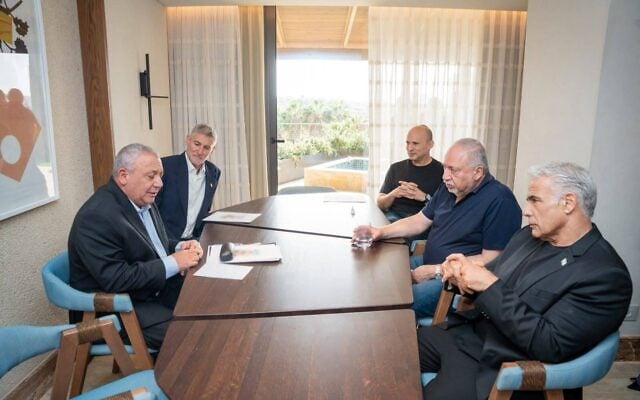
Eisenkot responded to Netanyahu’s offer by inviting the Likud leader and his team to meet with him that very night at the Dan Accadia Hotel in Herzliya for immediate negotiations.
He asserted, however, that Likud has rebuffed efforts to negotiate for nearly three weeks and has yet to respond to a detailed proposal sent on Sunday.
“If Likud is ready for genuine unity, I am prepared to assess its seriousness over the next 24 hours,” Eisenkot said, inviting Netanyahu and his team to join him “for genuine, accelerated talks on guiding principles and policy issues,” based on the proposal to which Netanyahu has yet to respond.
“The unity Israel needs — which I am ready to pursue and for which I am prepared to pay a political price — is unity among Israeli citizens based on shared values,” he continued.
Eisenkot said his proposal, sent through “a secret channel, established at [Netanyahu’s] request,” addressed “substantive issues.” He said his side had offered “significant compromises” on some of them before proceeding with coalition agreements with Yisrael Beytenu and the Democrats.
“For nearly three weeks, my team and I have been proposing and trying to conduct genuine, good-faith and accelerated negotiations, but we have encountered refusals and evasions,” he added.
Netanyahu’s Likud claimed the premier tried to phone Eisenkot before announcing his offer, but the latter did not return the call, Hebrew-language media reported.
The party said Netanyahu also phoned Eisenkot following the announcement, but the Yashar chair did not answer.
The two leaders were set to meet on Sunday at 10 a.m. in Herzliya, Netanyahu’s Likud party said later.
In the meantime, Yashar said Eisenkot spoke with the leaders of his bloc’s parties and brought them up to date on recent developments.
Eisenkot has reportedly previously pledged to his already-signed coalition partners, Yisrael Beytenu leader Avigdor Liberman and Golan, that he will not attempt to form a unity government with Netanyahu without their approval. Liberman warned on Friday that Netanyahu could make such an offer, which he dismissed as a “ploy” to foil a change in government.
B’Yachad chair Bennett welcomed Netanyahu’s announcement, but said the offer should continue to be treated with suspicion until it is proven genuine.
“The burden of proof now lies with Netanyahu to show that this is genuine intent and not lip service,” Bennett said in a statement, warning the Likud leader against “stalling tactics or futile discussions aimed at sabotaging the formation of a government that excludes him.”
“We shall proceed according to the principle: Respect him, but suspect him — and then suspect him again,” he wrote in a post to X.
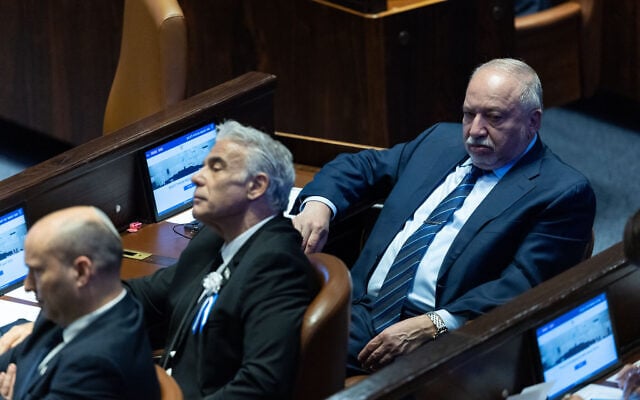
Channel 12 reported that it was pressure from Bennett that prompted Netanyahu to make the offer.
According to the report, Bennett informed Netanyahu that if he didn’t offer Eisenkot the option of serving as the first prime minister in a rotational unity government by Sunday, B’Yachad would abandon its push for unity and sign a coalition agreement with Yashar.
B’Yachad No. 2 Lapid rejected what he claimed was a “transparent con” by Netanyahu, warning that the Likud leader is a “serial deceiver who has cheated every partner and broken every agreement.”
Democrats chair Golan wrote on X: “Enough with the tricks and schticks. Netanyahu has lost. It is our duty to respect the will of the voters and form a government of change and rescue.”
As UTJ prepares for official coalition talks with Eisenkot’s Yashar, its MK Meir Porush said he would prefer a unity government with Likud to one solely headed by Eisenkot.
Porush is considered one of the most pro-Netanyahu voices in UTJ, even as the party has distanced itself from its once-firm ally over Haredi military conscription.
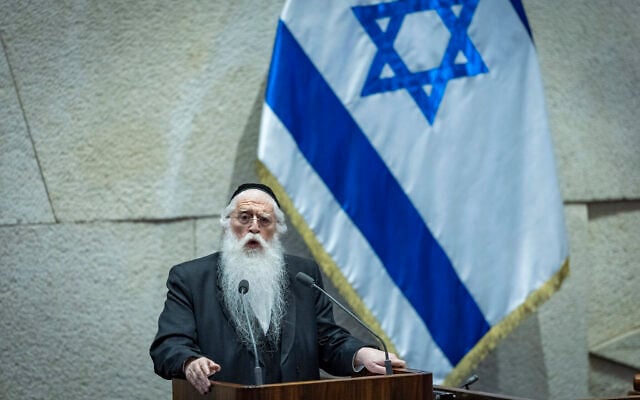
But in remarks to Hebrew media, an anonymous senior UTJ official dismissed Netanyahu’s offer out of hand, highlighting a split within the party.
“While Bibi and the right-wing lecture the ultra-Orthodox, telling us not to align ourselves with Eisenkot, Bennett and Lapid, Bibi himself is willing to take the second spot in a rotation deal, to kick out [ultranationalist Otzma Yehudit chair] Ben Gvir and the Haredim, just so that these ‘leftists’ form a government with him and keep Likud in power,” the official was quoted as saying, using Netanyahu’s nickname.
The official accused Netanyahu of “actively working against the very people who have stood by him all these years.”
Likud responded by denying that he was willing to ditch the Haredi parties, reiterating that they would be included in his proposed unity government.




The Times of Israel Community.