

Police chief heads to INTERPOL conference abroad, defying Ben Gvir’s objections
National security minister says Commissioner Danny Levy’s presence is needed at Sunday cabinet meeting, reportedly tells organizers of assembly in Hong Kong not to allow him entry
 Add ToI as a Preferred Source on Google

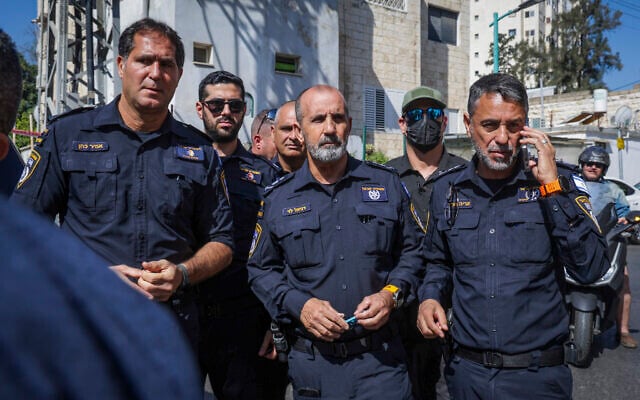
Israel Police chief Danny Levy was set to depart Israel Saturday night despite National Security Minister Itamar Ben Gvir’s opposition to him leaving the country to attend an INTERPOL General Assembly meeting in Hong Kong.
Ben Gvir, whose ministry oversees the police force, had refused to sign off on the trip and sent a message to organizers calling on them to exclude Levy from the conference, according to Hebrew media reports. Levy was set to head to the five-day conference along with several other officers.
As they were waiting to catch their flight, Ben Gvir reportedly sent a letter to INTERPOL saying that Levy “does not represent Israel and his participation should not be authorized.”
Ben Gvir’s office said in a statement that Levy’s trip was “unacceptable to the minister and not approved by him as required by procedure.”
His office also asserted that there is an important cabinet meeting scheduled for Sunday “that requires the attendance of the police chief, and it is regrettable that the police chief chose to ignore that fact.”
The statement also said that Ben Gvir made it clear to Levy “on a number of occasions that the security situation in Israel and the crime situation requires his presence in the country,” an apparent reference to deadly violent crime in the Arab Israeli community. Critics have long accused Ben Gvir of not doing enough to curb the violence.
The statement from Ben Gvir’s office also noted that Levy had recently returned from a vacation in Morocco, “and there is no real reason that he should not remain in the country and send other professional figures to the INTERPOL conference.”
Israel Police said in its own statement that during his visit to Hong Kong, Levy will hold work meetings with the heads of law enforcement organizations from various countries in order to build international cooperation, to “deepen professional ties and advance the sharing of knowledge and joint tackling of the challenges of crime and security in the international arena.”
Last week, Levy held a meeting with Attorney General Gali Baharav-Miara in an effort to circumvent Ben Gvir and get her approval for him to attend the INTERPOL General Assembly, the Walla news site reported at the time.
The relationship between Levy and Ben Gvir has grown increasingly tense following the October 27 elections for the Knesset, in which the ruling coalition lost its majority. Negotiations are underway to form a new government.
The week after the election, Ben Gvir accused Levy of ordering “harsh violence” against ultra-Orthodox protesters to appease the opposition. He also petitioned the High Court to cancel an April injunction that forbids him from interfering in the police’s use of force.

Responding to the attack from Ben Gvir, Levy said the minister’s claim was “baseless and outrageous.”
At the time, Ben Gvir had also accused Levy of “sucking up to the leftists” despite having “carried out my every request” over the previous 18 months.
Ben Gvir has previously expressed support for police officers who used violence to disperse anti-government demonstrations, including promoting an officer who tossed a stun grenade at protesters against the government’s judicial overhaul in Tel Aviv in 2023, and ousting the Tel Aviv police chief for failing to take a tougher stand against the protests.
Earlier this year, the Haaretz daily reported that Ben Gvir would lead a delegation to the United Nations Chiefs of Police Summit (UNCOPS) set to take place on July 7 and 8. But the report was never confirmed by Ben Gvir’s office, and he reportedly later canceled the trip.
Ben Gvir, a highly controversial figure in Prime Minister Benjamin Netanyahu’s cabinet, is the leader of the country’s far-right Otzma Yehudit party. Before the start of his political career, he was convicted of supporting a terrorist group and other offenses.
Hebrew media outlets reported in June that Ben Gvir canceled an earlier visit after he was required by the US Embassy in Israel to arrive in person and provide his fingerprints as a condition for receiving a visa, apparently due to his past criminal convictions.







The Times of Israel Community.