

Shas, 3 other slates punished for voter fraud at US vote for World Zionist Congress
More than 230,000 votes were cast in an election marred by improprieties; parties are expected to appeal, and final outcomes may not be clear for months
 Add ToI as a Preferred Source on Google
Zev Stub is the Times of Israel's Diaspora Affairs correspondent.
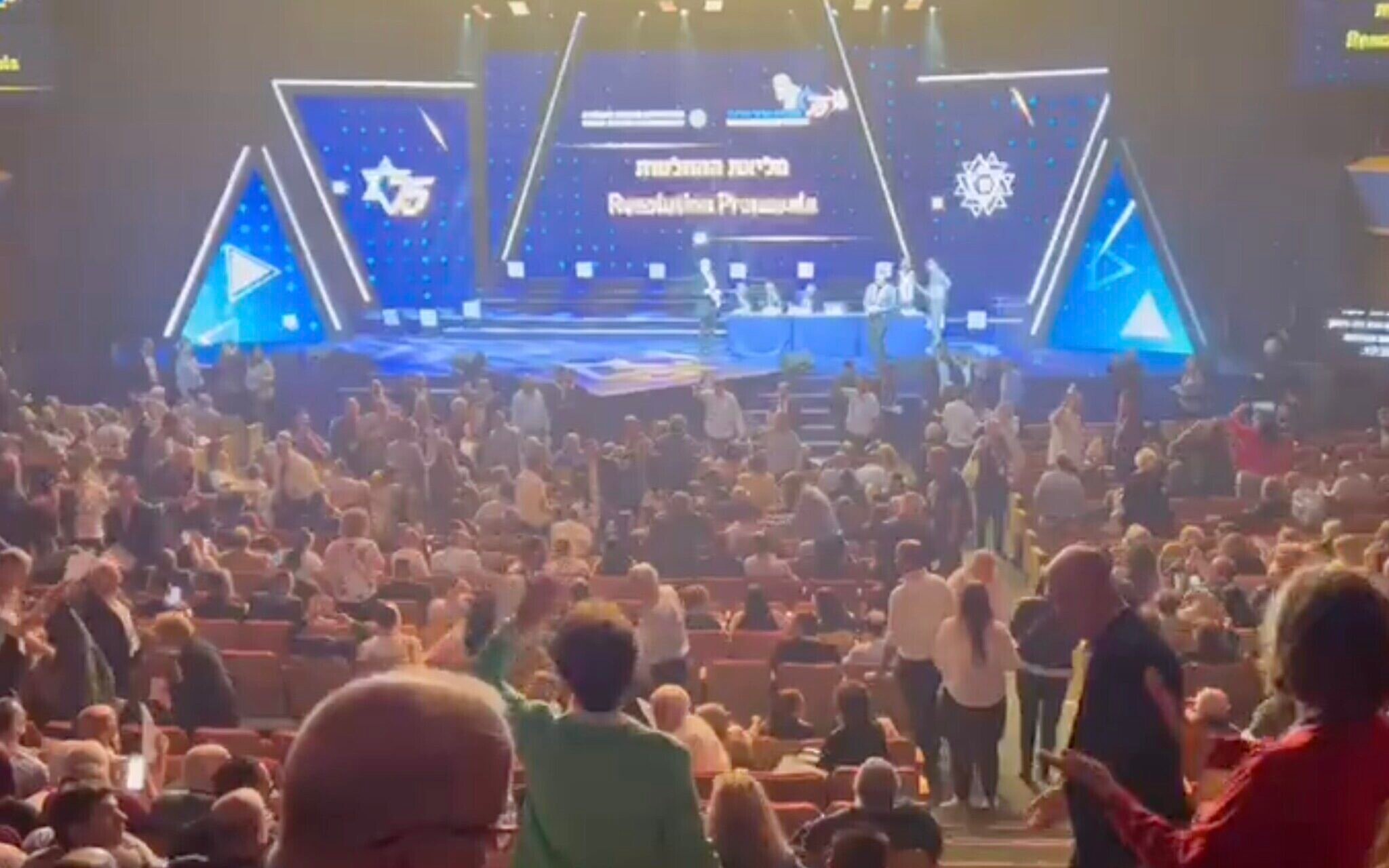
Following investigations of voter fraud in US elections for the World Zionist Congress, the Shas USA slate has been disqualified from participating, and several other parties will face financial penalties and vote deductions, according to documents obtained by The Times of Israel.
However, multiple levels of appeals and challenges are expected through the Zionist Supreme Court, which adjudicates disputes within the World Zionist Organization. Final outcomes may not be clear until later in the summer, sources noted.
A record 230,257 total votes were cast for American delegates in the World Zionist Congress held from March 10 to May 4, not including nearly 19,000 that were invalidated due to suspicions of fraud. In a historic first, Orthodox and ultra-Orthodox movements received more than 40% of the vote.
The results of the vote will help determine how some $5 billion in funding will be spent on Jewish and Israeli causes over the next five years.
Of the 22 slates that competed, Shas USA, which is linked to Israel’s Sephardic ultra-Orthodox party Shas, was relatively insignificant, winning just over 1% of the total vote after suspicious ballots were thrown out.
Internal documents from the Area Election Committee (AEC), which oversaw the election, showed that more than 2,700 mail-in votes for Shas were sent in two boxes delivered from Jewish institutions in New York. All were paid by suspicious credit or prepaid cards (there was a $5 fee to vote), most were linked to problematic mailing addresses and phone numbers, and many had irregular signatures. The slate’s responses to inquiries about the votes were not found by the AEC to be credible, the document noted.
In addition to being disqualified from the 2025 Congress, Shas USA’s chairman will also be barred from participating in the 2030 Congress. The slate will also be fined $5 per disqualified vote, or $13,530.
Five other slates were also investigated for fraud. The AEC has not disclosed their identities.
Slates identified as A and B each received about 2,000 suspicious votes paid for with prepaid cards in what seemed to be coordinated misconduct. Slate A was somewhat cooperative with investigators, taking some steps to identify wrongdoing, while Slate B refused to cooperate and had a history of using dishonest practices in past elections.
AEC heads recommended that Slate A be penalized an additional 50% of its disqualified votes, and that Slate B be penalized an additional 100% of its disqualified votes. Both would also be penalized $5 per disqualified vote, a bit more than $10,000 each.
Slate C had about 900 disqualified votes, which seemed to originate from multiple people working independently. Organizers were found to be very cooperative in investigations, and they self-reported about 100 improper votes when they were discovered. The slate was warned to improve its oversight for the next election, but no penalty was recommended.
For Slate D, investigators found that organizers adequately demonstrated that they did not participate in problematic behavior, and no penalty was recommended.
Slate E charged that nearly 6,500 improper votes on its behalf were cast by a rival slate to frame them, a claim for which investigators could find no basis. The recommended penalty was an additional 50% of its disqualified votes, plus a fine of $32,435, or $5 per vote.
“The AEC has taken decisive steps to uphold the integrity of the election process,” the American Zionist Movement (AZM), which administered the election, said in a statement. “The AEC reaffirms its commitment to a democratic process that reflects the values and voices of the American Jewish community.”
A final breakdown of the 152 Congress mandates for the US will only be made public once the appeals process comes to an end.

Setting precedents
Some are concerned that the AEC’s recommendations did not sufficiently penalize incriminated slates in an election that relied heavily on what AZM executive director Herbert Block previously called “an element of an honor system.”
While voting was ostensibly limited to self-identified Jews aged 18 or older in the US, the online platform lacked security features to block voters who ignored the rules.
Slates proposed several different models for how those suspected of wrongdoing should be penalized, with some suggesting that any slate directly involved with fraud should be immediately disqualified in order to set a precedent for future elections.
Complicating matters is the fact that some of the largest slates are among those believed to be accused of fraud, including Am Yisrael Chai and Eretz Hakodesh.
Am Yisrael Chai, a new group of Jewish college students and young professionals focused on pro-Israel advocacy and promoting the “love of Torah and Judaism,” was the biggest surprise of the election, coming in second place with 31,765 votes, or 13.8% of total votes cast.
Eretz Hakodesh, associated with Israel’s Haredi United Torah Judaism party, came in third overall with 29,159 votes, or 12.7% of the total.
It is not clear whether a final decision will be delivered by July 28, the deadline for all countries to submit their mandates to the World Zionist Organization.
International voting
Meanwhile, more than 35 countries around the world are choosing their delegates for the World Zionist Congress, including more than 20 countries holding public elections. (Delegates will be chosen by local Jewish leaders in other countries.)
In the UK, voting has been delayed to July 6-10 after the Eretz HaKodesh slate was disqualified there for violating rules regarding voter registration.
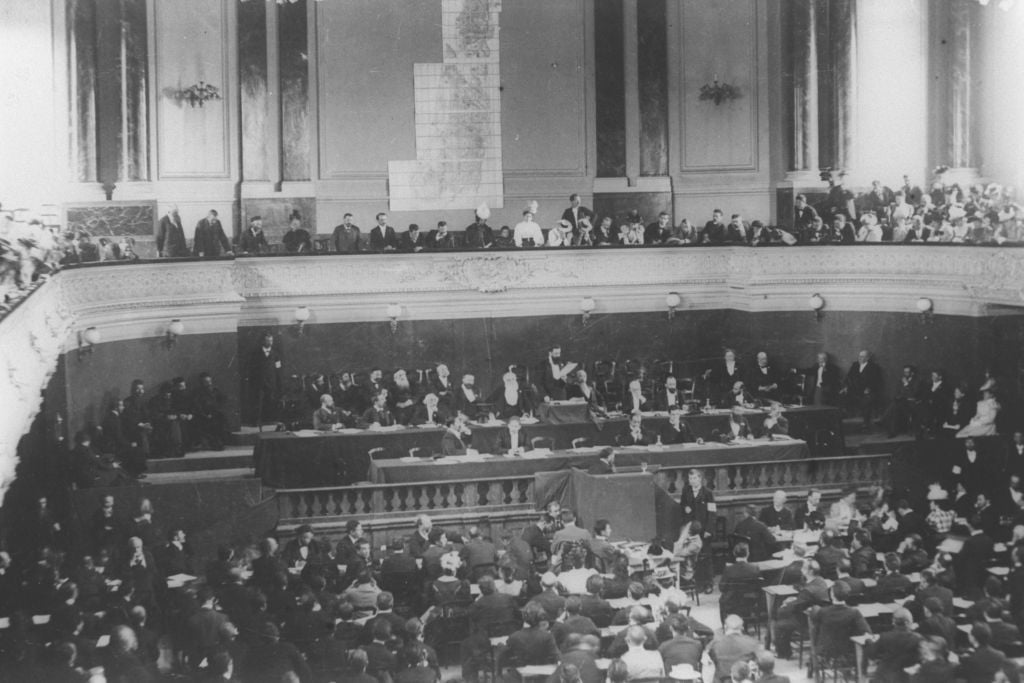
Established by Theodor Herzl in 1897, the World Zionist Congress decides how to allocate $1 billion to Jewish causes every year and oversee Israel’s so-called national institutions, including the World Zionist Organization, which carries out the Congress’s vision; the Jewish Agency, which plays a central role in Jewish immigration to Israel; and the Keren Kayemeth LeIsrael-Jewish National Fund.
The World Zionist Congress comprises 525 seats, with representation from three different geographic areas. Israel has 200 seats, automatically allocated according to political party representation in the Knesset. Another 152 seats represent the United States, divided according to the WZC election results. The final 173 seats are chosen by other countries, either through a public vote or, in smaller communities, by local Jewish leadership.
The World Zionist Congress will convene in Jerusalem on October 28-30.






The Times of Israel Community.