

Spinning tales: A collector shares dreidel stories from ancient Egypt to October 7
Ezra Cohen has been collecting the spinning tops used on Hanukkah for more than 30 years, and loves discussing their rich history and how they connect cultures
 Add ToI as a Preferred Source on Google
Zev Stub is the Times of Israel's Diaspora Affairs correspondent.
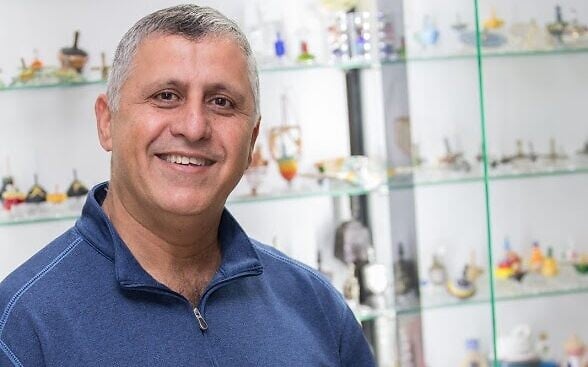
The best part of collecting dreidels is the stories that come with them, says 63-year-old Ezra Cohen from Ashdod.
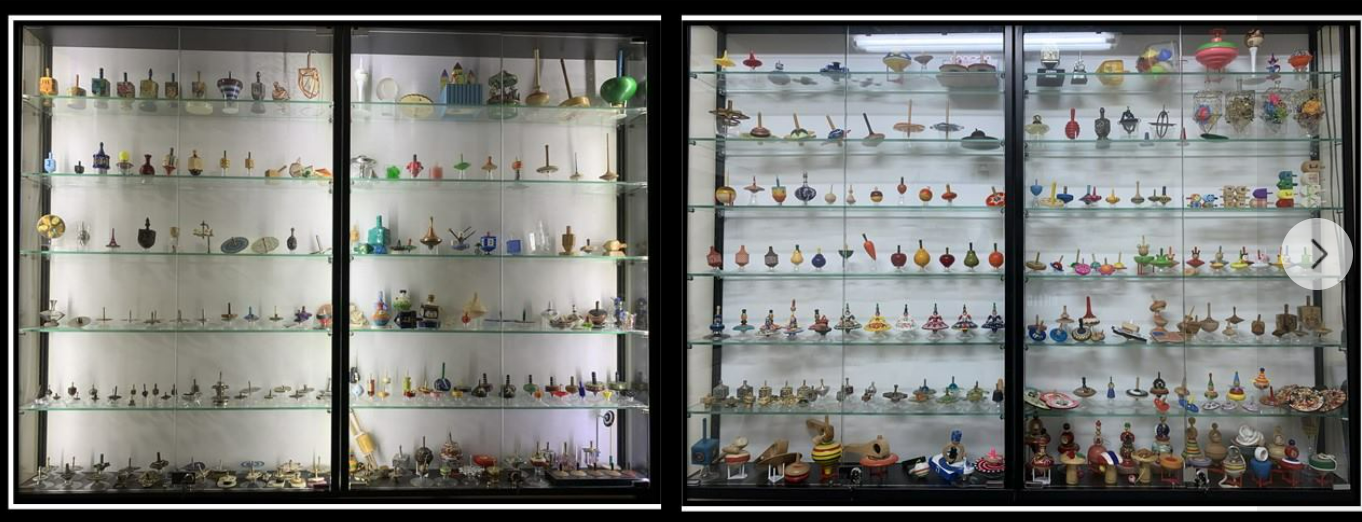
Cohen, a collector of the spinning tops traditionally used on Hanukkah, has dozens of stories to go along with the 1,000-plus dreidels he has acquired over more than 30 years. In a pre-Hanukkah discussion with The Times of Israel, he displayed his historical scholarship and spun some of his favorite dreidel tales, including several connected to the Hamas atrocities of October 7, 2023, and the subsequent Israel-Hamas war in Gaza.
The dreidel (or sevivon in Hebrew), as it commonly appears today, is a four-sided spinning top used in a traditional Hanukkah game where players spin it to win or lose tokens (or better, chocolate coins) based on which of the sides it lands on. Each side of the dreidel is marked with a Hebrew letter: nun, gimmel, heh, and shin — an acronym for “Nes gadol haya sham,” meaning “A great miracle happened there.” (In Israel )
That wasn’t originally the case in Germany, where the modern custom originated, Cohen noted. In the 1500s, Germans gambled with a spinning top as an alternative to rolling dice. Their four-sided top had letters that were instructions for whoever was doing the spinning: N – Nich (nothing), G – Gantz (everything), H – Hälfte (half), and S – Stell (put in). These letters were copied directly by the Yiddish-speaking Jews who adopted the game as their own, Cohen said.
Later, in modern Israel, the shin was replaced with the letter peh, which stands for poh, or here, instead of there.
“That was changed in the 1930s,” Cohen explained. “The State of Israel has not been founded yet, but the idea was to integrate the dreidel into contemporary society to emphasize the land’s historic connection to the story of the Hasmoneans. So kindergarten teachers started teaching it to their students with the peh, and poets started writing songs with it, and it stuck.”
Historically, the origins of the dreidel go back even farther, with evidence of spinning top games being used in ancient Rome, Greece, and even Egypt, Cohen noted.
Building a dreidel community
Cohen, who works as an engineer at Intel, has emerged as a figurehead for the relatively small group of dreidel collectors in Israel. He runs a WhatsApp group that connects more than 20 serious dreidel collectors from around the world, and is the administrator of a Facebook group dedicated to the spinning tops, where he shares photos and stories with about 370 followers.
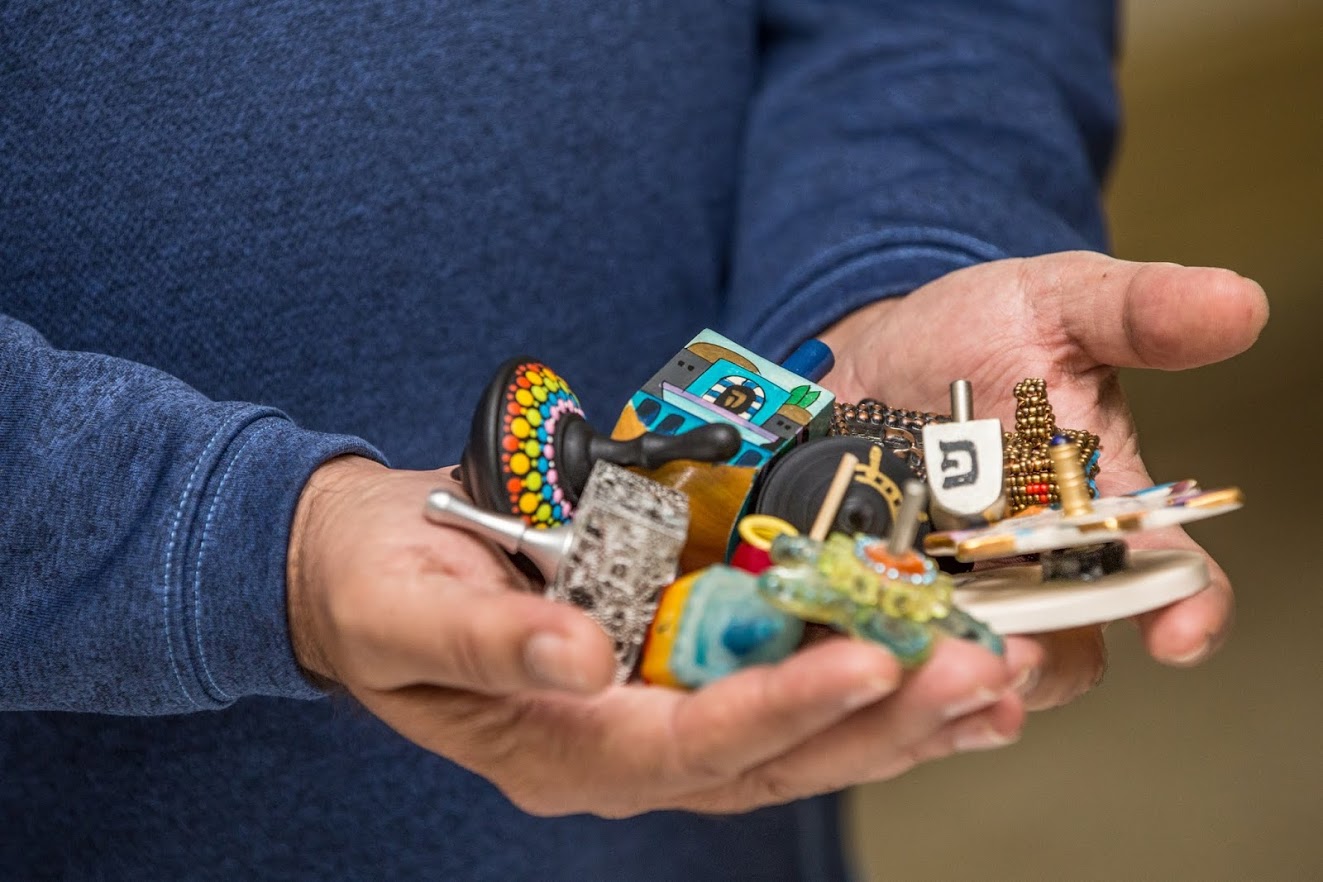
Cohen’s collection is large, but not the largest, and Cohen speaks with reverence of some of his fellow collectors. Rabbi Eliyahu Safran of New York has the world’s most valuable historical dreidel collection, and former Labor MK Avraham Burg owns more than 3,000 dreidels, he said. American author Arthur Kurzweil reportedly owns more than 4,000 dreidels found in Eastern Europe.
Others in Israel own 1,000 dreidels or more, but “the key is to get your spouse on board,” added Cohen, who is married.
“Last year, during Hanukkah, after the war had already started, some of us collectors decided to get together and make little bags of dreidels and chocolate coins to use for activities we ran for evacuees from the Gaza envelope area and the north,” Cohen recalled. “That was a very meaningful experience.”
Cohen’s fascination with dreidels began when he was a soldier serving in the IDF. “I would wander the streets of Jerusalem and buy them from vendors,” he said.
He got his start as a collector several years later after an experience in an art gallery in Jerusalem’s Old City: “I saw a beautiful one, and I asked how much it cost, and the salesman said it was $100. I was a young newly married man with a mortgage, and I told him I couldn’t afford it. Luckily, he liked me, and he told me to take two as a gift and make sure to use them well. After receiving this gift intended for art collectors, I said, ‘Okay, I’m a collector now.’ That was the beginning of everything.”
A dreidel for everything
Cohen has traveled the world researching all types of spinning tops, and his collection includes rare, artistic, and historic tops from numerous cultures. He smiles when he mentions one he owns that shows different sexual positions on each side, to be implemented by the person spinning the top.
“That one was once chosen to be included in a museum display of my collection,” Cohen noted. “I didn’t expect that.”
One of Cohen’s most emotional dreidel stories is that of Israeli artist Yossi Tor, a soldier who was captured in 1973 and imprisoned in Syria for eight months after the Yom Kippur War. Before Hanukkah, Cohen said, Tor was able to get a large piece of soap from his guards, which he secretly carved into the shape of a dreidel to help boost the morale of other soldiers in his cell.
“He knew that black soot would accumulate on the walls when the guards would light a fire to stay warm, so he used that soot to write the letters that appear on the dreidel,” Cohen said.
Cohen also told the story of Israel’s Ori Fund, started by Ravit Levi in memory of her son, Ori, who died at age two of Leigh syndrome, a rare genetic disease. Ori loved playing with dreidels, so every Hanukkah, she produces and distributes thousands of tops to soldiers, hospital patients, and people with disabilities. Money from those that are sold is donated to medical research for the disease.
The October 7, 2023, massacre and the current war have inspired many artists to create unique new dreidel designs, Cohen noted.
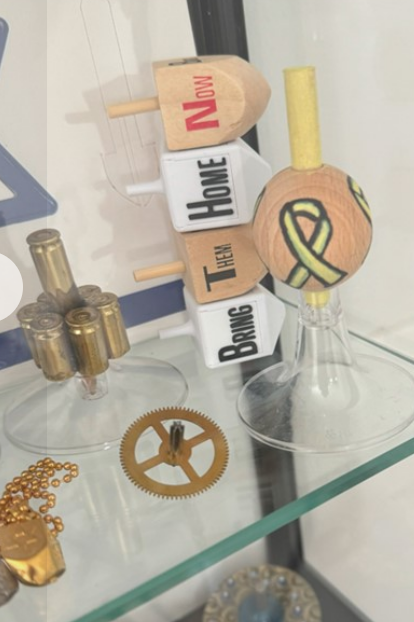
He mentioned artist Sabina Saad, who had previously created a Holocaust-themed dreidel shaped like a yellow star badge with the words, “A great miracle did not happen here.” Now, she has designed a wooden dreidel in honor of the hostages that says the words “Bring them home now” on the four sides of the dreidel, in conjunction with the Alon Foundation for Education.
Last year, Saad’s son designed his own cardboard dreidel with the name of Amit Shani, a 16-year-old former hostage who was released last year, Cohen added. He also noted a dreidel necklace with the phrase “Yachad Nenatze’ach” (“Together we will overcome”) sold by a company in Tel Aviv, as well as a small dreidel he personally created for himself from empty bullet cartridges.
“Dreidels are something that can connect people from every culture,” Cohen said. “Everyone loves to spin.”










The Times of Israel Community.