

Ukraine looks to impose martial law in wake of Russian ship seizure
After Moscow’s vessels board and capture its ships in ‘unjustified use of force,’ Kiev urges Western allies to impose further sanctions against Kremlin
 Add ToI as a Preferred Source on Google
Ukrainian President Petro Poroshenko signed a bill to impose martial law in the country on Monday, in the wake of Russia’s seizure of three ships and their crews by Russia, as tensions with Moscow skyrocketed over the incident.
The bill will have to be approved by parliament for it to go into force. The Supreme Rada is due to vote on the issue later in the day.
The proposal comes after Russian border guards opened fire on three Ukrainian military vessels in the Sea of Azov.
The bill published by Poroshenko’s office called for martial law to be imposed for two months.
The emergency measures will, if adopted by lawmakers, include a partial mobilization, a strengthening of the country’s air defense, as well as a plethora of vaguely worded steps, such as the “strengthening” of anti-terrorism measures and “information security.”
Kiev and Moscow were facing their worst crisis in years, as Ukraine and its Western allies demanded the release of the three ships fired on and seized by Russia near Crimea a day prior.
The incident has raised fears of a wider military escalation and the UN Security Council was to hold an emergency session Monday. NATO also called an emergency meeting on the incident.
Ukraine’s Western allies accused Russia of using force without justification, while Kiev urged its partners to impose further sanctions on Moscow.
“These were planned acts of aggression by the Russian Federation against Ukraine,” Foreign Minister Pavlo Klimkin told reporters in Kiev.
“We will demand (at the Security Council) the immediate release of our sailors and the liberation of our ships.”
He said talks were underway, with the European Union and others, on increasing sanctions imposed on Russia.
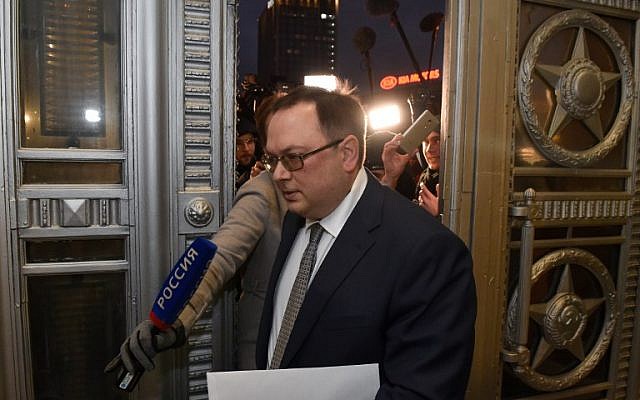
Moscow insisted Kiev was to blame, with Kremlin spokesman Dmitry Peskov saying: “The Russian side acted strictly within both domestic and international law.”
‘Dangerous methods’
Russian Foreign Minister Sergei Lavrov accused Kiev of a planned provocation and of using “dangerous methods” that put ships in the area at risk.
The crisis unfolded as two small Ukrainian warships and a tugboat were heading through the Kerch Strait, a waterway that gives access to the Sea of Azov from the Black Sea and which is used by both Ukraine and Russia.
Ukraine said a Russian border guard vessel rammed the tugboat and then fired on the ships, immobilizing all three. It said the Kerch Strait was blocked by a tanker and that Russian military aircraft were flying over the area.
Russia’s FSB security service, which oversees border forces, confirmed weapons had been fired and the vessels seized, accusing the Ukrainian ships of “violating the Russian border.”
Ukraine said six of its servicemen were injured, two seriously. The FSB said only three had suffered non-life threatening injuries and were given medical treatment.
Russian news agencies quoted port officials in Crimea as saying the strait was reopened to traffic early on Monday.
The confrontation is a dangerous development in the long-running conflict pitting Ukraine against Moscow and Russian-backed rebels in the east of the country. More than 10,000 people have died in the fighting.
The United States and EU have imposed sanctions on Russia over the conflict and on Monday European capitals rallied behind Kiev.
“I condemn Russian use of force in Azov Sea. Russian authorities must return Ukrainian sailors, vessels & refrain from further provocations,” EU President Donald Tusk tweeted.
Tensions over sea access
France also called on Russia to release the sailors and ships, with the foreign ministry saying “nothing appears to justify the use of force” by Russia.
German Foreign Minister Heiko Maas said any Russian “blockade” of the Sea of Azov was “unacceptable.”
Tensions have been building over the Kerch Strait, where Russia has built a new bridge that gives it a land connection to Crimea, annexed by Moscow in 2014.
Kiev has accused Moscow of blocking access for Ukrainian ships though the strait, the only way in and out of the Sea of Azov to the Black Sea.
In recent months, both sides had deployed more naval and border vessels to the area.
“The incident marks a significant escalation of the conflict between Russia and Ukraine,” research firm Eurasia Group said.
“Western governments will side with Ukraine against Russia over the incident… making new sanctions against Russia likely.”
Poroshenko held a late-night meeting of his military cabinet, proposing the imposition of martial law in Ukraine “to ensure the security and safety of its citizens.”
Eurasia Group said martial law could have wide-ranging domestic consequences, especially with a presidential election due in March and Poroshenko behind in opinion polls.
“Poroshenko did not take this kind of action during the worst of the conflict in 2014 and 2015. This raises concerns that… it could lead to postponement of the presidential election,” it said.
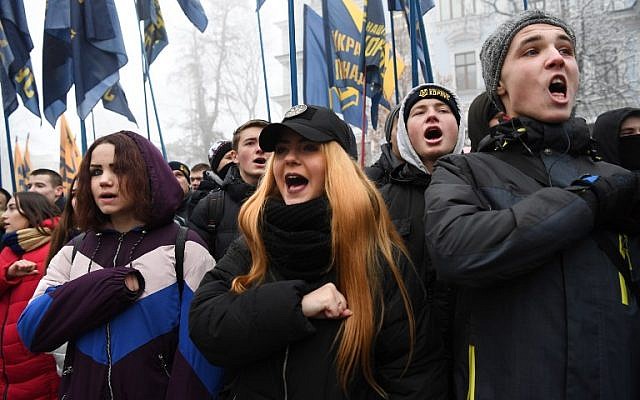
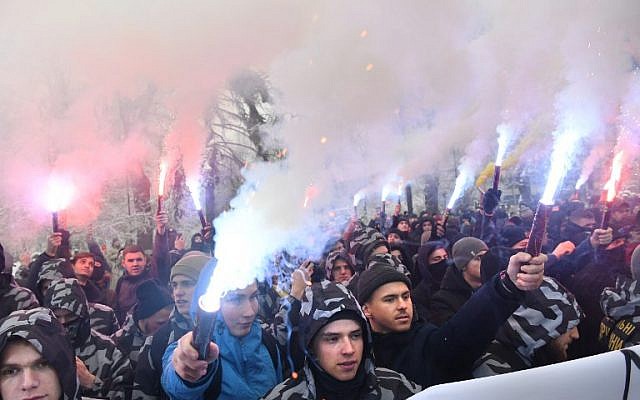
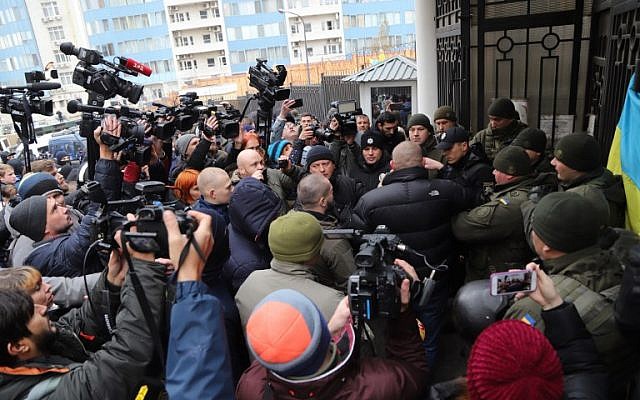
Protesters gathered in several Ukrainian cities to denounce Russia’s actions, with several hundred far-right activists marching to parliament in Kiev and setting off flares.






The Times of Israel Community.