

UN says Syria blocking access to site of alleged chemical attack
Damascus regime requested investigation into use of nerve agents in Aleppo but hasn’t agreed to free inspection
 Add ToI as a Preferred Source on Google
Stuart Winer is a breaking news editor at The Times of Israel.
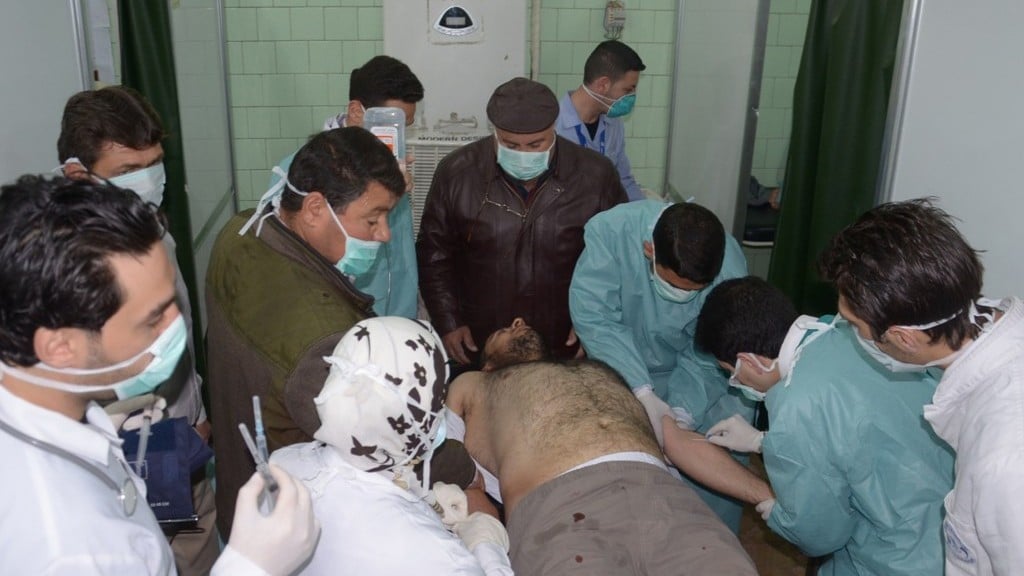
Syria has not agreed to give United Nations officials free access to investigate an alleged chemical weapons attack, even though it was the Damascus regime that asked for the probe after accusing rebel forces of using nerve agents in Aleppo.
UN officials want to begin their investigation as early as next week but have not yet agreed with authorities in Damascus about the scope of their work, the French news agency AFP reported on Wednesday.
UN Secretary General Ban Ki-moon has demanded “unfettered access” to areas where chemical weapons may have been used, but so far the ruling authorities have not agreed, the report said. The demand is a necessary condition for the investigation to go ahead, a UN source told AFP.
“It is obvious that to be able to do this work, you need unfettered access, and that is why the secretary general has underscored that in his communications,” UN spokesman Martin Nesirky said.
Nesirky made it clear that the investigation is only to establish if chemical weapons were in fact used, and not to level any charges against either side.
The March 19 attack killed 30 and left another 80 injured in the northern Aleppo province.
While the government blamed the rebels, the rebels claimed that government forces staged the attack in order to defame those fighting to bring down the regime.
Experts who have since examined video footage of victims of the attack speculated that the chemical used was most likely super-potent tear gas, the Sunday Times reported. US officials have also expressed doubt that actual chemical agents were used.
Although Damascus called for the United Nations investigation into the incident, both Britain and France said that that the probe should also check the rebels claims that the government was behind the attack, as well as two other claims of the use of chemical weapons.
On Wednesday, Ban named Swedish expert Ake Sellstrom to lead the investigation. Sellstrom is an experienced weapons analyst who served on the team of UN investigators that searched for weapons of mass destruction in Iraq in the 1990s.
The UN wants between eight and 10 experts on the Beirut-based investigating team, AFP reported. Ban has stressed that the members of the team should not come from any of the permanent member countries of the Security Council. Britain, France, and the United States are already providing non-lethal support to rebel forces in the form of training, communications equipment, and vehicles. Britain and France are pushing to supply weapons as well.
On the other side, Russia supplies the Assad regime with weapons, and China has publicly backed Damascus against the rebels.
The experts will also not been drawn from Turkey or Arab countries but rather from South American, Asian, and Nordic countries, the report said.
President Barack Obama said in 2012 that the use of chemical weapons by the Syrian government would cross a “red line” and prompt direct action from the United States.
The United States, Israel, and Jordan are particularly concerned about the fate of Syria’s large stockpile of chemical weapons.
In addition to the possibility that President Bashar Assad may use the weapons as a desperate measure to stay in power, there are fears that some of the weapons may find their way in to the hands of terror groups in Syria or Lebanon.




The Times of Israel Community.