

Why the Houthis threatening Red Sea shipping could be worse for the oil market this time
The Iran-backed terror group attacked Israel, as well as Red Sea shipping, after Oct. 7; now, it announced a ban on Israeli-linked ships and fired missiles at Israel once again
 Add ToI as a Preferred Source on Google
The Houthis, Yemen’s Iran-backed terror group, said on Monday that they would ban ships linked to Israel from the Red Sea after fighting between Jerusalem and Tehran renewed, adding to concerns about global shipping and energy flows.
The rebel group also fired two missiles at Israel on Monday, setting off sirens in the Tel Aviv area. One was intercepted and one failed to reach the country, the IDF said.
The Houthis — whose slogan calls for “Death to America, Death to Israel, [and] a Curse on the Jews” — first began attacking Israel and maritime traffic in November 2023, a month after the October 7 Hamas-led massacre. In response, Israel attacked the Houthis in Yemen, located some 1,800 kilometers (1,100 miles) away, 19 times with the Israeli Air Force and Israeli Navy.
Amid ceasefires between Israel and Hamas — between January and March 2025, and since October 2025 — the Houthis largely held their fire.
Here is why the ban announced by the Houthis matters and what it means for the Iran war and the global energy crisis:
How big is the risk to global energy markets?
Iran’s closure of the Strait of Hormuz since the beginning of the US-Israeli war with the Islamic Republic on February 28 has disrupted most oil and other energy exports from the Gulf, raising prices and causing a major energy shock.
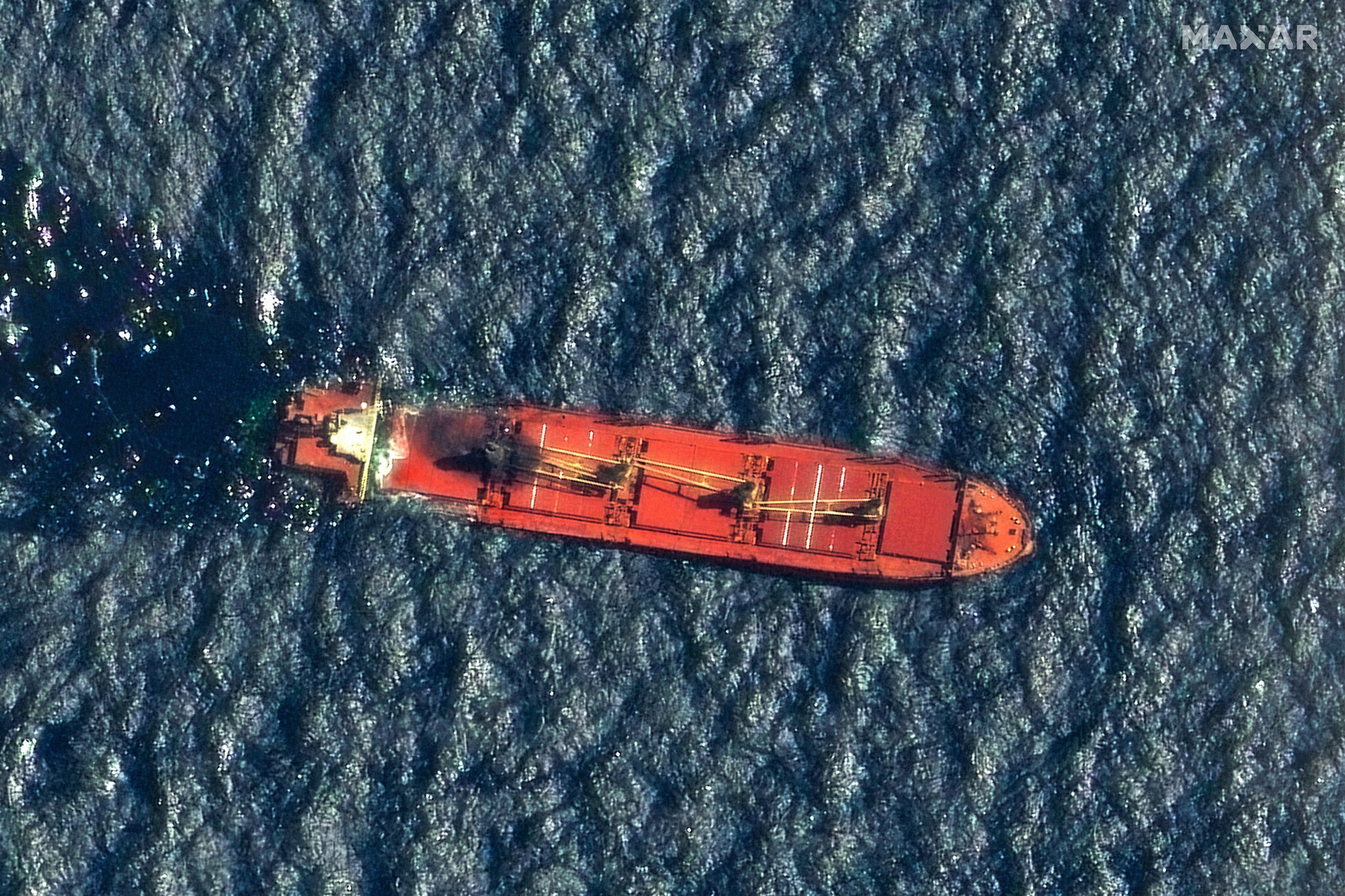
Saudi Arabia has responded by diverting more than 70 percent of its normal daily crude exports to the Red Sea port of Yanbu. That has been a lifeline for the energy market, helping to keep down global oil prices.
Any sustained Houthi disruption to Red Sea shipping, including potential attacks on shipping or ports, could be a big problem.
When the Houthis launched attacks on Red Sea shipping in November 2023, after the October 7 massacre, Gulf oil exports were flowing freely, meaning cargoes were diverted to avoid the Red Sea, but not halted. But this time, they are being loaded there.
A Houthi source told Reuters that preventing Israeli ships from transiting the Red Sea was “a first step” but that if escalation continued, the group would stop any ships heading to Israel as well as other measures.
When the group attacked shipping during the Gaza war, its stated target of Israel-linked vessels included any vessel belonging to any company that used Israeli ports, and its attacks on those ships dissuaded most companies from using the route.
Who are the Houthis?
The Houthis emerged as a military, political and religious movement in north Yemen in the 1990s, fighting guerrilla wars against the government in Sanaa.

They adhere to the Zaydi sect of Shi’a Islam, and after the 2011 Arab Spring they strengthened ties with Iran and seized on instability to capture the capital in 2014, derailing a Gulf-backed political transition plan.
Saudi Arabia and Arab allies launched a military intervention months later to restore the ousted government and dislodge a group it saw as a proxy for Iran, Riyadh’s regional archrival.
As Yemen’s civil war ground to a stalemate, the Houthis attacked oil installations and other infrastructure in Saudi Arabia and the United Arab Emirates with missiles and drones.
However, a 2022 truce between Yemen’s warring sides has largely held.
What’s their relationship to Iran?
Iran champions the Houthis as part of its regional “Axis of Resistance,” against Israel, which includes Lebanon’s Hezbollah terror group, and Iraqi Shi’ite militias. But its ties with the Yemeni terror group are less clear than with those other groups.
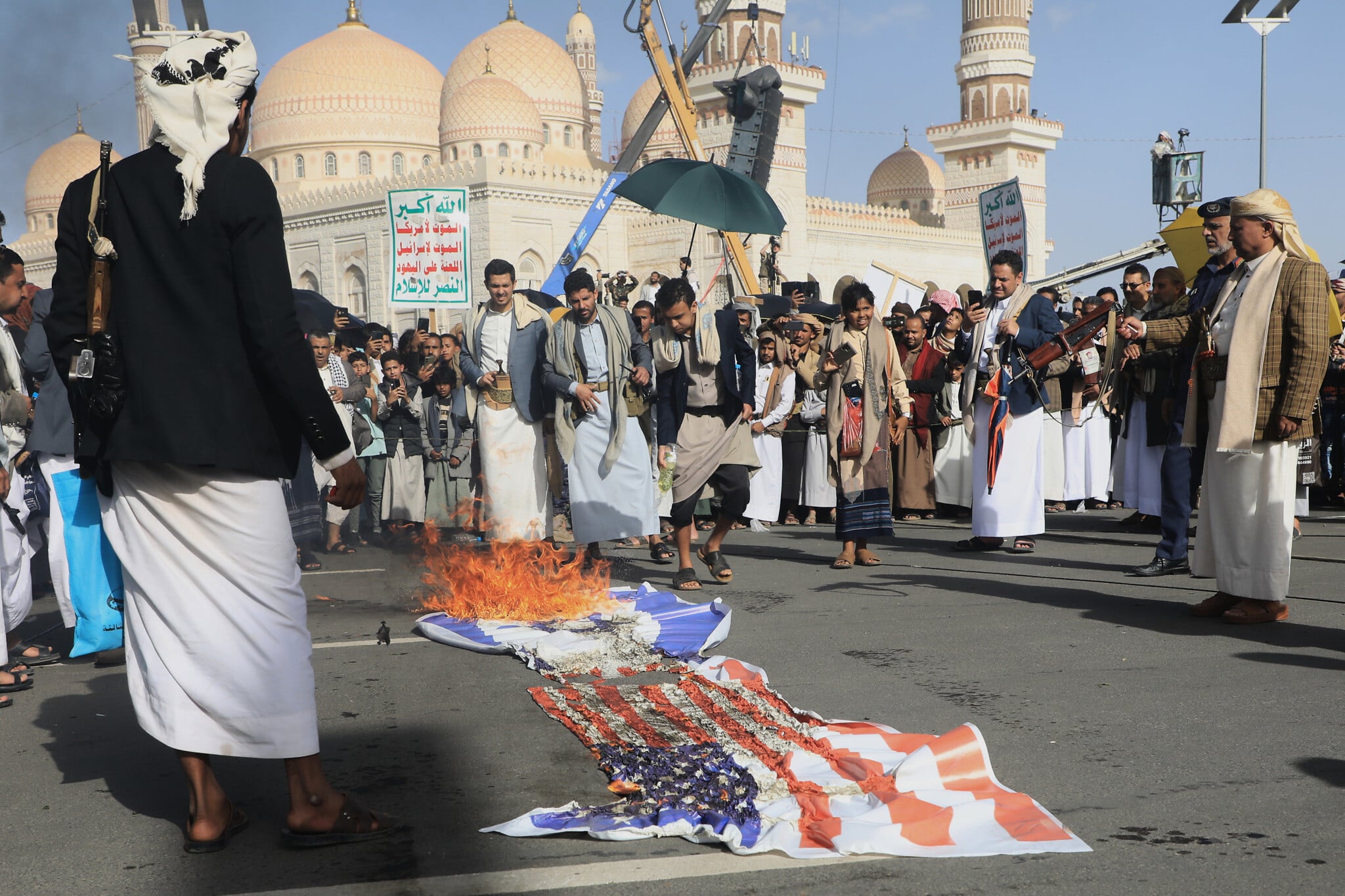
The Houthis do not recognize Iran’s supreme leader as their ultimate religious authority in the same way Hezbollah and the Iraqi groups do. The Houthis’ motivations are mainly domestic, though it is ideologically aligned with Iran and has made consistent and significant efforts to attack Israel.
The US says Iran has armed, funded and trained the Houthis with help from Hezbollah. The Houthis deny being an Iranian proxy and say they develop their own weapons.
What happened when the Houthis attacked Red Sea ships before?
The Houthi attacks in the Red Sea after October 7 severely disrupted global shipping, prompting Maersk, Hapag-Lloyd and other major companies to divert around Africa — a far longer, more expensive route.
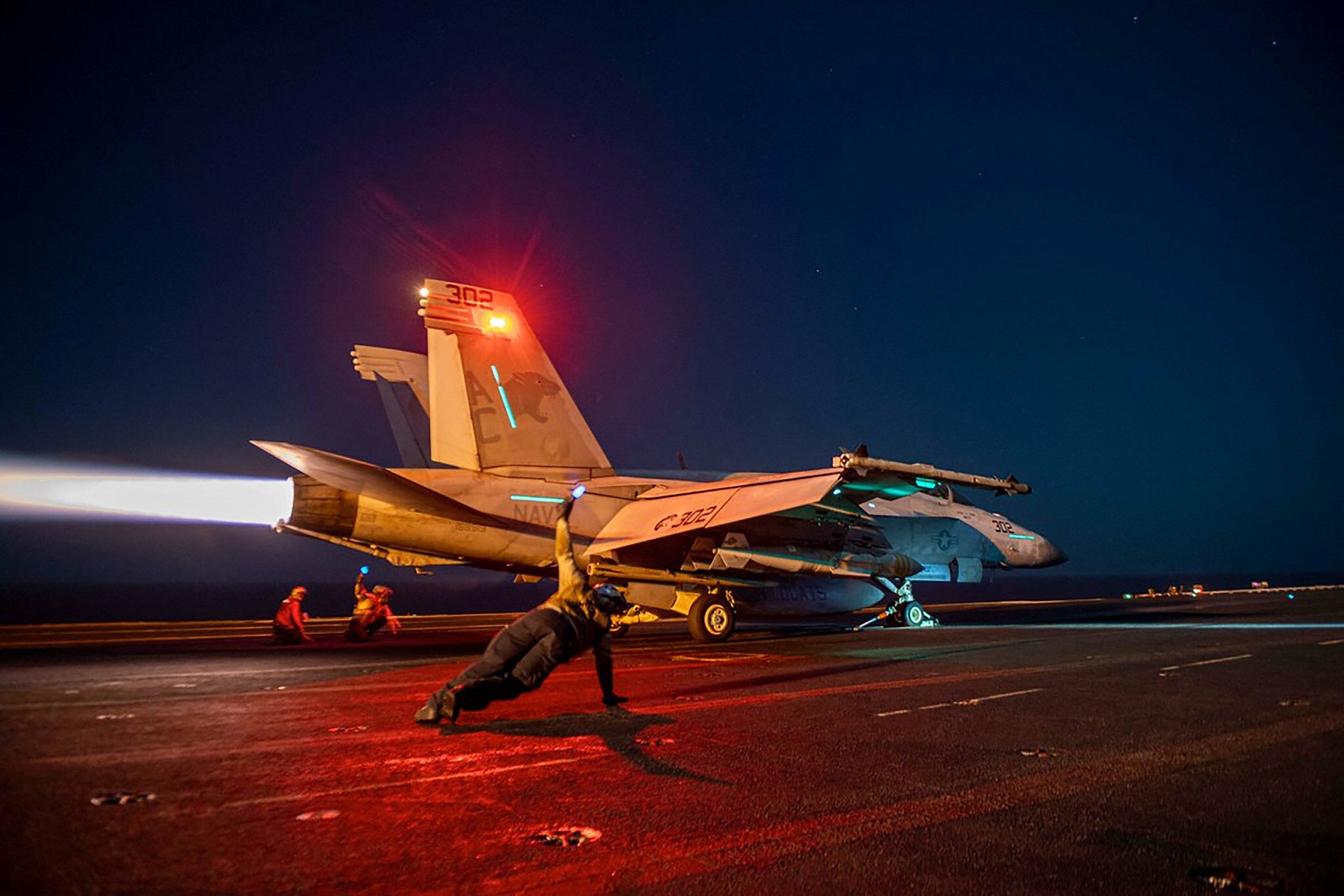
A US-led mission to restore free navigation in the Red Sea involved repeated strikes on Houthi targets and a defensive campaign that shot down hundreds of drones and missiles.
But some Houthi attacks continued until last summer, only ending completely with the Gaza ceasefire in October.
What have they done during the latest Iran war?
While Hezbollah and the Iraqi groups joined the current war early with rocket and drone fire on Israel and other targets, the Houthis were comparatively quiet until this week, firing on Israel sporadically.
The group’s leader Abdul Malik al-Houthi said on March 5, “Our fingers are on the trigger at any moment should developments warrant it.”

Iranian military commanders have repeatedly warned the Houthis could join the war, with Revolutionary Guards Quds Force commander Esmail Qaani saying on June 1 they could choke off the Red Sea.
Before this week, the group’s involvement was a few missile and drone attacks on Israel in late March and early April.
Why the Houthis have been relatively quiet until now is not entirely clear.
They and Iran may have wanted to use the threat of another major energy route closure to warn Israel and the United States off further escalations. The Houthis may also feel less committed to Iran’s security than do Tehran’s other regional allies.
And the group may not want to antagonize its powerful, wealthy neighbor Saudi Arabia and risk reigniting the conflict at home.






The Times of Israel Community.