

An officer, but maybe not a gentleman
It’s shock and awe as the army and its loyal corps of correspondents react to rape accusations against Ofek Buchris with breathless praise for the top general
 Add ToI as a Preferred Source on Google
Joshua Davidovich is The Times of Israel's Deputy Editor
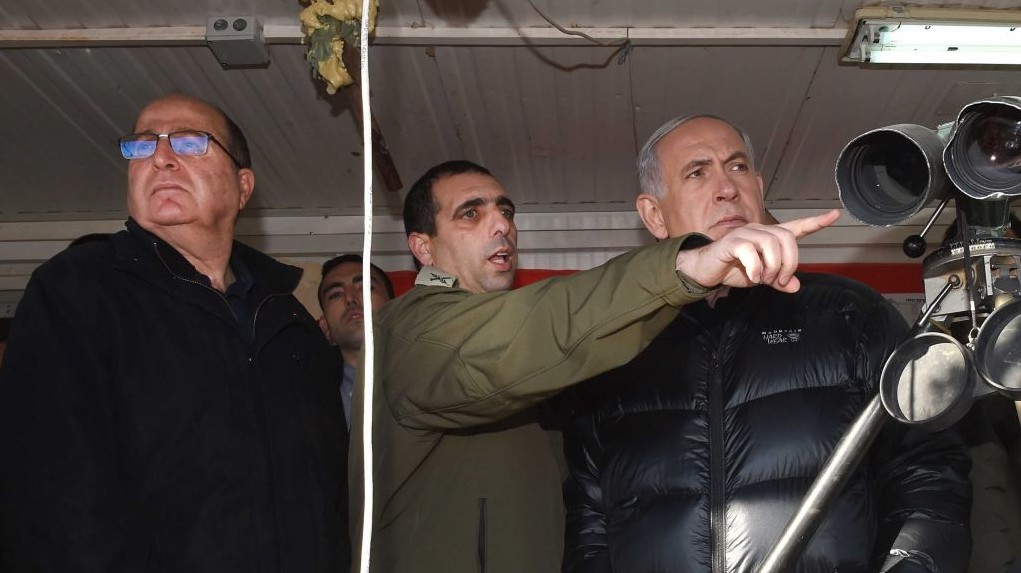
What do you do when someone you thought was a leading light turns out to maybe be a monster? If you are the army and Israel’s military press corps, and the man is Brig. Gen. Ofek Buchris, you apparently cover the allegations through the lens of how shocked you are and how great a guy the alleged philanderer is.
“The army is in shock” reads the front page headline in Yedioth Ahronoth on Wednesday, closely echoed by the Israel Hayom headline “Stupefaction in the army,” over news that Buchris is being accused of raping a soldier under his command.
But just as the so-called most moral army in the world has been accused of being slow or unwilling to accept blame for mistakes, here too the culture of invincibility seems to creep through, with army officers and military reporters expressing disbelief that Buchris could have done something like this, throwing his illustrious military career now thrown down the toilet like some latter-day Gary Hart.
Israel Hayom reports that Buchris’s name was cleared for publication late Tuesday night after a judge ruled that there’s already enough evidence to move forward with the case. But despite that, the paper also quotes a chorus of IDF officers singing Buchris’s praise in unison. (Unless of course only one person said the quote, or the quote is a made up amalgamation of several comments, but the paper does not say that.)
“This is simply astounding,” they supposedly sing to the paper. “He is the last person who would do a thing like this. This is a family man, a fearless fighter, very ethical, brilliant. If he did a thing like this, it’s simply unbelievable.”
It seems not just the soldiers are in disbelief, but writers too, who stick to praising Buchris despite the harsh allegations against him.
“Anyone who knows Brig. Gen. Buchris is in shock,” writes Yedioth’s Yossi Yehoshua. “True shock. All the superlatives that will be written about him — he deserves. And unlike most in Israeli society, he paid for them in blood, and that’s not hyperbole … In the army brass they aren’t just astounded but quite perplexed. Buchris is thought of as a symbol. One of the last heroes left from the Lebanon generation, and the most well known of them that wears a skullcap. When they speak about the new elite in the IDF, they are talking about Buchris.”
The paper’s six-page package also focuses on the alleged victim, whose guttered flame is outshone by Buchris’s star in all the coverage. Yedioth quotes the unnamed 24-year-old, who has required continuing psychological care since the episode five years ago.
“I have no reason to complain against my former commander. I have no reason to go back over what I went through now except for the fact that the things are true as can be,” she’s quoted saying.
Buchris may be a hell of a fighter, but he’s a lousy comedian, as Yedioth reminds readers with a trip down memory lane to 2011 when Buchris was joshing with then-defense minister Ehud Barak about female soldiers singing, which was caught on a hot mic and sparked a mini scandal at the time, throwing a shade of doubt over all the talk about him being the last person in the world to be caught in an affair like this.
“This is Dana from communications, she’s from a moshav and can sing without a uniform,” Barak said according to the paper’s retelling, to which Buchris replied, “So long as she is without a uniform and with clothes, it’s fine.”
Hilarious.
Haaretz’s Amos Harel also slathers praise on Buchris over his career, but notes that his suspension is a sign of the severity of the allegations despite his standing.
“As with other high-ranking officers, Buchris had standing credit with [IDF chief Gadi ] Eisenkot, who was impressed with his abilities and supported his rise to key positions. But the severity of the claims made by the female soldier gave the army no choice,” he writes.
Harel shoehorns in a potshot against the police, where higher-ups raping girls seems to be an common complaint: “The IDF is far from being a league of refined gentlemen, but compared to the police … its situation seems better.”
Meanwhile, undisturbed by the fact that their newspapers were published while Americans in a dozen states were still in the midst of primary voting and hit newsstands only after the results came out, both Haaretz and Israel Hayom sally forth boldly with somewhat useless coverage of Super Tuesday voting.
Perhaps realizing the pointlessness of the endeavor, Israel Hayom’s Boaz Bismuth makes the unsurprising prediction that Donald Trump already won, not just in the voting booth, but in the reality star’s ability to have turned the primary voting into a referendum on him, both in the GOP and even among the Democrats.
“Results aside, Super Tuesday 2016 edition will enter the history books as the most important day of the elections so far, with the primaries carried out under the shadow of one candidate: Trump. Yesterday was the day that ‘Super-Trump’ looked to close gaps, as the polls predict, and to break away from the rest of the candidates. His rivals, senators [Ted] Cruz and [Marco] Rubio, are just looking to stay alive,” he writes.
“Even the Democratic contenders, [Hillary] Clinton and [Bernie] Sanders, have no choice but to talk about Trump, because not talking about Trump today in America is just not relevant.”
Haaretz’s Chemi Shalev also devotes most of his real estate to Trump, writing that establishment Republicans are raging against the loud-mouthed juggernaut with apocalyptic fury, penning what amounts to a roundup of various conservative pundits’ soundclips against the candidate.
Beyond that, he notes that Israel supporters in the party may be particularly anguished by his rise, but not because of his wildcard position on the Jewish state.
“While resistance to Trump’s surging popularity is far from limited to Israel’s supporters, it has wreaked the most havoc among Netanyahu’s greatest core of support, the evangelicals,” he writes. “Their outcry against the large number of their brethren who are flocking to Trump, however, does not stem from his statement that he might be ‘neutral’ in seeking Mideast peace or his refusal to commit to a united Jerusalem. Rather it is the sinful nature of his ways.”




The Times of Israel Community.