

Deputy defense minister allowed to stay put, after initial booting from army HQ
PM overrules law applied by departing minister Ya’alon, which would have required Eli Ben-Dahan to vacate his offices by day’s end
 Add ToI as a Preferred Source on Google
Judah Ari Gross is The Times of Israel's religions and Diaspora affairs correspondent.

The Prime Minister’s Office allowed Deputy Defense Minister Rabbi Eli Ben-Dahan to remain in his offices Sunday, overruling a law that automatically removes a deputy minister from his position once his superior leaves office, officials said.
Those close to Ben-Dahan, a member of the right-wing Jewish Home party, blamed the attempt to ban him from the ministry’s offices in the IDF’s Kirya central headquarters in Tel Aviv on a long-running personal feud with departing defense minister Moshe Ya’alon, while Ya’alon’s office said the move was simply procedural.
After several hours of uncertainty, Ben-Dahan and his staff were allowed to remain in their offices.
“Despite the attempt to haze the people of my office, thanks to the Prime Minister’s Office and in coordination with the State’s Commissioner, it has been agreed that the workers of my office will be allowed to continue their important work in the Defense Ministry as usual,” Ben-Dahan wrote on Twitter on Sunday afternoon.

Other than his statement on social media, Ben-Dahan’s office would not officially respond to the incident. But a now-former Defense Ministry employee said the decision to remove Ben-Dahan’s access to the Kirya base was taken “solely out of unkindness and because of [Ya’alon’s] persecution of Ben-Dahan.”
The official provided a litany of examples of how Ya’alon, who was holding a series of goodbye parties at the Kirya on Sunday afternoon, kept Ben-Dahan marginalized during his tenure, including barring him from discussions and refusing to meet with him.
“All manner of dirty things were done to him. And this happened despite the fact that Ben-Dahan never said anything against [Ya’alon], even though he had cause to,” the source added.
Representatives from Ya’alon’s office, meanwhile, said that they acted solely based on the Knesset’s legal guidelines and that the decision was in no way political or personal.
“When a minister and his staff leave, the deputy and his staff also leave automatically. Those are the rules of the law and of the State’s Commissioner!” a Ya’alon staff member said in a written message.
As proof, the outgoing defense minister’s office sent along a highlighted photocopy of the relevant legislation from Israel’s Basic Law: The Government, which states: “The service of a Deputy Minister will be terminated [when the]… Minister ceased being a Minister or being in charge of the same office.”
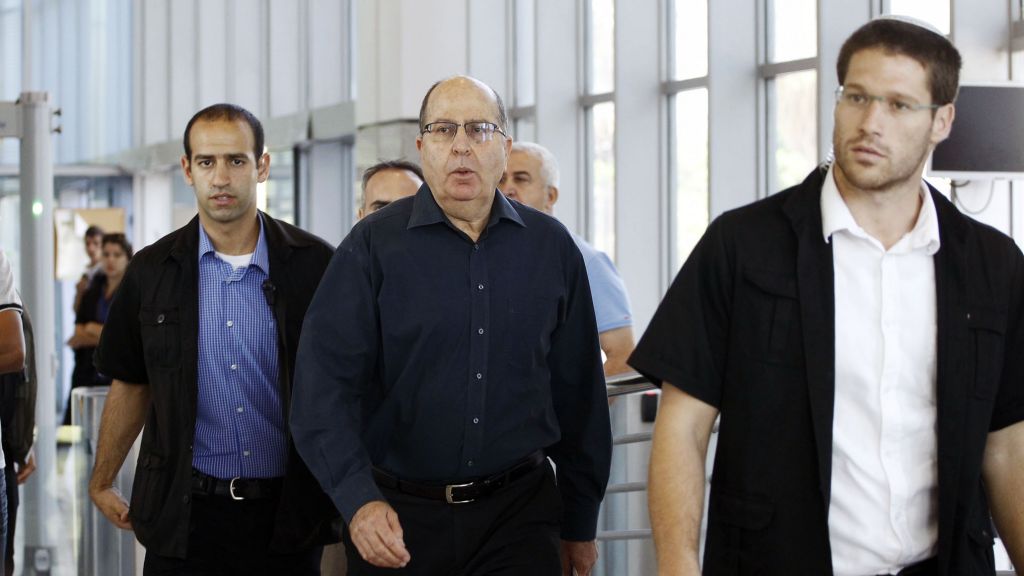
Ya’alon quit his post and the Knesset on Friday amid an ongoing tussle with Prime Minister Benjamin Netanyahu, saying he had lost faith in the Likud leader. Netanyahu had been in talks to replace Ya’alon with Avigdor Liberman as part of a deal to bring the Yisrael Beytenu party into the ruling government.
Last week Ben-Dahan expressed unrestrained delight at Ya’alon’s ouster, saying that Ya’alon had never lived up to the coalition agreement whereby a Jewish Home party member would have control over the Defense Ministry’s Civil Administration, which oversees day-to-day life in the West Bank.
Liberman, meanwhile, had promised Ben-Dahan greater responsibility over West Bank issues, the deputy minister said.
Those close to Ben-Dahan said that while the ban on entering the Kirya was indeed in line with the letter of the law, they claimed it is seldom enforced and that in this case there was no serious imperative.
“Yes, legally, the moment a minister leaves, his deputy is fired. But that doesn’t mean that at the same instant, your permissions for the Kirya get taken away and that on the same day they tell you to ‘buzz off’ from where you are,” the now-former Defense Ministry employee, who asked not to be named, told The Times of Israel.
“What, we have to be out by 4:30 p.m.? Something’s urgent?” the unnamed Defense Ministry employee asked rhetorically.
“Yes, there’s a law, but there’s also the standard procedure.”










The Times of Israel Community.