

EU welcomes revival of peace talks
Strengthened economic ties promised if conflict can be resolved
 Add ToI as a Preferred Source on Google
Adiv Sterman is a breaking news editor at The Times of Israel.
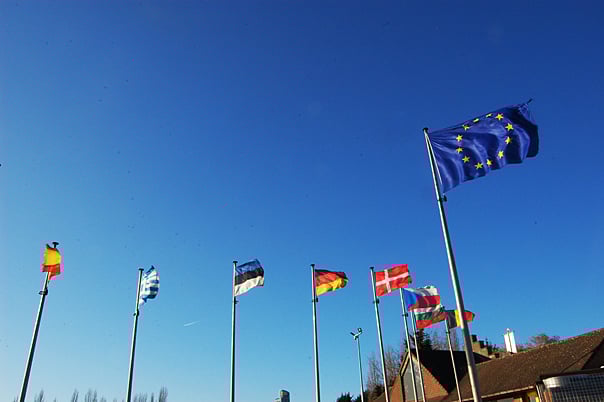
The European Union’s Foreign Affairs Council welcomed US Secretary of State John Kerry’s July 19 announcement that Israel and the Palestinian Authority have agreed to restart peace talks. The EU said it will remain “fully engaged” with both Israel and the Palestinians ahead of the expected negotiations, which are set to resume within the coming weeks.
In a statement, the Foreign Affairs Council pledged to “contribute together with other regional and international partners, including within the Quartet, to a negotiated solution on all final status issues, including Jerusalem, borders, security, water and refugees.”
The council further stated that the EU “will give active and concrete support to help ensure negotiations between the parties are successful.”
The EU statement stressed that should an agreement to end the ongoing conflict be reached, it would be highly inclined to strengthen economic ties with Israel, as well as with the Palestinians.
“The door would open to deepened and enhanced cooperation between the European Union and all the countries of the region, contributing to the prospect of a new era of peace, security and prosperity,” the statement read.
The council went on to assure that the “legitimate aspirations of both parties” will at any rate be fulfilled. The EU expressed hope that “the state of Israel and an independent, democratic, contiguous, sovereign and viable State of Palestine,” will one day live “side by side in peace and security and mutual recognition, both states enjoying normal relations with all the countries of the region.”
Citing “previous conclusions,” apparently referring to the recent EU ban on funding and cooperation with Israeli institutions operating in territories beyond the pre-1967 lines, the council emphasized that it will not spare any measures “to address all issues that put the viability of the two-state solution at risk.”
New directives issued by the EU last Tuesday ruled that any Israeli entity that wishes to apply for a “grant, prize or financial instrument” from the European Union must first submit a declaration stating that it has no direct or indirect links with the West Bank, the Golan Heights, East Jerusalem and the Gaza Strip.
The directives garnered sharp responses across the Israeli political spectrum, with many saying it would push the Palestinians away from the negotiations.
Prime Minister Benjamin Netanyahu harshly criticized the move, saying Israel wouldn’t accept dictates about its borders from any outside forces.
“As prime minister, I won’t allow hundreds of thousands of Israelis living in the West Bank, Golan Heights, and in Jerusalem — our united capital — to be harmed,” he said.
“I expect those who really want peace and regional stability to deal with this matter [of West Bank settlements] after they solve more pressing problems in the region like the Syrian civil war and Iran’s race to get a nuclear weapon.
“We will not accept any foreign dictates about our borders. This matter will only be determined through direct negotiation between the [two] sides” of the Israeli-Palestinian conflict, stated Netanyahu.








The Times of Israel Community.