

Hawkish US columnists slam Obama, and Netanyahu, on Iran
Commentators largely pessimistic on nuclear diplomacy; most American media preoccupied by government shutdown
 Add ToI as a Preferred Source on Google
Raphael Ahren is a former diplomatic correspondent at The Times of Israel.
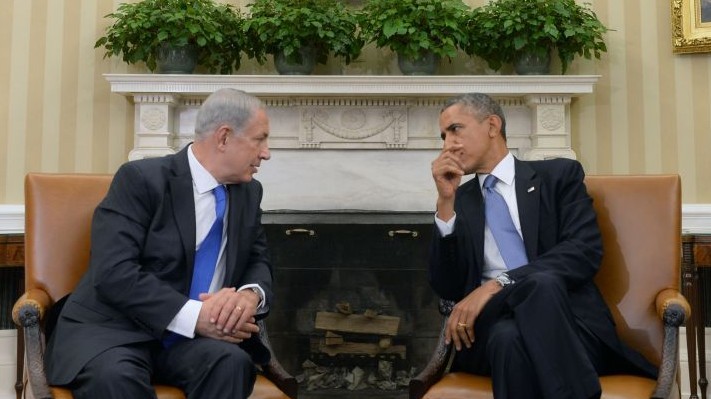
NEW YORK — With the government shutdown dominating news cycles, the US visit of Prime Minister Benjamin Netanyahu, including his meeting Monday with President Barack Obama on Iran, made little impact in the American media.
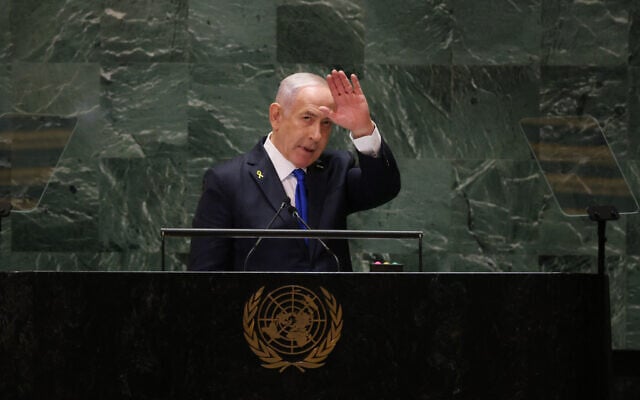
Netanyahu was hoping to change that with his speech to the UN General Assembly Tuesday afternoon and a blitz of American media interviews Wednesday.
Some columnists did weigh in, however, with Obama the recipient of hawkish criticism, and Netanyahu not escaping unscathed either.
In The Wall Street Journal, Bret Stephens urged Israel to realize that Washington would never attack the Iranian nuclear facilities and so Jerusalem had better be prepared to do the dirty work itself — even if that involved “downgrading relations with Washington.” Stephens wrote, “I wish Ehud Olmert were Israel’s prime minister,” since Olmert had demonstrated a readiness to defy the US in striking Syria’s reactor in 2007.
“What Mr. Netanyahu has been doing instead is granting Mr. Obama a degree of leverage and a presumption of authority over the Jewish state to which he is not entitled and has done little to deserve. That needs to stop,” Stephens wrote. “What also needs to stop is the guessing game over Israel’s intentions toward Iran. Mr. Obama will not — repeat, will not — conduct a military strike against Iran. Israelis who think otherwise are fooling themselves. But Israel will soon have to decide whether to act alone. If so, Israelis must proceed without regard to Mr. Obama’s diplomatic timetable. If not, they’ll need to reconsider the concept and structure of Israeli deterrence, including nuclear ambiguity.”
On the conservative website Breitbart.com, Anne Bayefsky called Obama’s latest remarks on Iran “disturbing.” During his meeting with Netanyahu, the president pledged to “take no options off the table, including military options,” to prevent the Islamic Republic from acquiring nuclear weapons, but stressed that he was willing to “test diplomacy.”
“Obama claimed that ‘the Iranians are now prepared to negotiate’ — as if this were some kind of concession,” Bayefsky wrote. “Of course they are prepared to negotiate, they have already been negotiating, and they are more than happy to keep negotiating — right up until the time their bomb is completed.”
The New York Times’s Mark Landler described the public remarks Obama and Netanyahu made Monday as “a disciplined show of unity by two leaders who have clashed in the past over how to deal with the nuclear threat from Iran and may soon face further strains as the United States tests the diplomatic overture made by [Iranian President Hassan] Rouhani.”
Netanyahu “held his fire,” Landler wrote. Obama, on the other hand, attempted to reassure the Israelis over the diplomatic process.
“Mr. Obama’s words on Monday, in fact, sounded like ones he could have delivered six months ago, before Mr. Rouhani was elected and when the prospects for diplomacy looked bleak,” Landler wrote.
Columnist Jeffrey Goldberg was doubtful about the prospects for a breakthrough, citing the complicated nature of the Middle East, and the fact that in recent memory nothing has worked out in the region — so why would a sudden Iranian-Western détente?
“Think about it: Every great, complicated effort meant to bring peace or democracy or tranquility to the Middle East somehow goes off the rails,” he wrote on Bloomberg.com. “Since nothing works in a zero-sum region where politics is defined by fanatics, I don’t feel particularly optimistic about the current effort… It wouldn’t be surprising, by next spring, if we saw the White House acquiesce to congressional demands for harsher sanctions on the Iranian regime, after several rounds of mostly fruitless negotiations.”
Despite Rouhani’s conciliatory rhetoric, he has given the world no reason to trust his intentions to reach a solution that would ease the West’s fears about Iran’s nuclear ambitions, Goldberg noted. “The Iranian leadership wants to maintain its ability to produce nuclear weapons while at the same time convincing the West to lift sanctions. So far, Rouhani’s difference is one of style, not of substance.”







The Times of Israel Community.