

Iraq: PM orders arrest of protesters who attacked lawmakers
Videos show demonstrators who broke into Baghdad’s Green Zone on Saturday slapping parliamentarians and attacking their motorcades
 Add ToI as a Preferred Source on Google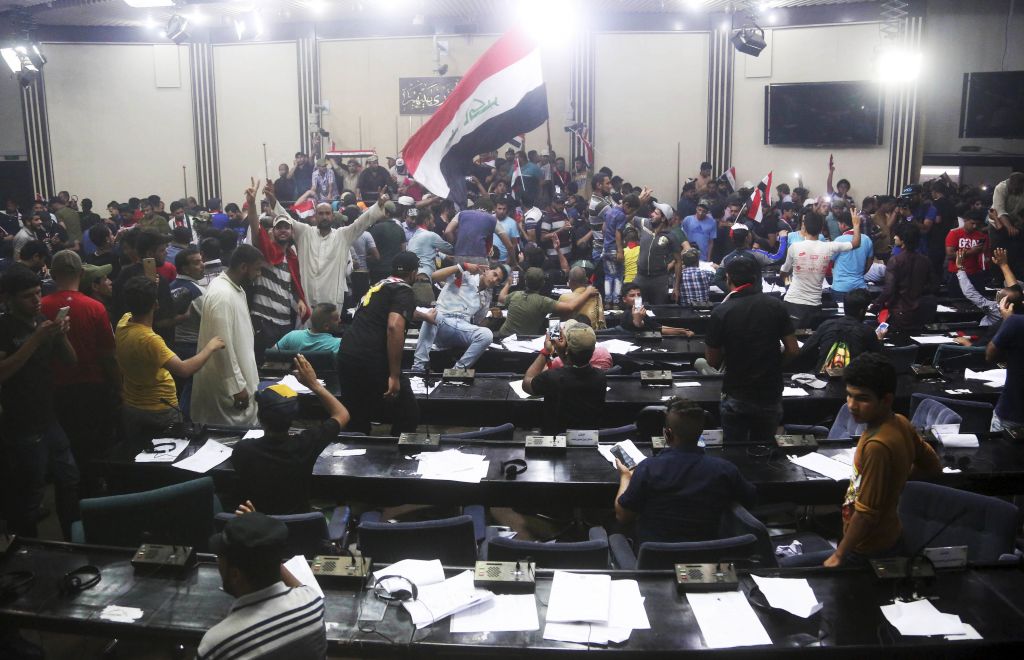
BAGHDAD — Iraqi Prime Minister Haider al-Abadi on Sunday ordered authorities to arrest and prosecute protesters who attacked security forces, lawmakers and damaged state property after breaking into Baghdad’s heavily fortified Green Zone to protest delays in reform plans.
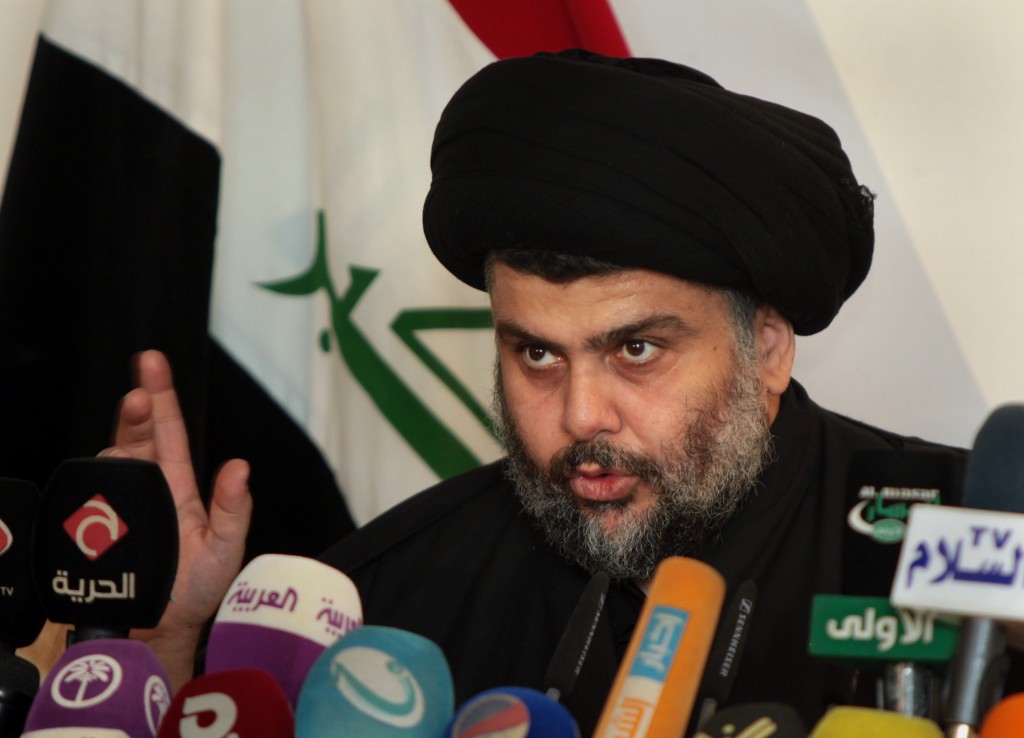
Al-Abadi’s statement came a day after hundreds of angry anti-government followers of influential Shiite cleric Muqtada al-Sadr tore down blast walls and poured into the parliament building, exacerbating a long-simmering political crisis. Late Saturday, al-Abadi toured inside the parliament building, walking past damaged furniture.
Videos on social media showed a group of young men surrounding and slapping two Iraqi lawmakers as they attempted to flee the crowd, while other protesters mobbed lawmakers’ motorcades. Jubilant protesters were also seen jumping and dancing on the parliament’s meeting hall tables and chairs and waving Iraqi flags.
The protesters eventually left the parliament Saturday night and rallied at a nearby square.
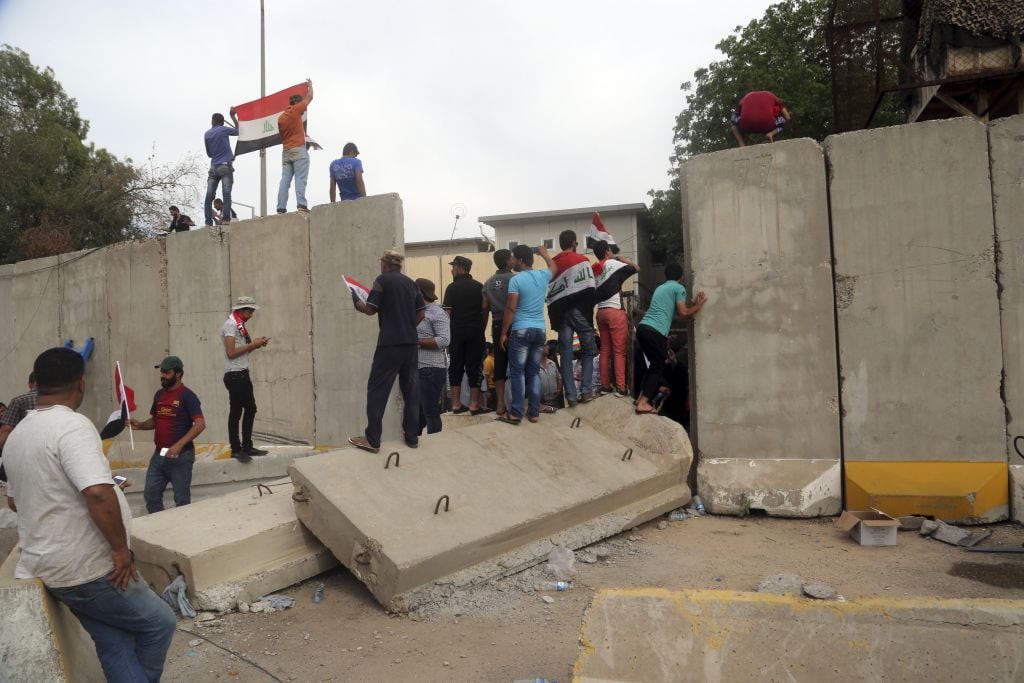
Al-Sadr and his supporters want to reform the political system put in place following the U.S.-led invasion in 2003, in which entrenched political blocs representing the country’s Shiites, Sunnis and Kurds rely on patronage, resulting in widespread corruption and poor public services. The major blocs have until now stymied al-Abadi’s reform efforts.
On Sunday, protesters vowed to continue their sit-in inside the Green Zone until their demands are met.
“We are fed up, we are living a humiliated life,” Rasool Hassan, a 37-year old father of three told The Associated Press from inside the Green Zone where thousands gathered in Saddam-era Grand Celebration Square. “We’ll leave here only when the corrupt government is replaced with another of independent technocrats that serves the people not the political parties,” Hassan added.
“We need new faces not the old ones,” said female protester Shatha Jumaa, a 58-year old surgeon. Jumaa, who identified herself as a secularist, said she wanted the current government dissolved and replaced by a small interim administration whose job would be to amend the constitution and to prepare for an early national election.
Iraq has been mired in a political crisis for months, hindering the government’s ability to combat the Islamic State — which still controls much of the country’s north and west — or address a financial crisis largely prompted by the plunge in global oil prices.
Iraqi security forces initially responded by tightening security across the capital, sealing off checkpoints leading to the Green Zone and halting traffic on main roads heading into the city, according to the Baghdad Operations Command.
Alarmed by the latest development, the UN mission to Iraq said it was “gravely concerned.” It issued a statement condemning violence against elected officials and urging “calm, restraint and respect for Iraq’s constitutional institutions at this crucial juncture.”





The Times of Israel Community.