

Israel: Jordan’s criticism on Temple Mount visits is misplaced
Minister says Jewish state ‘acting responsibly’ and Hashemite Kingdom ‘knows this,’ after Amman slams ‘violations’ at holy site
 Add ToI as a Preferred Source on Google
Raoul Wootliff is a former Times of Israel political correspondent and Daily Briefing podcast producer.

Israel on Monday slammed comments by a Jordanian official who criticized Israeli policing on the Temple Mount and threatened “consequences” over alleged “violations.”
“There is no place for such a statement. Israel is acting responsibly and Jordan knows this,” an Israeli official said.
A Jordanian government spokesman said earlier Monday that Israel’s “violations against worshipers” on the holy site “are a violation of international laws and conventions,” and could have “dangerous consequences.”
The comments came after several hundred Jews and tourists visited the contested holy site on Sunday, the first intermediate day of the Passover holiday.
Speaking Monday to Israel Radio, Tourism Minister Yariv Levin said that Israel’s policy on the Temple Mount is “very clear and very simple.”

“We take great care to preserve the right of everyone to ascend to the Temple Mount. We do it in an orderly manner, in accordance with all the agreements we have have always followed,” he said.
Jordan’s Muhammad al-Momani did not detail the violations, but he was likely referring to holiday measures enacted over the last several days, including expanded visiting hours for Jews and denial of entry to Palestinian worshipers during certain hours, as well as a beefed-up police presence.
Under the terms of a status quo in place for decades, Jews and other non-Muslims can visit the Temple Mount, but not worship there. The Hashemite Kingdom acts as custodian of the flashpoint site, which is the holiest site in Judaism and third holiest to Muslims, who call it Haram al-Sharif (Noble Sanctuary).
Momani “demanded Israeli occupation authorities to immediately stop such moves, deny entry to settlers and Israeli forces into the yards of the holy shrine and allow Palestinian worshipers to enter the mosque,” according to the Petra news agency.
Aside from Muslim worshipers, a total of 1,043 people visited the site Sunday, of whom 168 were Israeli Jews and the rest foreign tourists, police said.
Of that number, 13 Jewish visitors — of whom three were minors — were removed from the compound for “disturbing the peace,” according to police. One Palestinian was also removed.
Police did not detail why they had removed the 13 Jews, but Jewish visitors are often ejected for uttering prayers at the site.
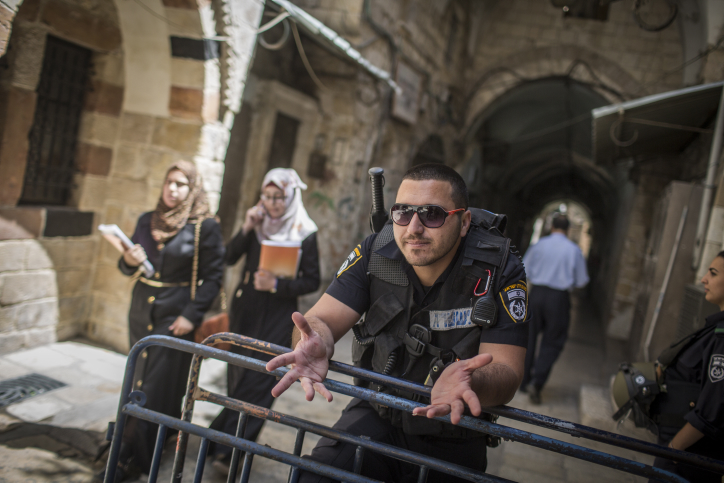
The Temple Mount, site of the two biblical Jewish temples, has been at the center of months-long tensions between Israel and the Palestinians, who claim a growing Jewish presence at the site, which is also home to the Al-Aqsa Mosque. Israeli security officials are wary that extra attention at the Temple Mount compound over the holiday could spark fresh unrest, after six months of deadly fighting seemed to die down in recent weeks.
Knesset members and ministers have been banned from entering the compound over Passover “for security reasons.”
Jordan has in the past threatened to take action against Jerusalem over tensions on the Mount, including recalling diplomatic officials and downgrading ties.
A US-brokered plan to place cameras on the Mount in a bid to calm tensions appeared to fall apart last week after Jordan said that Palestinians had protested the placement of recording devices.
Israel said it still wants the cameras.
During Passover, one of the three Jewish pilgrimage holidays, tens of thousands of Jews flock to the Old City, including many who visit the Temple Mount.
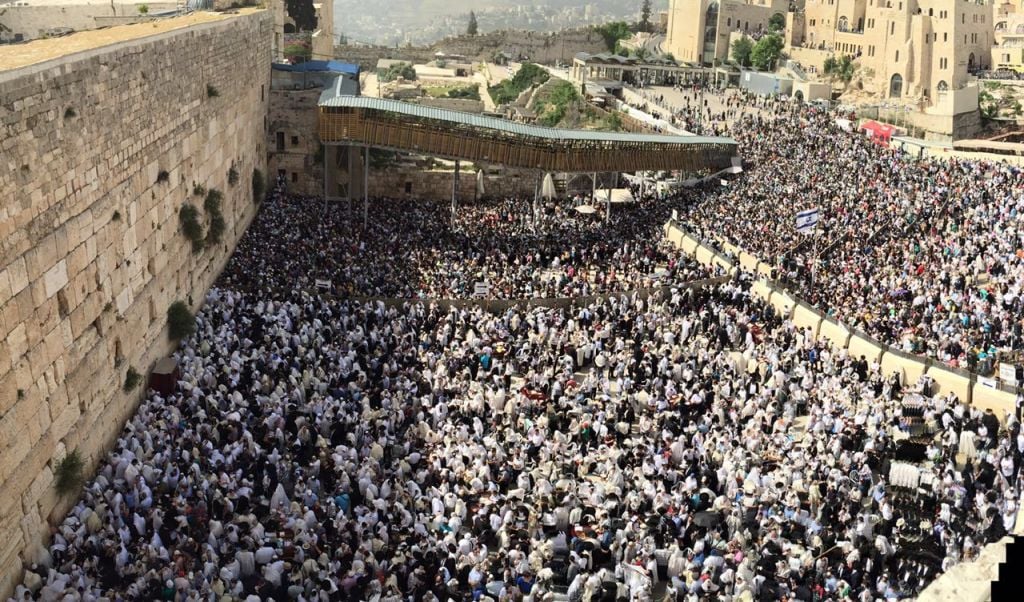
Amid concerns of a terror attack on the worshipers, and fearing general unrest, police bolstered security in Jerusalem for the festival this week.
Prime Minister Benjamin Netanyahu announced last week Israel would deploy reinforcements around the Temple Mount during Passover to prevent “riots.
“As Passover approaches, all sorts of extremists will spread lies about our policy concerning the Temple Mount,” he said.
AP and AFP contributed to this report.





The Times of Israel Community.