

Kerry heads to Switzerland as nuke talks deadline nears
Iran atomic agency chief says progress has been made in the negotiations, though sticking points remain
 Add ToI as a Preferred Source on Google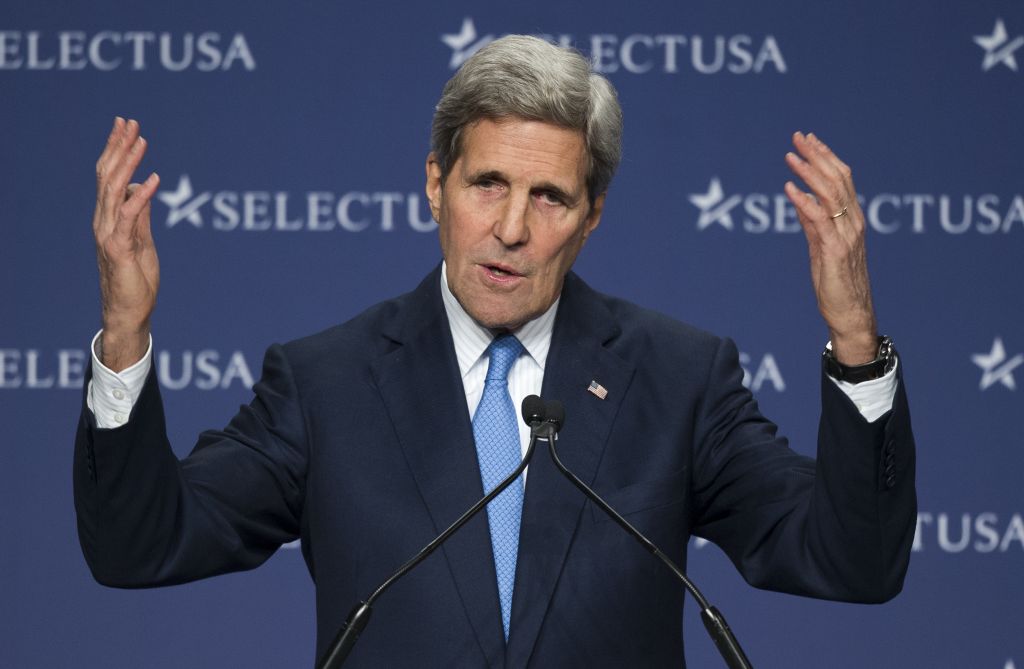
US Secretary of State John Kerry is headed back to negotiations with Iran with an end-of-March deadline days away, hoping to seal a framework deal to roll back its nuclear program in exchange for sanctions relief.
Kerry left Wednesday for Switzerland for several days of make-or-break talks with Iranian Foreign Minister Mohammad Javad Zarif. The top diplomats from Britain, China, France, Germany and Russia would join if the US and Iran are close to an agreement.
The pressure is high. The seven nations have set themselves a March 31 deadline for the outline of a final accord they hope to conclude by the end of June. Both President Barack Obama and Iran’s Ayatollah Ali Khamenei have spoken against what would be a third extension of the talks.
And opponents, among them wary American allies in the Middle East and hardliners in Iran and in Congress, stand ready to complicate the process if negotiators cannot reach a breakthrough in the next six days. American lawmakers have threatened new sanctions on Iran as well as the establishment of a process which would allow them to vote down any final accord.
The White House said Wednesday it was seeking concrete commitments from Iran in order to reach a nuclear deal that can be shown to the US Congress and public
“We certainly would want, and expect, that if a deal is completed, it will include tangible, specific commitments that have been made by the Iranians,” White House press secretary Josh Earnest said.
His comments followed a New York Times report that Iran is resisting a formal “framework” agreement and preferred a more general statement of “understanding” followed by a final accord in June.
Earnest said the Iranians were making “certain commitments” in the negotiations on its nuclear program and said there would a “process” for hammering out the details of those commitment.
“But the president was clear that the kinds of commitments that we seek from the Iranians are the kinds of things that we would be able to show to members of Congress and show publicly, to share with our allies, including Israel, about what kinds of commitments Iran has made,” he said.
Iran’s atomic energy chief said progress has been made in the nuclear negotiations, the official IRNA news agency reported Wednesday.
Ali-Akbar Salehi, head of Iran’s Atomic Energy Organization, was also heading to Lausanne, Switzerland as part of a negotiating team led by Zarif. IRNA quoted Salehi as saying that Tehran is seeking a win-win agreement, while Zarif has stated that a full lifting of all sanctions is a red-line condition for any deal.
“We have had good negotiations and now have reached a stage that needs a serious decision and we hope that the other side can make the proper decision,” Deputy Foreign Minister Majid Takht-e Ravanchi said on Wednesday. “We hope to be able to obtain results. Of course this depends on the other side which should accept the realities.”
The United States and its partners are trying to get Iran to cut the number of centrifuges it uses to enrich uranium, material that can be used in warheads, and agree to other restrictions on what the Islamic Republic insists is a peaceful nuclear program.
Speaking Wednesday morning to US ambassadors, Kerry assailed opponents of a deal.
“What happens if, as our critics propose, we just walk away from a plan that the rest of the world were to deem to be reasonable?” Kerry asked. “Well, the talks would collapse. Iran would have the ability to go right back spinning its centrifuges and enriching to the degree they want… And the sanctions will not hold.”
Kerry said the whole point of years of US sanctions was to get Iran to agree to limits on its nuclear program. He said it was the Obama administration’s job to “provide an agreement that is as good as we said it will be; that will get the job done; that shuts off the four pathways to a nuclear weapon.”
The alternative to diplomacy could mean Iran is left to “just expand its program full-speed ahead,” Kerry said. “You know we can’t accept that. So where does that take you? Anybody standing up in opposition to this has an obligation to stand up and put a viable, realistic alternative on the table. And I have yet to see anybody do that.”





The Times of Israel Community.