

New book claims Marco Polo may have ‘discovered’ the New World
Jewish scholar alleges the Venetian adventurer may have reached Americas two centuries before Columbus
 Add ToI as a Preferred Source on Google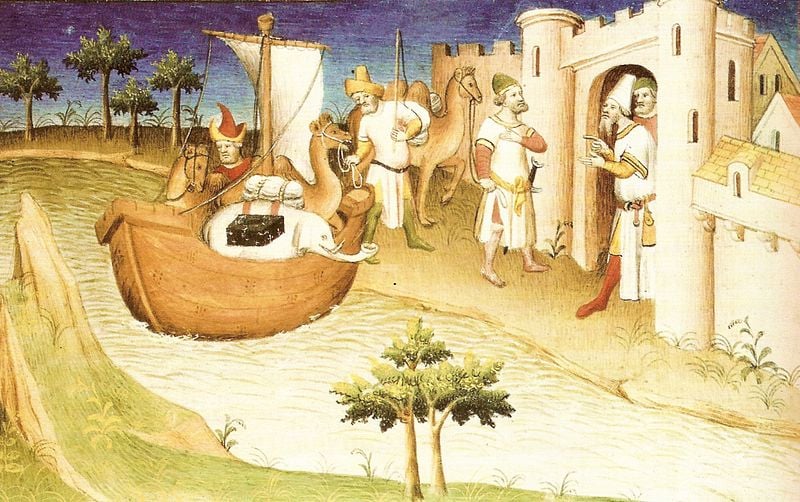
A new book suggests that 13th-century Venetian adventurer Marco Polo may have been the first European explorer to discover the New World.
“The Mysteries of Marco Polo’s Maps,” published by Jewish-American historian and cartographer Benjamin B. Olshin, contends that there is a possibility that Polo reached the west coast of North America in an undated expedition after his famed 13th-century odyssey to East Asia.
If true, the famed traveler’s expedition would have preceded Christopher Columbus’s first New World arrival by over two centuries. It would still postdate the arrival of Norse explorers on the shores of North America by several centuries, and the arrival of Native Americans by millennia.
Olshin’s claim is based on a series of parchment maps and writings that were compiled by Polo’s daughter and rediscovered in the 1930s in a trunk belonging to an Italian-American immigrant from Venice descended from the adventurer. The documents indicate that Polo may have recorded the shape of the western coast of Alaska and Canada as well as the Bering Strait — the body of water that separates the Russia from North America.
[mappress mapid=”4894″]
“It would mean that an Italian got knowledge of the west coast of North America or he heard about it from Arabs or Chinese,” Olshin said in an interview with Smithsonian Magazine. “There’s nothing else that matches that, if that’s true.”
One of Polo’s daughters, Bellela, recorded that her father had once encountered a group of lance-toting women wearing ermine pelts and people dressed in sealskin from a peninsula “twice as far as China” who survived on fish and built their houses “under the earth.”
Furthermore, Olshin’s research has uncovered that the documents had made allusions to a landmass called “Fusang,” a fifth-century Chinese name for a “land across the ocean.” Some experts believe that Fusang is an early reference to modern-day America.
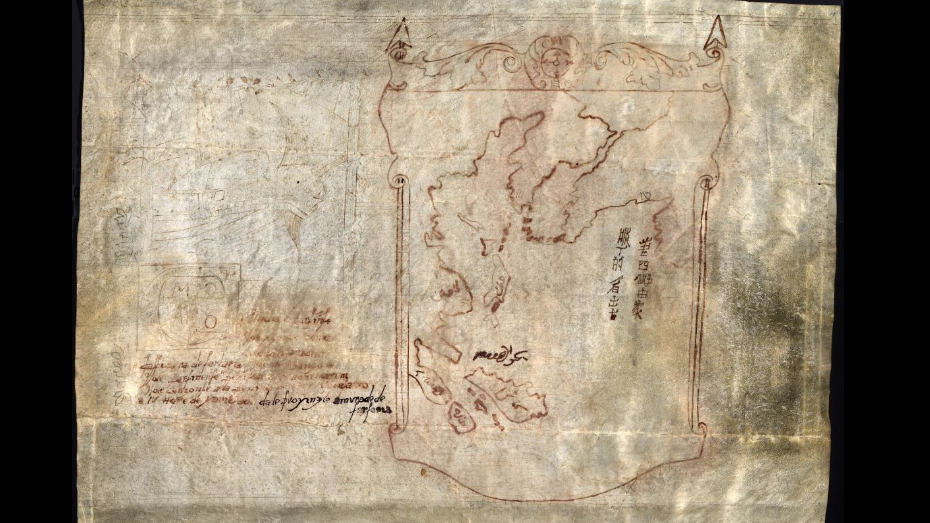
Olshin, a professor at the University of the Arts in Philadelphia, spent more than 13 years researching and writing the book, which is due to be released in November.
The professor, however, has said that the validity of the original documents may be questionable, as radiocarbon dating indicated one of the maps was made only in the 15th or 16th century. That would suggest that some of the documents on which he based his research are, at best, copies. Polo also made no mention of the possible expedition in the famous book published about his journeys, “The Travels of Marco Polo.”
While scholars may never know for sure if Marco Polo reached the New World, the Venetian merchant admitted on his deathbed that he “did not tell half of what I saw.”










The Times of Israel Community.