

Palestinians ‘disappointed’ after Kerry fails to produce breakthrough
Ramallah expected secretary of state to raise the possibility of renewing peace talks on 1967 lines, but instead was faced with toughened Israeli positions


 Add ToI as a Preferred Source on Google
Palestinian officials on Wednesday expressed deep disappointment with the results of US Secretary John Kerry’s visit to the region, saying little was done to push forward efforts to resume peace negotiations for a two-state solution during his meetings in Israel.
According to the officials, the Palestinians were expecting Kerry to bring news of a series of Israeli gestures that would ultimately pave the way for the resumption of diplomatic talks between the sides.
Kerry arrived back in the US Wednesday after holding meetings with Prime Minister Benjamin Netanyahu and Palestinian Authority President Mahmoud Abbas a day earlier; officials said there were no breakthroughs in his bid to calm raging tensions.
Palestinian officials said that according to understandings between Abbas and Kerry, the secretary was expected to raise the possibility with Netanyahu of renewing peace negotiations on the basis of a two-state solution along the pre-1967 lines.
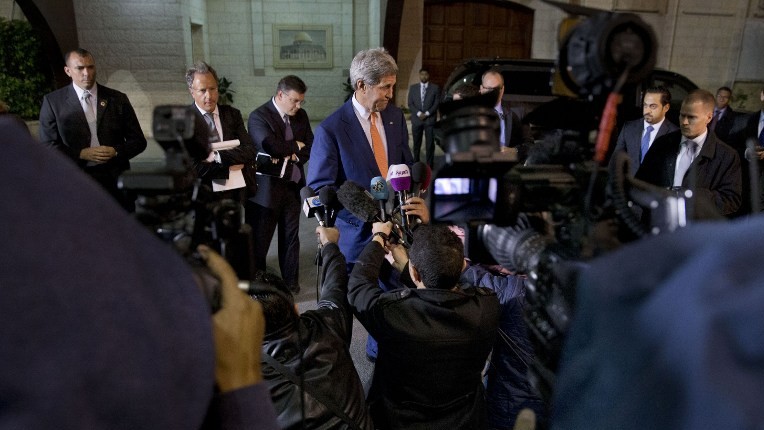
But Netanyahu seemed to take a hard-line stance during his meeting with Kerry in Jerusalem, saying Israel would not make any gestures to the Palestinians so long as the wave of violent terror attacks that began in September continued, a senior Israeli official said.
The prime minister also reportedly called for the US to recognize building in large settlement blocs and said there would not be a construction freeze. Netanyahu blamed the terror upsurge on “religious incitement” supported by the PA and spread on social media.
Israel’s position infuriates the Palestinians, officials in Ramallah said, since, they claimed, the Israeli government is aware that the onus of responsibility for the wave of terror attacks does not lie with the PA, especially the stabbing attacks carried out by “lone wolf” Palestinian teenagers.
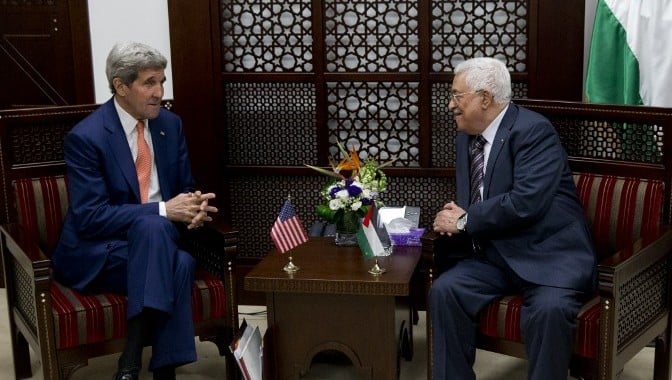
Before Kerry’s visit, a State Department official said renewing peace talks was not on the agenda for the trip, which was aimed at calming spiraling tensions.
Beyond that, the Palestinians are angry at Netanyahu’s demand from Kerry for American recognition of settlement blocs along the lines of a letter sent by former US president George W. Bush to former Israeli prime minister Ariel Sharon in 2004.
The letter from Bush mentioned agreed-upon land swaps and an understanding that Israel will not cede heavily-built land beyond the Green Line, including East Jerusalem neighborhoods and large settlements, in any future peace deal.
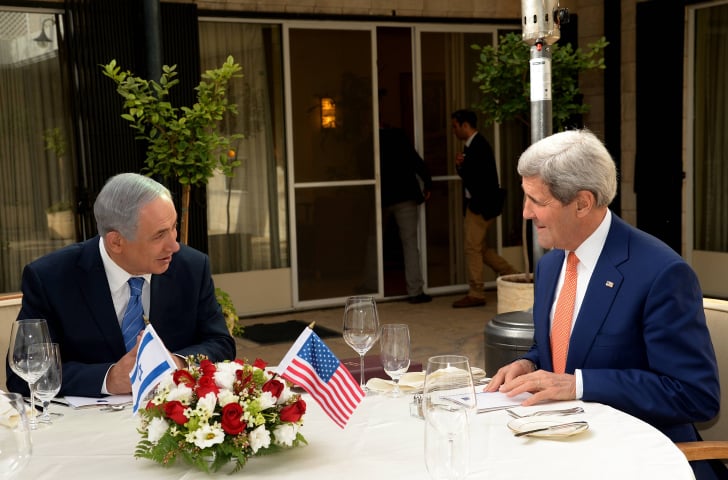
Netanyahu reportedly asked Kerry to revive the Bush letter in return for an Israeli agreement to allow the Palestinians to build new cities in the West Bank and to increase construction in Area C, which is under Israeli security control.
On Tuesday night, the State Department said the administration is not planning to recognize the guidelines set by the Bush letter.
“The US Government has never defended or supported Israeli settlements and activity associated with them and by extension does not pursue policies that would legitimize them,” spokesman Mark Toner said.
On Wednesday, Kerry told reporters upon returning to the US that the Israeli-Palestinian conflict is at a critical point and may “spin out of control.”
But the US is apparently not planning on forcing Israel and the PA into talks, with President Barack Obama soon entering the last year of his administration and dealing with the Islamic State threat, fighting in Syria and tensions with Russia. Obama has recently acknowledged that he sees no realistic prospect of brokering a permanent accord during what remains of his term.
Palestinian sources told The Times of Israel that Abbas, facing waning popularity on the Palestinian street, is now looking at several options, none of which would be positive for either side, or be likely to revive his standing.
Abbas is not interested in dismantling the PA or in stopping security coordination with Israel but may convene the Palestinian National Council of the Palestine Liberation Organization and announce there that the organization rescinds its recognition of Israel.
Another option is going to the UN’s Security Council with a demand to recognize Palestine or turning to the International Criminal Court at The Hague.








The Times of Israel Community.