

Religious restrictions on rise since Arab Spring, says study
Hostilities and communal violence have increased, says Pew survey, despite hope that uprisings would usher in more freedoms
 Add ToI as a Preferred Source on Google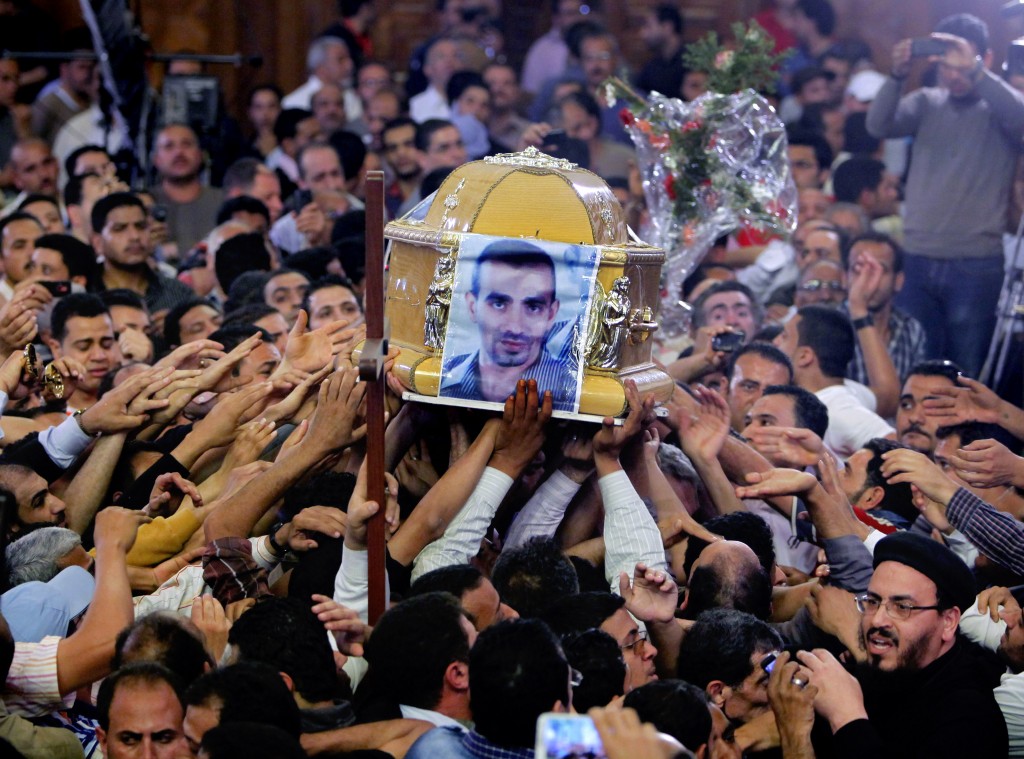
While the onset of the Arab Spring at the end of 2010 and the beginning of 2011 brought hope that the uprisings would lead to more freedoms, they in fact ushered in an era of increased restrictions on religion, a new study has found.
The Pew Research Center released a survey showing that the levels of government restrictions on religious freedoms in the Middle East — which were already high — continued to increase into 2011.
“Most of the restrictions present in the region before the Arab Spring were still in place after the political uprisings,” read the report.
Restrictions like “Government limits on religious conversions,” “National government violence toward religious minority groups,” and “National government bans certain religious groups” were on the rise in 80% of Middle Eastern and North African countries, according to the study.
“The share of countries that have government policies that clearly favor one religion over another was nearly eight times greater in the Middle East and North Africa than in the rest of the world. Moreover, there was a five-fold difference in the share of countries with constitutions that do not specifically protect religious freedom (95% of the countries in the Middle East-North Africa region fell in this category in 2011, compared with 19% of countries elsewhere).”
Restrictions on free speech and religious choice were also prevalent in the region in 2011, with 95% of regional countries limiting conversion and religious broadcasting and 80% setting limits for public preaching (up from 75%).
Levels of social hostilities toward minorities also saw a marked increase, while the number of countries in the region experiencing sectarian or communal violence doubled from five to 10 between mid-2010 and the end of 2011.
Types of hostilities surveyed included “violence or the threat of violence to enforce religious norms”; “hostility over proselytizing”; “mob violence related to religion”; and “attempts by groups in society to dominate public life with their perspective on religion.”
The study cited the situations in Bahrain, Syria, Libya and Egypt as examples of violence or hostility toward minority groups.
“The share of countries in the Middle East and North Africa that experienced sectarian violence was more than four times greater than the share of countries elsewhere,” concluded the study.










The Times of Israel Community.