

Rivlin: Ariel settlement ‘obviously’ to remain under Israeli control
President’s remarks come as Netanyahu, Liberman partially endorse Arab Peace Initiative
 Add ToI as a Preferred Source on Google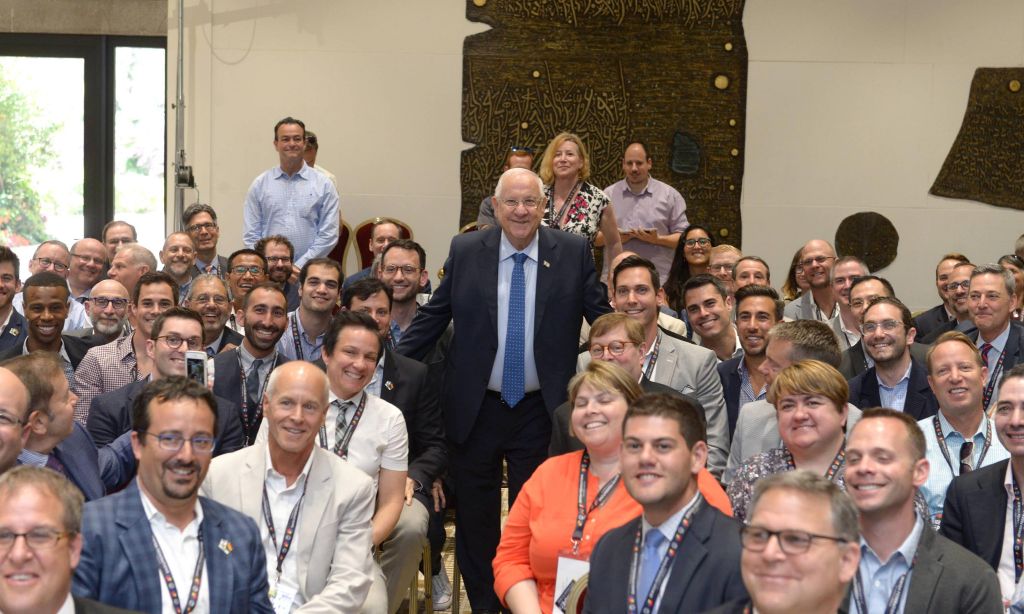
President Reuven Rivlin on Tuesday vowed the West Bank settlement of Ariel would forever remain under Israeli control, despite its location deep inside the West Bank.
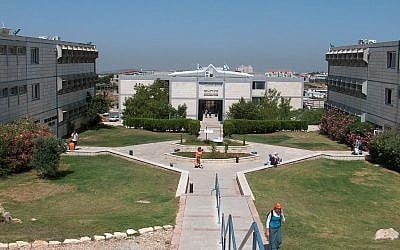
The president met with representatives of Ariel University in his office in Jerusalem, hailing a plan to build a joint Israeli-Palestinian medical center in the Jewish West Bank city east of Tel Aviv.
“It’s obvious to everyone that Ariel would be an inseparable part of Israel in any future accord,” the president said at the meeting.
With a population of some 20,000, Ariel is the fourth-largest settlement (after Modiin Illit, Beitar Illit and Ma’aleh Adumim) and is situated in the heart of the northern West Bank.
Opposition leader Isaac Herzog in February signaled he would support retaining Ariel under a future peace agreement. The West Bank security fence, seen by some as a de facto future border, includes the settlement on its Israel side.
[mappress mapid=”5707″]
Rivlin, a former proponent of Greater Israel, has signaled a more dovish turn since assuming the presidency in 2013.
The president spoke a day after Prime Minister Benjamin Netanyahu on Monday partially endorsed the Arab Peace Initiative, offering to negotiate with the Arab world the parameters of the plan, which promises Israel full diplomatic ties with 57 Arab and Muslim states after cementing a peace accord with the Palestinians.
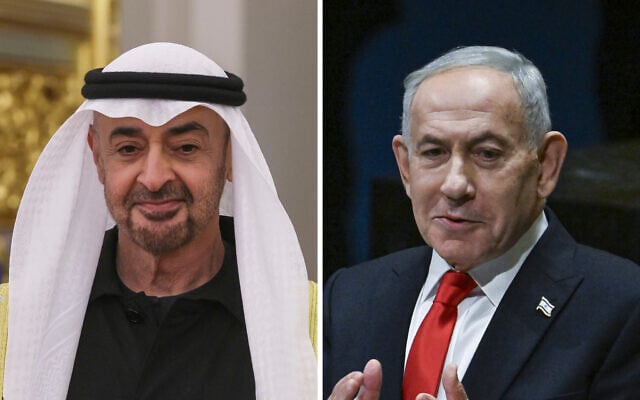
“I take this opportunity to make clear that I remain committed to making peace with the Palestinians and with all our neighbors. The Arab Peace Initiative contains positive elements that could help revive constructive negotiations with the Palestinians,” Netanyahu declared in the Knesset.
“We are willing to negotiate with the Arab states revisions to that initiative so that it reflects the dramatic changes in our region since 2002″ — when the proposal was first floated — “but maintains the agreed goal of two states for two peoples,” Netanyahu said, making his statement first in Hebrew and then repeating it in English.
Originally, the initiative demanded a “full Israeli withdrawal from all the Arab territories occupied since June 1967,” the establishment of a Palestinian state with East Jerusalem as its capital, and a “just” and “agreed upon” solution to the Palestinian refugee question. Over the years, the initiative has been partially embraced by some in the Israeli left, but the required withdrawal from the Golan Heights and the open-ended nature of the refugee issue made the initiative a nonstarter for many Israelis.
In 2013, the Arab League showed some flexibility in allowing that, to reach a final settlement of the Israeli-Palestinian conflict, “comparable,” mutually agreed and “minor” land swaps could be possible.
Rivlin on Tuesday also met with a delegation of US Jewish LGBT community leaders at his Jerusalem residence.
“Twenty-three years ago, I had the honor to welcome the first delegation of the Israeli gay community to the Knesset. One year ago, after being elected as president I had the honor to welcome the first delegation of the Israeli gay community to the President’s Residence. And today I have the honor to welcome all of you from across the USA,” he said.
Raphael Ahren contributed to this report.



The Times of Israel Community.