

Russia ready for more engagement with US, despite sanctions
Lavrov meets with Tillerson in Philippines for first time since Washington imposed additional penalties
 Add ToI as a Preferred Source on Google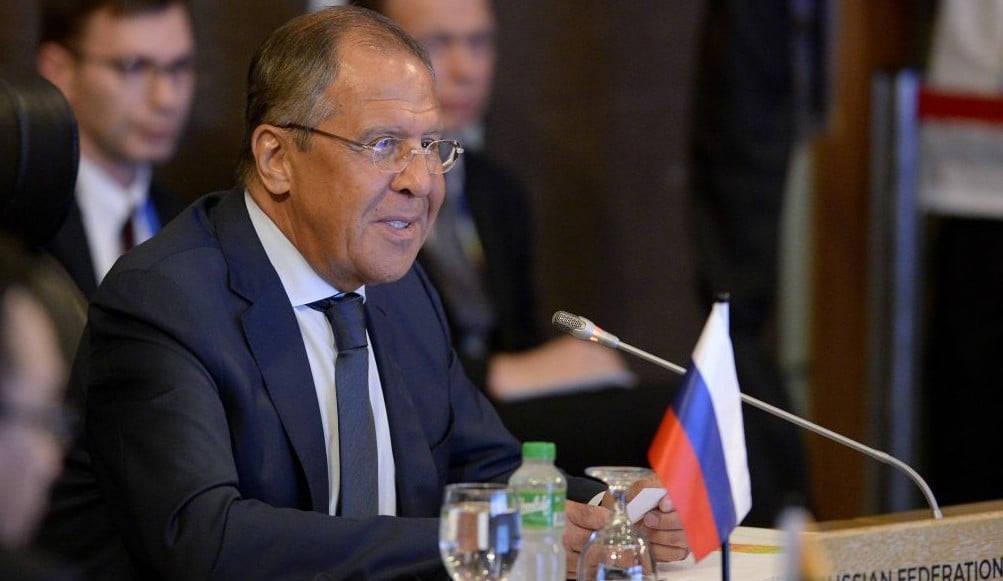
MANILA, Philippines (AP) — Russia’s top diplomat said Sunday his country was ready for more engagement with the United States on North Korea, Syria, Ukraine and other pressing matters, even as Moscow braced for new sanctions from the Trump administration.
Foreign Minister Sergey Lavrov, after meeting with US Secretary of State Rex Tillerson for the first time since the US imposed the additional penalties, said Russian and the US had agreed to resume a suspended high-level diplomatic channel and Washington would send its Ukraine envoy to Moscow for negotiations.
Lavrov’s upbeat assessment came amid what the US has called a diplomatic low point unseen since the end of the Cold War.
It wasn’t immediately clear whether the US shared Lavrov’s rosy view of the meeting. The US offered no comment about what the diplomats discussed, and Tillerson didn’t respond to shouted questions from journalists allowed in briefly for the start of the hour-plus meeting in the Philippines.
“We felt that our American counterparts need to keep the dialogue open,” Lavrov said. “There’s no alternative to that.”
Lavrov said Tillerson had asked him for details about Moscow’s recent move to expel American diplomats and shutter a US recreational facility on the outskirts of Moscow. Lavrov said he explained to Tillerson how Russia will carry out its response, but did not publicly disclose details.
Last month, the Kremlin said the US must cut its embassy and consulate staff in Russia by 755 people, a move that echoed former President Barack Obama’s action last year to kick out Russian diplomats in punishment for Moscow’s meddling in the 2016 American election. The Russian announcement has caused confusion because the US is believed to have far fewer than 755 American employees in the country.
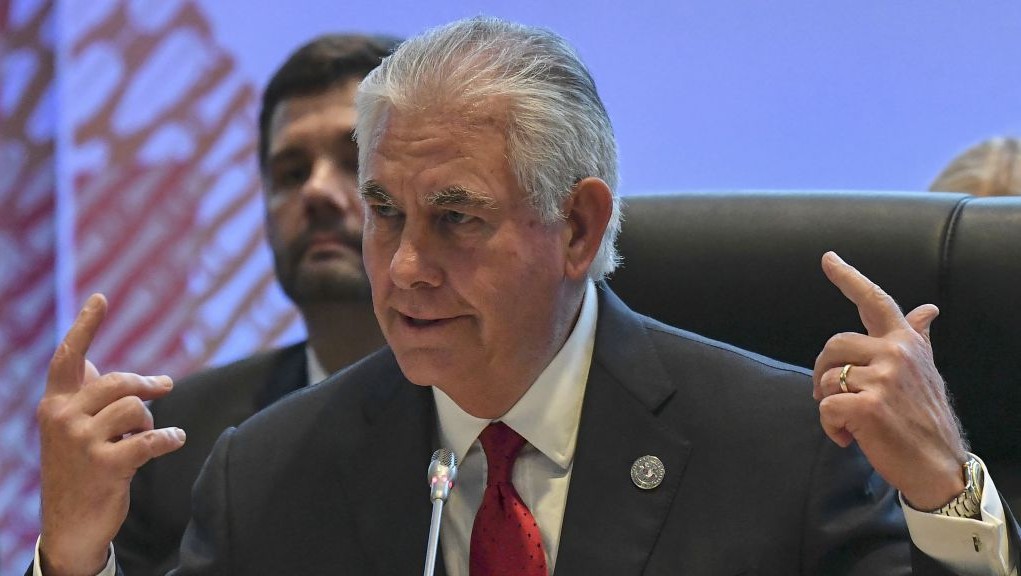
Word that US special representative Kurt Volker plans to visit the Russian capital was the latest sign that Washington is giving fresh attention to resolving the Ukraine conflict. The US cut military ties to Russia over Moscow’s annexation of Crimea and accuses the Kremlin of fomenting unrest in eastern Ukraine by arming, supporting and even directing pro-Russian separatists there who are fighting the Kiev government.
In recent days, the Trump administration has been considering providing lethal weaponry to Ukraine to help defend itself against Russian aggression.
Lavrov didn’t say when Volker, a former NATO ambassador, would go to Moscow.
In their meeting, Lavrov said, Tillerson agreed to continue a dialogue between US Undersecretary of State Thomas Shannon and Russian Deputy Foreign Minister Sergey Ryabkov. That channel was created to address what the US calls “irritants” preventing the two countries from pursuing better ties. Russia had suspended the talks after the US tightened existing sanctions on Russia related to its actions in Ukraine.
Lavrov and Tillerson met on the sidelines of an Asian regional gathering in the Philippines. It was their first face-to-face conversation since Congress passed new legislation in July that makes it harder for Trump to ever ease penalties on Russia. Trump signed the bill last week, but called it “seriously flawed.”
The White House said Trump’s opposition stemmed from the bill’s failure to grant the president sufficient flexibility on when to lift sanctions. Trump’s critics saw his objections as one more sign that he is too eager to pursue closer ties to Russia, or to protect the former Cold War foe from penalties designed to punish Moscow for its actions in Ukraine, election meddling and other troublesome behavior.
A US Justice Department investigation is moving ahead into Russia’s election interference and potential Trump campaign collusion. Trump denies any collusion and has repeatedly questioned US intelligence about Moscow’s involvement.
At the same time, Trump’s administration has argued there’s good reason for the US to seek a more productive relationship. Tillerson has cited modest signs of progress in Syria, where the US and Russia recently brokered a cease-fire in the war-torn country’s southwest, as a sign there’s fertile ground for cooperation.
The Syrian cease-fire reflected a return of US-Russia cooperation to lower violence there. The US had looked warily at a series of safe zones in Syria that Russia had negotiated along with Turkey and Iran — but not the US.
Lavrov cited upcoming talks involving Russia, Iran and Turkey about how to ensure the truce in the last safe zone to be established, around the north-western city of Idlib. He predicted “it will be difficult” to hammer out the details but that compromise can be reached if all parties — including the US — use their influence in Syria to persuade armed groups there to comply.






The Times of Israel Community.