

Trump: North Korea ‘disrespected’ China with missile test
US official says Pyongyang likely test-fired medium-range KN-17 ballistic missile which broke apart moments after it was launched
 Add ToI as a Preferred Source on Google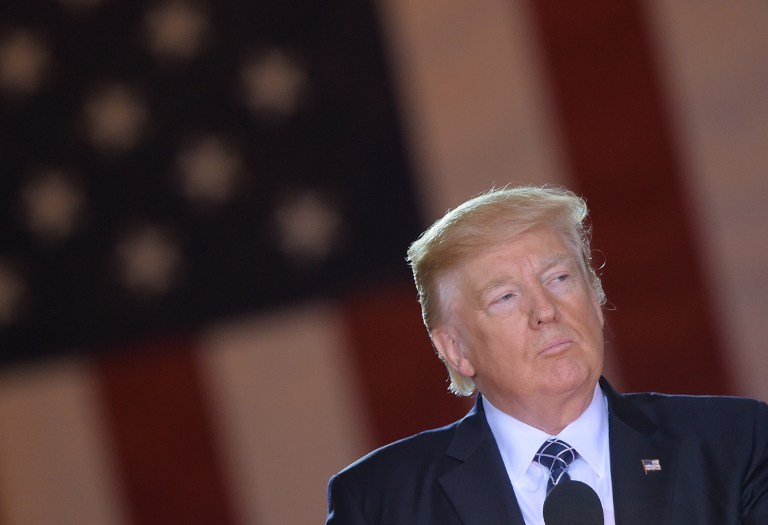
WASHINGTON — US President Donald Trump says North Korea “disrespected” China with its most recent ballistic missile test.
South Korea’s military said in a statement Friday afternoon that North Korea had fired the missile from an area near the capital of Pyongyang, but provided no other details.
US and South Korean officials say the launch apparently failed.
Trump did not answer reporters’ questions about the missile launch upon returning to the White House from a daytrip to Atlanta.
But he commented on Twitter, saying, “North Korea disrespected the wishes of China & its highly respected President when it launched, though unsuccessfully, a missile today. Bad!”
North Korean ballistic missile tests are banned by the United Nations because they’re seen as part of the North’s push for a nuclear-tipped missile that can strike the US mainland. The latest test came as US officials pivoted from a hard line to diplomacy at the UN in an effort to address what may be Washington’s most pressing foreign policy challenge.
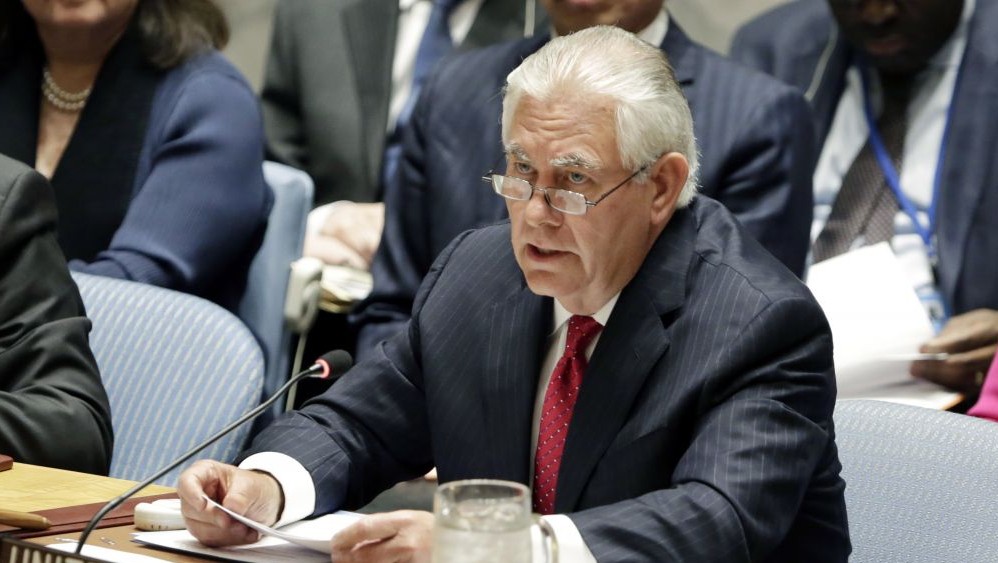
The timing of the North’s test was striking: Only hours earlier the UN Security Council held a ministerial meeting on Pyongyang’s escalating weapons program. North Korean officials boycotted the meeting, which was chaired by US Secretary of State Rex Tillerson.
South Korea’s Joint Chiefs of Staff said in a statement that the North fired the unidentified missile from around Pukchang, which is near the capital Pyongyang, but provided no other details.
A US official, speaking on condition of anonymity to discuss sensitive matters, said the missile was likely a medium-range KN-17 ballistic missile. It broke up a couple minutes after the launch, and the pieces fell into the Sea of Japan.
Analysts say the KN-17 is a new Scud-type missile developed by North Korea. The North also test-fired the missile earlier this month; US officials called that launch a failure.
North Korea routinely test-fires a variety of ballistic missiles, despite UN prohibitions, as part of its weapons development. While shorter-range missiles are somewhat routine, there is strong outside worry about each longer-range North Korean ballistic test.
Saturday’s launch comes at a point of particularly high tension. Trump took an initial hard line with Pyongyang and sent a nuclear-powered submarine and the USS Carl Vinson aircraft supercarrier to Korean waters. His diplomats have since pivoted and are now taking a softer tone.
A South Korean military official said without elaborating that Saturday’s launch was believed to be a failure. He didn’t want to be named, citing office rules. The official couldn’t immediately confirm how far the missile flew or whether it had exploded shortly after launch.
Pukchang, just north of Pyongyang, isn’t far from where the North earlier this year tested new midrange solid-fuel missiles, which raised worry because they could be quickly fired from land-based mobile launchers and are harder to detect before launch.
North Korea has also test-fired from inland a powerful liquid-fuel midrange missile, which outside experts call the Musudan and which has the potential to reach US military bases in Guam.
Meanwhile, on Friday the United States and China offered starkly different strategies for addressing North Korea’s escalating nuclear threat as Trump’s top diplomat demanded full enforcement of economic sanctions on Pyongyang and urged new penalties. Stepping back from suggestions of US military action, he even offered aid to North Korea if it ends its nuclear weapons program.
The range of Tillerson’s suggestions, which over a span of 24 hours also included restarting negotiations, reflected America’s failure to halt North Korea’s nuclear advances despite decades of US-led sanctions, military threats and stop-and-go rounds of diplomatic engagement. As the North approaches the capability to hit the US mainland with a nuclear-tipped missile, the Trump administration feels it is running out of time.
Chairing a ministerial meeting of the UN Security Council on Friday, Tillerson declared that “failing to act now on the most pressing security issue in the world may bring catastrophic consequences.”
Tillerson said all options “must remain the table,” while emphasizing the need for diplomatic and economic pressure on North Korea.
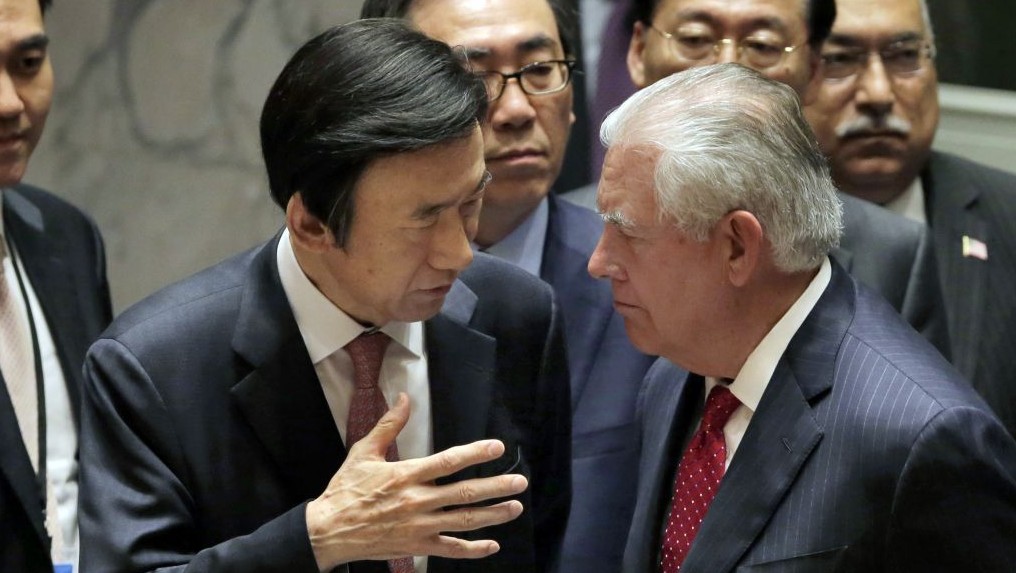
His ideas included a ban on North Korean coal imports and preventing its overseas guest laborers, a critical source of government revenue, from sending money home. And he warned of unilateral U.S. moves against international firms conducting banned businesses with Pyongyang’s nuclear and missile programs, which could ensnare banks in China, the North’s primary trade partner.
“We must have full and complete compliance by every country,” Tillerson said.
Yet illustrating the international gulf over how best to tackle North Korea, several foreign ministers on the 15-member council expressed fears of a conflict on the Korean Peninsula, which was divided between the American-backed South and communist North even before the 1950-53 Korean War. The conflict ended with no formal peace treaty. And while danger always has lurked, tensions have escalated dramatically as the North’s young leader, Kim Jong Un, has expanded a nuclear arsenal his government says is needed to avert a US invasion.
No voice at Friday’s session was more important than that of China, a conduit for 90 percent of North Korea’s commerce and a country Trump is pinning hopes on for a peaceful resolution to the nuclear crisis. Trump, who recently hosted President Xi Jinping for a Florida summit, has sometimes praised the Chinese leader for a newfound cooperation to crack down on North Korea and sometimes threatened a go-it-alone US approach if Xi fails to deliver.
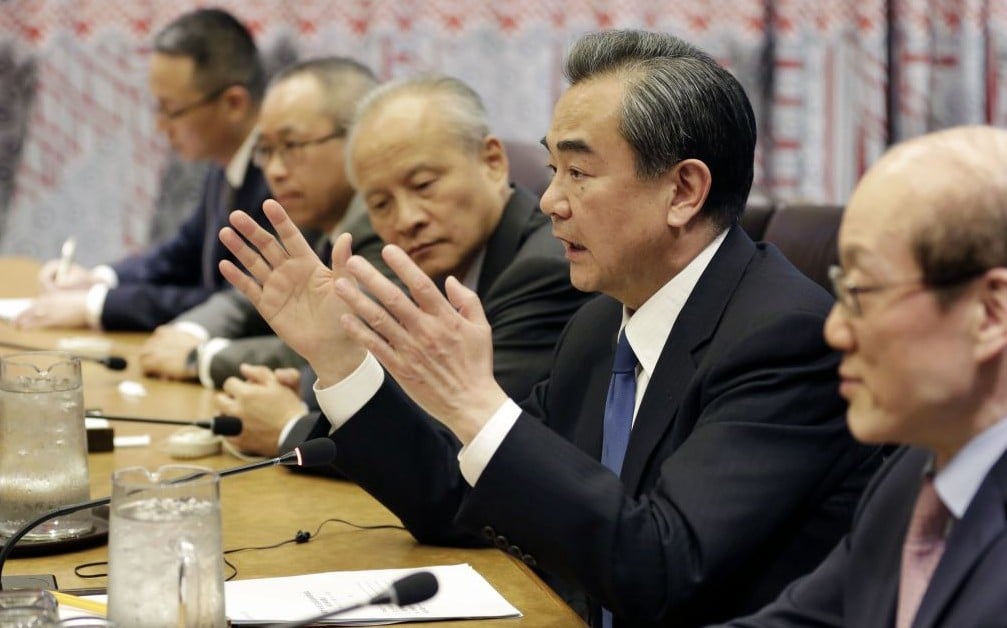
Foreign Minister Wang Yi said China would adhere to past UN resolutions and wants a denuclearized peninsula. But he spelled out no further punitive steps his government might consider, despite Tillerson’s assertions in an interview hours ahead of the council meeting that Beijing would impose sanctions of its own if North Korea conducts another nuclear test.
Wang put forward a familiar Chinese idea to ease tensions: North Korea suspending its nuclear and missile activities, if the US and South Korea stop military exercises in the region. Washington and Seoul reject the idea.
Amid signs of a possible North Korean nuclear test, the US recently sent a group of warships led by an aircraft carrier to waters off of the Korean Peninsula. North Korea this week conducted large-scale, live-fire exercises on its eastern coast. The US and South Korea also started installing a missile defense system that is supposed to be partially operational within days.
Tillerson said the US does not seek regime change in North Korea, and he signaled American openness to holding direct negotiations with Pyongyang. The US also could resume aid to North Korea once it “begins to dismantle its nuclear weapons and missile technology programs,” he said. Since 1995, he added, Washington has provided more than $1.3 billion to the impoverished country.
But the prospects for any more US money going there appeared bleak. Even negotiations don’t seem likely.
Tillerson said the North must take “concrete steps” to reduce its weapons threat before talks could occur. Six-nation nuclear negotiations with North Korea stalled in 2008. The Obama administration sought to resurrect them in 2012, but a deal to provide food aid in exchange for a nuclear freeze soon collapsed.
“In a nutshell, (North Korea) has already declared not to attend any type of talks which would discuss its nuclear abandonment, nuclear disbandment,” Kim In Ryong, North Korea’s deputy UN ambassador, told The Associated Press. His government declined to attend Friday’s council meeting.



The Times of Israel Community.