

Trump wins West Virginia, Sanders takes early lead
Presumptive Republican nominee sweeps to victory in first vote since rivals dropped out; polls hint at tough Trump-Clinton duel in Florida, Pennsylvania, Ohio
 Add ToI as a Preferred Source on Google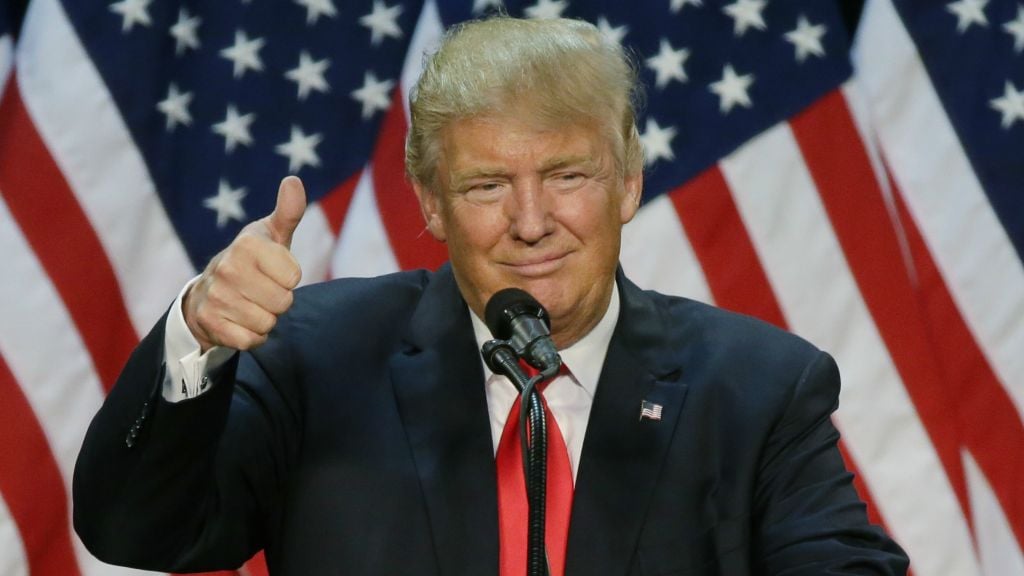
Presumptive Republican presidential nominee Donald Trump cruised to victory Tuesday in West Virginia’s primary, US networks projected, in the first state-wide vote since his remaining GOP rivals dropped out of the White House race last week.
On the Democratic side, NBC projected Senator Bernie Sanders as the winner over frontrunner Hillary Clinton, while other networks said Sanders was leading but the race was too early to call.
Clinton, the former secretary of state, is far enough ahead nationally that she will likely be the nominee, despite struggling to put her rival away.
With 2,224 delegates, she is close to the 2,383 necessary to win, according to a CNN tally. Sanders stands at 1,448.
Trump, the sole Republican candidate in the contest, was expected to sweep the 34 delegates at stake in West Virginia, as he closes in on the 1,237 delegates needed to clinch his party’s nomination.
Republicans were also voting Tuesday in the state of Nebraska.
The voting comes amid lingering Republican concerns about Trump, as a new poll showed the billionaire running neck-and-neck with Clinton in three key battleground states.
Trump is now alone in his quest for the Republican nomination, his last two rivals — Texas Senator Ted Cruz and Ohio Governor John Kasich — having dropped out after the New York real estate tycoon’s blowout victory in Indiana last week.
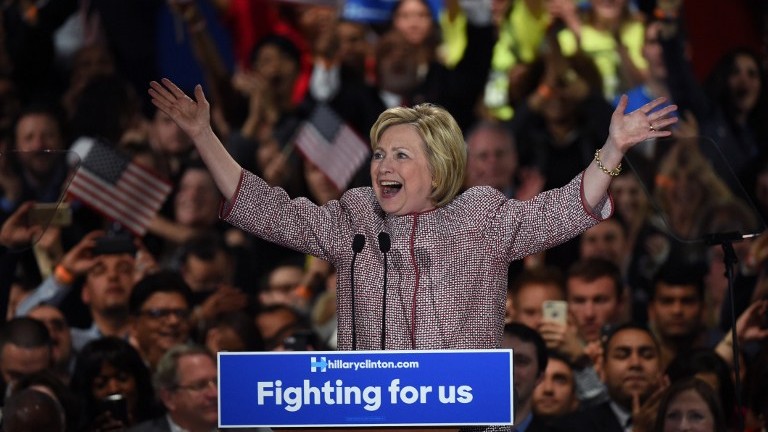
A Quinnipiac University poll out Tuesday showed Trump closing in on Clinton’s lead in two major battleground states — Florida and Pennsylvania — and overtaking her in swing state Ohio.
No candidate has won the presidential election without taking at least two of those three states.
Six months out from election day, the races in those three crucial states “are too close to call,” said Peter Brown, the poll’s assistant director.
With Republican concern about their nominee sizzling, Senate Majority Leader Mitch McConnell seized on the polls as a sign that Trump, whom the Republican leader has endorsed, will mount a strong challenge against Clinton.
“It’s a long time ’til November, but the early indications are that our nominee is likely to be very competitive,” McConnell told reporters.
Unyielding Sanders
Quinnipiac’s poll also found that Sanders, a democratic socialist who commands an enthusiastic following on the left, would do better against Trump than Clinton in all three states if he were the Democratic nominee.
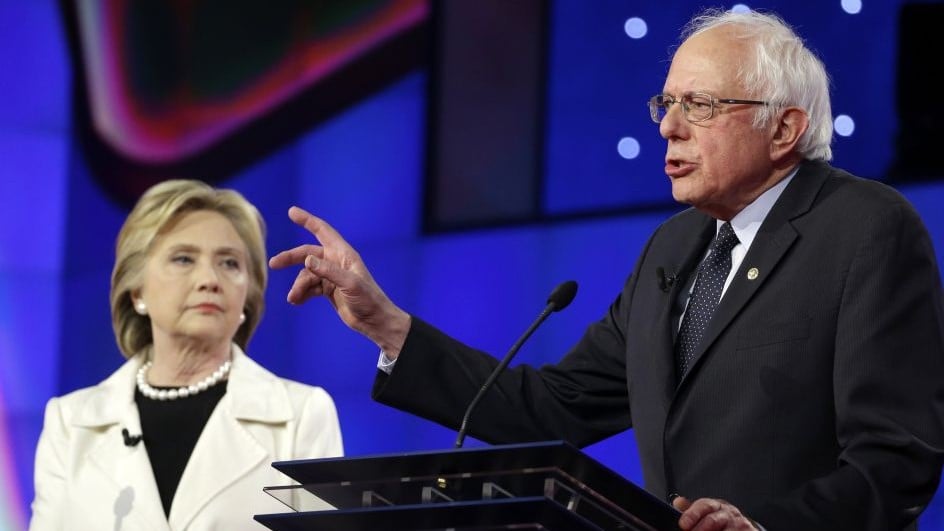
The 74-year-old Vermont senator, who defeated Clinton in Indiana, has mounted an unyielding come-from-behind challenge that has exposed weaknesses in the former secretary of state’s campaign.
Although almost certain to win the Democratic nomination — she is only about 160 delegates short of that goal — Clinton’s ability to excite young and white working-class Democrats going into the general election has been put in doubt by Sanders’s primary successes.
In West Virginia, a coal-mining state in Appalachia, Clinton shot herself in the foot in March by telling voters in neighboring Ohio she would slash mining jobs and put coal companies “out of business.”
She later apologized and suggested her remarks were misunderstood, but in a state where livelihoods have hinged on coal for generations, many are unconvinced.
Recent polls show Sanders with as much as a six-point lead over the 68-year-old former first lady among Democrats in the state, where 29 delegates are up for grabs.
Polls close in West Virginia at 7:30 pm (2330 GMT) and in Nebraska, which holds a Republican primary, at 8:00 pm (0100). The Democrats caucused there on March 5, and Sanders won.
Trump challenges
While Clinton still has Sanders to worry about, Trump faces a rebellion within the Republican leadership over the insulting tone and shifting substance of his candidacy.
House speaker Paul Ryan last week announced he was “not ready” to support Trump, a rare rebuke that put the power struggles within the Republican Party on very public display.
But Ryan and other Republican congressional leaders were due to huddle with Trump on Thursday in Washington, in a highly anticipated series of meetings that could help gauge GOP support for the real estate tycoon.
McConnell said he expected “a cordial meeting to discuss the way forward.”
On Tuesday, Cruz said Republican voters need not make a choice yet about Trump — and even suggested he could jumpstart his campaign if he somehow won Nebraska.
His White House quest could resume “if there is a path to victory,” Cruz said on conservative radio host Glenn Beck’s program.
The Republican establishment is still reeling from Trump’s hostile takeover of the party, aghast at positions he’s taken on trade, foreign policy and taxes that fly in the face of conservative dictums.
But Trump has shown no sign of backing down, and some Republicans have warned the “never Trump” movement to ease their opposition.
“I think a better place to be is to chill, and just let the campaign evolve a little bit and see where the candidate ends up,” said Senate Foreign Relations Committee chairman Bob Corker, who acknowledged he has discussed foreign policy positions with Trump staff.
“I think the party needs to come together,” added Senator John McCain, the GOP’s 2008 presidential nominee.
Trump has said he would need between $1-2 billion for the campaign ahead, and will seek to raise it from donors rather than to self-finance as he has up to now.






The Times of Israel Community.