

Ukrainian Jew abducted by Russian separatists immigrates to Israel
While a tearfully thankful David and his wife were able to leave war-torn Ukraine, their daughter awaits her Ukrainian soldier husband’s release from captivity
 Add ToI as a Preferred Source on Google
Deputy Editor Amanda Borschel-Dan is the host of The Times of Israel's Daily Briefing, What Matters Now and The Reel Schmooze podcasts, and heads up The Times of Israel's features.
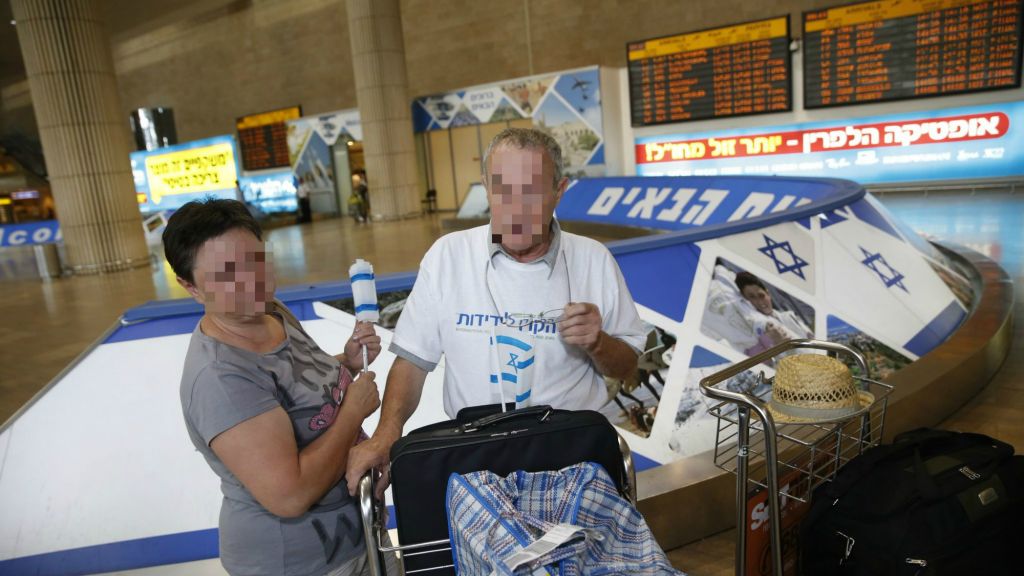
As on many days in the past months, David, 68, heard shots on his way back to his eastern Ukraine home near Donetsk last year on June 17. There had been fighting in the area since April, but this time the soldiers behind the guns grabbed him and forced him into a nearby vehicle.
They put a dark bag over his head and took him to a compound nearby where he estimates some 1,000 Russian separatists were based, where he was questioned, beaten and tortured. He was stripped, tied to a chair while still blindfolded and made to hold live hand grenades while grilled by a Russian officer, says David, who was formerly part of a Ukrainian intelligence unit.
One Russian-speaking fighter pressed a knife to David’s neck and told him he would be beheaded. David says another separatist barely stopped his companion from doing this, saying their commander would punish them.
A day after his abduction, David was beaten again and thrown out of a car near his home. He woke up in a hospital where, among his injuries, a broken jaw was repaired.
David, who immigrated to Israel on Wednesday morning, says he’s lucky his captors didn’t know he was Jewish. He feels sure they would have killed him had they known.
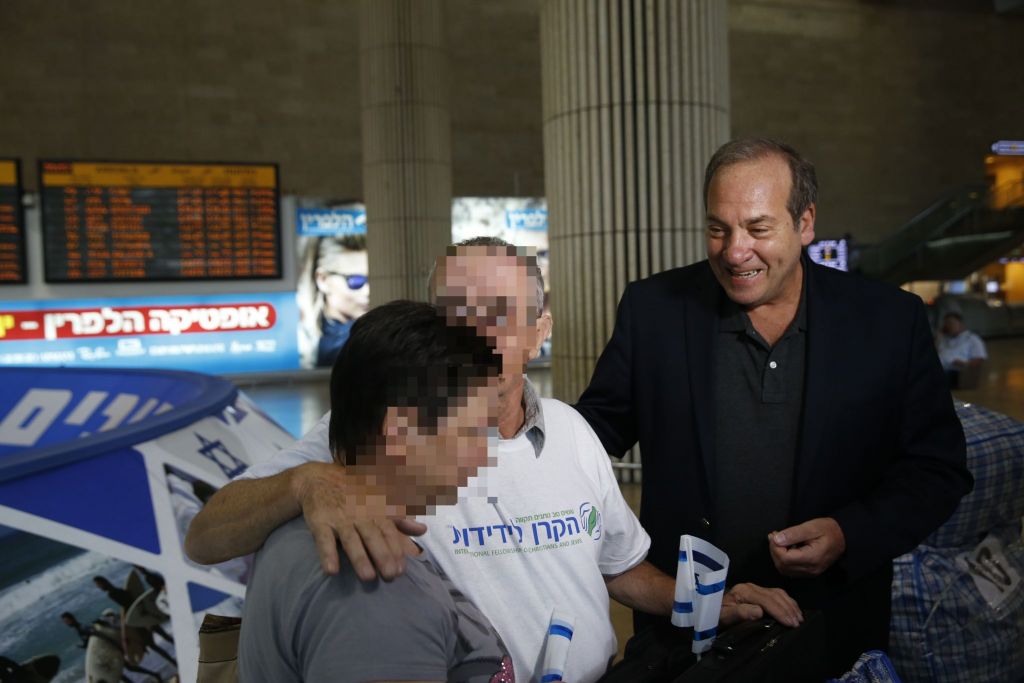
But today David, while interviewed via translator by The Times of Israel, tears up in thanks for having been welcomed by Israel. His son-in-law, a volunteer for the Ukrainian army, was also captured by Russian separatists last July. David, who doesn’t want to be identified for fear of sabotaging his son-in-law, knows he is still alive somewhere in Russia. His daughter, penniless with two children, awaits her husband’s release in Donetsk.
David and his wife, however, immigrated with another 89 Ukrainians this morning through the efforts of the International Fellowship of Christians and Jews, headed by Rabbi Yechiel Eckstein. The IFCJ has brought over some 800 immigrants from Ukraine since December 2014.
While awaiting the flight to Israel, David and his family did not flee Donetsk and for the past year, he says, he has been trying to help the Ukrainian army while pressing for his son-in-law’s release.
But many Ukrainians have become internally displaced persons throughout the country, including some 100,000 from Donetsk. The Jews have been helped by organizations such as IFCJ, the American Jewish Joint Distribution Committee, and UK’s World Jewish Relief.
‘Our motivation to bring Ukrainian Jews on aliyah is twofold — to rescue their physical bodies from peril, and to return them to the Jewish homeland’
Eckstein’s organization, funded by small donations from grassroots Christians around the world, provides each adult immigrant with a $1,000 grant and $500 per child for basic necessities upon landing in Israel. According to the IFCJ, “to further smooth” absorption into Israeli society, the organization works with local municipalities to secure housing and employment for the new immigrants.
“Our motivation to bring Ukrainian Jews on aliyah is twofold — to rescue their physical bodies from peril, and to return them to the Jewish homeland,” said Eckstein upon the arrival of the new 89 Israeli citizens to Ben-Gurion International Airport.
For David, who has always been proudly Jewish and had considered immigrating to Israel in the 1990s, his arrival with his wife Wednesday morning is the start of a new, secure chapter.
He told The Times of Israel that he belongs in Israel, where he believes he will feel more secure than in Ukraine. His only regret is that his grandchildren and three children, a daughter in Kiev, a second daughter in Donetsk and a son in Crimea, remained behind, though he does not judge them and says they need to make their own choices.
While ending our brief conversation, David began crying. “Thank you for welcoming us,” he said, “and thank you for accepting us.”



The Times of Israel Community.