

Ex-army chief warns infighting is wearing away Israel’s defenses
Haifa U poll on ‘national resilience’ finds Israelis to be patriotic optimists, but Benny Gantz says internal squabbles may change that
 Add ToI as a Preferred Source on Google
Judah Ari Gross is The Times of Israel's religions and Diaspora affairs correspondent.
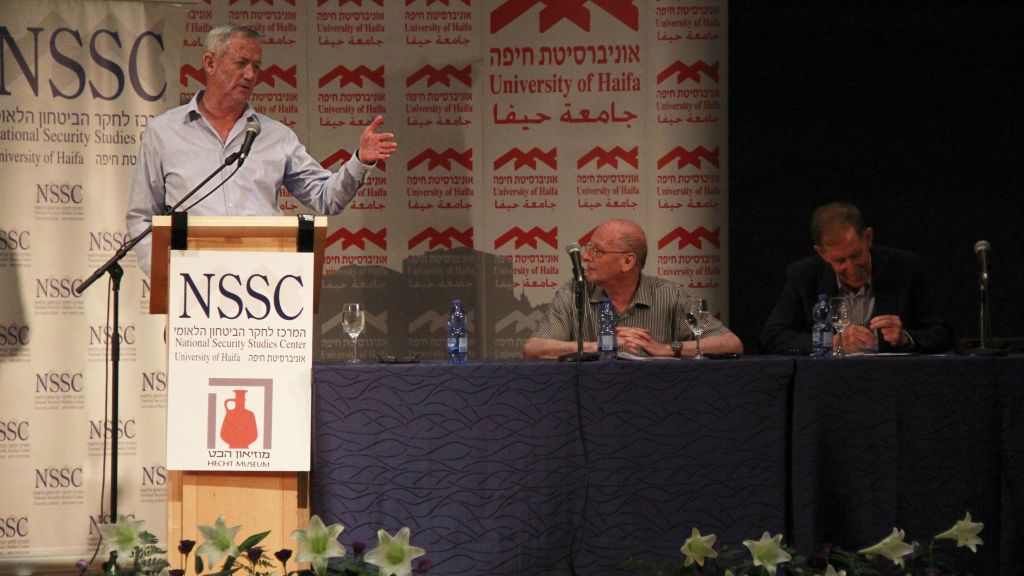
Former IDF chief of staff Benny Gantz warned on Monday that Israel’s ability to withstand attacks could be weakened, not by outside forces, but by the increasing infighting between the groups that make up Israeli society.
“We have, of course, a challenge with international delegitimization, but we have a more important challenge in internal differences,” Gantz said.
The former military leader’s comments were made at a Haifa University conference about the institution’s new study on the country’s “national resilience” — its ability to withstand hardship and conflict. The survey found that 50 years after the 1967 Six Day War, Israelis, both Jews and non-Jews, are patriotic and optimistic but are afraid of terror attacks, though to a lesser extent than they were last year.
Former US ambassador Dan Shapiro, who also spoke at the conference, noted that in his time in Israel, he has seen that citizens “have to have the ability… to sweep up the glass, heal the wounds and return to a normal life.”
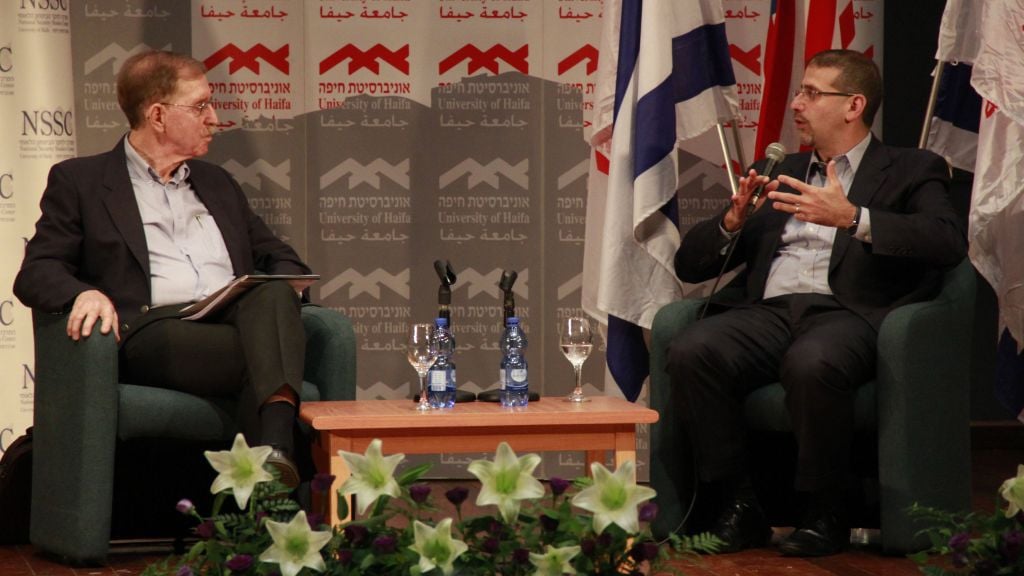
However, according to Gantz, that ability is increasingly at risk.
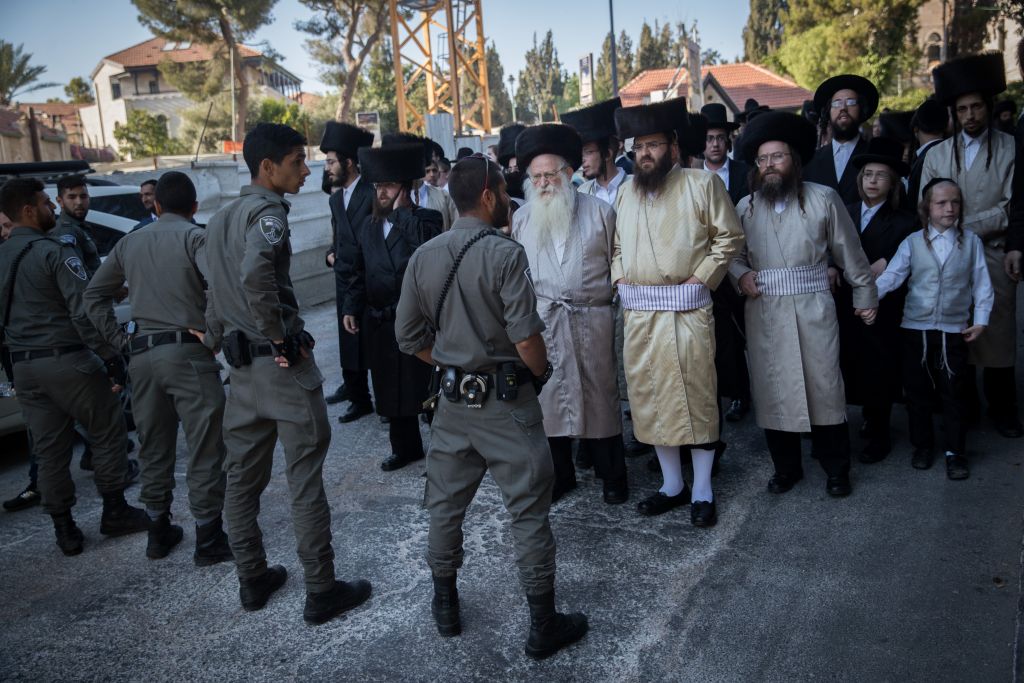
As an example, the retired lieutenant general (and, some believe, potential politician) brought up a recent meeting he’d had with a group of former high-ranking officers — “imagine the best kind of people you can” — in which they were on the verge of violent outbursts over the actions by radical elements of the ultra-Orthodox community that have been violently protesting military conscription and attacking uniformed soldiers.
“These things that are starting to stir in society, they are poised to become dangerous,” he said.
According to Gantz, a shift occurred 50 years ago with the 1967 Six Day War, though he admitted the view was based on anecdotal evidence only.
Before the 1967 war, he said, Israel was a “mobilized society,” with everybody generally working together toward a common goal.
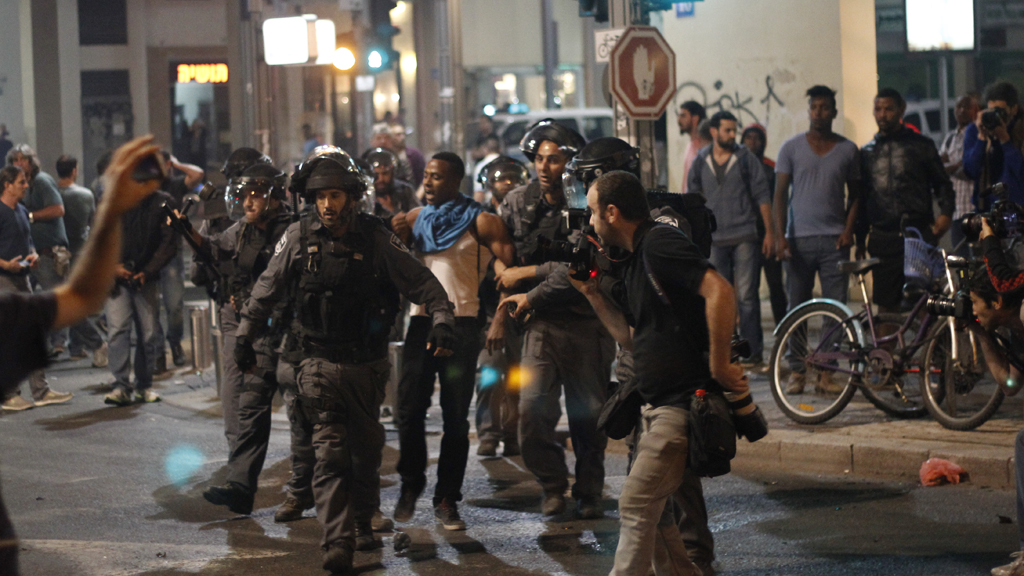
Gantz said that he has seen the rifts in Israeli society growing between religious and secular, right and left, black and white, Arabs and Jews.
The military, Gantz said, is providing “an adequate defense response to what we are facing.” But in an ever-changing world, he said, Israeli society needs the “personalities and values” to stand up to anything.
As an example of the new threats facing the world, Gantz cited challenges arising from fast-changing technologies, like the hacking attack that brought down the British healthcare system last year.
“Thirty, 40, 50 years ago, this dimension known as cyber didn’t exist. People invented it, and now we have to confront it,” he said.
The former army chief completed his term as head of the IDF General Staff in early 2015 after leading the military through the 2014 Gaza war, known in Israel as Operation Protective Edge. Many analysts speculate that Gantz will enter politics as soon as his legally required “cooling off” period ends, as many former generals have done in the past.
Gantz told the mostly full auditorium that while Israel will “always have its groups,” the country needs to come together to become a “progressive society” led by the advances of technology and the startup culture for which Israel is famous.
Following his prepared speech, the former army chief verbally sparred with Dan Schueftan, the head of the university’s National Security Studies Center and a co-author of the national resilience study.
‘The thing that best defends your house looks unstable from the outside, even though it is the thing that allows stability’
Schueftan disputed Gantz’s belief that the country needed to be more homogeneous. Using a metaphor, he noted that solid concrete is not the best material with which to fortify an army post, and that heaped rocks, loosely held together with barbed wire, do the job better.
If it falls apart, you just put the rocks back in place and tie them up again, Schueftan said. “The thing that best defends your house looks unstable from the outside, even though it is the thing that allows stability.”
The professor also doubted the ability of Israeli society to come together, since some parts of the population find themselves separated from the rest of the country by what they consider fundamental, existential issues.
Schueftan led the study on Israel’s national resilience alongside Gabriel Ben-Dor, head of the university’s National Security Studies program. The survey has been conducted every year since 2000, though this is the first time its results are being made public.
Over 2,000 people were polled, asked to give a score from one to six on topics like how patriotic they felt, or how much they trusted the government or feared terrorism. A score of six indicated a high level, while a score of one indicated a low level. A full report on the survey has not yet been released as it was only recently completed, a university spokesperson said, but the main findings were released on Monday.
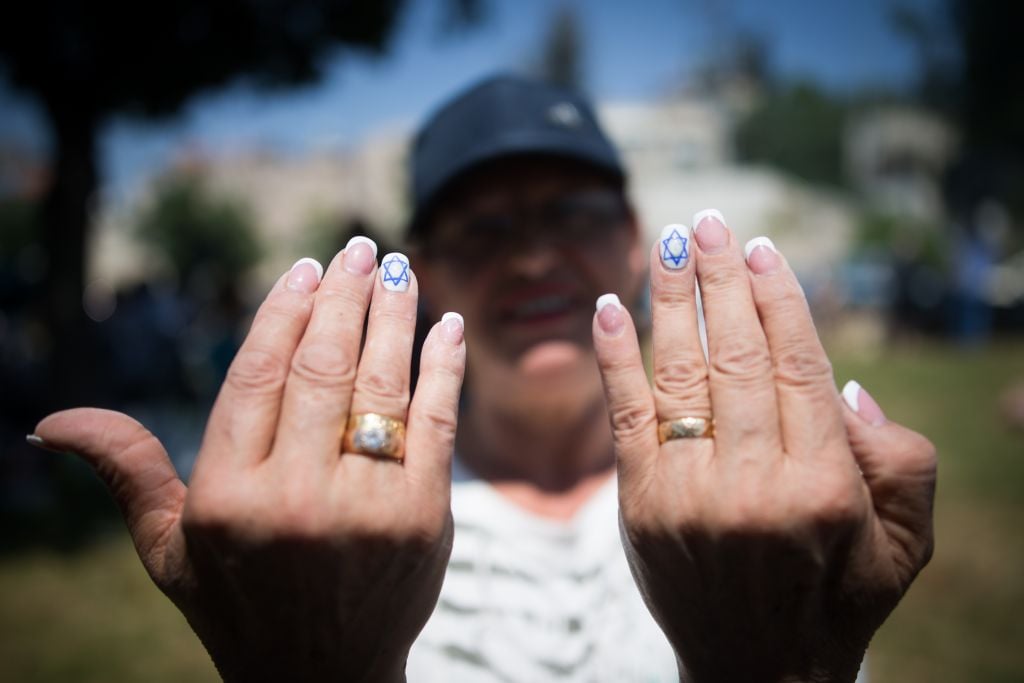
In what the university described as a “surprising find,” Israeli women were found to be more patriotic, more optimistic and more militant than their male counterparts.
The level of patriotism among Jewish and Arab women was 4.68 out of a possible score of six, compared to 4.38 among men; their optimism — 4.7 out of six — was 0.2 points higher than males’; and their support for Israel’s military operations was also slightly higher, at 3.77 for women compared to 3.69 for men.
Less surprisingly, levels of patriotism varied greatly between Jewish and Arab Israelis.
The level of patriotism among Jewish Israelis stood at 4.8 this year, which is similar to the scores for the past 17 years, the university said. For Arab Israelis, the patriotism level dropped from 3.87 in 2016 to 3.57 this year, though it is still a “dramatic increase” over the ho-hum score of 3 that they gave in 2010.
Jewish Israelis were also more afraid of terror attacks than their Arab counterparts, but not dramatically. Out of a possible six, Jews scaled their fear level to be 4.7, while Arabs put it at 4.38.
And yet “both Jewish and Arab Israelis have become more optimistic in the last seven years,” the university said in a statement. “Among Jewish Israelis there is an increase from a level of 4.56 in 2010 to a record high of 4.86, while Israeli Arabs see a similar trend rising from 3.15 in 2010 to 3.66 this year.”
According to a university spokesperson, the full results of the survey will be published in the coming weeks.





The Times of Israel Community.