

Foe, now friend: Germans find place at D-Day sites in France
75 years after allied forces battled Hitler’s army on French beaches, German soldiers are welcomed at Normandy cemeteries, nation is cornerstone of postwar Europe
 Add ToI as a Preferred Source on Google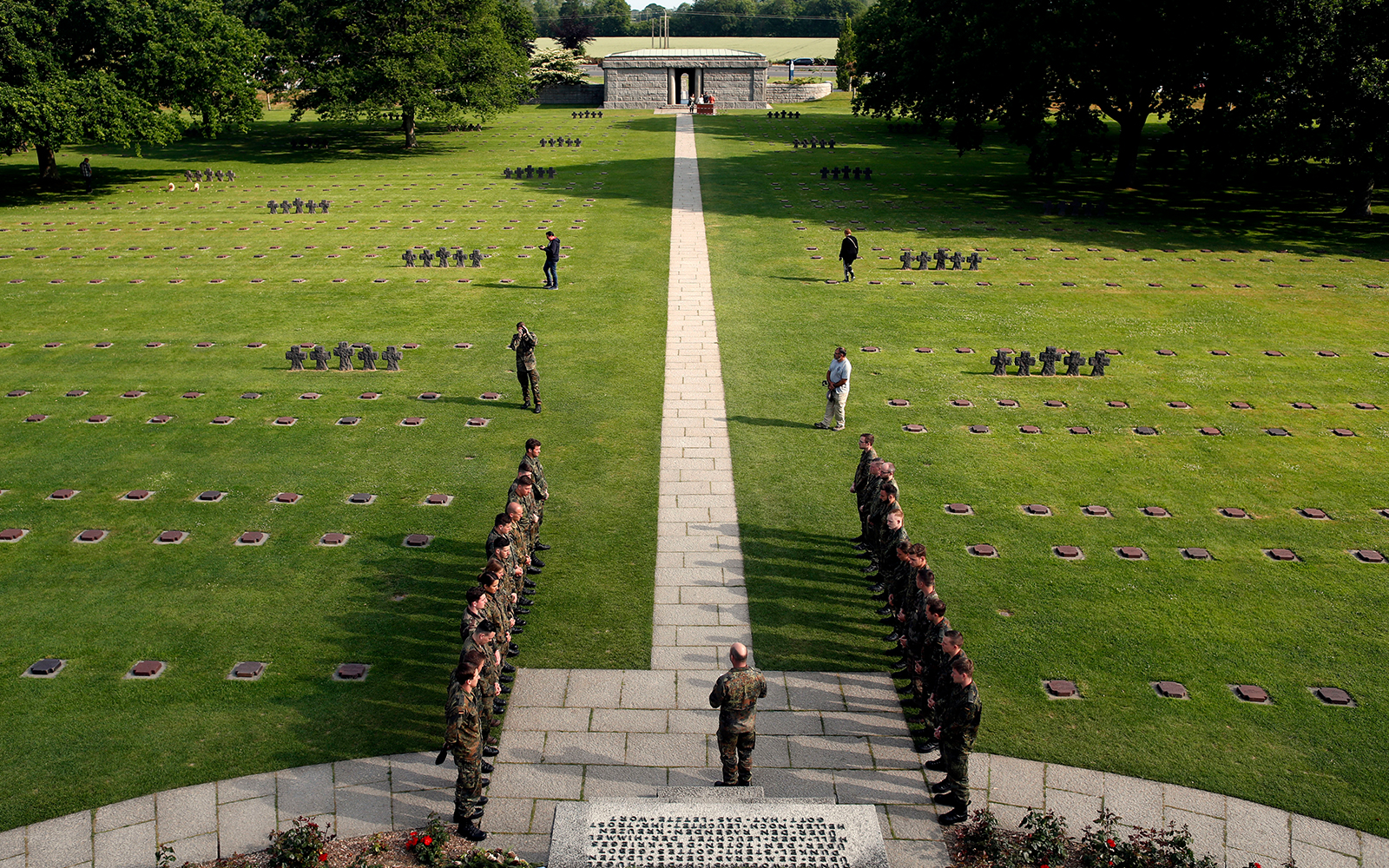
COLLEVILLE-SUR-MER, France (AP) — A vicious foe is now a trusted friend. The epitome of evil is now a cornerstone of postwar Europe. As the 75th anniversary of D-Day approaches, Germans are now welcomed instead of shunned and despised like the Nazis who came before them.
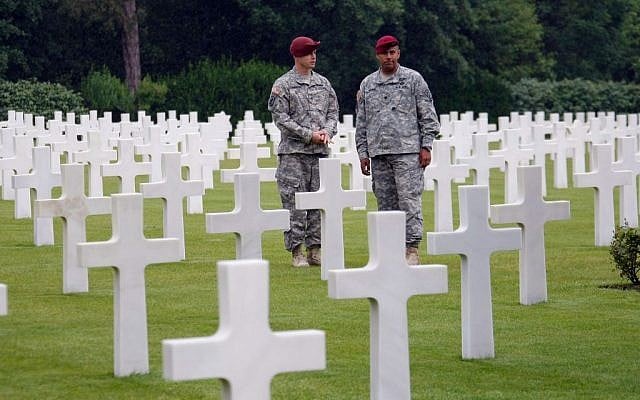
Now, a soldier wearing the German flag on his shoulder can stroll under a star-spangled flag at the Normandy American Cemetery, symbolizing the mending that’s occurred since allied nations fought their way onto French beaches held by Adolf Hitler’s forces on June 6, 1944.
“This is the most important thing, for which we are forever grateful: That we can be here wearing our German uniforms and that we meet friendly people,” said Daniel Pommer, a member of a German mechanized infantry battalion that visited the US military cemetery and memorial on Tuesday.
Standing amid 9,388 pristine white crosses , most of them for Americans killed during the D-Day landings and the fighting that followed, Pommer said the fallen buried at Normandy American Cemetery “freed Europe, and that includes Germany.”
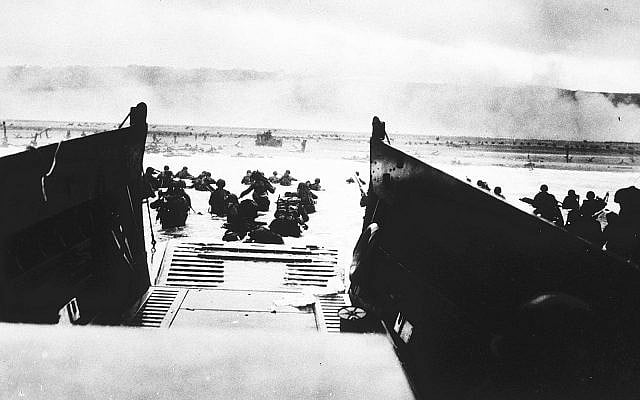
US Army veteran Pete Shaw, 94, who served with the 283rd Field Artillery Battalion during World War II, bore witness under the same American flag half an hour earlier, teary eyed as he thought of friends he lost fighting ferociously against the Germans during the Normandy offensive.
Asked whether he hated German troops during the war, Shaw answered “Oh, yes! Oh yes!”
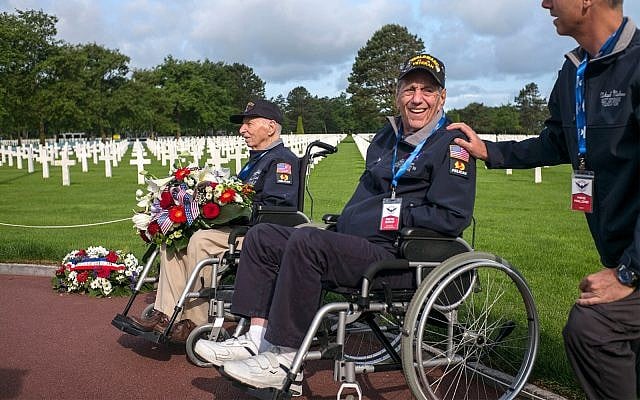
More than 10 months after D-Day, Shaw’s Army division participated in liberating Dachau, the Nazi concentration camp outside Munich where tens of thousands of prisoners died.
His eyes widen as he describes pits and carts “full of bodies — Jews, Germans, prisoners of war or anybody that didn’t agree with Hitler.”
“How could one man do that,” Shaw said of Hitler. As for the German troops he hated, the veteran now says “half of them they didn’t know what was going on.”
The occupying forces in France were referred to as “les Boches” (the Germans) for long after the war. In recent years, there has been an effort to make a distinction between the Nazis and their supporters, and other Germans.
In the same way, Germany now is considered the cornerstone of a stable continent and together with France, the driving force of the European Union.
“We can be glad that at the end of this terrible World War II that was started by Germany, we have an order that produced the European Union, that secures our peace, that secures our stability,” German Chancellor Angela Merkel said Tuesday.
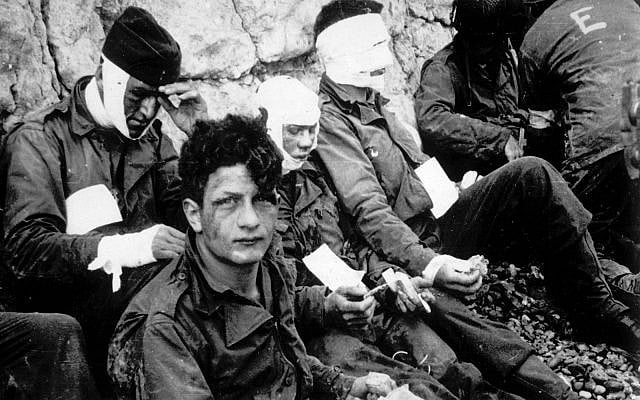
Nevertheless, don’t expect to see many German flags fluttering in northern France’s strong winds alongside the flags of the United States, Britain and Canada.
War re-enactors are all over Normandy these days, driving US jeeps, wearing British uniforms and saluting allied flags, but few are there in German uniforms.
International leaders are gathering in Portsmouth, England, on the eve of the Normandy invasion. US President Donald Trump, and British Prime Minister Theresa May and Merkel will be among them.
On Thursday’s anniversary itself, Trump will be at the US cemetery in Normandy overlooking Omaha Beach. Britain’s May will mark the invasion in nearby Caen. Canadian Prime Minister Justin Trudeau is visiting Juno Beach, where his country’s troops landed on D-Day. French President Emmanuel Macron plans to shuttle all over the region.
In sharp contrast, the German ambassador to France is expected to highlight a delegation to the nearby La Cambe cemetery, where over 21,000 Germans are buried.
Differences between the Allies and Germany persist when it comes to cemeteries.
The Normandy American Cemetery has an aptly named, shiny bronze statue, titled “Spirit of American Youth Rising from the Waves,” that features one perfectly muscled man looking upward and onward.
For the German military cemetery near Omaha Beach in La Cambe sculptors chiseled two figures that look as forbidding as the black stone out of which they were cut.
“Unfortunately, there is the aspect of victory and defeat,” Alain Dupain, the chief gardener at the US cemetery. “Each nation has its reflection in its cemetery, and you cannot look the same way at British, American on German cemeteries.”
It took a long time for people to come in large numbers to the German cemetery, where some 2,100 soldiers of the hated Waffen-SS, the Nazi’s paramilitary wing, are also buried.
Some 450,000 visitors came last year, and about one in three were German. La Cambe Mayor Bernard Lenice said “even if the elderly might still have some reticence,” younger generations gifted with the perspective that time provides have found their way there.
“This is our symbol for reconciliation, of course. We have to turn the page,” Lenice said.








The Times of Israel Community.