

Hezbollah is in decline, but the EU decision won’t do much to hasten it
Europe failed to internalize that terror chiefs don’t wander around with their secret military wing membership cards in their pockets

 Add ToI as a Preferred Source on Google
Avi Issacharoff, The Times of Israel's Middle East analyst, fills the same role for Walla, the leading portal in Israel. He is also a guest commentator on many different radio shows and current affairs programs on television. Until 2012, he was a reporter and commentator on Arab affairs for the Haaretz newspaper. He also lectures on modern Palestinian history at Tel Aviv University, and is currently writing a script for an action-drama series for the Israeli satellite Television "YES." Born in Jerusalem, he graduated cum laude from Ben Gurion University with a B.A. in Middle Eastern studies and then earned his M.A. from Tel Aviv University on the same subject, also cum laude. A fluent Arabic speaker, Avi was the Middle East Affairs correspondent for Israeli Public Radio covering the Israeli-Palestinian conflict, the war in Iraq and the Arab countries between the years 2003-2006. Avi directed and edited short documentary films on Israeli television programs dealing with the Middle East. In 2002 he won the "best reporter" award for the "Israel Radio” for his coverage of the second intifada. In 2004, together with Amos Harel, he wrote "The Seventh War - How we won and why we lost the war with the Palestinians." A year later the book won an award from the Institute for Strategic Studies for containing the best research on security affairs in Israel. In 2008, Issacharoff and Harel published their second book, entitled "34 Days - The Story of the Second Lebanon War," which won the same prize.
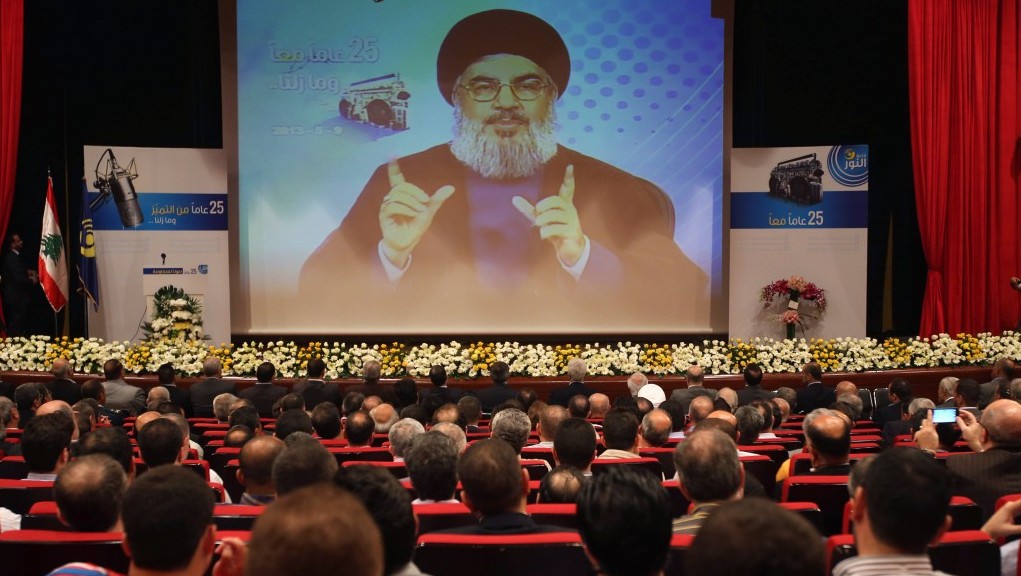
The EU’s decision to designate the military wing of Hezbollah a terrorist organization will do little to harm the group on the ground in the immediate future. But the wave of angry reactions from the organization’s leadership and from its Iranian allies are a testament to the fact that the blacklist has dealt Hezbollah a blow of sorts.
By Monday night, the group had already released an official statement calling the decision aggressive and unjust. According to the Shi’ite organization, the EU move was not based on evidence, rather it “looks like the decision was written by American hands with Israeli ink,” the statement read.
On Tuesday morning, its allies in Tehran joined the condemnation of the European decision. Iran “strongly condemns the decision and believes that it serves the interests of the Zionist regime,” said Iran’s foreign minister Ali Akbar Salehi. “As a result of impaired judgment about regional crises, the EU came to a flawed decision. This decision harms the Lebanese nation, since Hezbollah succeeded in defending it from the Zionist aggression.”
There is no need to get too excited about the reactions — nor about the decision. However, it is another public relations blow to Hezbollah, which has sought to present itself as a legitimate political movement ever since Hassan Nasrallah became secretary general of the organization in 1992.
There will be almost no immediate impact on Hezbollah’s sources of income or on its activities in Europe.
The EU’s decision theoretically prevents all trade and economic activity by terrorist groups on the continent, and denies entry to activists from these organizations. But the EU’s decision applies only to members of the military wing itself — not to all Hezbollah activists.
It sounds somewhat outlandish and bizarre, and were it not so sad it would have been somewhat funny, but apparently the European Union continues to see Hezbollah’s “political” leadership as a legitimate body leading a group of enthusiastic supporters, not thousands of armed warriors fighting on Syrian soil, while trying to carry out attacks against Israeli targets in Europe. Any sanctions against an economic body associated with Hezbollah will need proof tying it to the military wing of the organization. Any attempt to prevent the entry of Hezbollah activists into Europe will be contingent on evidence that they are indeed members of the military wing.
The EU apparently did not internalize that Imad Mughniyeh, Hezbollah’s late terror chief, didn’t regularly wander around European capitals with his Hezbollah secret military wing membership card in his pocket.
Still, it is impossible to ignore the decision’s other implications. It will be harder for Hezbollah and its members to operate with the same freedom in Europe that they enjoyed in the past. In addition — and this is no less important — the organization’s standing in the international arena, especially the Arab world, is plummeting rapidly. Bahrain has already designated it a terrorist organization, and the UAE has followed suit. Militarily, the organization has suffered painful losses and the number of its fighters killed in Syrian fighting exceeds 200. At the same time, it has been forced to defend itself against possible attacks from Sunni suicide bombers, rockets, and explosive-laden cars at home in Beirut.
The footage broadcast on Hezbollah’s Al-Manar channel two days ago, revealing the identity of the commander of the kidnapping operation that resulted in the deaths of IDF soldiers Uri Regev and Ehud Goldwasser, illustrates the depth of the crisis with which the organization is dealing.
It has nothing to sell to the Lebanese public except for a kidnapping seven years ago that led to the destructive Second Lebanon War. And like Nasrallah’s statement from the end of the war — that had he known what the kidnapping would result in, he wouldn’t have ordered it — one can assume that if Hezbollah’s secretary general had foreseen that his support for Bashar Assad would bring him to the present situation, he would have preferred to abandon the Syrian president and focus on his own business.






The Times of Israel Community.