

Israel says famine monitor did not seek aid facilitators’ input for upcoming Gaza report
Defense Ministry’s COGAT says food aid entering Strip ‘five times greater’ than needed to sustain populace, but claims UN-backed IPC did not consult with it or US-led CMCC
 Add ToI as a Preferred Source on Google
Jeremy Sharon is The Times of Israel’s legal affairs and settlements reporter
An upcoming report by a UN-backed famine monitor on the humanitarian situation in the Gaza Strip does not include input or responses from the Israeli body responsible for coordinating the entry of goods into the enclave, the unit said Wednesday.
According to the Defense Ministry’s Coordinator of Government Activities in the Territories, or COGAT, the IPC famine monitoring organization failed to contact it or the US-led Civil-Military Coordination Center for relevant information, with the report ostensibly set to be published this week.
The IPC said in response that senior members of the organization met with COGAT and CMCC representatives on December 9 “to discuss data relevant to the upcoming IPC analysis on Gaza”
The organization added that it included information provided by COGAT “as it was overall corroborating the data and analysis from other sources employed.”
A spokesperson for COGAT insisted, however, that the upcoming IPC report had already been written and conclusions drawn before the meeting with the IPC officials on December 9.
In mid-November, an IPC representative told The Times of Israel that an updated report was expected soon, but none has yet been published.
A spokesman for the Israel-based CMCC, which is staffed by foreign military officials and works closely with UN aid organizations, did not respond to a request for confirmation.
In a press update on Wednesday, COGAT stated that the number of trucks with food aid entering Gaza every week far exceeded the territory’s nutritional requirements, as determined by the World Food Program and previously cited by the IPC itself.
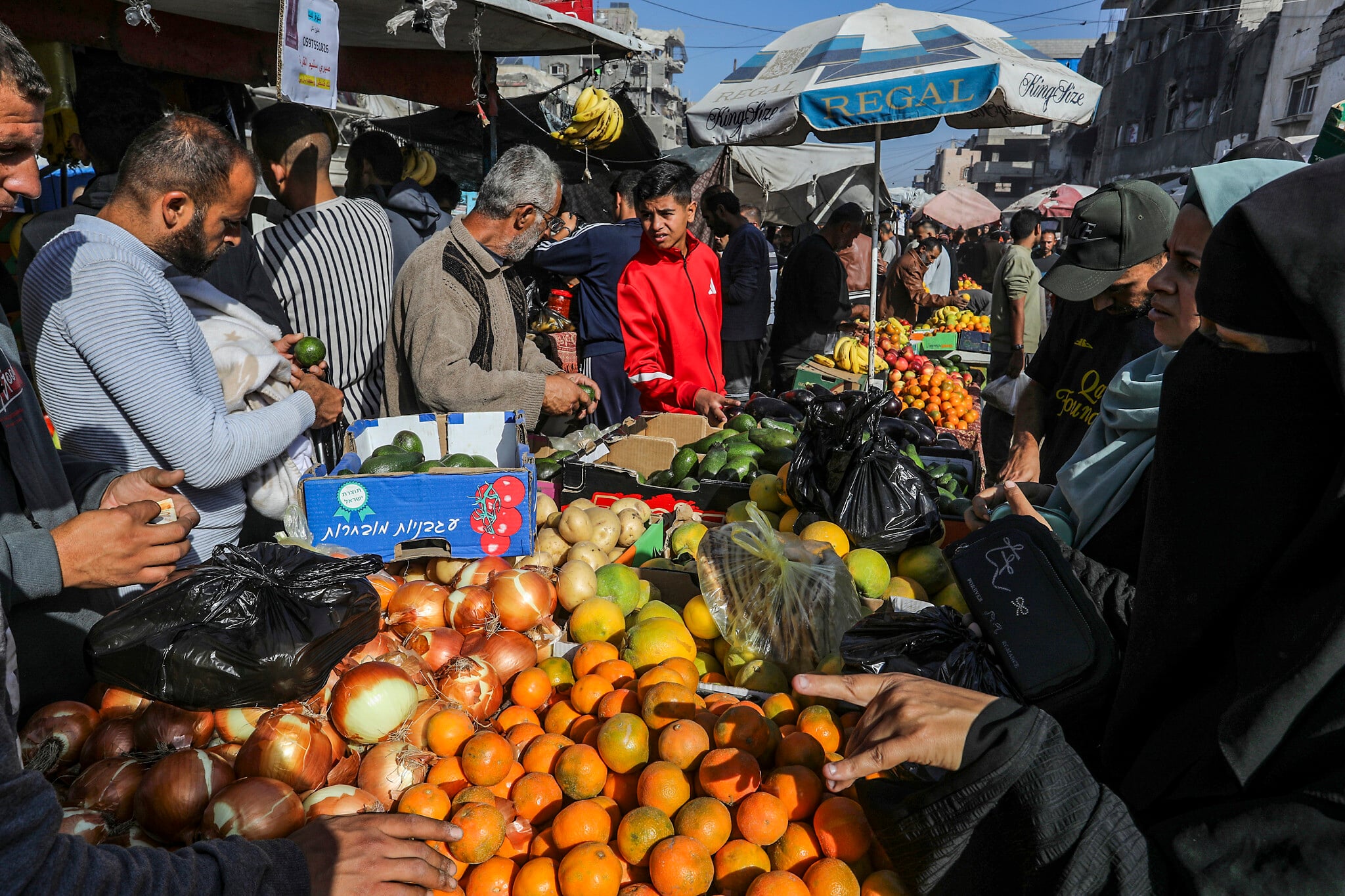
COGAT also cited data from the Palestinian Authority demonstrating that food prices have dropped sharply in Gaza, reflective of the increase in the supply of goods, and asserted that it was ensuring the provision of sufficient winter supplies, such as tents, tarpaulins, winter clothes and other equipment.
The IPC, or Integrated Food Security Phase Classification system, is a department of the UN’s Food and Agriculture Organization, and is considered an authoritative agency for monitoring malnutrition and famine around the world. It has predicted that famine is imminent in Gaza on several occasions, and in August determined that famine had actually broken out in the territory, leading to international condemnation of Israel.
Data on malnutrition in Gaza has, however, demonstrated that although malnutrition reached high levels in July and August, it was still significantly below famine levels, while the IPC itself has acknowledged on at least one occasion that previous predictions of famine were wrong.

The IPC’s reports on Gaza have been cited by the International Court of Justice in the genocide suit filed by South Africa against Israel, while allegations that Israel is deliberately starving Gaza have formed the backbone of charges against Prime Minister Benjamin Netanyahu and former defense minister Yoav Gallant in the International Criminal Court.
In a press statement issued by CMCC last week, the agency said that it had facilitated the movement of more than 30,000 trucks’ worth of humanitarian aid and commercial goods into Gaza since it began operations on Oct. 17.
It said that nearly 20 “internationally supported bakeries” were now able to produce “more than 160,000 loaves of bread daily,” and that hot meal kitchens were currently providing “an estimated 1.6 million meals daily – a 140% increase since September.”
COGAT says that 600 to 800 trucks carrying goods enter Gaza daily, with 70 percent containing food aid. This level of food aid deliveries amounts to “more than five times Gaza’s internationally defined nutritional requirements,” COGAT said Wednesday, citing a WFP determination that Gaza needs 62,000 metric tons of food per month.
IPC said in a July 2025 update that 62,000 metric tons of food staples would meet Gaza’s basic needs.
COGAT also pointed to Consumer Price Index data from the Palestinian Central Bureau of Statistics from this month that showed a drop of 80% in food prices between July and November 2025.
The agency said that “310,000 tents and tarpaulins” entered Gaza to help residents deal with winter conditions, and that “Over 100,000 pallets of winter-related items” have been approved by COGAT for entry and are currently waiting for international organizations to coordinate their entry into the territory.
According to an update this month by the Global Nutrition Cluster organization, whose data IPC has used, malnutrition rates have steadily declined in the whole of the Gaza Strip since peaking in July and August and continued to do so in November.
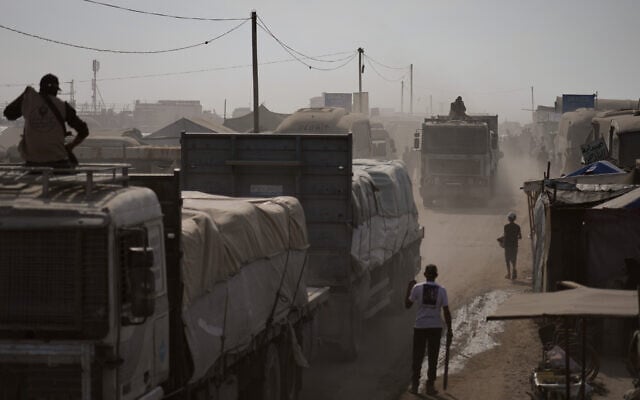
The UN Office for the Coordination of Humanitarian Affairs, which works with the CMCC on aid deliveries into Gaza, said in a December 11 update that “there have been improvements in the volume of supplies brought into Gaza.”
But it added that the “ability of aid actors to operate at scale” remained constrained due to “insecurity, customs clearance challenges, the limited number of partners authorized by Israeli authorities to bring cargo into Gaza, delays and denials of cargo at operational crossings, and limited routes available for transporting humanitarian supplies within Gaza.”
The organization said the UN “and its partners” had collected some 100,000 metric tons of assistance for distribution in Gaza since the October 10 ceasefire went into effect, 80 percent of which was food aid.










The Times of Israel Community.