

Live updates (closed)
 Add ToI as a Preferred Source on Google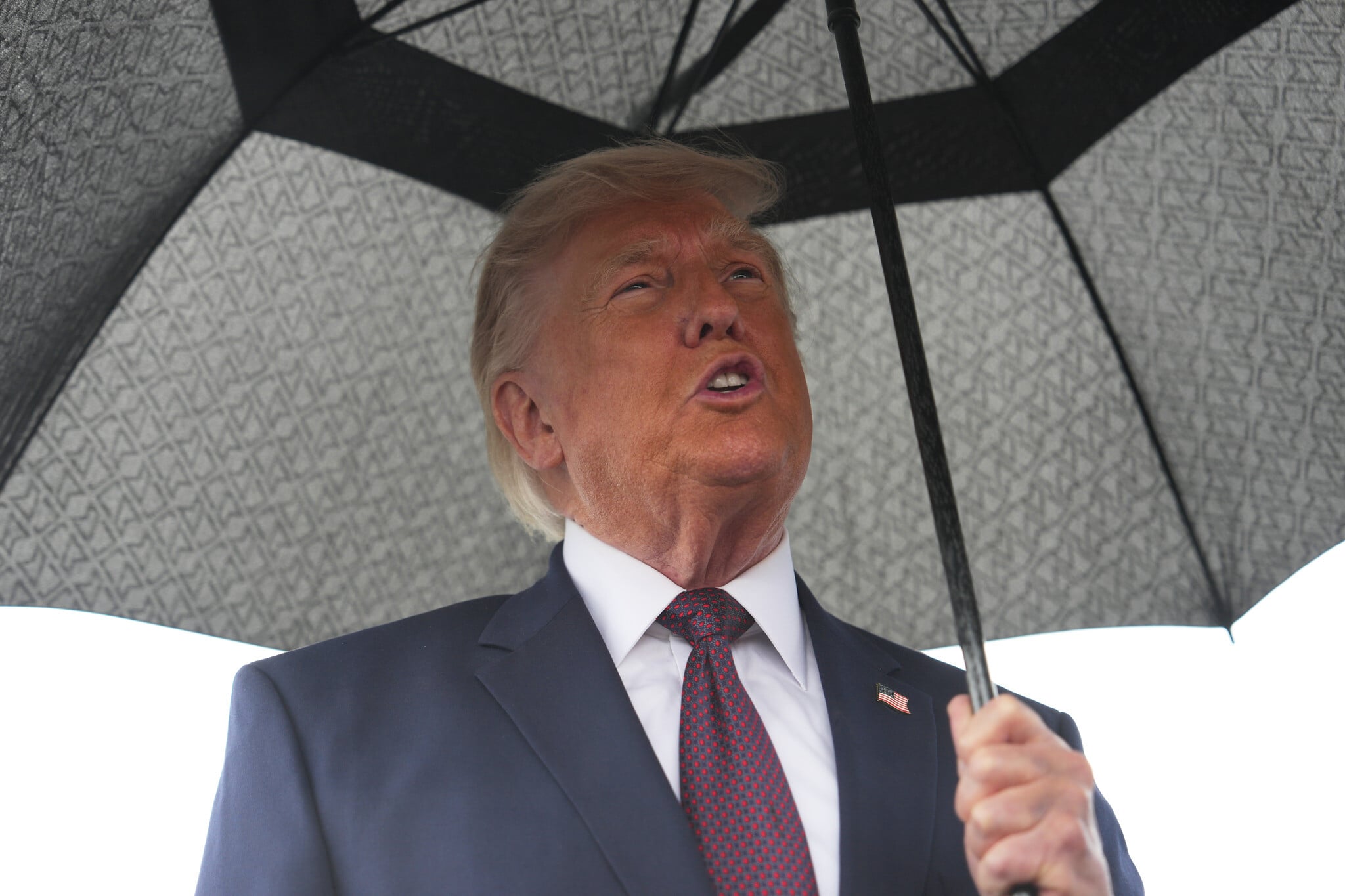
The Times of Israel liveblogged Tuesday’s events as they unfolded.
Oman announces temporary maritime corridor for Hormuz traffic
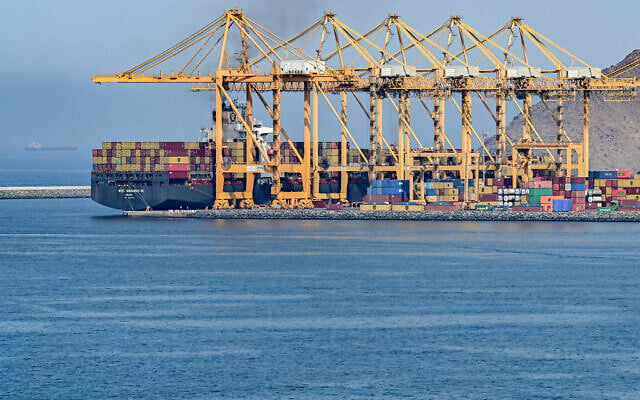
The Cyprus-flagged container vessel MSC Aquarius VII is docked along a pier at the Khor Fakkan Container Terminal, the only natural deep-sea port in the region and one of the major container ports in Sharjah Emirate, along the Gulf of Oman on June 19, 2026. (AFP)
Oman says it has coordinated with the International Maritime Organization (IMO) to provide a temporary maritime corridor for vessels seeking to transit the Strait of Hormuz, state news agency reports.
The vessels wanting to use the temporary corridor would need to coordinate with the IMO, based on coordinates announced by the organization and Omani authorities, it adds.
The measure is aimed at ensuring freedom of navigation through the strategic waterway in line with international law and the law of the sea, which uphold freedom of navigation without imposing transit fees.
Chair of NYC’s Jewish caucus and antisemitism task force says Mamdani invoked ‘age-old antisemitic tropes’
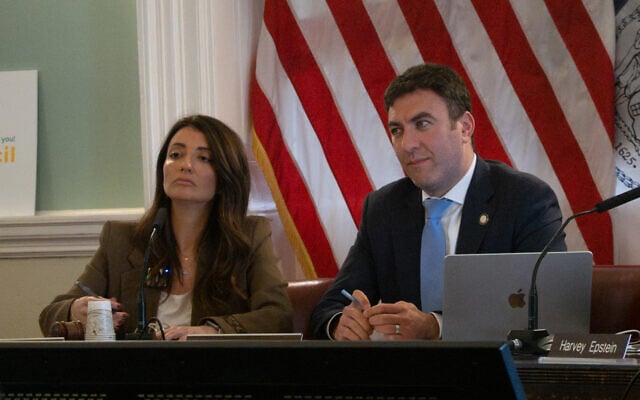
Left, New York City Councilmember Inna Vernikov, right, Councilmember Eric Dinowitz, the co-chairs of the council's antisemitism task force, at City Hall, April 22, 2026. (Luke Tress/Times of Israel)
New York City Councilmember Eric Dinowitz, the chair of the city council’s Jewish caucus and the council’s Bipartisan Task Force to Combat Antisemitism, says New York City Mayor Zohran Mamdani made antisemitic statements about AIPAC last week.
Mamdani last week likened AIPAC to “monsters” and accused the pro-Israel lobby of spending “millions in dark money” to “turn us against one another” and enact “genocide.”
The comments sparked an outpouring of criticism that has been mounting since Mamdani doubled down on the comments yesterday.
Dinowitz, a moderate Democrat representing part of the Bronx, says Mamdani’s words “invoke age-old antisemitic tropes while ignoring the reality of super PAC spending across our political system.”
Monsters. Money. Power. These words invoke age-old antisemitic tropes while ignoring the reality of super PAC spending across our political system, including PACs supporting his endorsed candidates. We should reject rhetoric that inflames hatred, no matter who uses it. 1/2 https://t.co/K6XTVQ5Mhn
— Eric Dinowitz (@EricDinowitz) June 23, 2026
“We should reject rhetoric that inflames hatred, no matter who uses it,” Dinowitz says in a statement. “People are entitled to strong opinions and sharp disagreements. But this kind of demonization and dehumanization causes real harm to NYers and does not advance understanding, constructive dialogue, or coexistence, values this administration repeatedly claimed to champion.”
Rubio: Lebanon is part of Iran talks only due to Tehran’s support for Hezbollah
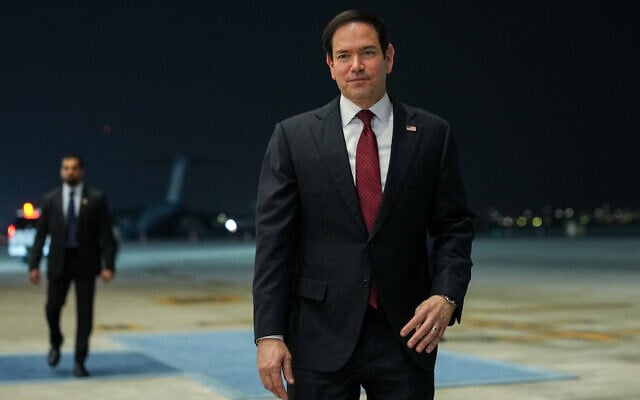
US Secretary of State Marco Rubio upon his arrival at Al Bateen Executive Airport, in Abu Dhabi, United Arab Emirates, June 23, 2026. (Eric Lee/Pool Photo via AP)
US Secretary of State Marco Rubio is pressed on the apparent dissonance in the Trump administration’s policy regarding Iran, given that it agreed to an MOU last week that included Lebanon in the ceasefire reached with Iran after creating a separate track of negotiations between Israel and Lebanon specifically in order to prevent Tehran from having a say in what happens in Beirut.
Speaking to reporters after landing in Abu Dhabi, Rubio insists that the Lebanon file is separate from the Iranian one.
“There’s an Iranian issue with regard to Lebanon, and that is their support and sponsorship of Hezbollah, and so that factor will be discussed as part of our conversations with the Iranians,” he says.
“But as far as the future of Lebanon, the future of Lebanon belongs to the Lebanese people through their sovereign elected government, and that’s who we’re going to be working with,” Rubio adds.
Rubio is beginning a Mideast tour with stops in the UAE, Kuwait and Bahrain. He says he is mainly there to listen to allies and receive their perspective on the ongoing negotiations with Iran.
The top US diplomat is also asked how he’s trying to ease concerns in the region over the MOU’s ignoring of Iran’s missile program and support for proxies.
Rubio acknowledges that those issues will come up during his meetings this week in the Gulf. However, he insists that they are actually covered by the MOU because the agreement talks about “an end of hostilities in the entire region.”
“You can’t have the end of hostilities and conflicts in the region as long as Iranian proxies are launching missiles and drones from Iraq and are participating in terrorism like Hamas did and like Hezbollah did,” Rubio says.
“So I do think it’s covered by the MOU, and it is an issue that will be gotten to at the appropriate time in these negotiations,” he adds.
It’s not clear, however, the extent to which US President Donald Trump agrees with Rubio, given that he insisted last week that Iran should be allowed to keep some of its missiles because other countries in the region also have them.
US Senate passes symbolic Iran war rebuke of Trump
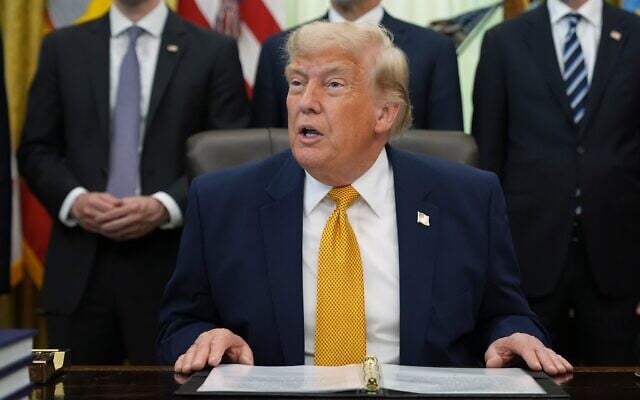
US President Donald Trump speaks in the Oval Office of the White House during an executive order signing about quantum computing, June 22, 2026, in Washington. (AP/Jacquelyn Martin)
The US Senate passes a largely symbolic resolution calling for an end to US President Donald Trump’s war with Iran, delivering a fresh rebuke to the White House as it tries to negotiate a lasting settlement with Tehran.
The House-passed measure, adopted by the Senate in a 50-48 vote, directs Trump to remove US forces from hostilities with Iran unless Congress explicitly authorizes military action.
Because the measure is a “concurrent resolution,” it does not go to Trump’s desk for signature and carries disputed legal force.
The US and Iran are currently in a ceasefire amid negotiations, and Trump is likely to entirely ignore the resolution’s passage.
Iranian president says without missiles his country would be ‘just like Gaza’
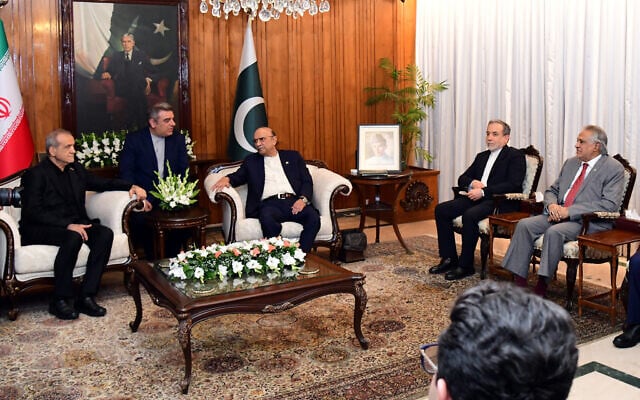
This handout photograph taken on June 23, 2026, and released by Pakistan's President House shows Pakistan's President Asif Ali Zardari (C) and Foreign Minister Ishaq Dar (R) attending a meeting with Iran's President Masoud Pezeshkian (L) and Foreign Minister Abbas Araghchi (2R) in Islamabad amid the US-Iran peace talks. (Pakistan's President House / AFP)
Iranian President Masoud Pezeshkian says that, without its missiles, his country would have ended up “just like Gaza,” insisting that its ballistic program is non-negotiable.
“If the missiles we have for our defense did not exist, Israel and the United States would have ploughed Iran just like Gaza, showing no mercy to either the old or the young,” he says during a visit to Pakistan, a key mediator in talks between Tehran and Washington seeking a permanent end to the Middle East war.
“We will never negotiate with anyone, under any circumstances, ever, about our defensive capabilities,” he adds.
Before the war, the United States had sought to include the ballistic missile program, as well as Tehran’s support for armed proxies, in negotiations over Iran’s nuclear activity.
In recent days, US President Donald Trump has appeared to soften his stance on the missiles issue.
“I’m saying that if other countries have them, it’s a little bit unfair for them not to have some,” he said last week at the G7 summit in France.
Former MK detained for questioning over alleged incitement in 2022 Ramallah speech
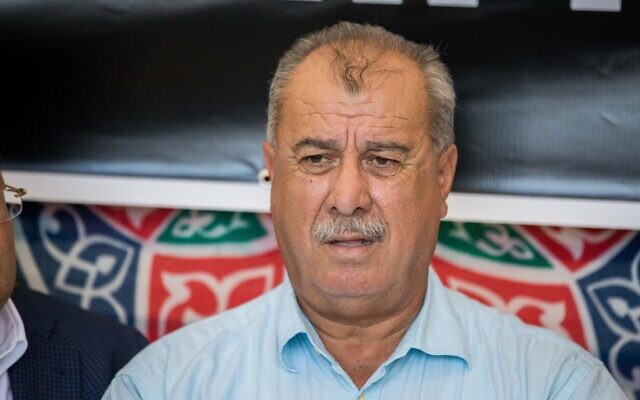
Mohammad Barakeh, chair of umbrella organization for the Arab community, the High Follow-up Committee in Jerusalem on November 3, 2019. (Yonatan Sindel/Flash90)
Police briefly arrested and interrogated former MK Mohammad Barakeh this morning on incitement suspicions for a speech he gave more than three years ago in Ramallah.
Announcing the move, police say they arrested a former elected official for a speech he gave in December 2022 which allegedly expressed “praise for and identification with terrorists and terror groups, alongside calls for struggle against the State of Israel.”
The arrest comes several days after police initially summoned Barakeh for questioning in Ariel, following approval to launch an investigation given last week by the State Attorney’s Office.
Barakeh refused to travel to the West Bank settlement, which prompted police to arrive at his doorstep in Shfaram with a warrant. They placed him under arrest and brought him to the West Bank for questioning.
After his interrogation, Barakeh was brought to the Petah Tikva Magistrate’s Court, where police sought to bar him from leaving the country until October or entering the West Bank for a 90-day period.
The judge rejected police’s request to bar him from traveling abroad, but imposed a 30-day ban on him entering the West Bank.
Police do not elaborate on the statements Barakeh made during his speech. According to Hebrew reports, the ex-MK compared the State of Israel to Nazi Germany, called for “popular resistance to the occupation” and “struggle and fighting” against Israel.
The speech in question was delivered at a 2022 rally marking the founding of Fatah, the dominant Palestinian political party in the West Bank.
At the time of the speech, Barakeh was chairman of the High Follow-Up Committee for Arab Citizens of Israel, an umbrella organization representing Israel’s Arab citizens.
The organization this evening decries the former chairman’s arrest as politically motivated, claiming it represents “another dangerous episode in a string of political persecutions” meant to “intimidate the Arab populace, deter them from political participation and legitimate struggle against the policies of occupation, racism and political repression.”
NY man imprisoned for attacking Jews is released early, supporters say

Tarek Bazrouk pictured during a December 2024 assault on Jewish targets. (US Attorney’s Office for the Southern District of New York)
A prominent anti-Israel activist in New York City who was imprisoned for assaulting Jews is released from prison early, his supporters say.
Tarek Bazrouk pleaded guilty to antisemitic hate crimes in federal court last year.
He physically assaulted Jews during anti-Israel protests in at least three incidents.
After his arrest, Bazrouk became a cause célèbre in the anti-Zionist movement.
More than 12,000 people signed a letter supporting him during his trial, hundreds showed up to his court hearings, and supporters have donated more than $11,000 to his prison commissary.
Leading anti-Zionist groups, such as National Students for Justice in Palestine and Within Our Lifetime, have publicly supported him.
A group of his backers says he was released from prison this morning, after 13 months of incarceration.
He is released a month early because he completed an early release program while incarcerated, the statement says.
The group, called Free Tarek Bazrouk, urges followers to continue donating to him during his three-year probation.
“Tarek has taught us all that struggle, sacrifice, solidarity and unity is our collective duty,” the group says.
Yair Golan said to hold power to rearrange The Democrats party list after primary
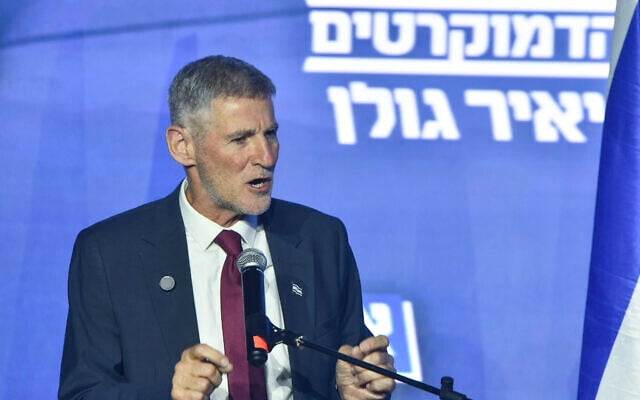
The Democrats chairman Yair Golan speaks during a party conference in Tel Aviv, May 31, 2026. (Avshalom Sassoni/ Flash90)
Ahead of the left-wing Democrats party’s upcoming July 20 primary, Channel 12 reports that a byline in the party’s bylaws authorizes the party leadership, with the approval of chairman Yair Golan, to move elected candidates higher or lower on their electoral list to boost the chances of electoral success, Channel 12 reports.
According to the network, this could be part of an effort to hold back controversial candidates like Naor Narkis. In March, the party distanced itself from the left-wing atheist activist after a series of social media posts in which he criticized married Orthodox women for wearing traditional head coverings.
While the party’s predecessor, Labor, currently holds four Knesset seats, it is expected to more than double its representation in the next election, having consistently polled at 10-11 seats for months, including in surveys conducted by The Times of Israel’s sister site Zman Yisrael.
The party was formed in 2024 through the merger of Labor and Meretz, which both historically held primaries. Only a handful of current Israeli parties, including Prime Minister Benjamin Netanyahu’s Likud, use primaries to select their Knesset slates.
NY progressive Jewish group condemns anti-AIPAC rhetoric after Mamdani comments
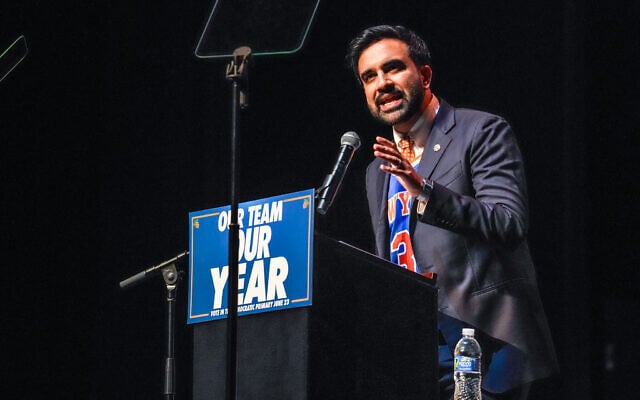
New York City Mayor Zohran Mamdani speaks during a Get Out The Vote rally ahead of New York's primary election, June 18, 2026, in the Brooklyn borough of New York. (AP/Ryan Murphy)
The New York Jewish Agenda, a progressive advocacy group, condemns rhetoric demonizing AIPAC after New York City Mayor Zohran Mamdani likened the pro-Israel lobby to “monsters.”
The statement stands out because the group has had a friendly relationship with Mamdani, and its former director heads the mayor’s Office to Combat Antisemitism.
“We have been deeply critical of AIPAC’s policies and approach to politics. No matter those very deep differences, it’s vital that our leaders to not resort to rhetoric and attacks that only reinforce polarization and division,” the group says in a statement.
“Especially at this moment of fear and rising antisemitism, flattening these urgent conversations with dehumanizing language is counterproductive to building a broad and vibrant movement for human dignity,” says the statement, without naming Mamdani.
— New York Jewish Agenda (@NYJewishAgenda) June 23, 2026
Mamdani’s description of AIPAC as “monsters” seeking “genocide” and “to turn us against one another” last week sparked a firestorm of criticism from both centrist Jewish groups, and some of Mamdani’s Jewish supporters.
Mamdani doubled down on the statement yesterday, tying AIPAC to “death and destruction” and a “status quo for immorality.”
The former director of the New York Jewish Agenda, Phylisa Wisdom, left the group earlier this year to head Mamdani’s Office to Combat Antisemitism.
Representatives of the New York Jewish Agenda attended Mamdani’s Shavuot event last month, which leading Jewish groups boycotted. In December, Mamdani, then the mayor-elect, attended a Hanukkah event hosted by the group.
The New York Jewish Agenda has applauded past actions by Mamdani, such as his funding for combating hate crimes.
Moroccan soldiers arrive in Israel to join international Gaza force
Officers from the Moroccan military, whose deployment was announced in February, have arrived in Israel to join a nascent international force for Gaza, says US President Donald Trump’s Board of Peace.
An official from the board separately tells AFP on condition of anonymity that the contingent arrived on June 18 at the headquarters of the International Stabilization Force (ISF) in southern Israel.
The contingent is expected to contribute to the development of the force’s overall structure and provide expertise in several areas, including policing, the official says. He confirms the presence of four Moroccan officers but does not specify whether the contingent included additional personnel.
The #ISF welcomes its newest members from the Royal Moroccan Armed Forces. Their arrival strengthens the international effort to support the people of Gaza. #StabilityStartsHere pic.twitter.com/xsp6GTgaC1
— Board of Peace (@BoardOfPeace) June 23, 2026
“Their arrival strengthens the international effort to support the people of Gaza,” the Board of Peace says on X.
In February, Morocco committed to deploying police officers and military personnel to the Gaza Strip, becoming the first Arab country to do so publicly.
In mid-January, Washington announced the launch of the second phase of Trump’s plan for Gaza aimed at bringing a definitive end to the war triggered by Hamas’s October 7, 2023 attack on Israel. In practice, however, little tangible progress has been achieved.
Dedy Simhi reportedly set to join Gantz’s Blue and White party
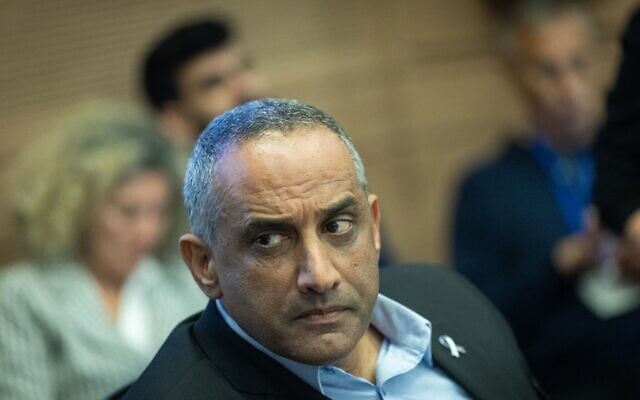
Former Israeli Fire and Rescue Services Commissioner Dedy Simhi attends committee meeting at the Knesset, January 21, 2025. (Yonatan Sindel/Flash90)
Benny Gantz’s Blue and White party is expected to soon announce a joint run with former Israeli Fire and Rescue Services Commissioner Dedy Simhi, who threw his hat into the political ring in early May, according to Hebrew media reports.
Simhi, a frequent commentator and analyst on Israeli TV channels, lost his son, Staff Sgt. Guy Simhi, when he was killed battling the Hamas invasion of southern Israel on October 7.
Gantz, whose party has been polling at or below the electoral threshold, is reportedly also in talks with Yoaz Hendel’s Reservists party as well as former Beit Shemesh mayor Aliza Bloch.
Denmark to join mission to help reopen Strait of Hormuz

US Central Command (CENTCOM) forces begin setting conditions for clearing mines in the Strait of Hormuz, April 11, 2026, as two US Navy guided-missile destroyers conducted operations. (US Central Command Photo)
Denmark will take part in the international maritime mission set up by France and Britain to help reopen the Strait of Hormuz, the Danish government says.
“This will involve a contribution including a group of interpreters, drone capabilities, staff officers as well as the possibility of mobilizing expertise in the cyber domain,” Defense Minister Jeppe Bruus tells reporters, declining to provide further details on the size of the contribution.
The aim is “to strengthen maritime security and guarantee freedom of navigation in and around the Strait of Hormuz and the Red Sea,” according to a bill submitted to the Danish parliament which is expected to pass before the end of the week.
At least 37 commodity carriers transited the Strait of Hormuz yesterday, a record volume of maritime traffic since the start of the Middle East war, according to data from the maritime tracking firm Kpler, nearly a week after the conclusion of a memorandum of understanding between the United States and Iran.
France and Britain, together with other countries, have proposed an international mission to clear mines and secure the strategic passage, to be deployed after the conclusion of a US-Iran deal.
Zini cancels Shin Bet Pride Month event, leaves LGBTQ group without budget – report
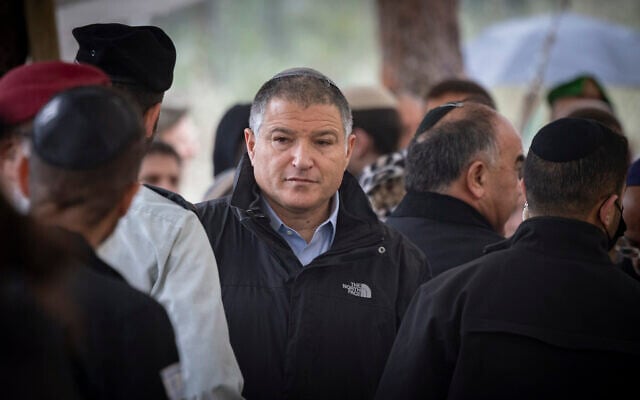
Shin Bet director David Zini attends the funeral of an Israeli soldier at the Mount Herzl Military Cemetery in Jerusalem, March 27, 2026, (Chaim Goldberg/Flash90)
Shin Bet chief David Zini recently ordered the cancellation of a planned Pride Month event within the agency and blocked a series of related initiatives, effectively shutting down the organization’s LGBTQ employee group, Channel 12 reports.
According to the report, organizers were informed at an advanced stage of preparations that the event would not be approved. Sources familiar with the matter tell the network that the directive came from high up in the Shin Bet’s chain of command, allegedly from Zini, with no clear explanation for the decision.
Channel 12 says requests to display Pride-themed banners and screensavers, hang Pride flags at the event venue, produce event stickers and distribute LGBTQ-related content through Shin Bet systems were all denied. The report also claims that the agency’s human resources department was instructed to transfer the LGBTQ group’s budget into the Shin Bet’s general budget, leaving it with no dedicated funding.
The move has reportedly sparked criticism among some Shin Bet employees and LGBTQ rights advocates, who describe it as a departure from the values of equality and inclusion that the agency had promoted in recent years.
The Shin Bet declines to officially comment on the report, according to Channel 12.
Opposition Leader Yair Lapid slams Zini following the report.
“The conduct of Shin Bet chief Zini towards his gay service-people is a disgrace,” Lapid says in a statement. “Our LGBTQ service members are just as good as any other service member and save Israeli lives just like any other service member. I want to tell them today: We are proud of you and grateful to you. In the government we establish, there will be no place for such dark views in Israel’s public sphere.”
Trump: Iran is ‘wrong’ to claim it didn’t agree to allow access to nuclear inspectors
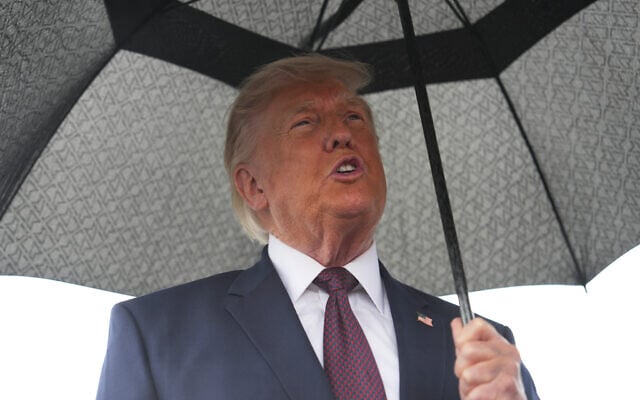
US President Donald Trump speaks to the media after disembarking Air Force One at Reading Regional Airport, June 23, 2026, in Reading, Pennsylvania. (AP/Julia Demaree Nikhinson)
WASHINGTON — Asked about Iran’s assertion that it has not agreed to grant UN inspectors access to its nuclear sites, US President Donald Trump responds, “They’re wrong.”
Asked what he will say to Senate Republicans tomorrow who have criticized his Iran agreement, Trump says: “Anybody’s that’s been critical of it has to be educated, even if they’re friends of mine.”
“They know they’re wrong. They told us inside [negotiations in Switzerland over the weekend], and we have it down — 100% inspections,” Trump tells reporters.
“And if they [the Iranians] were right, I’d cancel the meetings right now,” Trump adds, indicating that technical talks with Iran will continue.
Asked when UN inspectors will actually arrive in Iran, Trump responds that they will do so at the appropriate time.
Report: Israel set to partially withdraw troops from southern Lebanon
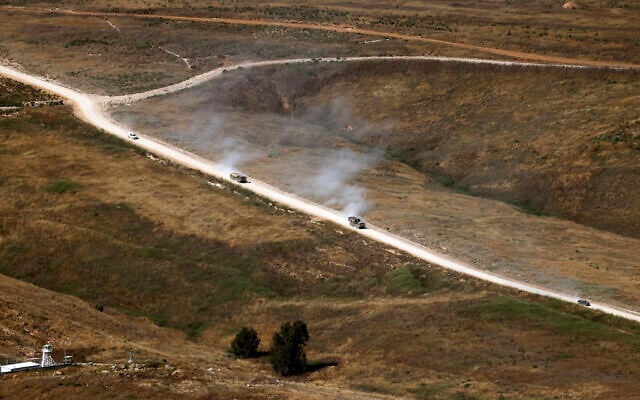
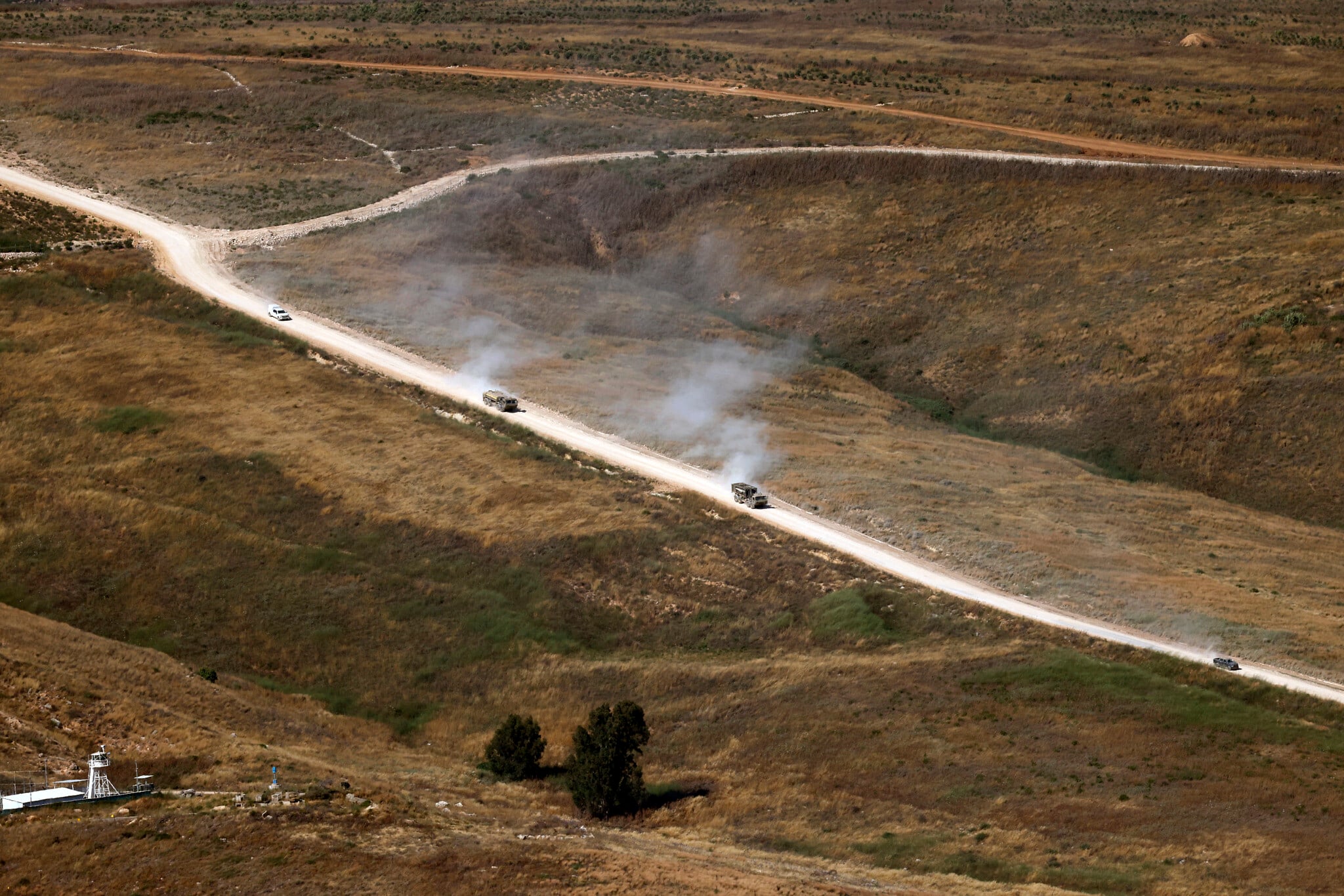
This picture taken from a position in the Upper Galilee region in northern Israel, shows Israeli military vehicles driving along a road in southern Lebanon on June 22, 2026. (Jalaa MAREY / AFP) /
Israel is set to partially withdraw troops from southern Lebanon, Channel 13 news reports.
According to the network, the issue of Israel’s withdrawal from some areas under IDF control is currently being discussed during a meeting between Israeli and Lebanese delegations in Washington.
An unnamed “senior official” tells the network that the IDF “captured territory in recent days for the purpose of negotiations, to then withdraw from them.”
Under a reported planned pilot program, the IDF would leave certain areas of southern Lebanon and hand them over to the control of the Lebanese army.
In Pakistan, Iranian president says ballistic missiles ‘will never be’ included in deal
This handout photograph taken on June 23, 2026, and released by Pakistan's President House shows Pakistan's President Asif Ali Zardari (C) and Foreign Minister Ishaq Dar (R) attending a meeting with Iran's President Masoud Pezeshkian (L) and Foreign Minister Abbas Araghchi (2R) in Islamabad amid the US-Iran peace talks. (Pakistan's President House / AFP)
Iran’s missiles were not in the memorandum of understanding signed with the US and “will never be,” Iranian President Masoud Pezeshkian says at a joint news conference with Pakistan’s prime minister in Islamabad.
Iran will never negotiate its defense capabilities with any country and believes strongly that regional peace and stability can only be reached through honest discussions and intraregional cooperation, Pezeshkian adds.
Pakistani Prime Minister Shehbaz Sharif says there should be no double standards regarding ballistic missiles, saying that Iran has the same right to have them as other countries.
Sharif also told reporters that there was no mention of ballistic missiles in the MOU agreed between Iran and the United States because the issue was never on the table in those discussions.
Hezbollah chief demands full Israeli withdrawal ‘according to a timetable’
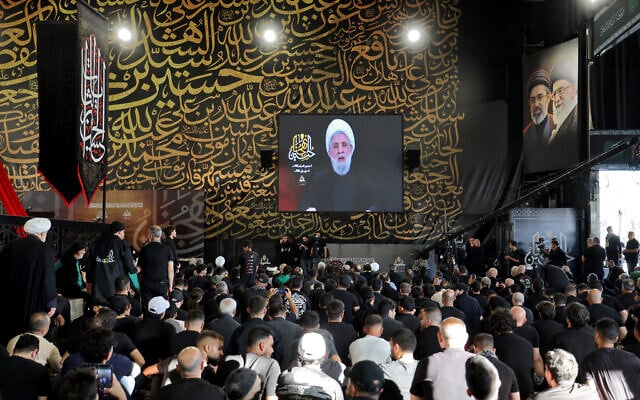
Hezbollah Secretary-General Sheikh Naim Qassem addresses crowds via a giant screen during the first day of Ashura commemorations at the mausoleum of former Hezbollah leader Hassan Nasrallah in Beirut's southern suburbs on June 17, 2026. (Anwar AMRO / AFP)
Hezbollah chief Naim Qassem demands a full, scheduled withdrawal of Israeli troops from Lebanon to make way for a Lebanese army deployment in the south following the US-Iran deal to end the Middle East war.
“We now have a ceasefire. The withdrawal must take place according to a timetable. Israel has no choice but to fully withdraw from all Lebanese territory, without retaining an inch,” Qassem says in a televised address. “Israel withdraws and the Lebanese army deploys exclusively south of the Litani River.”
Lebanon announced last year that it had completed its deployment in southern Lebanon after disarming Hezbollah in the area as part of a ceasefire deal, but Israel had expressed heavy skepticism toward the claim and the Iran-backed terror group later continued to attack Israel from the area.
Rubio: Iran will not be allowed to charge tolls in Strait of Hormuz under any final deal
US Secretary of State Marco Rubio says Iran will not be able to charge tolls in the Strait of Hormuz as part of any final agreement with the US, saying that such an arrangement would be contrary to international law.
Rubio’s comments come as he landed in Abu Dhabi, the first stop on a tour of the Gulf states hit hard by Iran’s retaliatory campaign.
Rubio is to meet Emirati leaders tomorrow, before heading to Kuwait, followed by Bahrain for a meeting of the Gulf Cooperation Council, as he seeks to reassure US allies after the signing of an initial US-Iran deal last week.
Shas and UTJ deny reaching deal with Netanyahu over pre-election legislation
Shas and United Torah Judaism deny reports that they have reached a deal with Prime Minister Benjamin Netanyahu to advance their legislative agenda in exchange for supporting coalition priorities.
In a joint statement, the two ultra-Orthodox factions state that “contrary to reports, there is no ‘deal’ with Prime Minister Netanyahu. Our demand to advance the Basic Law: Torah Study and the law preventing the arrest of Torah scholars stands on its own, is not contingent on anything, and we have not given up on any demand.”
“To the extent that we see these laws are being practically advanced, we will be able to resume voting in favor of coalition legislation, in accordance with the instructions of the Torah sages,” the two parties add.
In a previous statement sent less than an hour ago, the two parties indicated that Netanyahu had committed to the immediate advancement of the Basic Law: Torah Study and legislation halting the detention of ultra-Orthodox draft evaders.
“Today we held a meeting with Prime Minister Benjamin Netanyahu and conveyed to him on behalf [of our rabbinic leadership] an unequivocal demand to immediately advance the Basic Law on Torah Study and the law to stop the arrests of Torah students, by convening the Foreign Affairs and Defense Committee and the Knesset House Committee this week,” the two parties stated.
“We made it clear that if we do not see practical actions as we demanded, we will support dissolving the Knesset as early as next week. The prime minister clarified during the meeting that he is committed to the approval of these laws and will work toward their rapid advancement.”
The initial statement did not mention the so-called Daycare Law, aimed at restoring daycare subsidies to the children of draft evaders, indicating that the Haredi parties had likely given up on legislation which until now has been one of their highest priorities.
Leiter: Israel wants US-Iran MOU to succeed, but funds cannot reach Hezbollah
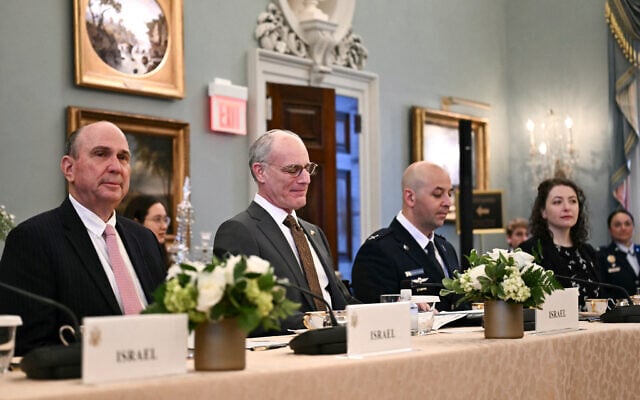
Ambassador to the US Yechiel Leiter (2nd left) attends a meeting between Israeli and Lebanese delegations hosted by the United States at the State Department in Washington, DC, on June 2, 2026. (Kent NISHIMURA / AFP)
WASHINGTON — Israeli Ambassador to the US Yechiel Leiter says Israel wants the memorandum of understanding reached last week between the US and Iran to succeed.
“We all support President Trump’s vision of ensuring that Iran no longer has nuclear capabilities, ballistic missiles or the ability to funnel money to its proxies to threaten its neighbors and maintain its regional hegemony,” Leiter says in a statement.
Trump notably last week rejected calls to bar Iran from having any ballistic missiles, arguing that it should be allowed to have some if other countries in the region do, in comments that sparked further alarm in Jerusalem.
That concern peaked yesterday when the US announced a new deconfliction cell as part of its negotiations with Iran that will be tasked with preventing further escalations in Lebanon. The deconfliction cell is said to curb Israel’s ability to operate against Hezbollah, and would replace an already-existing mechanism in which Jerusalem has a more active role.
“I fear that the concept of ‘deconfliction’ is misplaced,” Leiter says, in reference to the new cell.
“Israel is not in conflict with Lebanon. Therefore, deconfliction is not the issue. All that is needed is coordination with Lebanon,” the ambassador says.”The only issue is Hezbollah. Hezbollah must be defeated and removed from the equation. Instead, there is a danger that Hezbollah has received a boost. It certainly feels stronger and bolder.”
Leiter goes on in his statement to pose questions, which he doesn’t say who they’re for, but appears to be directing them to the Americans.
He notes that the previous meeting resulted in a joint statement from the US, Israel and Lebanon regarding the need to disarm Hezbollah and asks whether that is still the basis of talks in DC.
“For us, it must remain so,” he says. “We agreed to a ceasefire that was conditional on Hezbollah withdrawing north. Is this agreement still binding?” Leiter asks.
“We cannot afford commitments that fade away. And it is important to be clear: Israel will act against immediate and evolving threats to its citizens and soldiers,” he adds.
“Iran is expected to benefit from a flow of funds under the MOU. How do we ensure that these funds do not find their way to Hezbollah?” Leiter continues.
“If we cannot guarantee that, then all the words we agree to here will make no difference, because Hezbollah will simply rebuild itself,” he warns.
Israeli ambassador to US says including Iran in Lebanon talks is a ‘train wreck’
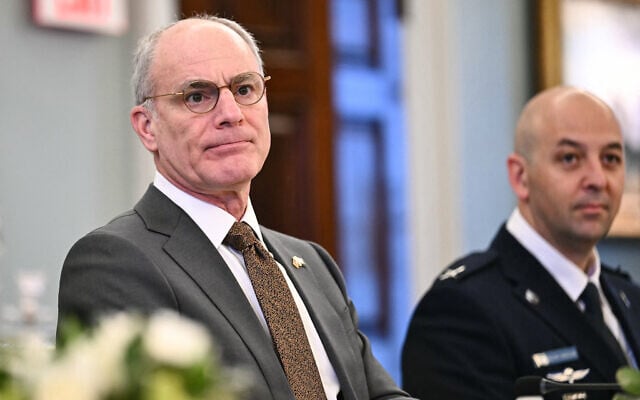
Yechiel Leiter (L), Israeli Ambassador to the US, attends a meeting between Israeli and Lebanese delegations hosted by the United States at the State Department in Washington, DC, on June 2, 2026. (Kent NISHIMURA / AFP)
WASHINGTON — Israeli Ambassador to the US Yechiel Leiter lays into the Trump administration over its willingness to include a ceasefire in Lebanon as part of the memorandum of understanding Washington inked last week with Iran.
“We are in a train wreck,” Leiter says in a Hebrew statement issued as the ambassador began the fifth round of direct talks with Lebanon at the US State Department.
Those talks were set up by the Trump administration specifically to detach Lebanon from the ongoing Iran conflict, as Tehran sought to secure an agreement with the US that also protected its Hezbollah proxy.
The direct Israel-Lebanon channel has been used to negotiate several ceasefires in Lebanon in recent months. But those truces barely held at all, as Beirut has been unable to rein in the terror group and as Israel’s efforts to disarm it exclusively through military means have failed as well.
And as the US sought an end to the Iran war that was wreaking havoc on the global economy, it found itself accepting Tehran’s demands that a ceasefire between the US and Iran also extend to Lebanon — terms to which Israel says it is not beholden.
In his Hebrew statement, Leiter says that when the direct talks between Israel and Lebanon began, “we all got on the same train.”
“We sat in the same car and traveled to the same destination, with the United States serving as the locomotive. The train was heading in a very clear direction: full peace between the countries, Iran and its malign influence out of Lebanon, the disarmament of Hezbollah, and peace and security for Lebanon and Israel.
“Today, this train is in danger of derailing. I hope we can get it back on track,” Leiter says.
“The basic premise [of these talks] was that Iran was not involved, and the main discussion is about Lebanon and Hezbollah — not about the extent to which Iran can restrain Hezbollah,” the Israeli envoy continues. “That is not Iran’s role. Its role is to get out of Lebanon. The role of the Lebanese government is to exercise its sovereignty. Sovereignty means that Iran will no longer be involved… in Lebanon.”
Leiter says he’ll be seeking “clarity” in today’s talks — ostensibly from the US regarding what its position is on Lebanon.
The apparent disconnect in the US position may have to do with the fact that US Vice President JD Vance leads the talks with Iran, as US Secretary of State Marco Rubio has spearheaded the talks between Israel and Lebanon while largely staying out of the Iran talks.
Contradicting Ben Gvir, Israel Police chief backs officers criticized for treatment of Haredi protesters
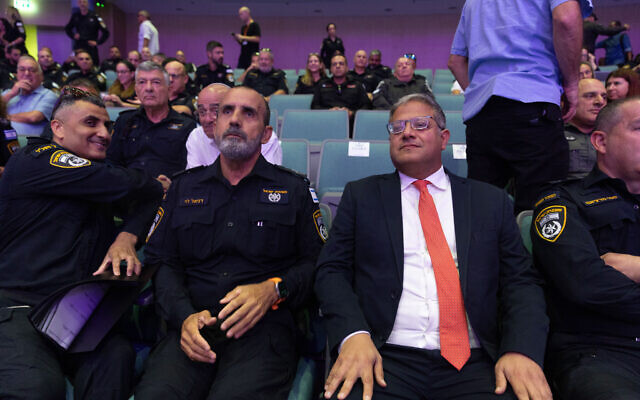
Police Commissioner Danny Levy and National Security Minister Itamar Ben Gvir seen during a ceremony at the National Police Academy in Beit Shemesh, on September 15, 2025. (Oren Ben Hakoon/ Flash90)
Police chief Danny Levy comes out in support of police officers who dealt roughly with Haredi protesters during a demonstration last week, rebuffing National Security Minister Itamar Ben Gvir’s threat to fire the Bnei Brak police station chief.
Station commander Ch. Supt. Yuval Shavit was one of several officers filmed grabbing Haredi protesters by their legs, ripping their pants and dragging them by their ankles to the side of the highway during a Wednesday demonstration against ultra-Orthodox conscription.
After meeting with Shavit, Levy concludes that “significant police action” was needed to restore public order during the early morning protest, in which hundreds of Haredi anti-draft demonstrators blocked traffic on Route 4.
“Given the circumstances of the serious incident, during which a major traffic route was blocked early in the morning, [causing] public disturbance and harming the daily lives of tens of thousands of citizens, significant police action was required,” police say in a statement communicating Levy’s position.
The commissioner expressed his “appreciation and support” for the police officers working to “preserve public order, involving decision-making in real time in a complex operational reality, and will continue to stand by their side,” the statement continues.
This morning, Ben Gvir sent a letter to Levy threatening Shavit’s dismissal after footage spread online showing the police station chief dragging a protester by the ankles after having torn his trousers.
The far-right minister’s criticism of police’s violent dispersal last week, in which officers injured eight Haredi demonstrators with stun grenades and batons, stands in stark contrast to his past support for the same measures against anti-government protesters.
UN maritime body says it will begin evacuating sailors in Gulf in coordination with Iran
The UN’s International Maritime Organization says it will begin evacuating more than 11,000 sailors stranded in the Gulf due to the Middle East war.
“This large-scale operation will be carried out in close cooperation with Iran, Oman, all other coastal States in the region, the United States and the maritime industry,” IMO secretary-general Arsenio Dominguez says in a statement.
“We have secured the necessary safety guarantees and have thoroughly verified the conditions for safe navigation to support these operations,” he adds.
Sa’ar: Hezbollah, not Israel, is the one ‘breaching Lebanon’s sovereignty’
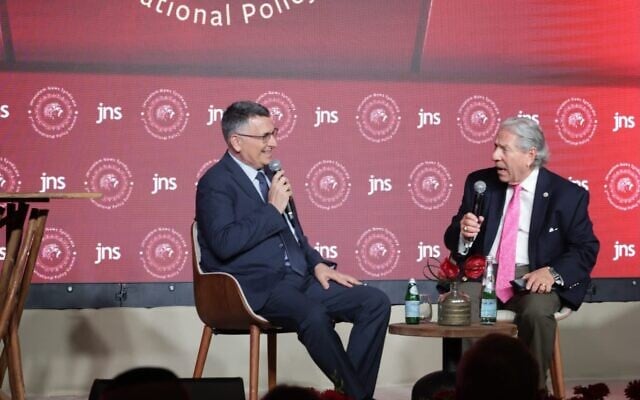
Foreign Minister Gideon Sa'ar (left) speaks at the JNS conference in Jerusalem on June 23, 2026. (JNS via Foreign Ministry)
Foreign Minister Gideon Sa’ar accuses Iran of indirectly occupying Lebanon through its proxy Hezbollah, and defends Israel’s self-proclaimed security zone in southern Lebanon amid increasing concerns in Jerusalem of potential US limitations on its freedom of action there.
“I hear statements in the international community that Israel is breaching Lebanon’s sovereignty [by occupying a security zone]. This is not the truth. Hezbollah is breaching Lebanon’s sovereignty,” Sa’ar says in an interview at the JNS International Policy Summit in Jerusalem.
“Lebanon is under Iranian occupation — indirect by Hezbollah, but under an occupation. On the soil of Lebanon, there is a stronger army than the Lebanese Army, which is Hezbollah. And this is the core problem” to improving Israel-Lebanon ties, he says, adding he hopes talks between Beirut and Jerusalem today lead to “a common future” with Lebanon.
Defending Israel’s security zone, Sa’ar says, “I don’t think there is any other country in the world that would accept attacks from neighboring territory on its citizens, and we cannot as well.”
Resolving stalemate, Netanyahu, Haredi parties said to settle on October 20 election date
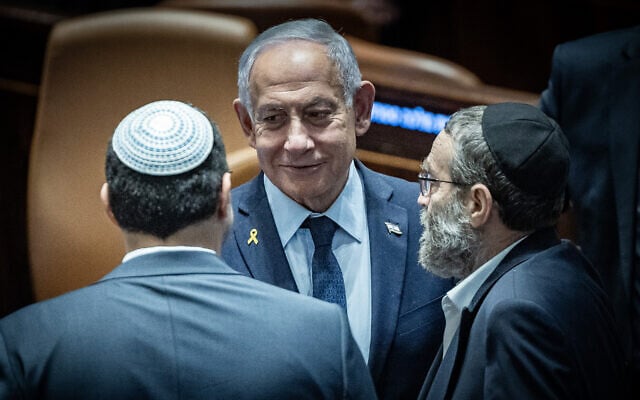
Prime Minister Benjamin Netanyahu (C) and UTJ MK Moshe Gafni (R) at the assembly hall of the Knesset, in Jerusalem on March 19, 2025. (Yonatan Sindel/Flash90)
Prime Minister Benjamin Netanyahu has committed to the immediate advancement of the Basic Law: Torah Study and legislation halting the detention of ultra-Orthodox draft evaders, the ultra-Orthodox Shas and Degel HaTorah parties claim in a joint statement following a meeting with the prime minister.
“Today we held a meeting with Prime Minister Benjamin Netanyahu and conveyed to him on behalf [of our rabbinic leadership] an unequivocal demand to immediately advance the Basic Law on Torah Study and the law to stop the arrests of Torah students, by convening the Foreign Affairs and Defense Committee and the Knesset House Committee this week,” the two parties state.
“We made it clear that if we do not see practical actions as we demanded, we will support dissolving the Knesset as early as next week. The prime minister clarified during the meeting that he is committed to the approval of these laws and will work toward their rapid advancement.”
The statement does not mention the so-called Daycare Law, aimed at restoring daycare subsidies to the children of draft evaders, indicating that the Haredi parties have likely given up on legislation which until now has been one of their highest priorities.
According to the Ynet news site, the two sides agreed to hold the upcoming national election on October 20, with the Haredim also agreeing to back the coalition’s bills to split the role of the attorney general and establish a political commission of inquiry into October 7.
There is a limited amount of time to pass these bills, as the pre-election parliamentary recess is likely to begin on July 16.
Spokespeople for the prime minister do not immediately reply to The Times of Israel’s request for comment.
Vance, Rubio discuss proposed US-Lebanon-Iran ceasefire mechanism with Aoun
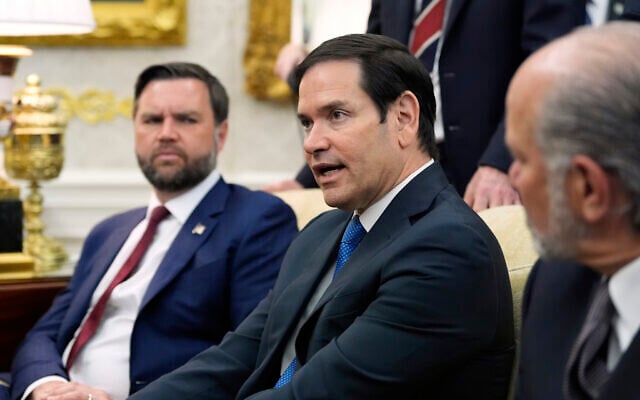
US Secretary of State Marco Rubio speaks as Vice President JD Vance listens during a meeting between President Donald Trump and South Korean President Lee Jae Myung in the Oval Office of the White House, Aug. 25, 2025, in Washington. (AP/Alex Brandon)
US Vice President JD Vance and Secretary of State Marco Rubio tell Lebanese President Joseph Aoun in a call today that the US is following up on understandings reached in Switzerland, including plans to consolidate a ceasefire in Lebanon.
The statement, issued as Lebanon and Israel begin a new round of talks in Washington, adds that arrangements for a mechanism to firm up the ceasefire and monitor its implementation are still being discussed.
Traffic picking up in Strait of Hormuz as talks progress, tracking data shows
Three stranded supertankers pass through the Strait of Hormuz today, while seven empty Qatar-linked liquefied natural gas tankers have entered in recent weeks in an early sign Gulf gas shipping may be resuming, ship-tracking data shows.
Iranian-linked tankers also continue to transit the vital waterway, according to the data, with traffic picking up yesterday as US-Iran talks progressed.
More crude oil cargoes stranded in the Gulf since the start of the war are expected to make their way out now, analysts say, while a growing number of sanctioned tankers have been plying the strait to load and export Iranian oil after the US waived sanctions.
Two Trafigura-operated Very Large Crude Carriers (VLCCs), each carrying 2 million barrels of crude, exited the strait today. One, Dubai Energy, was chartered by Taiwanese state energy firm CPC, and the second, Legio X Equestris was chartered by TotalEnergies, LSEG and Kpler data showed.
Another VLCC, Universal Glory, chartered by South Korean refiner GS Caltex, also left the strait today with 2 million barrels of Saudi crude onboard, the data shows. GS Caltex declined to comment.
Two sanctioned Suezmax tankers — Sobar and Sarak — were heading into the strait today, the data showed. Each of them can carry 1 million barrels of oil.
Freed Israeli hostage tells UN rights council she is ‘living proof’ of Hamas sexual violence
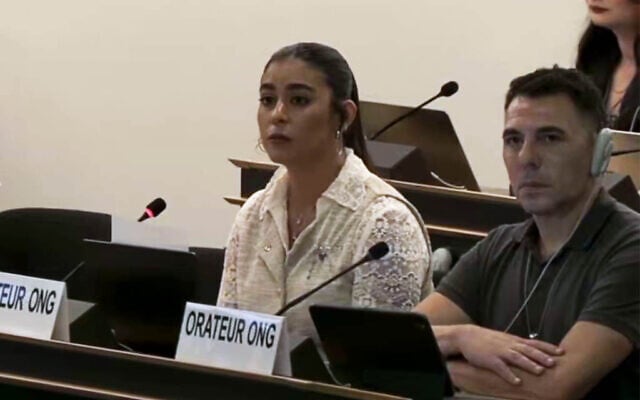
Freed hostage Ilana Gritzewsky speaks at a session of the UN Human Rights Council on June 23, 2026. (Screenshot)
Former Hamas hostage Ilana Gritzewsky testifies before the 62nd session of the UN Human Rights Council in Geneva about sexual violence perpetrated against hostages taken captive during the Hamas-led October 7, 2023, massacre, and accuses the UN Special Rapporteur on violence against women of denying evidence of such crimes.
“On October 7 and in captivity, Jewish women were raped, abused and humiliated. And you special rapporteur, you choose silence and denial,” Gritzewsky says at the Palais des Nations, addressing special rapporteur Reem Alsalem, who is in attendance.
“I am the living proof of sexual violence by Hamas”
“And you Special Rapporteur you choose silence and denial”Hostage survivor Ilana Gritzewsky slams @UN Special Rapporteur @UNSRVAW Reem Alsalem with the truth. pic.twitter.com/MCX3sNWjLf
— Oren Marmorstein (@OrenMarmorstein) June 23, 2026
“You say there was no evidence of sexual violence on October 7. I’m standing here today… [as] a woman who survived. I am the living proof of sexual violence by Hamas,” she continues, saying she “begged not to be raped” by her captors while in captivity.
Gritzewsky also testified before the UN Security Council last year, where she said her captors “sexually abused” her, leading her to lose consciousness, and that she had to tell them that she had her period in order not to be raped.
Remarks by Alsalem in 2025 falsely claiming that no independent probe had found that rape occurred during the October 7 attack sparked intense backlash from Israeli officials and Jewish organizations.
A series of investigations have found evidence that Palestinian attackers raped Israelis during the invasion of Israel on October 7, 2023, and while they were being held hostage in Gaza, including a 2024 report by the UN’s special representative of the secretary-general on sexual violence in conflict.
As talks begin, Lebanon’s president says Beirut will accept ‘nothing less’ than IDF withdrawal
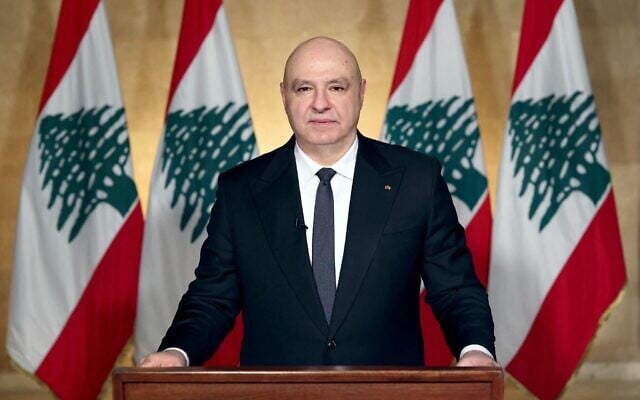
A photograph released by the Lebanese Presidency on April 17, 2026, shows Lebanon's President Joseph Aoun delivering a televised address to the Lebanese people from the Baabda Presidential Palace, east of the capital Beirut. (Lebanese Presidency)
Lebanese President Joseph Aoun rejects Israel’s presence in south Lebanon and other foreign interference — an allusion to Iran — as a fifth round of Israel-Lebanon talks begins in Washington.
“We accept nothing less than an end to the Israeli occupation and at the same time, the fall of foreign tutelage, because our only option is our national sovereignty and our sole wager is on the Lebanese state,” Aoun says, according to his office.
He also expresses hope that the new round of talks will be “decisive along the path of achieving what we seek for the good of our nation and people,” namely “the full restoration of Lebanon’s sovereignty over every grain of its soil.”
Amid coalition standoff, Gafni and Deri sit down with Netanyahu
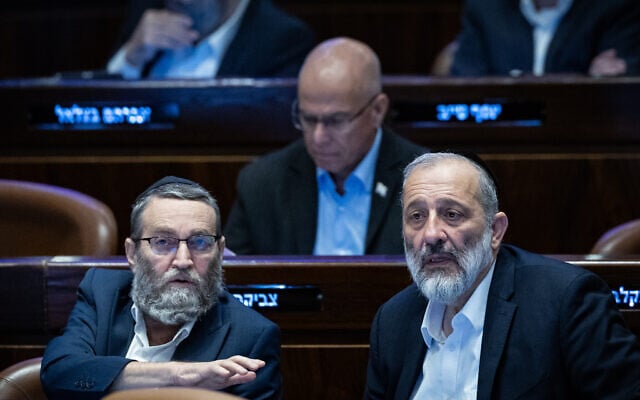
Shas chairman Aryeh Deri speaks with United Torah Judaism MK Moshe Gafni in the Knesset, December 14, 2023. (Yonatan Sindel/Flash90)
Degel HaTorah chairman Moshe Gafni and Shas chief Aryeh Deri are currently meeting with Prime Minister Benjamin Netanyahu after declining to attend a sit-down with the premier and the heads of his coalition parties, the Ynet news site reports.
Degel HaTorah is part of the larger United Torah Judaism party. UTJ’s Agudat Yisrael faction does not appear to have sent a representative to the meeting.
Netanyahu had invited the leaders of the Knesset’s ultra-Orthodox factions to sit with their coalition counterparts to discuss the ongoing fight over their demand for the expedited passage of a bundle of laws benefiting draft evaders and yeshiva students. Their refusal to attend the initial, larger meeting led to its cancellation.
A spokesman for Gafni told The Times of Israel earlier today that Degel HaTorah had declined to meet with Netanyahu and his coalition allies “because we are in the opposition and it was a meeting of the coalition leaders.”
Speaking with the Emess news site after the coalition meeting was canceled, a senior coalition figure declared that “we are advancing toward dissolving the Knesset next week.”
Iran announces three-day holiday in Tehran for Ali Khamenei’s funeral
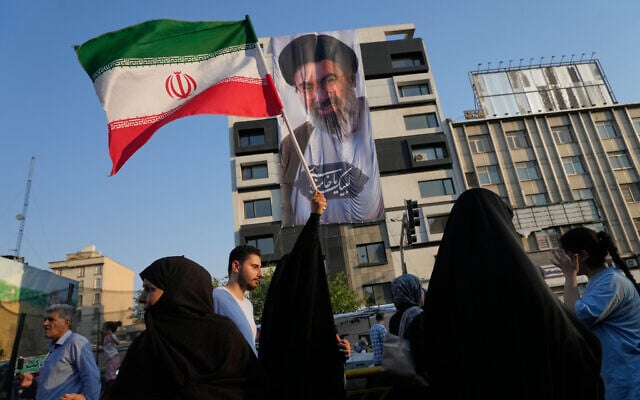
A woman holds up an Iranian flag in front of a banner showing a portrait of the Supreme Leader Ayatollah Mojtaba Khamenei, during a street festival celebrating the Muslim Shiite holiday of Eid al-Ghadir, in Tehran, Iran, June 4, 2026. (AP/Vahid Salemi)
Iran announces three days of public holidays in the capital Tehran for late supreme leader Ayatollah Ali Khamenei’s funeral ceremonies, state television reports.
“The farewell ceremony and prayers for the martyred leader’s body will be held on Saturday and Sunday, July 4 and 5, in Tehran’s Grand Mosalla, and the funeral will be held on Monday, July 6, and Tehran province will be off for these three days,” IRGC commander Hassan Hassanzadeh, in charge of the funeral ceremonies, is quoted as saying.
Earlier, state media said Tehran would be on holiday on July 4 and 5, while the whole country will follow suit on July 6.
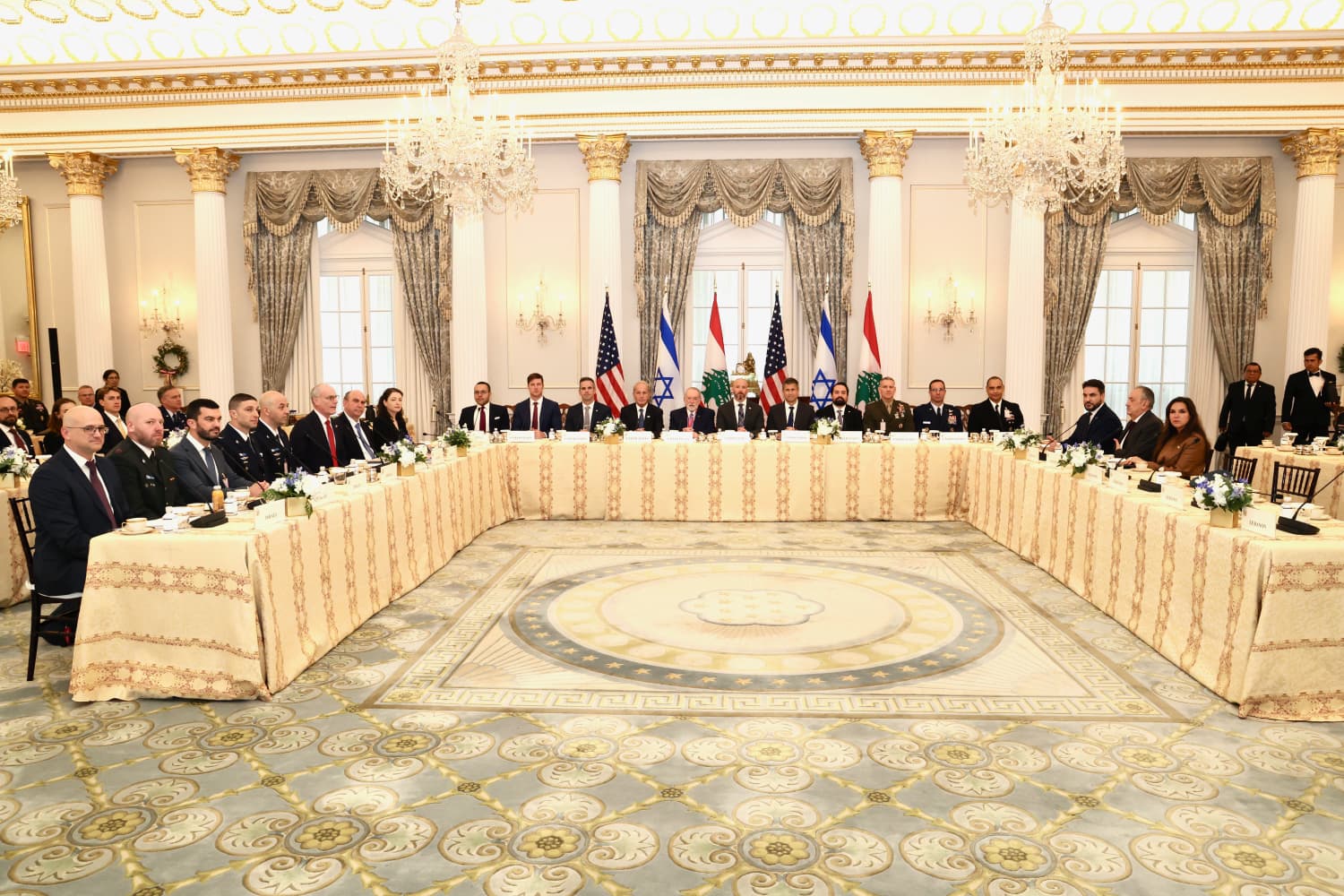
Latest round of direct Israel-Lebanon talks kicks off in Washington
The latest round of direct talks between Israel and Lebanon has kicked off at the US State Department in Washington.
Today’s session will focus on both political and security issues before splitting off into separate sessions on Wednesday and Thursday, respectively.
IDF: Troops fired at 4 Hezbollah operatives who entered south Lebanon ‘security zone’
This picture taken from a position in the Upper Galilee region in northern Israel, shows Israeli military vehicles driving along a road in southern Lebanon on June 22, 2026. (Jalaa MAREY / AFP) /
The IDF says troops opened fire on four Hezbollah operatives who crossed into Israel’s security zone in southern Lebanon a short while ago.
According to the military, troops spotted four Hezbollah operatives riding in a bulldozer and on a motorcycle into the security zone near the Ali Taher ridge, close to Nabatieh — where troops are operating — “in a manner that posed an immediate threat.”
After identifying the operatives, troops fired warning shots toward them.
“After the operatives continued to approach and did not respond to the forces’ calls, additional fire was carried out in order to remove the threat,” the military says, adding that at least one was hit.
Bennett says Israel smuggled Starlink internet receivers into Iran to aid protesters
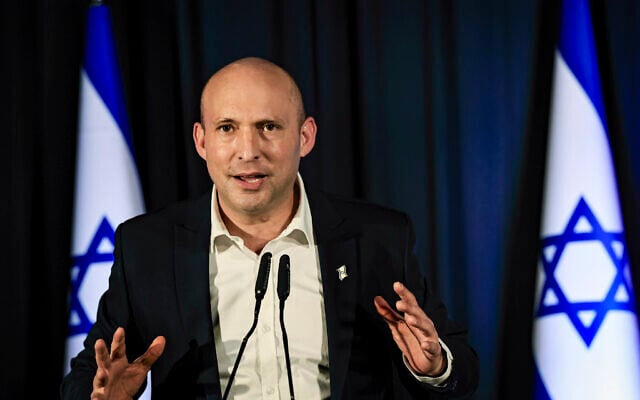
Former prime minister Naftali Bennett speaks during a press conference in Ofakim, June 23, 2026. (Tsafrir Abayov/Flash90)
Former prime minister Naftali Bennett acknowledges that Israel smuggled Starlink internet receivers into Iran to help anti-government protesters, though he said Prime Minister Benjamin Netanyahu’s government failed to follow through on the plans.
Bennett, who served as prime minister from 2021 to 2022, tells the audience at the JNS International Policy Summit in Jerusalem that he had initiated a “process of acquiring and smuggling into Iran tens of thousands of Starlink receptors that would allow continuity of the internet and social networks.”
Starlink, owned by Elon Musk’s SpaceX, provides satellite internet connections. Iran has previously accused Israel and the United States of smuggling in the devices to undermine its security. Starlink is not licensed to operate in Iran but Musk has previously said the service is active there.
Bennett says the devices were intended to enable protesters to coordinate and ultimately topple the Iranian government.
“Unfortunately, the current incompetent Israeli government stopped doing that,” he says. “And when the protest happened, that infrastructure was not there.”
Netanyahu’s office did not immediately respond to questions on Bennett’s remarks and SpaceX was not available for comment.
Bennett told The Times of Israel this month that one thing “I had pushed for that, unfortunately, the next government did not do, was to smuggle into Iran tens of thousands of Starlink receivers, so the next time there’s a local uprising, the regime can’t turn off the internet. This wasn’t done.”
Knesset agenda cleared of legislation amid Haredi boycott
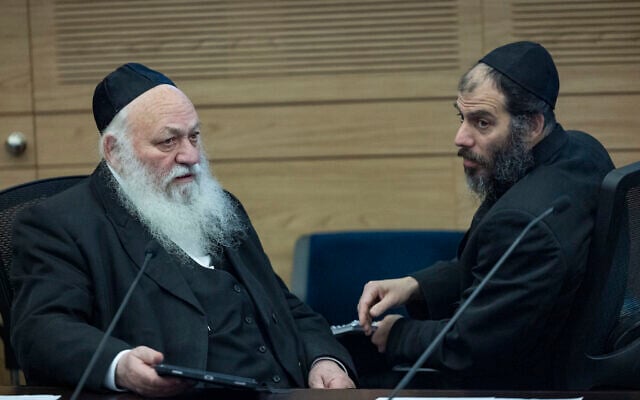
United Torah Judaism chair Yitzhak Goldknopf and his senior adviser Motti Babchik attend a Knesset House committee meeting on June 16, 2026.(Yonatan Sindel/Flash90)
All bills are removed from the Knesset plenum’s agenda as the Haredi parties’ boycott of coalition legislation continues, after the ultra-Orthodox Shas and United Torah Judaism parties decline to attend a meeting at the Prime Minister’s Office intended to break the stalemate.
The boycott, which is now in its second week, was initially prompted by the coalition’s refusal to advance to a plenum vote the so-called Daycare Law, which would restore daycare subsidies for the children of draft evaders, but has since grown to encompass other Haredi conscription-related demands.
“The violent arrests of Torah students must stop! We informed the coalition chairman that as long as the law to stop arrests and the Basic Law on Torah study are not advanced, we will not support any coalition legislation,” Shas chairman Aryeh Deri told party lawmakers during their weekly faction meeting yesterday afternoon.
Haredi legislators, who began the process of dissolving the Knesset in May over the coalition’s failure to pass a controversial law restoring yeshiva students’ draft exemptions, have since pushed for the passage of legislation declaring Torah study a foundational value of the State of Israel, restoring daycare subsidies to the children of draft dodgers, and halting the arrests of evaders.
Iran says card-based banking hit by cyberattack on three lenders
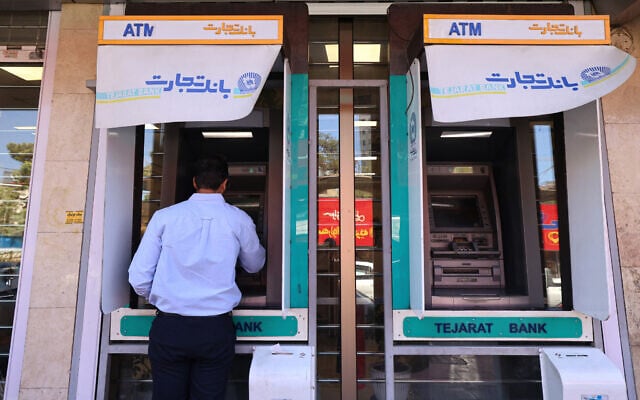
A man withdraws money from the Tejarat Bank ATM along a street in Tehran on May 25, 2026. (Atta Kenare/AFP)
Iran’s state-owned banking technology provider says that cyberattacks disrupted card-based banking services at Bank Melli, Bank Saderat and Bank Tejarat.
This prompted a temporary suspension of all card-related operations at the three banks to prevent further unauthorized access, the company tells state TV, with cybersecurity teams working to restore normal operations.
The company’s public relations head says ATM services, point-of-sale terminals and mobile applications linked to card systems were all affected.
Major banks including Melli, Saderat, Tejarat and the Export Development Bank of Iran have faced disruptions first reported on June 14 after a cyberattack targeting a shared communication infrastructure, Iran’s banking coordination council has said. Iranian state media said those took several days to resolve.
Officials have said the earlier incident did not compromise customer data. There has been no official statement on who Iran thinks was behind the recent cyberattacks.
Iranian authorities have previously blamed hostile foreign actors such as Israel for similar incidents. Israel has previously not commented on such allegations.
PM meeting with Haredi leaders canceled amid growing talk of Knesset dissolution
A meeting of the leaders of the coalition parties set to take place in Prime Minister Benjamin Netanyahu’s office is canceled after the leaders of the ultra-Orthodox Shas and United Torah Judaism parties decline to attend. The meeting was called to discussed Haredi-backed legislation to halt the arrests of draft evaders, exempt yeshiva students from military service and restore benefits to draft dodgers.
Speaking with the Emess news site, a senior coalition figure declares that “we are advancing toward dissolving the Knesset next week.”
Yesterday, nearly all bills were removed from the Knesset plenum’s agenda as the Haredi parties’ boycott of coalition legislation entered its second week.
The boycott was initially prompted by the coalition’s refusal to advance to a plenum vote the so-called Daycare Law, which would restore daycare subsidies for the children of draft evaders, but has since grown to encompass other Haredi conscription-related demands.
“The violent arrests of Torah students must stop! We informed the coalition chairman that as long as the law to stop arrests and the Basic Law on Torah study are not advanced, we will not support any coalition legislation,” Shas chairman Aryeh Deri told party lawmakers during their weekly faction meeting on Monday afternoon.
Haredi legislators, who began the process of dissolving the Knesset in May over the coalition’s failure to pass a controversial law restoring yeshiva students’ draft exemptions, have since pushed for the passage of legislation declaring Torah study a foundational value of the State of Israel, restoring daycare subsidies to the children of draft dodgers, and halting the arrests of evaders.
Senior Shas and UTJ officials who spoke with the ultra-Orthodox Behadrei Haredim news site on Saturday evening said that they felt thwarted in their efforts to force the premier to advance their own agenda by holding coalition legislation hostage.
Over the weekend, Hebrew media reported that Netanyahu was considering pushing the coalition’s Knesset dissolution bill through its final two readings in the coming days under pressure from coalition officials, who are concerned about advancing the Haredi legislative initiatives ahead of the election in light of widespread public opposition.
The Behadrei Haredim news site cites sources in the Prime Minister’s Office as saying that Netanyahu met with Deri last week to discuss the bills, during which tempers flared and Deri was harshly critical of the prime minister.
Health Ministry rules out two suspected cases of Ebola in Israel
The Health Ministry announces that two individuals who were suspected to have contracted Ebola after returning from the Democratic Republic of the Congo do not have the disease, according to laboratory tests.
The tests were carried out in accordance with professional protocols and accepted international guidelines for dealing with high-risk infectious diseases.
The two patients continue to receive medical treatment for their condition in Sheba Medical Center in Tel Aviv and Rambam Health Care Campus in Haifa.
The ministry emphasizes that there are no confirmed cases of Ebola in Israel.
Ebola is not airborne, and transmission occurs through direct contact with a symptomatic sick person or with blood, bodily fluids, or secretions.
The ministry reiterates its call to the public to avoid non-essential travel to areas with active Ebola transmission, primarily the Democratic Republic of Congo and Uganda.
Iran and Oman say they’ll examine charging fees to pass through Hormuz
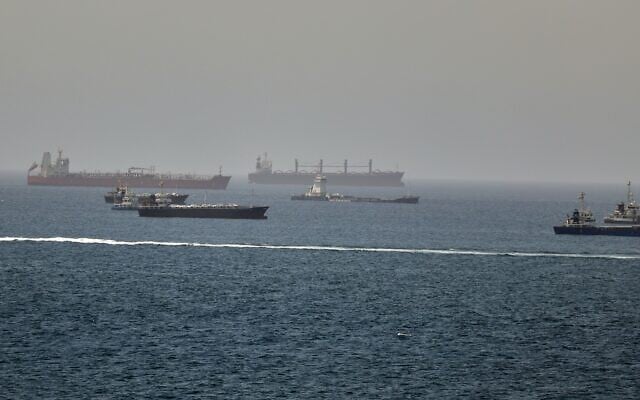
Tankers and cargo vessels are seen in the Gulf of Oman, along shipping routes linking the Strait of Hormuz and the Arabian Sea, June 16, 2026. (AP Photo)
Oman and Iran will study the future administration of the Strait of Hormuz and the costs to be charged for services provided, they say in a joint statement, insisting on sovereignty over the vital waterway.
The two countries emphasize “their sovereignty and sovereign rights over their territorial waters in the Strait of Hormuz” and “agreed to maintain their dialogue on this issue through a joint working group between the two foreign ministries in order to reach agreement on the future administration of navigation in the Strait of Hormuz and the services that will be provided in this regard and the costs associated with them in accordance with international standards.”
The statement follows a high-level meeting between their top diplomats in Muscat, where Iran’s Foreign Minister Abbas Araghchi and chief negotiator Mohammad Bagher Ghalibaf also met Oman’s Sultan Haitham bin Tariq.
Yesterday, Omani Foreign Minister Badr Albusaidi said the countries were committed to “toll-free safe passage” in Hormuz.
No fees were required to traverse the strait prior to this year’s war.
Trump: Iran has ‘fully agreed to highest level of nuclear inspections’
US President Donald Trump speaks in the Oval Office of the White House during an executive order signing about quantum computing, June 22, 2026, in Washington. (AP/Jacquelyn Martin)
In a post, US President Donald Trump claims Iran has “fully and completely agreed to highest level nuclear inspections long into the future (Infinity!)”
“This will insure ‘nuclear honesty.’ If they did not agree to this, there would be no further negotiations!” Trump writes.
“Based on this and other major concessions being made by Iran, I have agreed to allow the Hormuz Strait to remain OPEN, with no further naval blockade. However, all ships are remaining in place should it be necessary to reinstitute the blockade, which seems, at this point, highly unlikely,” Trump adds.
The US claims that Iran agreed during talks over the weekend to grant UN inspectors access to its nuclear sites — something that stopped after the US bombed three of them last year.
But earlier, an Iranian foreign ministry spokesperson said Iran had neither held a meeting with International Atomic Energy Agency chief Rafael Grossi in Switzerland nor planned for the UN nuclear watchdog to inspect Iran’s damaged nuclear facilities,
Trump continues: “The money and/or sanctions that the US Treasury is releasing goes into escrow, controlled by the USA and will be used for the purchase of food and medical supplies, exclusively from the United States, including corn, wheat, and soybeans from our great American Farmers,” Trump continues, as he tries to downplay the US concession of billions of dollars in sanctions relief.
“These are things that are desperately needed by Iran. This is a humanitarian crisis, and I feel it is necessary to help, NOW, before it is too late.”
Tehran also said today that it alone will decide how to use its frozen assets once they are unfrozen.
“Talks are going well!” Trump adds, referring to the negotiations on a final deal with Iran covering its nuclear program and other outstanding issues.
Trump says 19 million barrels of oil exited Strait of Hormuz on Monday
US President Donald Trump claims “19 Millions barrels of oil flowed out of the Hormuz Strait (on Monday) — an all time RECORD.”
“Oil prices are tumbling down, and the world is a much safer place!” Trump writes on Truth Social, as he celebrates the results of the deal he inked last week with Iran.
Trump’s figures have not yet been independently verified.
The president has argued that continuing the war against Iran would have caused economic catastrophe, an effective acknowledgment of Iran’s leverage in negotiations through the closure of the Strait of Hormuz.
Iran FM joins President Pezeshkian for Pakistan visit — state media
Iranian Foreign Minister Abbas Araghchi arrives in Islamabad, Iran’s state media reports, as President Masoud Pezeshkian also travels to Pakistan, which acts as a mediator in talks between Tehran and Washington.
Upon their arrival in Islamabad, the pair meet with Pakistani President Asif Ali Zardari and Prime Minister Shehbaz Sharif, according to state news agency IRNA.
The Iranian foreign minister was previously in Oman alongside Iran’s chief negotiator, Mohammad Bagher Ghalibaf, as part of diplomatic efforts.
Hezbollah claims Israel violated truce by firing on ‘civilians’ who IDF says were gunmen
The Hezbollah terror group says Israel violated the ceasefire by opening fire on a “group of civilians” near Nabatieh in southern Lebanon today.
The Israeli military said troops struck a group of Hezbollah gunmen who posed a threat to forces in the Ali Taher ridge area. It published a photo it said shows one of the gunmen.

Hezbollah claims that the IDF opened fire on a “group of civilians… who were working to clear roads and recover the bodies of martyrs from beneath the rubble.”
Lebanese media reported that two people were killed by Israeli fire in the area, and others were wounded.
The terror group says it “warns that what the enemy has done constitutes a blatant violation of the ceasefire, which [Hezbollah] has adhered to until now.”
IDF says it struck Hezbollah gunmen near Israeli forces in south Lebanon
The IDF says it struck armed Hezbollah operatives who were spotted near Israeli forces in southern Lebanon a short while ago.
The cell of Hezbollah gunmen was spotted in the Ali Taher ridge area, north of the Israeli-held security zone in southern Lebanon, according to the military.
The IDF says that the operatives were then targeted by the troops “to remove the threat.”
Lebanese media reported that Israeli fire in the area killed two and injured two others.
As Haredim plan to rally outside military prison, locals seek to block them
The Hasidic Agudat Yisrael party is set to send out large convoys of hundreds of cars from ultra-Orthodox communities across the country tomorrow, culminating in a massive anti-conscription demonstration outside the Neve Tzedek (Beit Lid) military prison in Kfar Yona, where a number of draft evaders are incarcerated. Local leaders have pledged to block the protest.
According to organizers, “masses of vehicles will depart in organized convoys” tomorrow at 4 p.m. from 19 cities, including Ashdod, Beit Shemesh, Bnei Brak, Jerusalem, Arad and Safed. The cars will carry posters and stickers declaring “Enough is enough: There is no path but the path of Torah,” sending a message that “all of Israel stands behind [the draft evaders] and bears the burden of this struggle with [them].”
“The convoys will move along main routes at a uniform speed and will comply with all safety and traffic regulations, while playing chapters of Psalms and songs of encouragement from sound systems installed in the vehicles,” organizers add.
Haredim frequently protest outside the prison, with demonstrations sometimes escalating into clashes. This has angered local residents, who say that their quality of life has been disturbed. On Monday, screaming protesters attempted to break into the base, pulling down barriers and and clashing with guards.
Responding to the announcement of the protest, which comes a week after a previous rally organized by the Gur Hasidic sect, the mayor of Kfar Yona tells the Ynet news site that residents “will block the entrance to the neighborhood” rather than see their city “besieged once more.”
Asked if he believes that this will lead to violence, a spokesman for the protest tells The Times of Israel that the demonstrators “don’t want violence” and hope that it will not occur.
“I think that in a democratic country, people are allowed to protest. I’m not aware that a mayor has the right to prevent a protest in his city… Do you support a democratic country? This isn’t something that is subject to the agreement of the local authorities,” the spokesman says.
A similar convoy protest was planned for last week with the participation of the ultra-Orthodox Degel HaTorah faction, which together with Agudat Yisrael comprises the Knesset’s United Torah Judaism party.
That protest was reportedly canceled, however, after Degel HaTorah senior spiritual leader Rabbi Dov Lando expressed opposition.
Spokesmen for Rav Lando, as well as the Degel HaTorah and Shas parties, said that they are not involved in the upcoming demonstration.
While arrests of draft evaders have increased, authorities have announced several exceptions to this policy. Last month, Chief Rabbi of the Israel Police Commander Rami Brachyahu said that the police will no longer arrest Haredi draft evaders who come to police stations to file unrelated complaints.
On Monday, Central Elections Committee Director-General Dean Livne announced that evaders will not be arrested on the upcoming election day so that they too can vote.
Prosecutors waiting on Mossad legal opinion to file Qatargate indictments — report
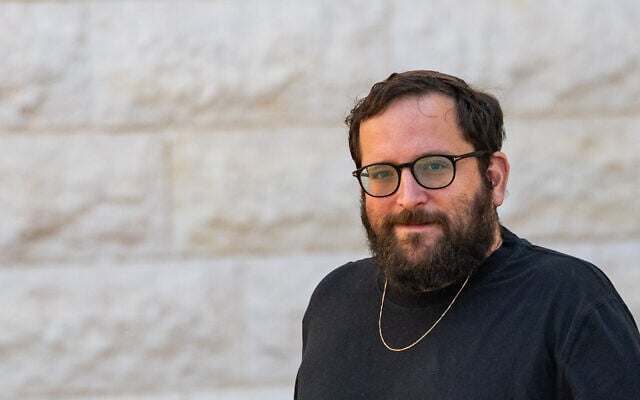
Jonatan Urich seen after a court hearing at the Supreme Court in Jerusalem, October 27, 2025 (Chaim Goldberg/Flash90)
Police have completed their investigation into the Qatargate scandal, but indictments have yet to be filed because the State Attorney’s Office is waiting for a legal opinion from Mossad on the case, Channel 13 reports.
According to the report, the Mossad legal submission will determine if three key suspects in the case, Jonatan Urich, Eli Feldstein, and Yisrael Einhorn, harmed state security, including Israel’s relations with Egypt, through their public relations work to boost Qatar’s image in Israel and abroad.
Urich and Feldstein are suspected of doing PR work for the Qatari government through an American lobbying company from 2022 to October 2024, at the same time as they worked as media advisers to Prime Minister Benjamin Netanyahu. Likud campaign strategist Einhorn is also a suspect in the affair, with police alleging that he used his Perception strategy company to receive funds ultimately coming from Qatar to pay Urich for his work. All three are also suspected of various financial crimes.
New Mossad director Roman Gofman may have a conflict of interest in the matter, since he was Netanyahu’s military secretary at the time the activity in question, an issue that is delaying the submission of the document, according to Channel 13.
The State Attorney’s Office declined to comment on the matter.
Israeli fire kills two, wounds two in south Lebanon — Lebanese media
Lebanese media reports two dead and two wounded by Israeli fire in the southern Lebanon town of Nabatieh al-Fawqa a short while ago.
Lebanon’s National News Agency reports that the four were hit by machine gun fire near a bulldozer working to clear a road in the area.
There is no immediate comment from the IDF on the incident.
PM: Israel must free itself of dependence on US arms, fight with Iran ‘depends on our strength’
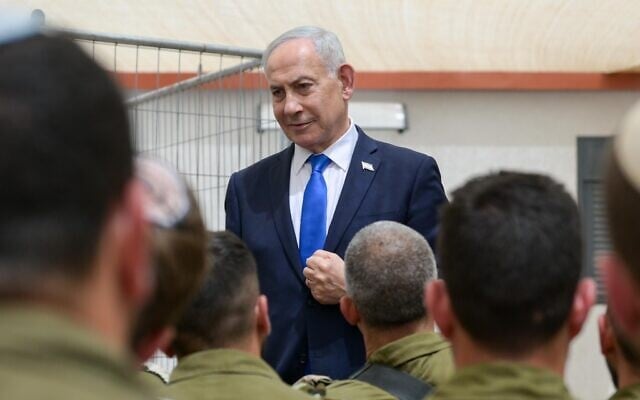
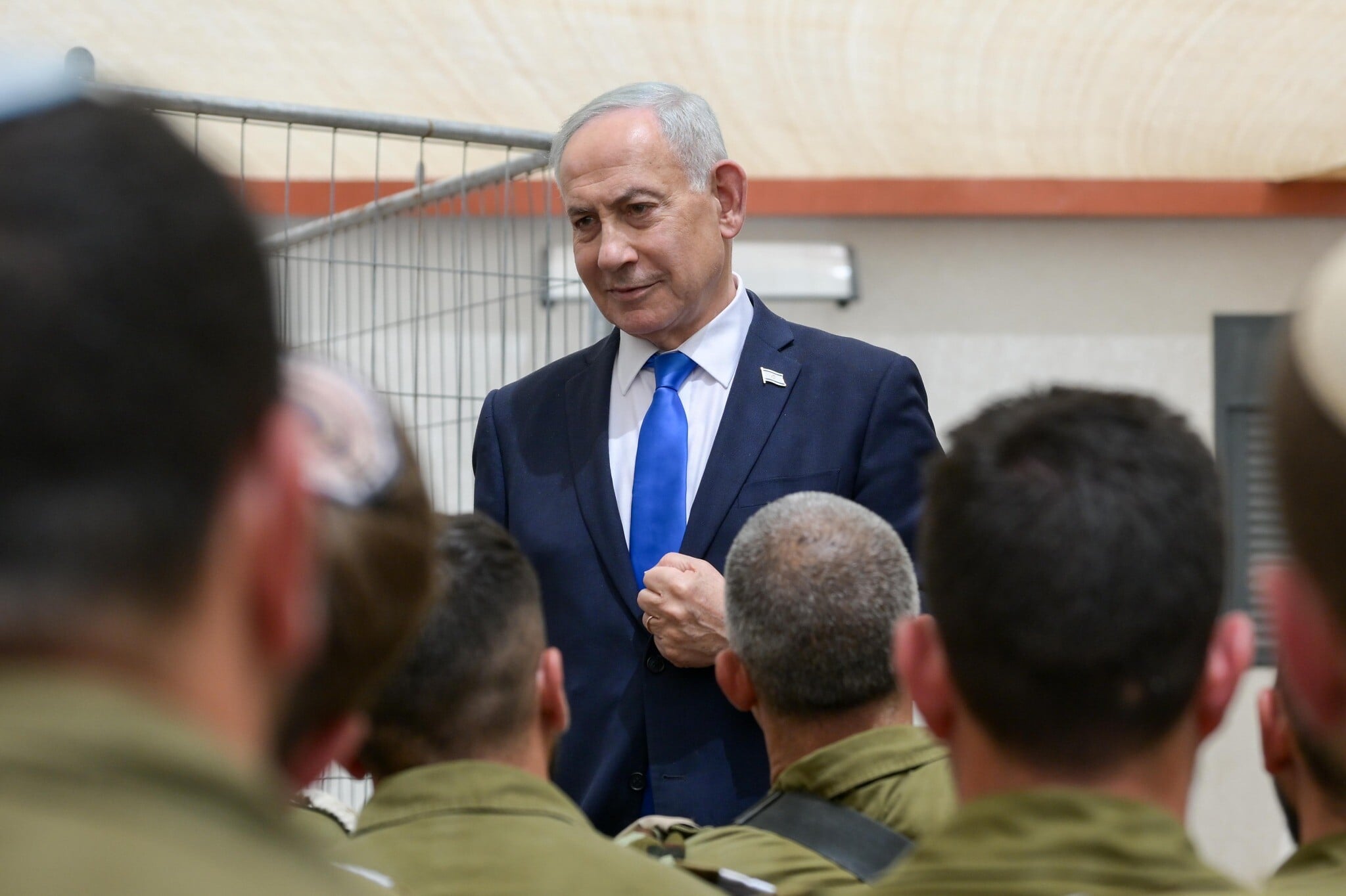
Prime Minister Benjamin Netanyahu speaks to reserve combat officers in Gush Etzion in the West Bank, June 23, 2026. (Maayan Toaf/GPO)
Prime Minister Benjamin Netanyahu says Israel needs to be “free” from military dependence on the United States and develop its own weapons-production capabilities, adding that this is needed to support the ongoing fight with Iran and its proxies.
Speaking during a meeting with reserve combat officers in the West Bank’s Gush Etzion, Netanyahu says: “I greatly appreciate the support we have received — and that I have secured over the years — from our American friends. But today I say: We need our own independent weapons-production system. We must manufacture our own armaments.
“We are now confronting Iran and its proxies. We have struck them hard. It is not over yet, but it depends on our strength. Where we will be in 30 years depends on our strength. That is why what we are doing now is building even greater strength,” the premier says, adding that he wants Israel “to have an independent armaments capability.”
Netanyahu has vowed for months to end US military aid to Israel over the next decade, but today’s remarks come at a particularly tense moment, amid increasing concern in Jerusalem over the US placing limitations on its freedom of action as Washington continues to advance an agreement with Tehran that Israel largely opposes.
“We need to free ourselves from dependence, continue building more and more strength, incorporate more and more technology, and train more and more generations of commanders like you — because ultimately that is what will determine our position,” Netanyahu adds.
US Vice President JD Vance remarked in a press conference last week that in recent months, “two-thirds of the defensive weapons that have protected [Israel]” were US-made and funded by American tax dollars.
US and Israeli officials say that recently begun talks on a new 10-year US-Israel security cooperation framework seek to “gradually transition” the framework “from aid to a completely reciprocal partnership.”
Ben Gvir says he’s weighing punishing cops who tore pants of Haredi protesters
National Security Minister Itamar Ben Gvir says he is weighing punitive action against the Bnei Brak police station commander and other officers after they were filmed tearing the pants of Haredi protesters and dragging them across the road last week.
The minister pens a letter to Police Commissioner Danny Levy this morning, warning him that he is considering action to dismiss or suspend Ch. Supt. Yuval Shavit and other officers at the station following their violent dispersal of an anti-draft demonstration Wednesday morning.
Officers deployed to deal with the protest used stun grenades and batons to clear ultra-Orthodox demonstrators blocking Route 4 during rush hour, arresting five and injuring at least eight.
הפרגוד: מפקד תחנת ב"ב/רמת גן סנ"צ יובל שביט קורע מכנסים לאברך בהפגנת הפלג בכביש גהה pic.twitter.com/pgySWsAVjc
— הפרגוד (@moshepargod) June 17, 2026
In the letter to Levy obtained by the Kan public broadcaster, Ben Gvir laments that police were seen “throwing stun grenades, apparently against regulations, directly at protesters and dragging protesters on the road while ripping their pants, leaving them only in underwear.” Another policeman, he adds, was filmed kicking a protester in the head.
Shavit was one of several officers who, during the dispersal, grabbed protesters by their legs and ripped their pants, before dragging them by their ankles to the side of the highway.
After footage of police throwing stun grenades directly at protesters spread on social media, Ben Gvir said officers should only employ the crowd control weapon in “exceptional cases” — despite having endorsed similar measures against anti-government protesters.
Iran will be ‘only country’ to determine how to use its unfrozen assets — ambassador
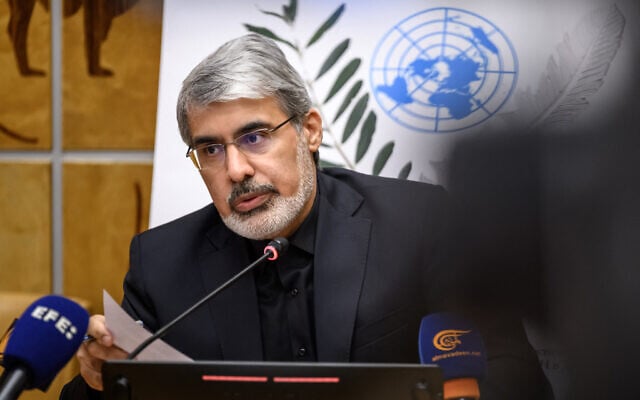
Iran's ambassador to the United Nations in Geneva, Ali Bahreini, holds a press conference at the UN Offices in Geneva on March 3, 2026. (Fabrice COFFRINI / AFP)
Tehran alone will decide how to use its frozen assets once they are unfrozen under a US-Iranian deal toward ending the Middle East war, an Iranian ambassador says, contradicting US claims.
“Iran is the only country who will decide what to do with its assets, which are going to be defrozen and so I reject any claim by [Washington] about that there should… be any role for any other country to have an influence on those decisions or on those processes,” Ali Bahreini, the Iranian ambassador to the United Nations in Geneva, tells reporters.
UN independent commission claims Israel deliberately targeted Gaza children, resulting in genocide
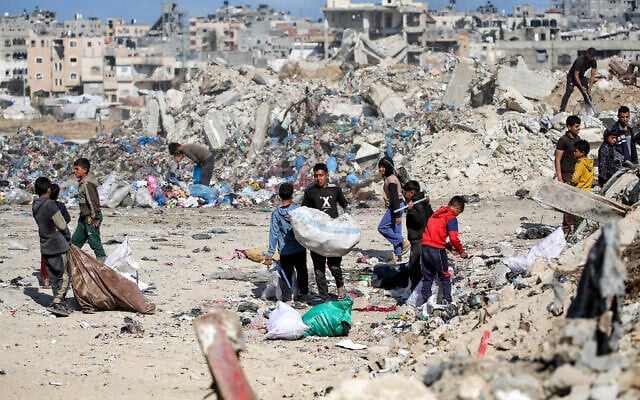
Children sifting through trash at the Nuseirat camp for Palestinian refugees in the central Gaza Strip on May 7, 2026. (Eyad Baba/AFP)
Israeli authorities and security forces deliberately targeted Palestinian children, resulting in genocide, crimes against humanity and war crimes in Gaza, and war crimes in the West Bank, an independent UN inquiry says.
The report by the UN Independent International Commission of Inquiry on the Occupied Palestinian Territory, including East Jerusalem, and Israel examined alleged violations against Palestinian children since the start of the war between Israel and Hamas on October 7, 2023, when the terror group launched its deadly attack on Israelis in southern Israel.
Around 30% of those killed in the Gaza war were children, the report found.
The report says it bases its claim of genocide on the fact that that Israeli forces continued to use high-payload munitions and weapons with wide-area effects in densely populated residential areas during the war, despite mounting child casualties. “This indicates that such attacks, which killed children in such high numbers, were intentional,” it says.
It says it believes children were targeted collectively because the Israeli security forces considered the civilian population as a whole to be associated with Hamas and other armed groups. Israel points to Hamas embedding its fighters and military infrastructure in homes, hospitals, schools and mosques.
The panel does not speak on behalf of the UN, and has faced harsh Israeli criticism. While it is not a legal body, its reports can influence diplomatic pressure and serve to gather evidence for later use by courts.
“The evidence shows that Palestinian children have been deliberately targeted and killed by the Israeli security forces,” says Srinivasan Muralidhar, the commission’s chair, in a statement accompanying the report.
A previous report by the commission in September asserted that Israel had committed genocide in Gaza and that top Israeli officials including Prime Minister Benjamin Netanyahu incited these acts, citing the IDF’s “pattern of conduct” as evidence of intent to “destroy Palestinians.” Israel called those allegations scandalous.
Today, Israel’s mission in Geneva says it rejects what it calls the commission’s “second defamatory advocacy report.”
“Israel dismisses this libelous sham,” it says in a statement, adding that “every child deserves protection” and asserting that the report ignored “the brutal tactics of Hamas,” which regularly operates from within dense civilian areas.
The inquiry also found that attacks on healthcare and reproductive facilities impacted the survival of newborns and reported increases in miscarriages, and that nearly all children in Gaza were reported to require psychological support.
Israel’s rebuttal says the report failed to mention Israel’s role in facilitating vaccinations and the entry of medical staff, and the establishment of field hospitals. It accuses Hamas of systematically diverting humanitarian aid and fuel for hospitals.
Brig. Gen. Barak Hiram enters role as head of IDF’s Operations Division
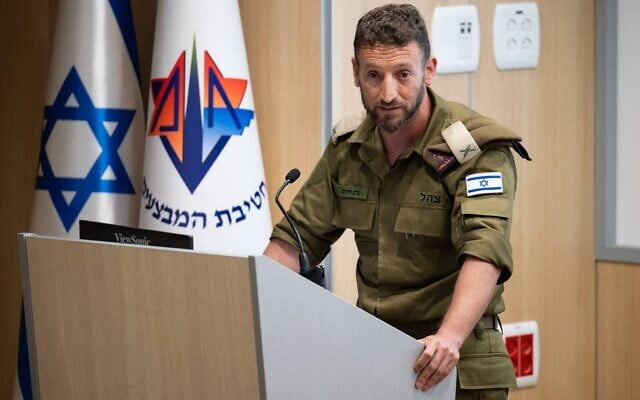
Incoming Operations Division chief Brig. Gen. Barak Hiram speaks at a ceremony, marking his entry to the role on June 22, 2026. (Israel Defense Forces)
Brig. Gen. Barak Hiram enters the role of head of the IDF’s Operations Division, following the sudden departure of the previous commander due to a scandal.
Hiram previously commanded the Gaza Division. Before that, as commander of the 99th Division, Hiram was known for his controversial actions in the battle at Kibbutz Be’eri during the October 7, 2023, onslaught, including decisions that risked the lives of hostages. An IDF tactical investigation has since cleared him of any wrongdoing.
He replaces Brig. Gen. Yisrael Shomer, who suddenly stepped down as Operations Division head this month and retired from the military after being suspected of an illicit relationship with a subordinate officer.
The Operations Division is tasked with coordinating and formulating plans for war, emergencies, and routine operations, along with directing the various branches of the military regarding the deployment of troops. The unit, which is based out of the IDF’s main underground command center at the Kirya headquarters in Tel Aviv, is also tasked with formulating IDF recommendations for approval by Israel’s political leadership.
Iran says IAEA inspections of damaged nuclear sites are not planned
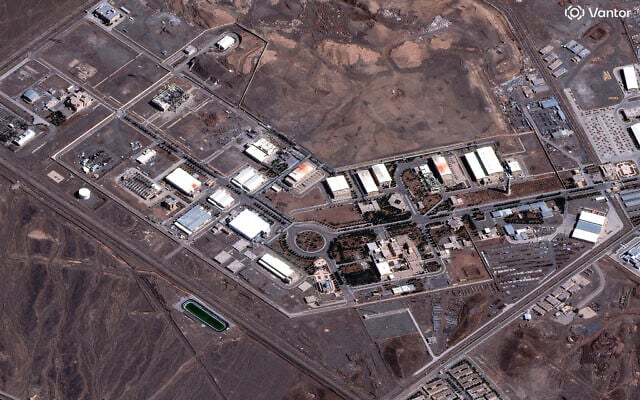
This handout satellite image courtesy of Vantor shows the Natanz Nuclear Facility near Natanz, Isfahan province, in central Iran on March 7, 2026. (Satellite image ©2026 Vantor / AFP)
Iran has neither held a meeting with International Atomic Energy Agency chief Rafael Grossi in Switzerland nor plans for the UN nuclear watchdog to inspect Iran’s damaged nuclear facilities, a foreign ministry spokesperson says.
Esmaeil Baghaei says there is no protocol for such inspections, adding that Iran will continue its current obligations as a member of the nuclear Non-Proliferation Treaty and under its safeguards agreement with the IAEA.
Taliban expected in Brussels for EU migration talks
A Taliban delegation is expected to fly into Brussels today after being granted a one-day visa to hold talks with the EU on returning failed asylum-seekers to Afghanistan.
The European Commission has invited the officials for discussions under a push to crack down on irregular migration and boost deportations — despite it not formally recognizing the Taliban administration.
The EU outreach to the Taliban authorities has drawn fierce pushback, with rights groups urging the commission to back out of the planned meeting.
A spokeswoman for the foreign minister of Belgium, which issued the documents in its capacity as host country to the European institutions, says the five requested visas were granted yesterday afternoon “after a security assessment.” They are just valid for Belgium and not the broader free-movement Schengen area and for one day only, she says.
The delegation is understood to be flying in and out of the country via Turkey.
Smotrich vows no IDF withdrawal ‘as long as Hezbollah exists in Lebanon’
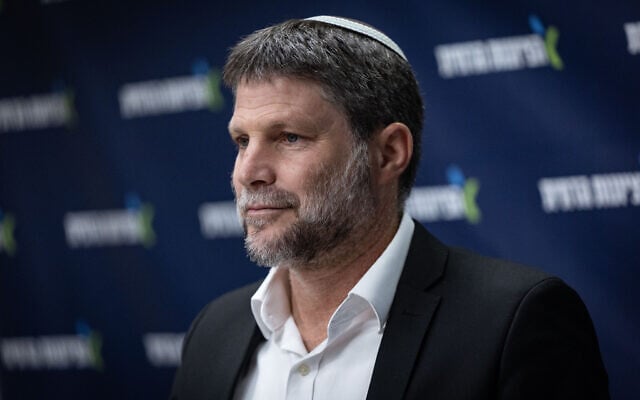
Finance Minister Bezalel Smotrich leads a Religious Zionism faction meeting at the Knesset in Jerusalem, June 22, 2026. (Yonatan Sindel/Flash90)
Finance Minister Bezalel Smotrich says Israel will not pull its military forces out of southern Lebanon “as long as Hezbollah exists in Lebanon,” and so long as this government remains in power.
“It simply will not happen,” he tells Army Radio. “There will be no Israeli withdrawal from the security zone in Lebanon, including the Beaufort Ridge, as long as Hezbollah exists in Lebanon.”
Smotrich adds: “Hezbollah is a terrorist organization. It must be dismantled, it must not be part of the Lebanese government, and it must not have any military force or ability to threaten the State of Israel. Only then will it be possible to discuss new security arrangements.”
He stresses that this means “until Hezbollah is dismantled. Not just disarmed… dismantled. Not only stripped of its weapons, but also of its political power in Lebanon. As long as it retains any power that can threaten the residents of northern Israel… [and] as long as we are in power, there will be no withdrawal.”
Asked about potential US pressure to remove troops in accordance with Iranian demands amid peace negotiations between Washington and Tehran, Smotrich insists, “We are standing firm on this position. We have made it clear to the Americans.”
The far-right minister noted that “even as we speak — at this very moment — we are continuing to deepen our achievements there and destroy terrorist infrastructure both above and below ground.
“Some of this has already been made public. You are familiar with the strategic underground infrastructure, stretching for many kilometers, that Hezbollah built over the past 15 to 20 years. We will also clear it out, disrupt it, and destroy it.”
Iran says technical talks with US in Switzerland have concluded
Technical talks between Iran and the United States in Switzerland have concluded, with negotiating groups to be set up on nuclear issues and sanctions, Iran’s state media reports.
The negotiators “decided that four working groups would be established: Sanctions Termination, Nuclear Affairs, Reconstruction and Economic Development, and Monitoring and Implementation,” says the IRNA state news agency, quoting Deputy Foreign Minister Kazem Gharibabadi.
Siren test planned at Majdal Shams in Golan Heights at noon
Alert sirens will sound in the area of Majdal Shams in the Golan Heights at 12:05 p.m., as part of a test of the system, the IDF’s Home Front Command says.
“If a real alert is activated, an additional siren will sound, and concurrently an alert will also be issued through the Home Front Command app and through supplementary warning systems,” it says.
Man shot dead near northern Israeli village of Kabul
A man has been shot dead in northern Israel, police say, in a suspected murder.
The 67-year-old was found shot on Route 70 near the village of Kabul, in the Western Galilee. Paramedics declared him dead at the scene.
Police have opened an investigation.
Victim of Montreal shooting confirmed as Michael Moshe Mizrahi
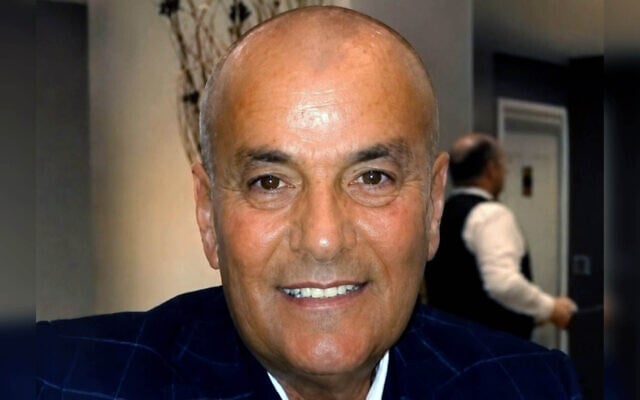
Michael Mizrahi, a Jewish Canadian-Israeli man killed during a shooting in Montreal on June 22, 2026. (X; used in accordance with Clause 27a of the Copyright Law)
After earlier conflicting reports, the civilian killed in the Montreal shooting earlier today has been confirmed to be a member of the Jewish community.
The Centre for Israel and Jewish Affairs (CIJA), a prominent Canadian civil society group, names the slain civilian as Michael Moshe Mizrahi, describing him as “a beloved member of Montreal’s Jewish community.”
Montreal Police identifies the deceased officer who was shot dead in the attack as Constable Mohamed Lamine Benredouan, 34. He had been with the force since 2021.
The attacker, who has not been identified, was also killed at the scene.
Police have declined comment on the shooter’s motive, amid speculation he may have been targeting Jews or Israelis in the heavily Jewish neighborhood.
But the French language public broadcaster Radio Canada said the gunman was connected to “incel” ideology — a misogynistic worldview that fueled the man responsible for one of Canada’s most deadly mass killings, a 2018 vehicle-ramming in Toronto that killed 10.
2 more suspects arrested for plot targeting Israel-linked Congress members at White House event

Diego Lopes celebrates during a featherweight bout against Steve Garcia during UFC Freedom 250 on the South Lawn of the White House, June 14, 2026, in Washington. (AP /Mark Schiefelbein)
The FBI announces the arrests of two additional suspects for plotting to attack Israel-linked members of Congress at a White House event earlier this month.
US federal authorities last week announced the arrest of five suspects for the plot. The conspirators allegedly planned to use explosive-laden drones and snipers to attack a mixed martial arts event on the White House lawn.
The conspirators had discussed targeting politicians who had connections to the “pro-Israel lobby.”
The US Department of Justice announces the arrest of two more suspects —- William Lee Spartacus Falkner, from Washington state, and Jordan W. Rincker, 28, of Missouri. They are charged with conspiracy to commit murder.
Falkner has experience manufacturing and piloting drones and had discussed loading explosives onto drones with the other conspirators, the statement says.
Rincker accepted $1,200 in cash from another suspect to help pay for some of the expenses related to the planned attack and gave a shotgun to one of the other suspects, the Department of Justice says.
A search of Rincker’s home turns up four firearms, a gas mask, night vision goggles, a thermal scope and body armor.
US official: Israel-Lebanon talks in DC this week to start with joint political-military session
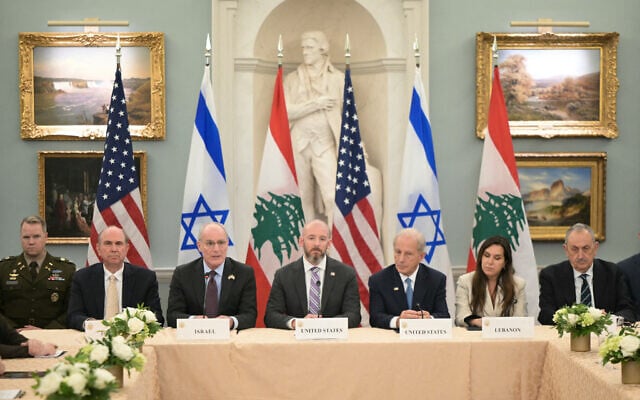
Israel's Ambassador to the US Yechiel Leiter, State Department Chief of Staff Daniel Holler, US Ambassador to Lebanon Michel Issa and Lebanese Ambassador to the US Nada Hamadeh attend a meeting between Israeli and Lebanese delegations hosted by the United States at the State Department in Washington, DC, on June 3, 2026. (Oliver Contreras / AFP)
This week’s talks between Israel and Lebanon in Washington will begin with a joint political and military session, followed by one military session and another political session, a US official says.
The talks will be held from Tuesday to Thursday at the State Department and the Pentagon.
Israel and Lebanon will be represented by their respective ambassadors in Washington, while State Department Counselor Dan Holler and Assistant Secretary of Defense for International Security Affairs Dan Zimmerman will represent the US.
The Trump administration is trying to maintain the legitimacy of the direct channel it created between Israel and Lebanon after seemingly undermining the initiative by using US talks with Iran in order to secure a ceasefire in Lebanon.
The apparent disconnect may have to do with the fact that the talks with Iran are led by US Vice President JD Vance, while US Secretary of State Marco Rubio has spearheaded the talks between Israel and Lebanon, while largely staying out of the Iran talks.
US President Donald Trump has oscillated between the two tracks, sometimes giving attention to the Israel-Lebanon channel as he tries to detach Lebanon from the Iran conflict, while other times legitimizing Iranian demands that its deal with Washington include Lebanon.
As of late, the administration appears to be prioritizing the latter track as it works to sustain the MOU it reached with Iran last week, but Trump is known to shift drastically on these matters.
US energy secretary falsely suggests oil moving through Strait of Hormuz at pre-Iran war levels
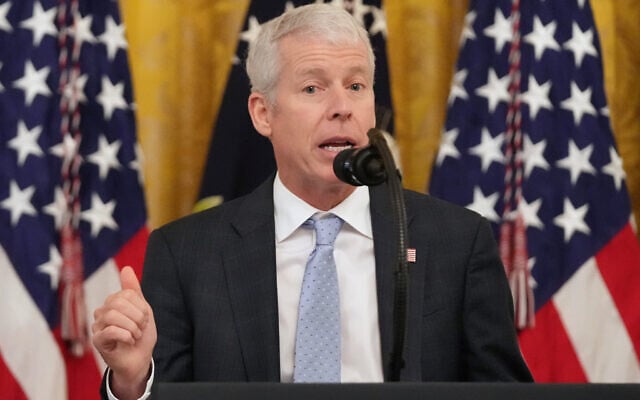
US Energy Secretary Chris Wright speaks during an event, May 4, 2026, in the East Room at the White House in Washington. (AP/Mark Schiefelbein, File)
Energy Secretary Chris Wright claims that oil and natural gas are flowing through at “pre-crisis levels.”
“We could get to above that, we will get above that,” Wright adds.
US President Donald Trump also suggests that “two days ago” there had been a record in terms of oil being taken out of the strait.
Neither of those statements are true.
According to data and analytics firm Kpler, there were 71 confirmed transits over the weekend, with a peak of 35 crossings on Saturday.
About 100 to 130 vessels passed through the strait each day before the war.
Iran’s lead negotiator insists Strait of Hormuz will be managed by Iran
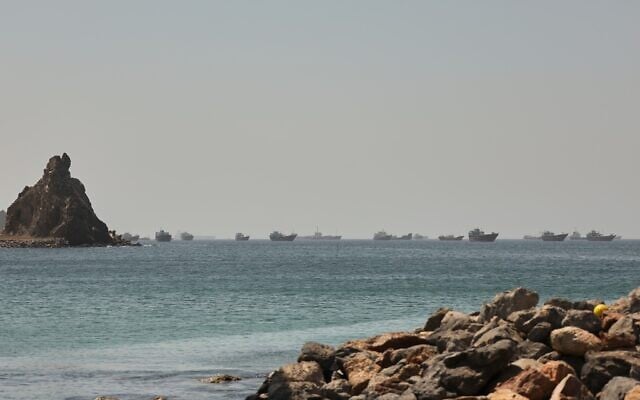
Tankers and cargo vessels are seen in the Gulf of Oman, along shipping routes linking the Strait of Hormuz and the Arabian Sea, June 16, 2026. (AP)
The lead negotiator of the Iranian delegation, Mohammad Bagher Ghalibaf, insists the Strait of Hormuz will be managed by Iran and will follow international laws.
Ghalibaf, who is also the speaker of the parliament, speaks with Iran state media on a plane on his way back from Switzerland.
“Hopefully we can activate the strait again, in terms of passage, and bring prosperity back to regional and global economy,” he says.
Ghalibaf confirms that the issue of releasing the frozen assets as well as the sale of Iranian oil were discussed in the talks with the US today.
US-Israeli extradited from Norway, indicted in Florida for threatening Jewish institutions in 2016-2017
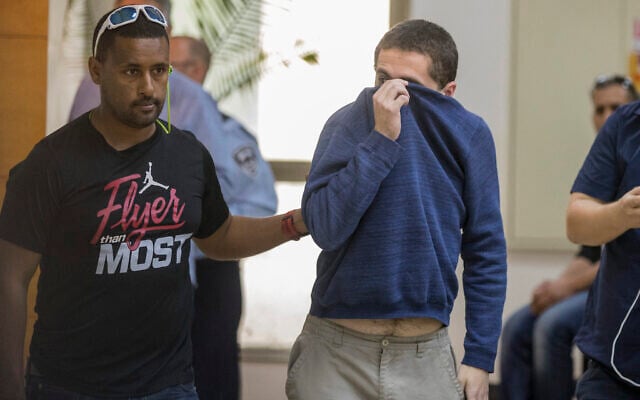
American-Israeli teenager Michael Kadar (R), accused of making dozens of antisemitic bomb threats in the United States and elsewhere, is escorted by guards as he leaves a Rishon Lezion courtroom on March 23, 2017. (JACK GUEZ / AFP)
A dual citizen of the US and Israel is indicted in a federal court in Florida for allegedly perpetrating a wave of bomb threats against Jewish institutions in 2016 and 2017.
Michael Ron David Kadar, 27, previously served seven years in an Israeli prison for the calls to Jewish organizations in multiple countries.
At the time of his conviction, Kadar’s lawyer said he had autism and was suffering from a brain tumor.
Kadar traveled to Norway to seek asylum after completing his sentence in Israel. He was extradited to the US on Thursday, the Department of Justice says in a statement.
Kadar faces charges in Florida, Georgia and Washington, DC, for threats to Jewish institutions and other crimes targeting those areas.
He is indicted for hate crimes and obstruction of the free exercise of religion. The hate crime charges carry a maximum sentence of 20 years in prison and the bomb threats a maximum of 10 years in prison.
Kadar had been detained in Norway and was fighting extradition to the US.
He was a minor at the time of some of the offenses, and his name had been under gag order in Israel until last year.
The so-called “hacker from Ashkelon” admitted in court to making some 2,000 fake bomb threat calls to hospitals, airlines, schools and various Jewish institutions in the US and beyond out of boredom.
He was found guilty in June 2018 of hundreds of counts of extortion, spreading false information that caused panic, computer offenses and money laundering, among other charges.
Trump: If Iran doesn’t live up to agreement, I will do what I have to do
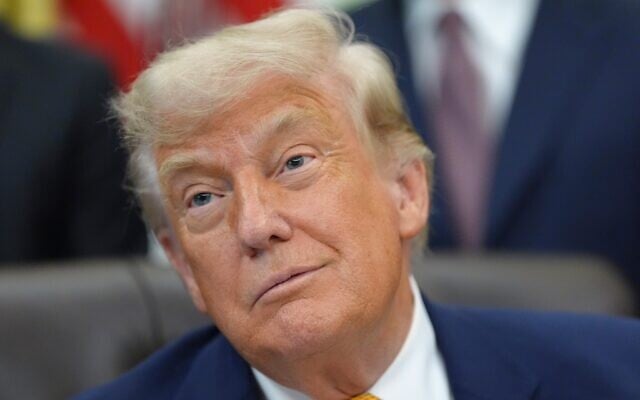
US President Donald Trump is pictured in the Oval Office of the White House during an executive order signing about quantum computing, June 22, 2026, in Washington. (AP Photo/Jacquelyn Martin)
While acknowledging his previous comments that a resumption of the Iran war would have major economic repercussions, US President Donald Trump indicates that this would not deter him from striking Iran again, since ensuring that the regime doesn’t obtain a nuclear weapon is his top priority.
“Nuclear weapon supersedes depression,” Trump tells reporters in the Oval Office.
“If Iran doesn’t live up to their agreement, or if they’re not behaving, I will do what I have to do,” Trump continues. “As long as Iran respects us, we are not going to have any trouble.”
Asked about Prime Minister Benjamin Netanyahu’s assertion that he will keep the IDF in southern Lebanon — in what would appear to contradict the MOU’s bar on military operations in the country — Trump says he will have to look into the matter before insisting that he knows how to deal with Netanyahu effectively.
Netanyahu, Katz and Zamir reiterate pledge to ‘continue to act decisively to thwart threats’ in Lebanon
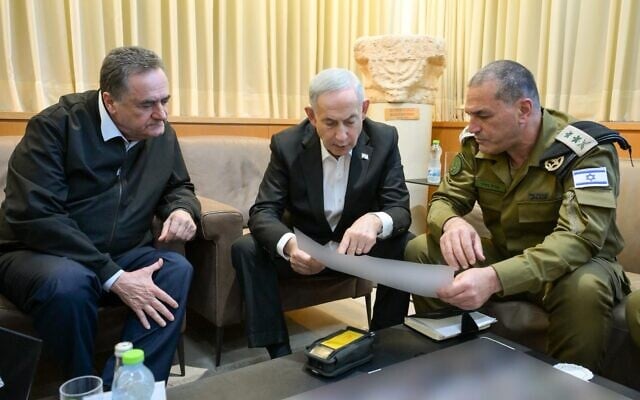
Prime Minister Benjamin Netanyahu (C) meets with Defense Minister Israel Katz (L) and IDF chief of staff Eyal Zamir at the Kirya military headquarters in Tel Aviv on May 26, 2026. (Maayan Toaf/ GPO)
Prime Minister Benjamin Netanyahu, Defense Minister Israel Katz, IDF Chief of Staff Lt. Gen. Eyal Zamir and Northern Command chief Maj. Gen. Rafi Milo just held a call.
“The IDF will continue to act decisively to thwart threats to our soldiers and civilians, destroy terror infrastructure, and continue maintaining the security zone in southern Lebanon,” Netanyahu, Katz, and Zamir say in a joint statement.
“The prime minister, the defense minister and the chief of staff clarified that the security of Israel’s civilians and IDF troops will continue to remain before their eyes without compromise,” they add.


read more: