

 From the Liveblog of
Tuesday, September 24, 2024
From the Liveblog of
Tuesday, September 24, 2024
Abdullah slams those who continue to view Jordan as homeland for Palestinians
 Add ToI as a Preferred Source on Google
Jacob Magid is The Times of Israel's US bureau chief
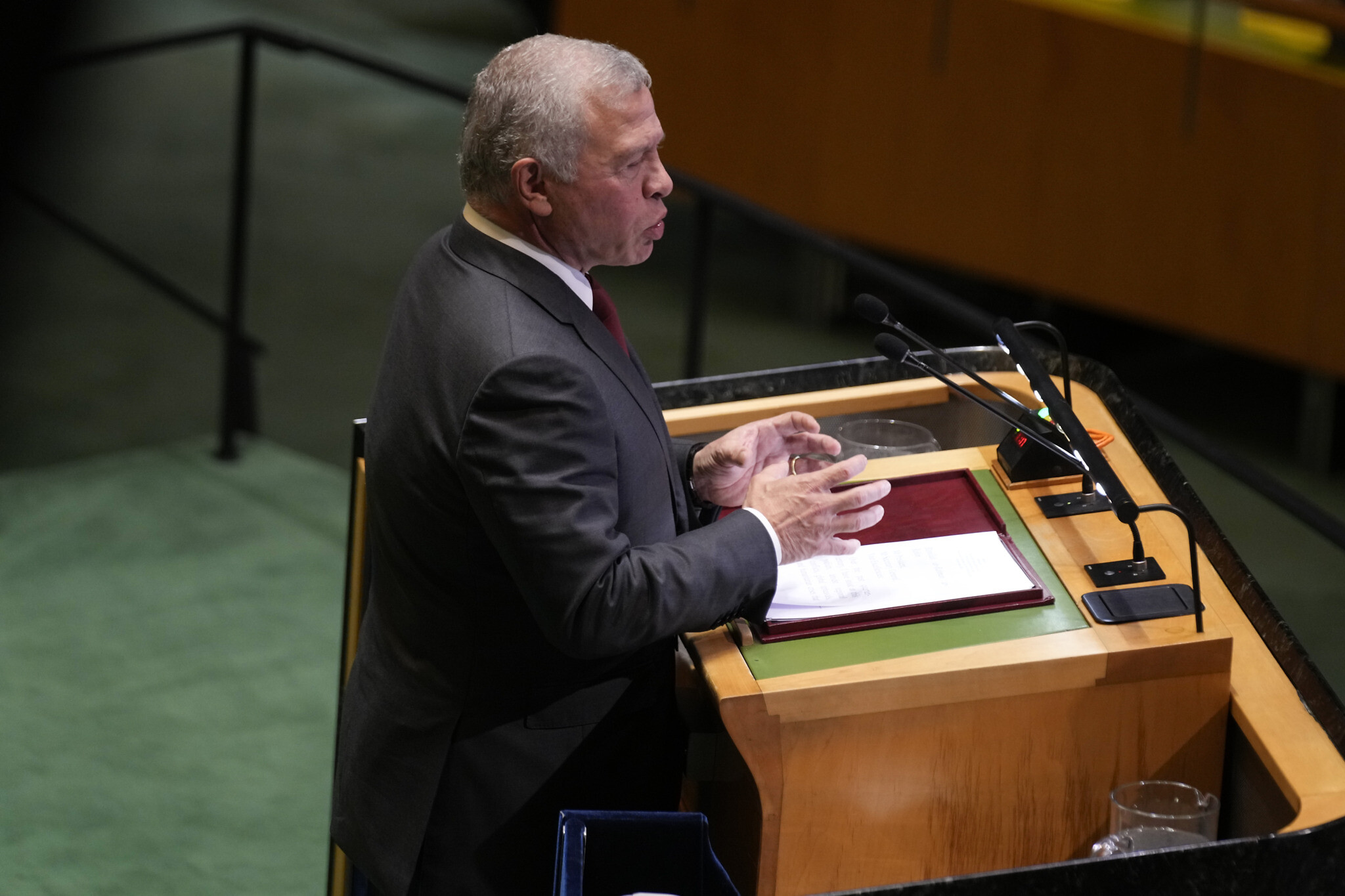
Jordan’s King Abdullah blasts “those who continue to propagate the idea of Jordan as an alternative homeland” for the Palestinians.
“Let me be very clear. That will never happen. We will never accept the forced displacement of Palestinians, which is a war crime,” he says in his speech to the UN General Assembly.
“Let us not forget the attacks on the West Bank… Armed settler violence has surged, and entire villages have been displaced,” the Jordanian leader laments.
“In Jerusalem, flagrant violations of the historical and legal status quo at Muslim and Christian holy sites continue unabated under the protection and encouragement of members of the Israeli government,” he says.
“For years, the global community has taken the path of least resistance, accepting the status quo of the ongoing military occupation of Palestinians, all the while paying lip service to the two-state solution.”
“For years, the Arab world has extended a hand to Israel through the Arab Peace Initiative, offering full recognition and normalization in exchange for peace, but consecutive Israeli governments, emboldened by years of impunity, have rejected peace and chosen confrontation instead,” says the leader of one of the few Arab countries that has already normalized relations with Israel.
“For decades, Israel has projected itself as a thriving Western-style democracy in the Middle East, but the brutality of the war on Gaza has forced the world to look closer. Now, many see Israel through the eyes of its victims, and the contradiction, the paradox is too jarring. The modern advanced Israel admired from afar, and the Israel that Palestinians have experienced firsthand simply cannot coexist,” he continues.
“Israel will eventually be entirely one or the other. That is the choice its leaders and its people will have to make — to live by the democratic values of freedom, justice and equality for all, or to risk further isolation and rejection,” Abdullah argues.






The Times of Israel Community.