

 From the Liveblog of
Thursday, October 23, 2025
From the Liveblog of
Thursday, October 23, 2025
Israeli settlement councils cannot enforce bylaws on Palestinians, High Court rules
 Add ToI as a Preferred Source on Google
Jeremy Sharon is The Times of Israel’s legal affairs and settlements reporter
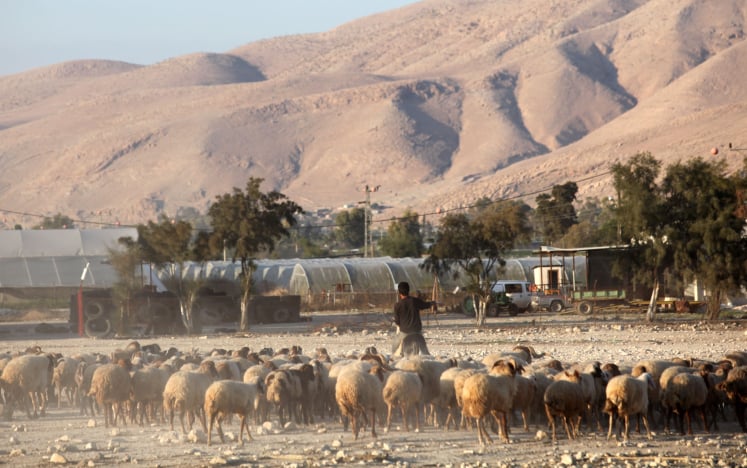
In a key case regarding the application of Israeli law in the West Bank to Palestinians, the High Court of Justice rules that municipal bylaws passed by Israeli settlement regional councils cannot be applied to Palestinian residents of the territory. Such councils have no authority to enforce their bylaws on Palestinians, the court says.
The ruling comes in response to a petition filed in 2024 by four Palestinian sheep and cattle herders asking the court to order the Jordan Valley Regional Council to stop seizing and holding stray Palestinian livestock and charging the owners heavy fees for doing so, a practice it carried out on several occasions last year.
Civil rights activists argued at the time that the regional council was enacting a form of de facto annexation by applying Israeli civilian laws to the local Palestinian population.
“The Jordan Valley Regional Council does not have the authority to enforce its bylaws against the residents of the region [Palestinians] and their property,” Judge Daphne Barak-Erez writes in her opinion, which was backed unanimously by the other two judges on the panel.
“All of the bylaws enacted by the regional council – including the Stray Animals Bylaw and the Herding Regulation Bylaw – were enacted by virtue of the [military] regulations [for regional councils], which apply to Israeli residents only,” she writes.
Barak-Erez writes as explicitly as possible in the ruling that the Jordan Valley Regional Council “must refrain from exercising its powers” under both its relevant bylaws against livestock “for which there is a reasonable possibility” that they are owned by Palestinians, and that this prohibition “applies both to the seizure of animals, to their keeping in a pen, and to the collection of money from the residents of the area for the care of animals.”









The Times of Israel Community.