

Five Palestinians ask court to halt alleged spike in unlawful detentions by troops
West Bank men petition High Court claiming soldiers repeatedly nabbed them without apparent cause and hauled them to bases where they were abused for hours, then released without being questioned
 Add ToI as a Preferred Source on Google
Nurit Yohanan is The Times of Israel's Palestinian and Arab world correspondent
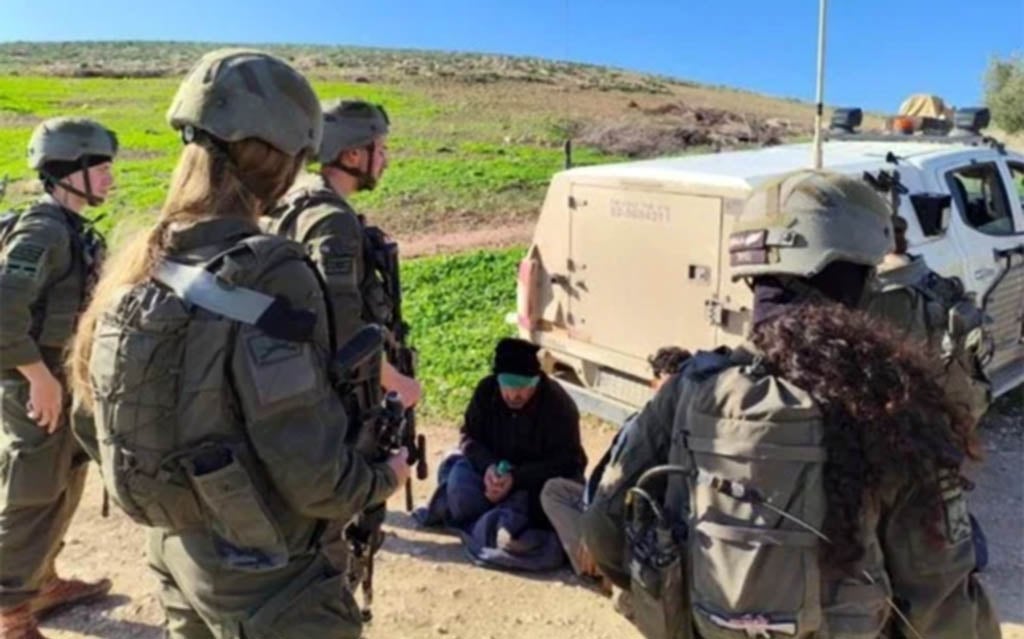
Saeed Awad, a 55-year-old resident of the village of Abu Shaban in the South Hebron Hills, says he has been detained by soldiers six times this year alone.
According to Awad, in each of the six cases, soldiers grabbed him from near his home and took him, blindfolded and handcuffed, to a nearby military base in the settlement of Susya. There, he said, he was held for hours, at times overnight, at the end of which he was released without charges and without having even been questioned.
Because he was detained and not arrested, soldiers were not required to produce a warrant or specify an accusation against him. Under the military’s own procedures, according to human rights groups, such detentions are supposed to last no longer than six hours, and the detainee is supposed to remain at the location where he was encountered, not transported to a base.
Awad is one of five Palestinians who are now petitioning the High Court over what they say are unlawful detentions they have been subjected to in recent months, demanding an end to the practice amid what activists say is a sharp uptick in such cases.
Also party to the case, filed May 14, are several rights groups, including HaMoked: Center for the Defense of the Individual, the Association for Civil Rights in Israel, the Human Rights Defenders Fund and Haqel – In Defense of Human Rights.
The court has ordered the military to respond to the petition by June 28.
In response to a query from The Times of Israel, the IDF said that “the petition has been received and is being handled by the relevant authorities in the IDF. A response to the petition will be submitted as customary.”
According to the Human Rights Defenders Fund, the detainment phenomenon existed previously on a smaller scale, but began ramping up significantly in November.
From mid-November to mid-May, the group said it documented 159 reports of Palestinian detentions across the West Bank allegedly violating military procedures.
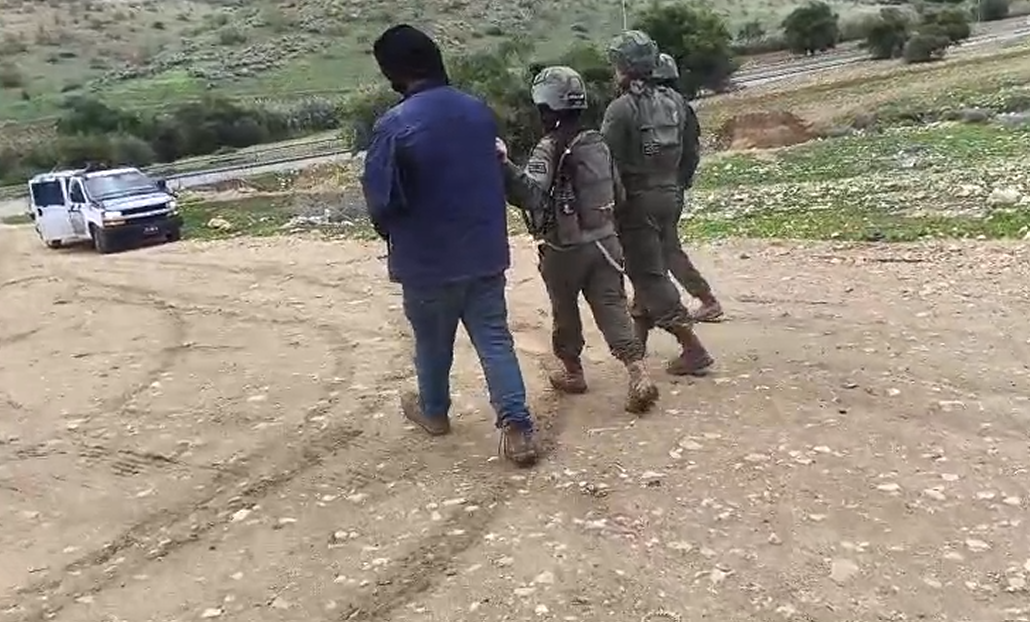
The organizations petitioning the court say they do not know what is behind the rise, but note that it began around the olive harvest season, a period that often sees heightened friction between Israeli settlers and Palestinians attempting to access groves of trees.
According to the groups, most of the detentions occur in Area C of the West Bank, where Israel maintains full security and civilian control.
Oneg Ben Dror, an activist with the Human Rights Defenders Fund who works closely with Palestinians in the South Hebron Hills, said a routine pattern had developed in the area since the start of 2026.
“In these detentions they are not taken for questioning. They spend the night at a military base while blindfolded, and they abuse them — beat them, humiliate them,” she said. “It has become systematic, several detentions a day.”
Attorney Hila Sharon, who filed the petition on behalf of the Association for Civil Rights in Israel, said that in the three days following the filing of the petition, two of the five petitioners were detained again.
One of them, she said, was taken while grazing sheep on his land in the evening, and only released at 5 a.m.
‘Kicked and cursed’
In the petition, the Palestinian plaintiffs and rights groups are demanding an end to detentions carried out without reasonable suspicion, and are calling on the military to better enforce its own procedures governing such incidents.
In their testimonies, several detainees also describe violence and abuse by soldiers. Awad said one of the most severe incidents occurred on March 6.
Speaking to The Times of Israel, he said he was grazing his flock on privately owned land when a settler from the area arrived, followed by soldiers. He did not know whether the settler was serving in a military capacity at the time or not.
“They handcuffed me, blindfolded me, and took me to the base in Susya, where I stayed until around midnight,” he said.
The incident took place during Ramadan, but Awad said he was given no access to food or water to break his fast. He remained on the ground for hours as soldiers randomly beat him from time to time, he alleged.
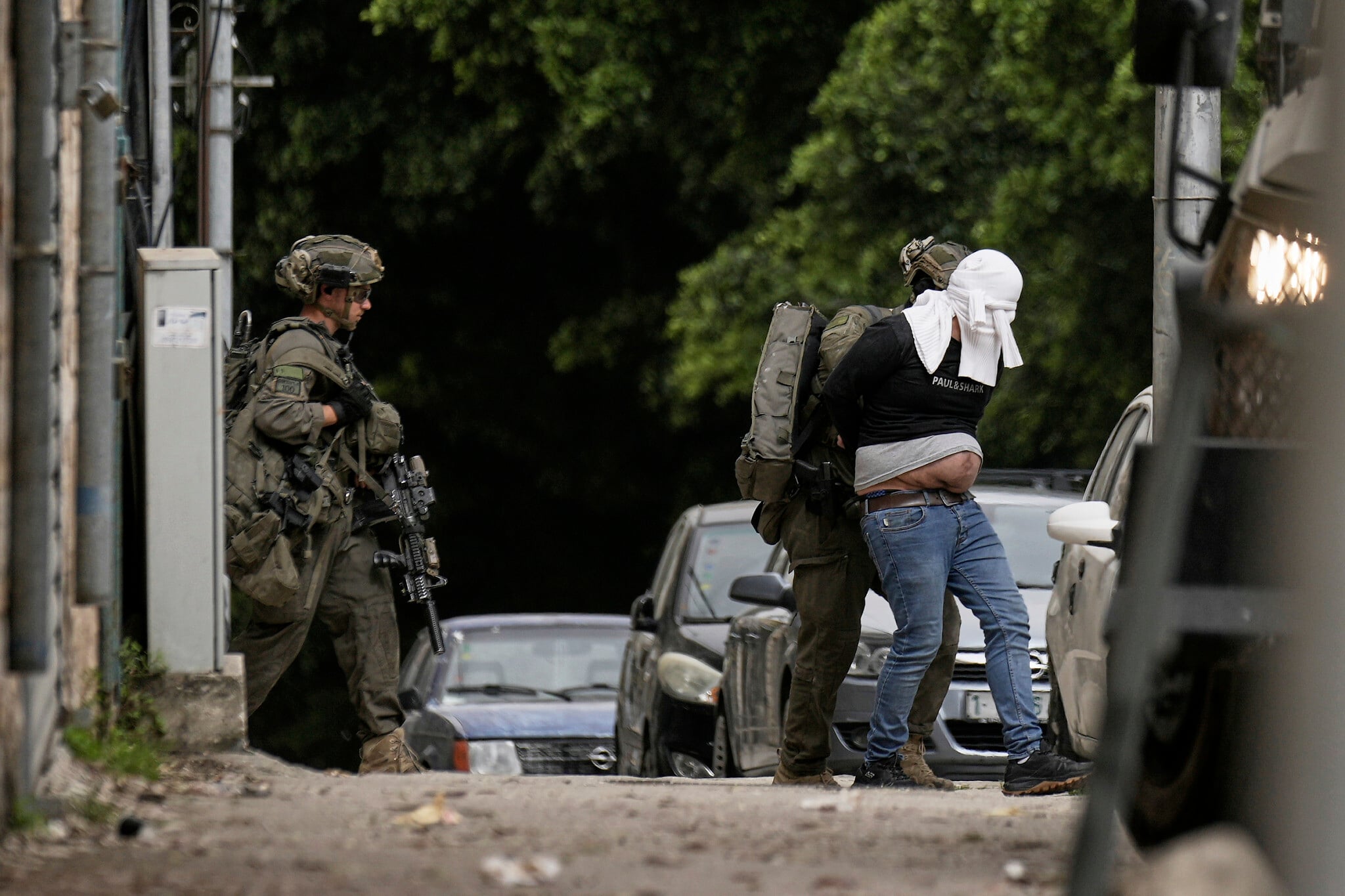
“While I was blindfolded, they would come and kick me, curse at me,” he said. “I tried to ask what the accusation was, why they hadn’t brought the police if I had done something illegal. They told me: ‘We are in charge. We do whatever we want.’”
After the incident, Awad was released without charges and, he said, without being told of any suspicion against him.
Beatings have been a constant feature of every detainment, he told the court.
“There wasn’t a single time they took me without giving me two or three punches,” he testified.
Other plaintiffs also testified about being manhandled, beaten and cursed at, often while blindfolded and restrained. In one case, soldiers allegedly put out cigarettes on the body of a Palestinian they had detained.
One of the men recalled being released after five hours in a mountainous area far from his home. Another said he was held on a base inside a settlement for a full day before being taken to a police station, where he was questioned for 15 minutes and then let go.
Soldiers acting like children
Attorney Hila Sharon, named as the lead lawyer for the plaintiffs in the case, told The Times of Israel that the incidents described in the petition constitute a serious violation of military procedures.
“The Palestinians who were detained were not told they were suspected of any crime, and they were not interrogated,” she said. “Moreover, people who are arrested properly are supposed to be brought as quickly as possible before an investigative authority — the police or the Shin Bet — and that also is not happening.”
In 2019, the High Court of Justice stressed in response to a petition filed by Palestinians that soldiers in the West Bank are prohibited from blindfolding Palestinians during detentions. In the cases documented in the current petition, however, detainees were allegedly both handcuffed and blindfolded.
Omri Metzer, director of the Human Rights Defenders Fund, accused the army of “disappearing” people for hours, with their families having no idea where they are.
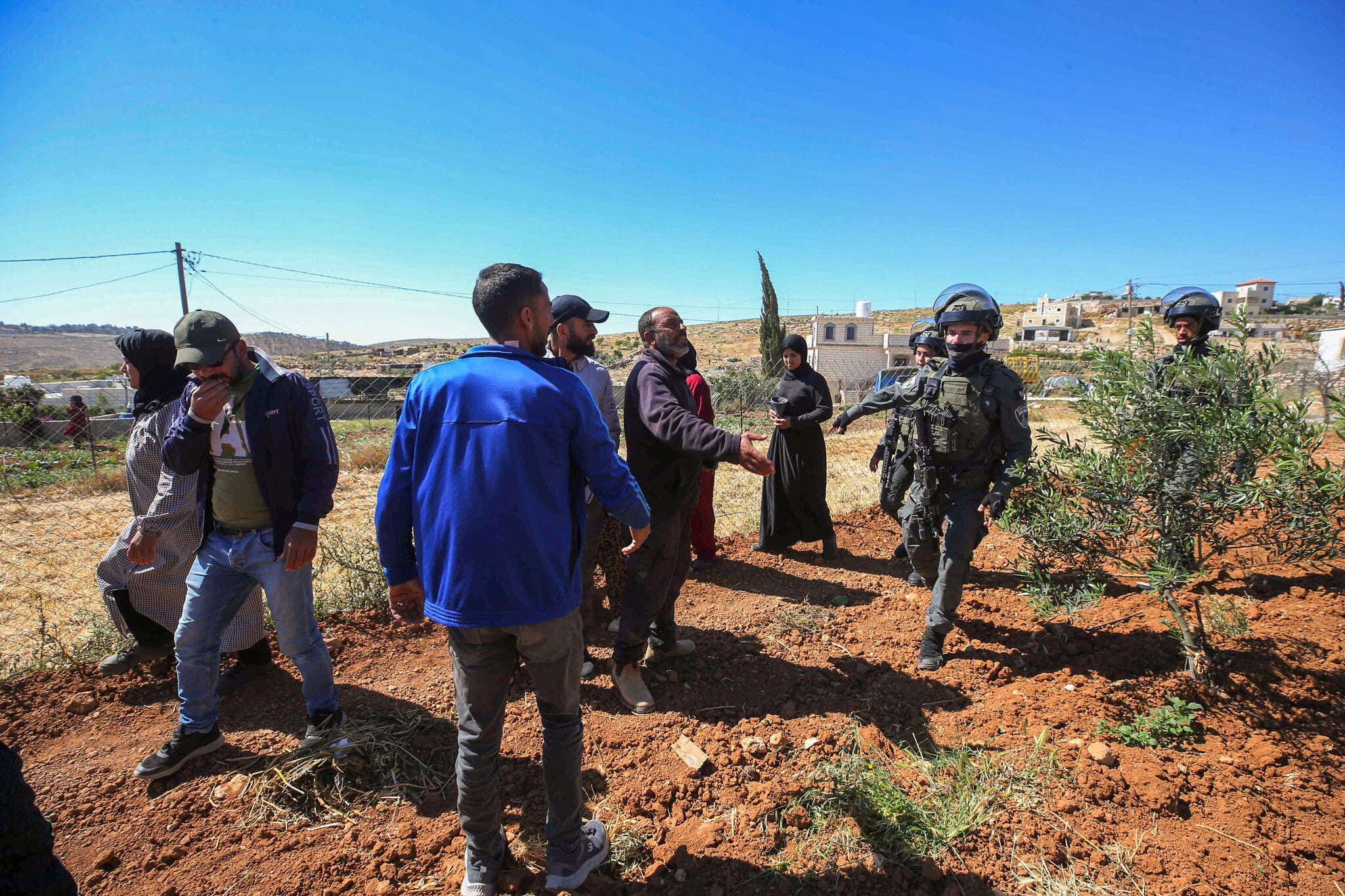
“Soldiers come and take them for a period of time without telling them how long it will be,” he said. “They are taken to military bases where there is no Shin Bet or police presence. It’s not like you can call a police station and ask whether they are there. There is no oversight, nothing is documented anywhere. People disappear — from three hours up to two or three days.”
Ben Dror, the activist who assists families in the South Hebron Hills trying to locate detained relatives in real time, said the response from the military is often dismissive.
“We mostly call the army, the brigade operations room, and usually they hang up on us,” she said. “There were also absurd cases where they imitated little children, said it was a pizza place, things like that.”
Ben Dror provided The Times of Israel with a recording of a March 17 phone call in which an activist from the Human Rights Defenders Fund attempted to ask the Hebron Brigade where a Palestinian from the South Hebron Hills detained earlier that evening was being held.
In the recording, soldiers in the operations room can be heard imitating small children for about a minute and giggling before hanging up.
In response to a query from The Times of Israel regarding the phone call, the IDF Spokesperson’s Unit said that “the soldiers in question acted in an unprofessional manner that does not align with IDF values, and the incident will be handled disciplinarily.”
The IDF added that the brigade operations room is not intended to respond to civilian inquiries and that such inquiries should be directed to the Israel Police, which would then transfer the information to the relevant military authorities.
However, Ben Dror said that when she contacted the police in the past, she was told that the Palestinians she was searching for were not being held by police, and that no further assistance was provided.
Beyond settlers
Some of the incidents described in the petition allegedly involve cooperation between soldiers and settlers.
Awad told The Times of Israel that “the moment a settler arrives with the army, the settler gives orders to the soldiers, and the soldiers follow the settlers’ instructions.”
According to Awad and the rights groups involved in the petition, some of those settlers serve in regional defense reserve units accused of fueling violence against Palestinians. The reserve forces, known as Hagmar units, consist largely of settlers who are tasked with defending their own communities, which allows them to act against nearby Palestinian communities.
Hagmar soldiers have been documented in numerous incidents over the past two years involving violence against Palestinians.
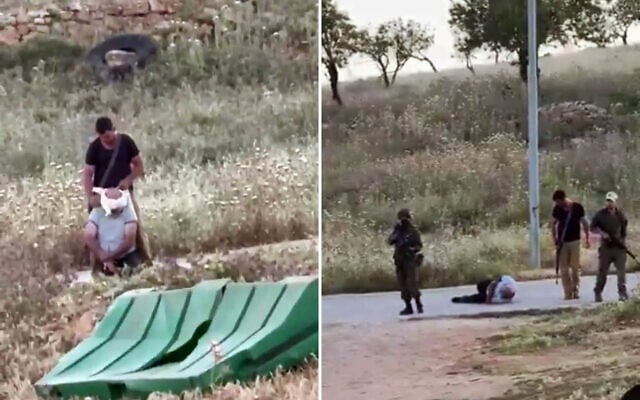
Metzer noted, however, that the alleged unlawful detentions are not limited to settler reservists and vary by region.
“In the Jordan Valley it’s more the Jordan Valley Brigade — regular soldiers doing operational duty, not settlers,” he said. “In the South Hebron Hills, there is more involvement of settler soldiers, like Hagmar units.”
Sharon argued that it is highly unlikely the broader military establishment is unaware of the practice.
“These are people being detained inside military bases. It’s impossible to say the army doesn’t know about it,” she said.
According to Sharon, in recent months, the Association for Civil Rights in Israel submitted two general complaints compiling testimonies to the IDF legal adviser, the military advocate general, and the head of Central Command, but received no response, leading the groups to file the High Court petition.
Awad said the seemingly random detentions had left him perpetually on edge.
“These are months where you are constantly afraid, constantly worried they will come and take you for no reason while you are on your own land, that they will come and create problems just to detain you,” he said. “You are in constant distress.”









The Times of Israel Community.