

Pigeon meat and five other kosher trends to watch
This year’s Kosherfest offers stores, restaurants, and foodies a sampling of the hottest new Jewish cuisine – including, improbably, chicken soup potato chips
 Add ToI as a Preferred Source on Google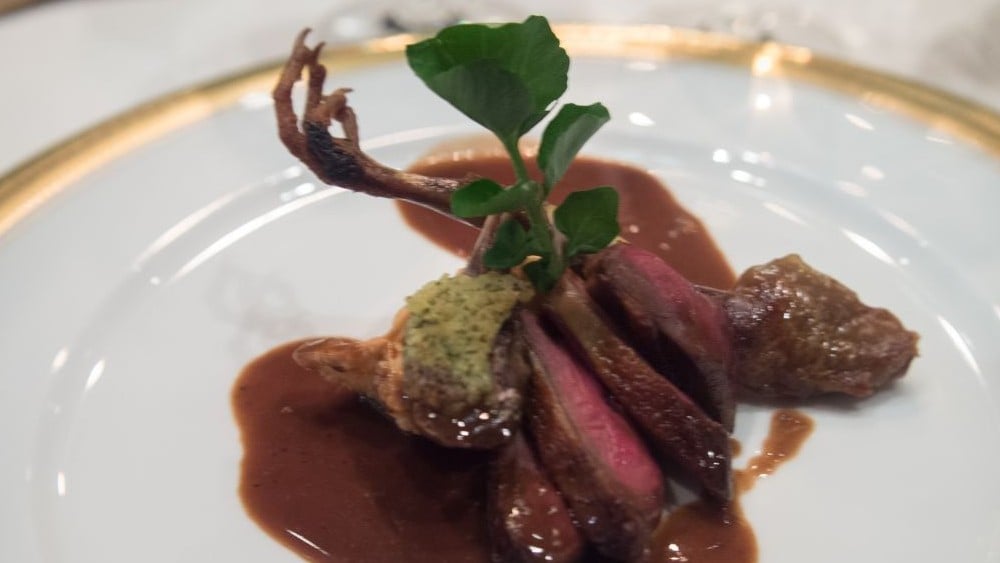
SECAUCUS, New Jersey (JTA) – Walking around the exhibitors’ hall at Kosherfest, the annual kosher food trade show, is like finding yourself at the most intense synagogue kiddush reception you could ever imagine.
There’s plenty of food of every kind, from blintzes to hot dogs to nutritional supplements. There are loads of people. And everywhere you turn, someone is elbowing you in the gut. Most of Kosherfest’s attendees come for business — food company representatives, grocers, institutional cooks — but more than a few consumers come to taste the free samples.
I went along last week to see what was new and interesting in the kosher food world. Here’s what I found.
1. They call it squab, I call it pigeon
Think chicken, only much, much smaller. The drumstick is about the size of an adult pinky finger, and there’s not much meat on the bone. It’s squab – known in the common vernacular as pigeon.
It’s actually not bad: With a creamier texture than chicken, squab meat tastes like a cross between dark-meat chicken and liver.
It’s the latest offering from Pelleh Poultry, a New York-based company that sells such poultry delicacies as gizzards and chicken feet along with less exotic varieties of chicken, duck and turkey.
In what circumstance, exactly, would one serve squab?
“This is not something that’s going to be your everyday food,” Pelleh CEO Eliezer Franklin told JTA. “If you like patchkeing and getting something very good,” he said, using the Yiddish term for fussing, “I debone it, brine the breasts and you can serve it as an appetizer at a dinner party.”
Among Pelleh’s other new offerings this year are rendered duck fat, duck fry (which they call duck bacon) and duck sausage.

2. Kosher bacon?
With bacon all the rage (didn’t you know?), kosher consumers are eager for a taste of this forbidden food. Imitation bacon bits – many of which are soy based and long have been certified kosher – just don’t cut it.
Welcome to the world of kosher meat disguised as bacon. It sort of looks like bacon, its taste may evoke bacon, it often can be prepared just like bacon, but guess what? It’s still not bacon.
It is pretty good, though.
Pelleh Poultry’s duck fry is called duck bacon because, Pelleh’s CEO says, “it’s friable, it’s fatty and it gets crispy.”
Jack’s Gourmet, a 5-year-old Brooklyn-based company that does wonders with sausages, says its most popular product is its glatt kosher “facon.” Like bacon, the beef is dry cured and well salted, giving it bacon’s characteristic texture and flavor, says CEO Jack Silberstein.
How would he know?
“I wasn’t always kosher,” Silberstein whispers with a smile.
Jack’s new barbecue pulled beef brisket was among the winners of Kosherfest 2015’s best new product award.
3. Chicken soup potato chips for the soul
Chicken soup occupies an exalted place in the Jewish diet. It’s been described as Jewish penicillin, it’s a staple of Shabbat dinner — but it’s got no crunch. Enter the chicken soup-flavored potato chip.

Ten Acre, a UK-based company, is the brains behind this creation and another unusual flavor: pastrami-flavored crisps (officially called Pastrami in the Rye). But don’t be fooled: These chips are meat free (and dairy free, for that matter). Other flavors in the Ten Acre line include the slightly more prosaic hickory barbecue, Bombay spice, sweet chili, and cheese and onion, among others. All are certified by the Orthodox Union.
4. Chicken in a can
Ever bitten into a tuna fish sandwich and thought: “Oh, if only this were canned chicken, not albacore?” Well, wish no longer: Kosher canned chicken is finally here!
“Fifteen years ago I noticed people were eating a lot of tuna, but the only way to have chicken was to prepare it yourself,” said David Levine, president of Choice Yield, the California company manufacturing canned chicken under the label Noah’s Kosher Kitchen. “I thought this would be really convenient for people.”
Why would anyone want chicken in a can? Levine lays out his rapid-fire argument: You can take it on a road trip, pack it for the park, use it in institutions like schools and you don’t have to worry about cooking the chicken, making space for it in your fridge or worrying about it going bad. And it’s kosher for Passover.
The cans, which contain fully cooked chunk white meat packed in water, look just like tuna cans except for the label. (Don’t confuse them with Chicken of the Sea, which in fact is tuna.)
The just-launched product is not yet available in grocery stores.
5. Empire eliminating nitrates
Change is coming to Empire Kosher, the nation’s largest poultry producer, following its sale last March to Hain Celestial, an organic and natural foods company.
Empire products are getting a fresh look and logo. More notably, nitrates — the preservative that some scientific research has linked to cancer — are being eliminated from its deli products.
The company’s new deli line will be all natural, which means no antibiotics for the animals that after processing become chicken and turkey breast slices, bologna, pastrami, salami and hot dogs. Instead, Empire will use high-pressure pasteurization methods to preserve its deli meats, which will have a shelf life of 60-90 days. The deli packaging is also being changed from the current over sized box to a much smaller, resealable vacuum-packed bag.
“We believe there’s a great desire from our consumers for clean-label products, and we want to be the leader,” Empire CEO Jeff Brown told JTA.
6. Welch’s going kosher for Passover
In the kosher grape juice market, Kedem by the Royal Wine Corp. rules supreme. It’s practically the only grape juice found in the kosher aisles at supermarkets — and even at kosher grocers.
But Welch’s, which controls a majority of the non-kosher US grape juice market, is muscling its way in with the launch of a jointly branded Welch’s-Manischewitz kosher-for-Passover grape juice. Slated to hit shelves in January, Welch’s new 100 percent grape juice will also be kosher for year-round use, including for sacramental purposes like Kiddush and Havdalah.
Though Welch’s regular grape juice will not carry kosher certification and its new line is being targeted at the kosher-for-Passover market, those bottles may find buyers throughout the year.
“We certainly will be price competitive, and based on the quality of Welch’s and the fact that it’s made without anything artificially added to it, we think it’s going to be the best value to the Jewish consumer,” Manischewitz CEO David Sugarman told JTA.










The Times of Israel Community.