

UK museum stands by description of Nazi race laws as aimed at ‘observant’ Jews
Holocaust historians say ‘nonsense’ caption by Imperial War Museum in exhibit on Nuremberg Laws implies secular Jews were spared; retired academic: ‘Reprehensible’
 Add ToI as a Preferred Source on Google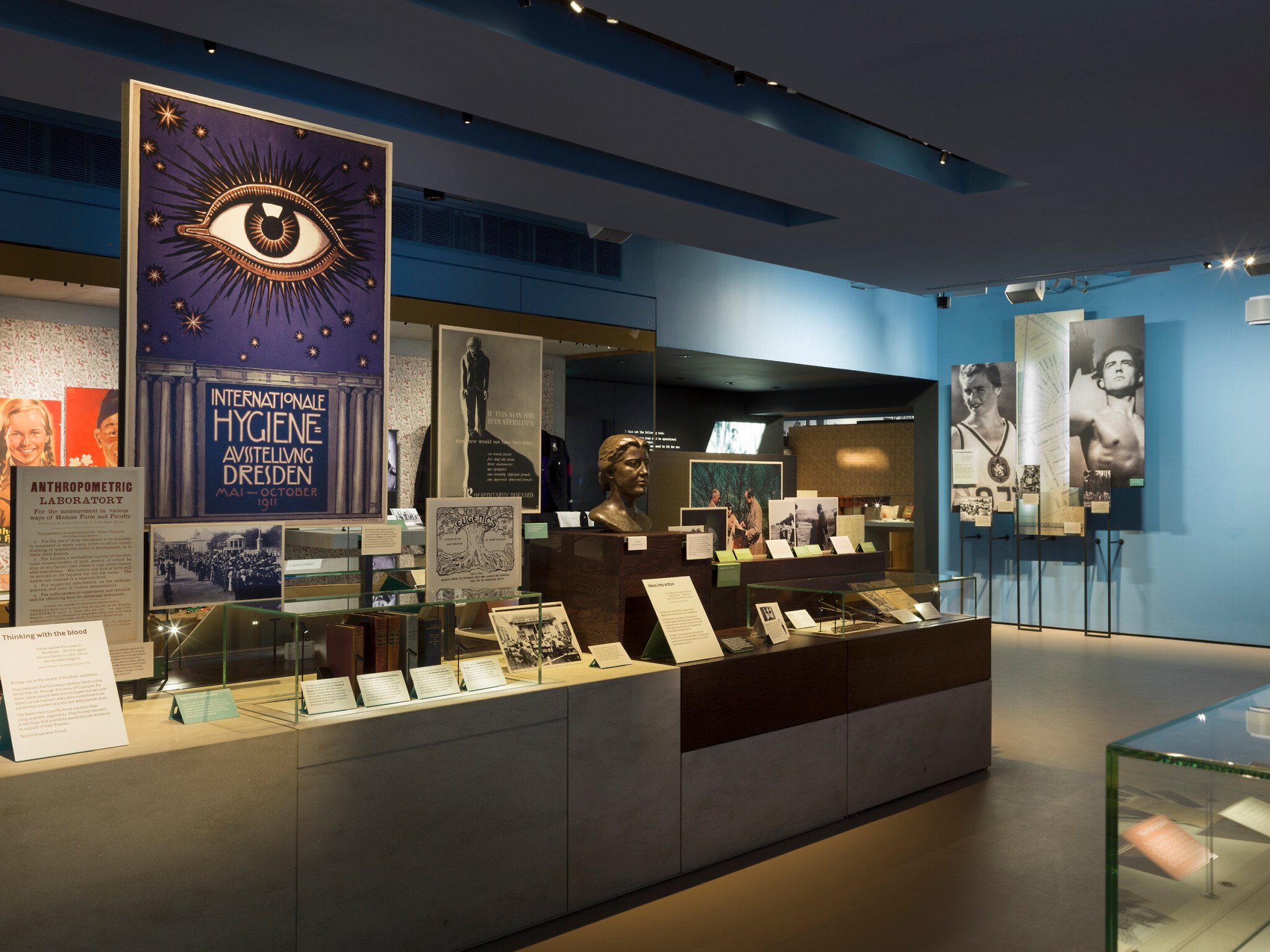
A London museum is refusing to change its description of Nazi racial laws as only targeting “observant” Jews, even as academics labeled the caption in an exhibit as “nonsense,” British media reported.
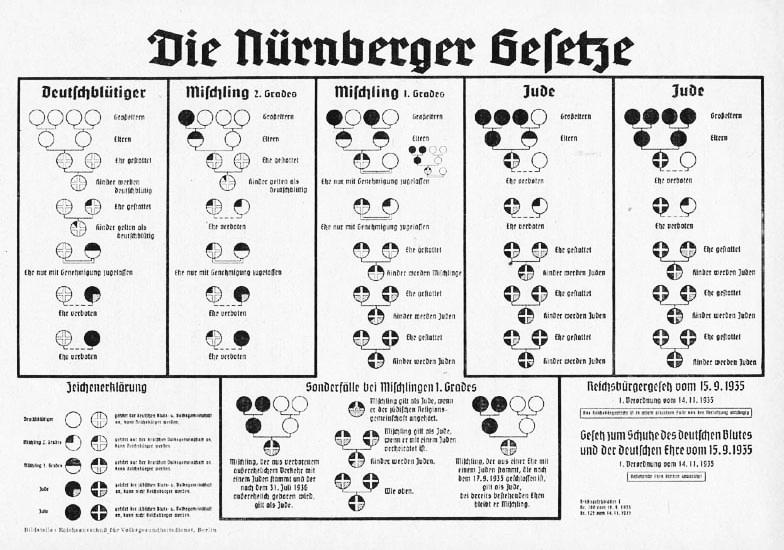
The Imperial War Museum’s description said that under the 1935 Nuremberg Laws, “a person was defined as Jewish based on how many observant Jewish grandparents they had.”
In fact, the antisemitic law did not refer to observance in its criteria; rather, it described anyone who was recorded as having three or four Jewish grandparents as a Jew, while an individual with one or two Jewish grandparents was defined as mixed race, or Mischlinge.
The legislation stripped Jews of German citizenship and barred them from marrying or having sexual relations with ethnic Germans.
A retired New York academic, who asked not to be named, told The Guardian in a report published last week that she noticed the caption during a visit to the museum last year.
She said that while she was “extraordinarily impressed” by the rest of the exhibits, she told the IWM that “wording referring to observant Jewish grandparents with its lack of historical accuracy must be changed.”
“It disregards the vast majority of the Jewish population who are not observant,” she told the British daily, noting that the Nazis aimed to eradicate all Jewish people, regardless of their level of observance.
“This is such a misleading impression of the Nazi outlook that for me it’s reprehensible that it stays in the public domain,” she said.
In response, the IWM’s director general Caro Howell told the academic that it would “stand by the curatorial choices that we have made and that our expert advisers have reviewed,” an email cited by The Guardian read.
According to the email, Howell said that the museum’s integrity would be undermined if it made changes whenever “questions of interpretative nuance” were raised.
According to The Guardian, the retired academic sought clarification on the matter from Christopher Browning, a Holocaust historian and expert witness in the David Irving libel trial in 2000, as well as historian Timothy Snyder, who has written books on Nazi crimes.
“The issue was not whether the grandparent was observant but whether his or her birth had been registered with the Jewish community,” Browning said. “The grandparent could later even have converted to Christianity but if the grandparent had been registered as Jewish at birth, that for the Nazis was the deciding factor.”
Snyder also insisted, “It did not matter whether the grandparents were observant … No one was saved from persecution, as the wording incorrectly implies, by having grandparents who were not observant.”
“As worded, the suggestion is that ‘bad Jews,’ i.e., those with a secular (or even Reform) background, might have been spared from the persecutions that preceded the Holocaust, whereas ‘good Jews,’ those with religious (or Orthodox) backgrounds, were the victims. This is nonsense,” Snyder said.
After the academic forwarded the experts’ comments to the IWM, Howell responded that she would no longer respond and that the debate “risks sowing division among people who really should pull together.”
Dr. Robin Douglas, a fellow of the London Centre for the Study of Contemporary Antisemitism, told the UK Jewish News that the IWM description misinterpreted the law “as meaning that the grandparent had to have been a piously observant Jew in adult life, whereas what [the law] really meant is that the grandparent had to have been entered into Jewish religious records when they were born.”
“The fact that the Nazis ultimately fell back on a religiously-determined criterion of Jewishness exposes the emptiness of their supposedly scientific ideas,” he said.
Responding to the report, a spokesperson for the museum told The Guardian that it was “inevitable” that questions of interpretation would be raised by its audiences and defended the choice of words used in the exhibit.
“The [information board] was rigorously reviewed and edited by IWM’s curators, a number of leading international scholars and members of Jewish communities before being printed,” the spokesperson said.
In a subsequent statement emailed Tuesday to The Times of Israel, IWM said it was considering whether “some further clarification should be added to the caption in consultation with external advisors” to address the “concerns and misunderstanding.”
“There is absolutely no suggestion across IWM’s Holocaust Galleries that the Nazis’ persecution of Jews was restricted to those who were religiously practicing or to their descendants – indeed this point is made explicitly in major text elements,” the statement said.
“The caption in question does not address the issue of Jewish identity (as it was conceived by the Nazis) in the context of the overall history, as suggested in media reports, but accompanies and is specifically related to a diagrammatic poster from 1935 associated with the Nuremberg Laws.”



The Times of Israel Community.