

Virus fears, new government kindle fresh hopes for Gaza prisoner swap
Hamas source says significant steps made toward deal after Gaza leader indicates new willingness to talk, but agreement still far off; Gantz as defense minister may change that
 Add ToI as a Preferred Source on Google
Long-stalled negotiations on a prisoner exchange between Israel and Palestinian terror group Hamas could be given fresh impetus by the coronavirus pandemic and the formation of a new Israeli government, analysts say.
A deal is not yet close but significant steps have been taken in recent weeks, said a Hamas official speaking on condition of anonymity.
Israel has not confirmed it is holding talks with Hamas, with which it has fought three wars since 2007, but recent media reports suggest the two sides are nearing an agreement.
Germany, Switzerland and Russia are reportedly involved in the talks, as is traditional mediator Egypt.

Since the 2014 Gaza war, Hamas has held the bodies of Israeli soldiers Oron Shaul and Hadar Goldin, although the ruling terror group has never confirmed their deaths.
Hamas is also believed to be holding two Israeli citizens — Avera Mengistu and Hisham al-Sayed — who entered Gaza of their own volition and whose families say they have mental health issues.
Israel is meanwhile holding more than 5,000 Palestinians in its jails.
In the most recent prisoner swap, in 2001, Hamas and the Jewish state brokered a deal that saw more than 1,000 Palestinians released in exchange for Gilad Shalit, an Israeli soldier captured five years earlier.
Virus fears
In early April Yahya Sinwar, head of Hamas in Gaza, claimed he was especially concerned about humanitarian conditions in Israeli prisons during the coronavirus pandemic and was ready to negotiate.
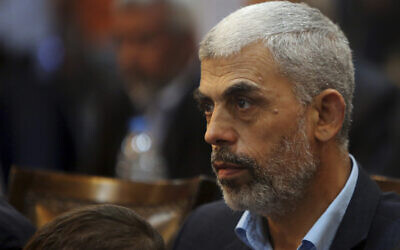
Sinwar himself is a former inmate of Israeli jails and was freed in the 2011 exchange.
Israeli authorities have identified more than 16,000 coronavirus patients, including 248 deaths. More than 350 people have been infected in the Palestinian territories, 20 of them reported in Gaza.
Sinwar’s comment was interpreted by Israel as indicating a new willingness to broker a deal, said Kobi Michael, a senior fellow specializing in the Israeli-Palestinian conflict at Israel’s Institute for National Security Studies.
There are also hopes Israel’s new unity government could help accelerate talks.
After more than a year of stasis, the country is expected to swear in a new government on May 13 — with Prime Minister Benjamin Netanyahu and his former rival Benny Gantz agreeing to share power.
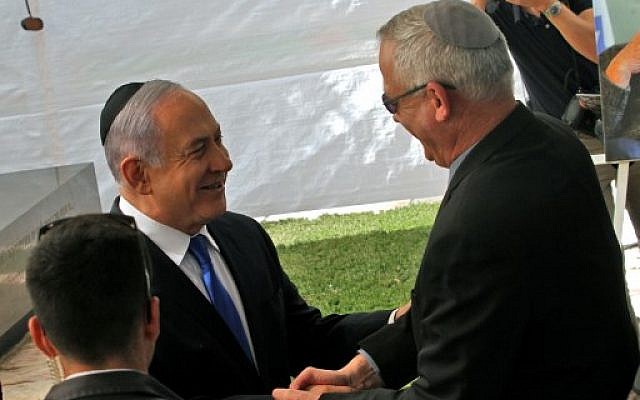
For the initial 18 months, former army chief Gantz will serve as defense minister, taking over from hardline right-winger Naftali Bennett, who had opposed negotiations with Hamas.
“A deal might be easier to reach if a new government is formed because of the composition of the security cabinet,” Michael said.
‘Closer than before’
A talked-about first step could see Israel release some elderly and sick prisoners jailed for minor crimes in return for Hamas providing information about the two Israeli civilians and confirmation that soldiers Shaul and Goldin are dead.
A Hamas official close to the negotiations told AFP there had been progress in recent weeks but the sides were still some distance apart.
“There is a step on which to build and it needs moves from (Israel) to complete the deal,” he said.
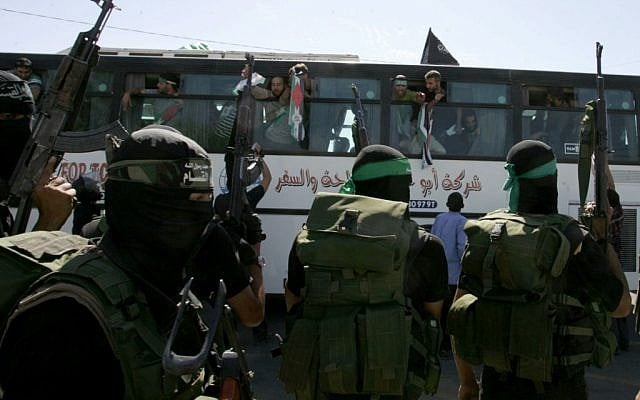
The Hamas official said so far Israel was offering the release of dozens of prisoners held on minor charges but that Hamas was demanding more, including freedom for some inmates serving longer sentences.
Hamza Abu Shanab, a Palestinian analyst and researcher on Hamas affairs, said the “Sinwar initiative” showed Hamas was demonstrating increasing “flexibility” toward Israel.
“Both sides are seriously occupied in negotiations over the deal and willing to make concessions,” said Michael from INSS.
“I think that under the current circumstances and atmosphere of the coronavirus crisis, we are closer than before.”
‘Wider truce’?
Israel has for 13 years maintained a blockade on Gaza which it says is necessary to prevent arms from reaching Hamas and other Palestinian terror groups there, but critics say it punishes and impoverishes all two million residents.
The last prisoner-swap deal is still controversial among Israelis, many of whom believe too high a price was paid.

Rockets and mortars are often fired from Gaza towards Israel, which responds with airstrikes.
Michael said Israel would hope a prisoner exchange could lead to a wider truce that will ensure calm.
“If both sides reach such an agreement, they’ll be able eventually to reach to a broader security agreement that will last a couple of years.”
Times of Israel staff contributed to this report.



The Times of Israel Community.