

When protesters in Ofra tried to ‘slow down the inevitable’
A month after Amona evacuation, demonstrators in nearby settlement faced off against police in doomed bid to save nine homes from demolition
 Add ToI as a Preferred Source on Google
Raoul Wootliff is a former Times of Israel political correspondent and Daily Briefing podcast producer.
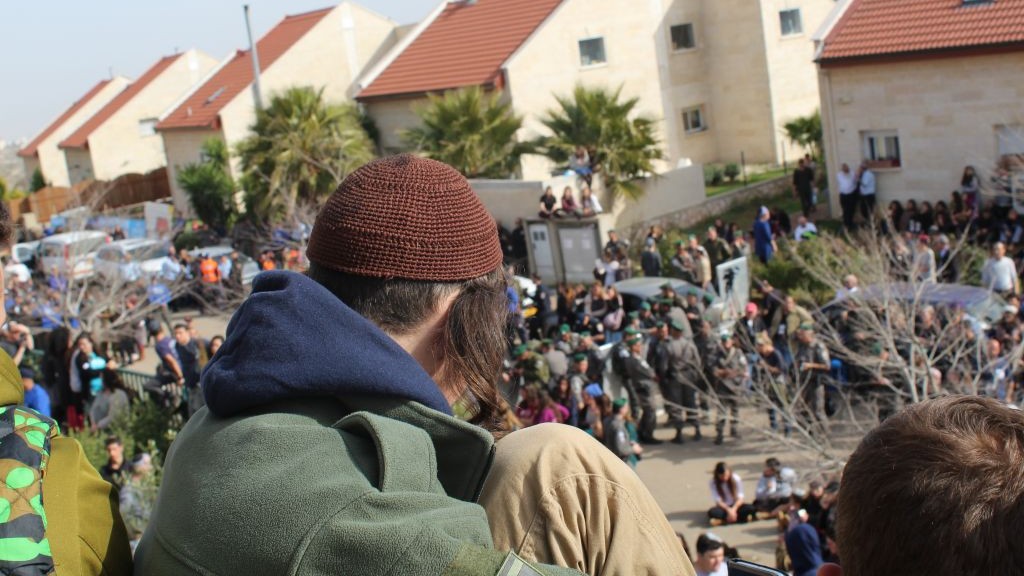
OFRA, West Bank — The protesters who arrived at the Ofra settlement last week were welcomed as old friends by those who had turned up a day earlier and slept on the floor of one of the nine buildings slated to be demolished. While some knew each other from school or summer camp, most had become acquainted just a month earlier at the last set of house demolitions, at the nearby Amona outpost.
But while some of the faces were the same, chanting the same slogans at police officers and singing the same songs as they crammed into the homes of families due to be evicted, the atmosphere this time was different.
In Amona, many came to stop the “uprooting” of a Jewish settlement, convinced that if they held their ground strongly enough they could prevent the court-ordered and government-instructed evacuation of the illegal outpost. Here, protesting the demolition of nine houses within the boundaries of the Ofra settlement, the goal appeared to be an act of obstruction, not prevention.
“We are here to slow down the inevitable,” said one protester who came from the Otniel Yeshiva seminary in the southern West Bank. He asked not be named in order to “prevent problems” with his IDF draft due in less than two weeks.
“We know what’s coming. We can’t stop them,” he said, gesturing towards the hundreds of police officers waiting to begin the evacuation. “But we need to show the government and the High Court that we will not let this happen easily. They need to know that every time they try this we will give them hell.”
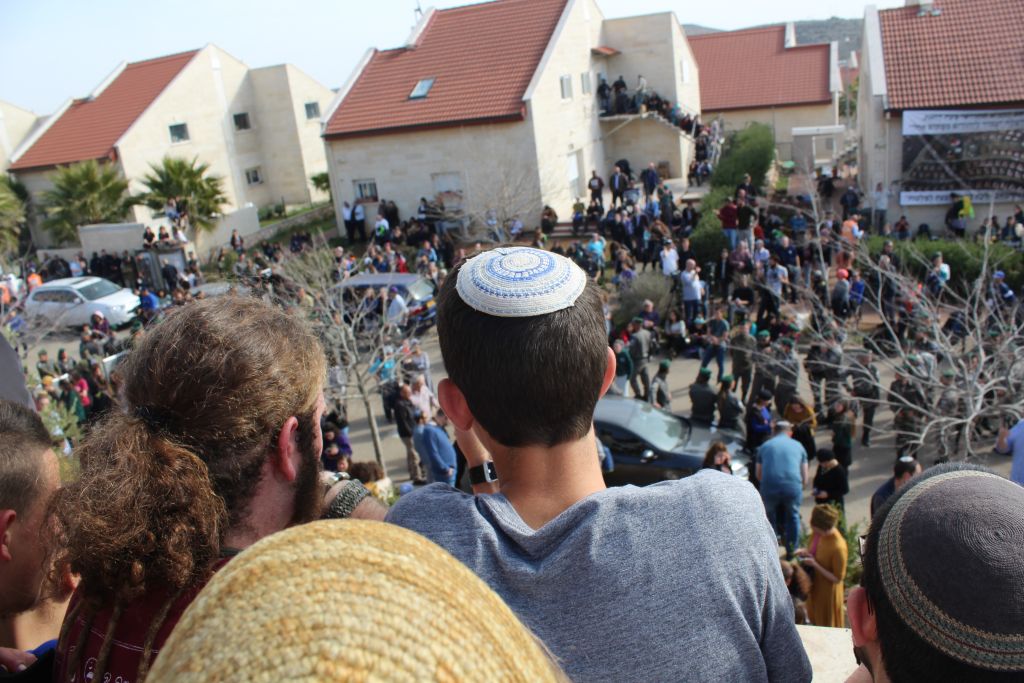
Asked if the protesters would resort to violence against police, he said others may but he didn’t see the point. “People are angry and upset and I can understand them, but it’s not going to stop what’s coming.” he added. “That’s not what I’m here for.”
A day earlier, the High Court of Justice rejected an appeal to halt the demolition, with Ofra residents requesting that the nine buildings be sealed off rather than destroyed.
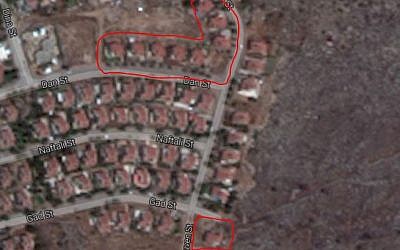
The original case against the nine buildings was brought before the High Court in 2008 by the left-leaning Yesh Din legal organization, which represented the Palestinian landowner. The court first issued its demolition ruling in February 2015, and, after a number of delays, set March 5, 2017, as the final deadline by which the buildings must be pulled down.
The residents’ request to have the structures sealed off and not demolished would have made them eligible for being spared in accordance with legislation passed earlier this month known as the Regulation Law. The law legalizes Jewish homes constructed illegally on Palestinian land, if homeowners can prove they built their homes in good faith or received government assistance.
However, the judges ruled unanimously on Monday that the evacuation of the buildings must go ahead.
The operation itself, while on a smaller scale, was carried out in a similar manner to that at Amona. In a vicious game of cat and mouse, police cleared and closed off houses one-by-one as protesters moved from building to building. Dressed in the same non-threatening blue sweaters, officers this time came with the noticeable addition of protective goggles to prevent injury from paint or acid thrown in their eyes, as happened a month ago.

Each time police tried to surround a house, protesters huddled together to create a human blockade, counting down from 10 before charging the officers in an attempt to push them back.
When officers backed down to regroup, the protesters cheered and jeered. When, as they eventually did each time, the police broke through the throng, they were met with bitter and angry shouts, with protesters often squaring off with individual officers.
But while the clashes raged outside, inside the houses a very different picture played out. Packed with friends, family and supporters from the settlement and beyond, residents gathered together in solemn mourning for the imminent destruction of their homes. The tightly packed groups sang songs about the destruction of Jerusalem and the exile of the Jewish people. In one house someone played a guitar, in another, a violin.
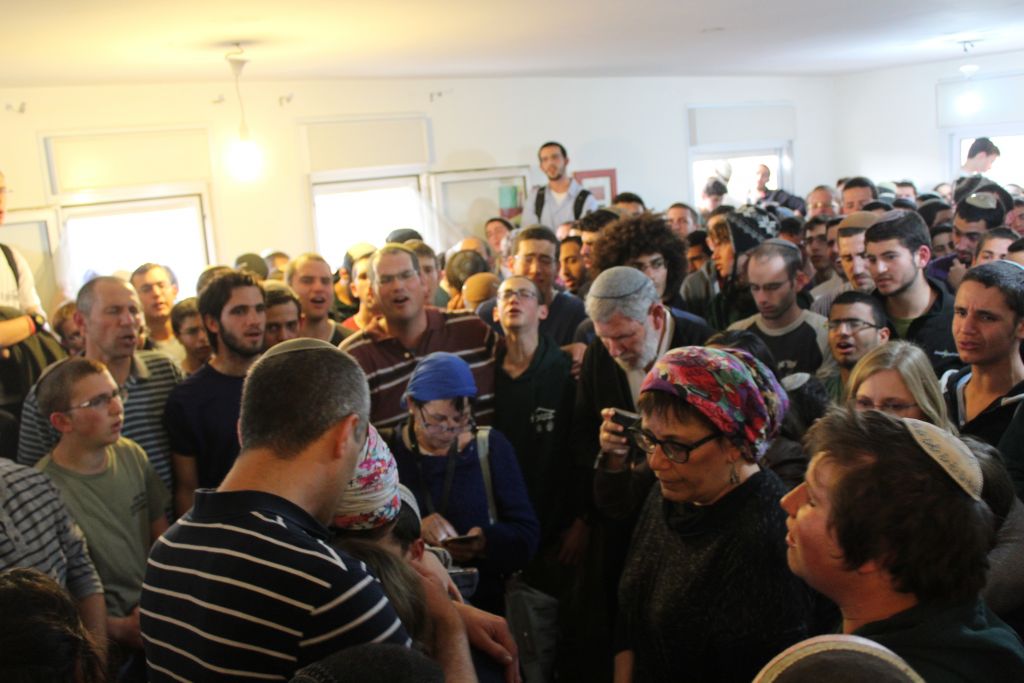
Speaking to those gathered in his house, Bini Eldar beseeched the crowd to show “love, not hate” to the security forces carrying out the operation. “We can’t believe this is happening. It makes no sense. But the police are not to blame. They are just carrying out the ridiculous and hateful orders,” he said.
On the outside the Eldar home, as with the other houses slated to be destroyed, a giant smiling photo hung of the family that lived inside. “We want to show the police that this is not just a house being destroyed,” Eldar told The Times of Israel. “There is a family that has built their lives here. Taking down the building is taking down a part of that.”
As police entered the home, the commander of the unit carrying out the operation addressed those gathered inside.
“We are one people and we must not fight each other,” he said, holding Bini Eldar’s hand. “I’m so sorry to have to do this, but please let us do our job.”
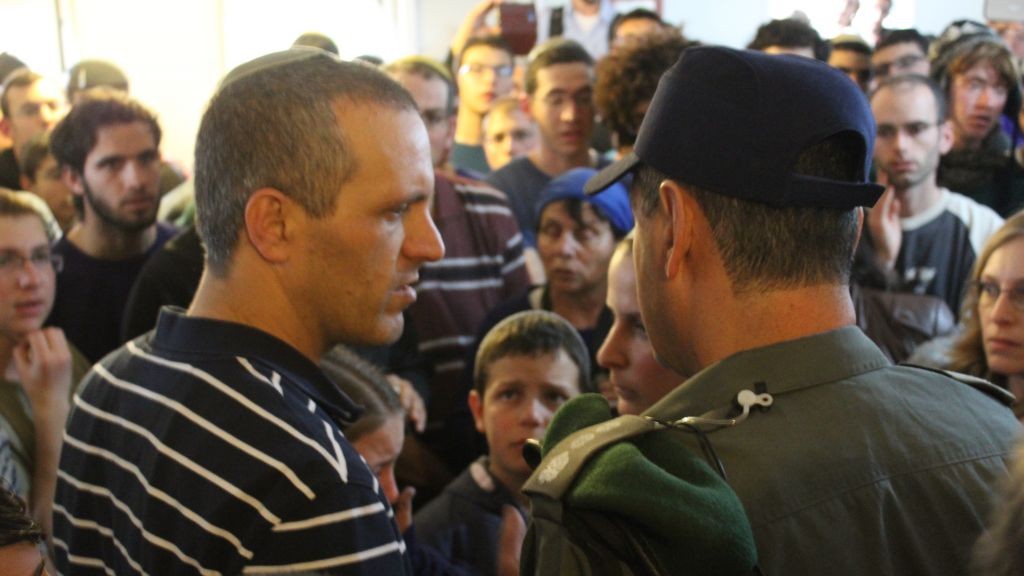
Most of the youth heeded the family’s request to exit the house peacefully, leaving officers to struggle with only a few dissidents. The other protesters either filled the road next to the houses or moved on to the remaining buildings for a similar ceremony of outdoor clashes and indoor grieving.
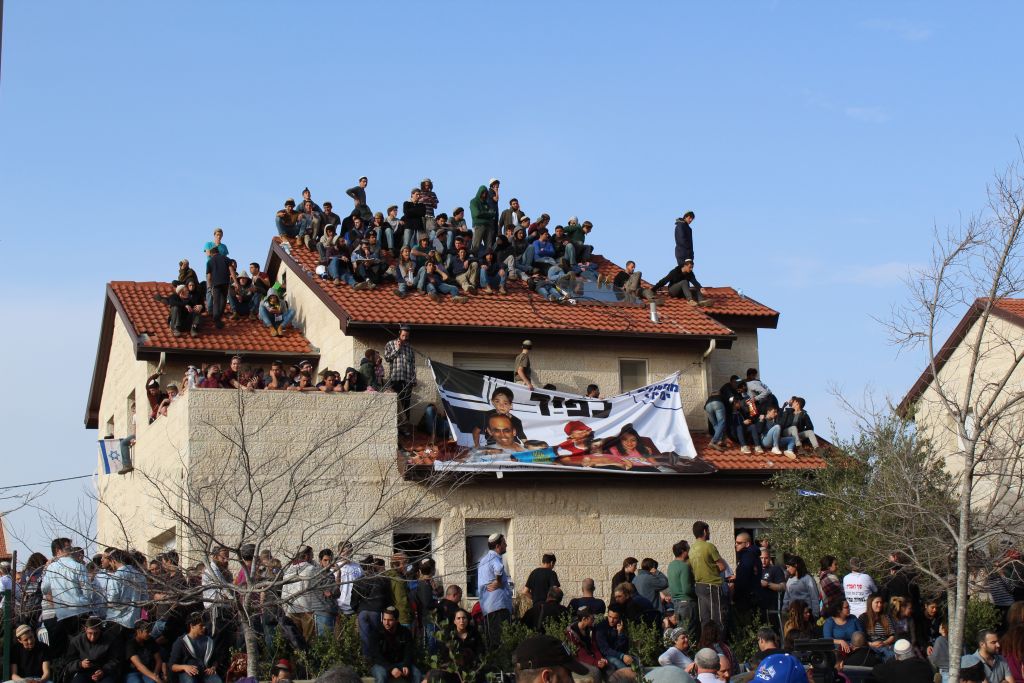
After eight of the nine houses had been cleared, police appeared to take a break to gather their strength before tackling the now-packed final house belonging to the Kfir family. Protesters, announcing that the police were on a lunch break, took the lull in activity as an opportunity for afternoon prayers.
As police began to amass around the home, Rabbi Avi Gisser, the spiritual head of the Ofra community, spoke to the protesters in the house via loudspeaker. “Raising a hand against our brothers will not stop this atrocity. You don’t have to leave on your own, but don’t fight back,” he bellowed.
With the doors locked and pressed against by the sweating bodies of protesters, police used hydraulic battering rams to force their way in, eventually gaining entry to the protesters inside.
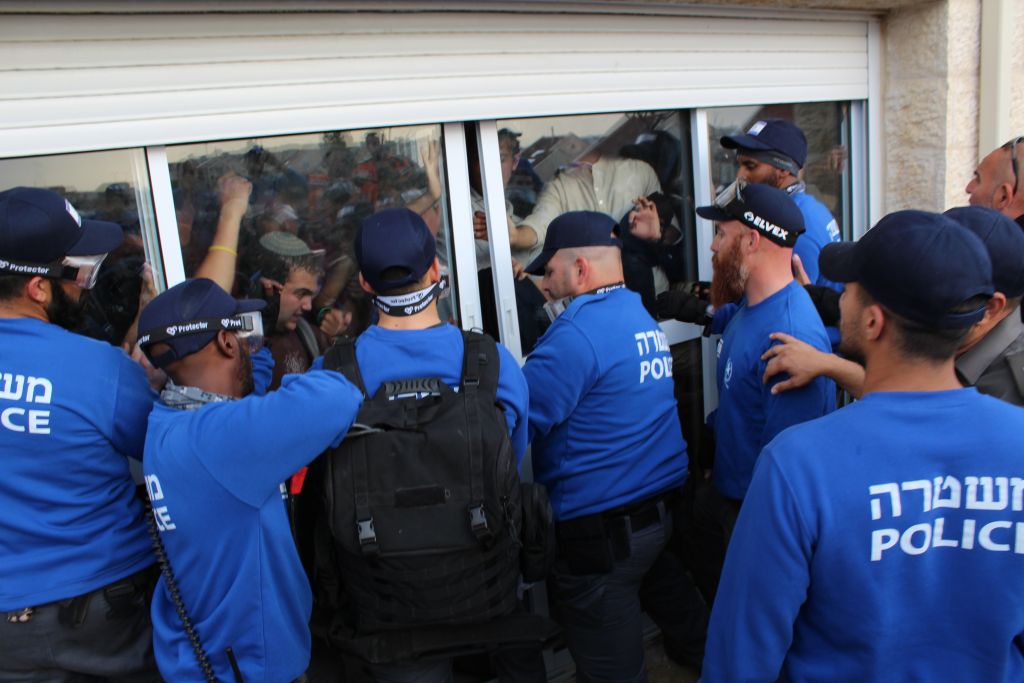
Minutes later, the “inevitable” scenes reminiscent of Amona and other evacuations began, with police forcibly dragging protesters away from the building. Some lay stone-still, carried by four officers away from the building. Others, disregarding the words of Gisser, flailed and struck out at the police, only subdued by a greater show of force from the officers.
As they forced their way inside, protesters on the upper floors poured water on the officers and on at least three occasions threw full bottles at the officers below.
Twenty-one officers suffered light injuries during the operation, a police spokeswoman said, a number of whom were brought to Hadassah Hospital Mount Scopus in Jerusalem for treatment. At least two of the injured officers reported they were bitten by protesters. Fifteen people in total were arrested for attacking officers.
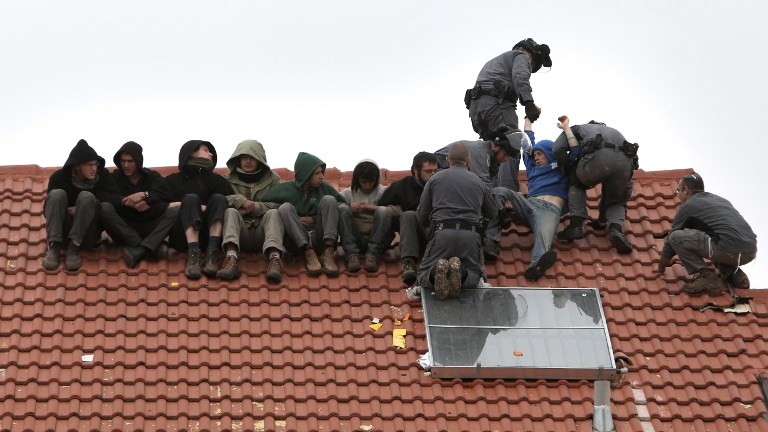
After successfully evacuating the lower floor of this last home, police decided to wait until the next morning to remove dozens of demonstrators who had barricaded themselves on the second floor and roof, leaving some 15 youths to spend the night in the rain on terracotta tiles.
One officer told The Times of Israel that leaving protesters on the roof would break their spirit and encourage them to come down on their own. Some did. Others were eventually taken down by special forces from the Border Police.
But as protesters were loaded onto the buses taking them from Ofra to Jerusalem, they vowed to continue to fight. “We will be back at the next evacuation,” one teenager with a ripped shirt said. “We knew what would happen here, but eventually, we will win.”







The Times of Israel Community.