

On Iran trip, Australian FM brokers intel-sharing deal
Julie Bishop won’t provide details of agreement with Tehran to clamp down on fighters joining Islamic State
 Add ToI as a Preferred Source on Google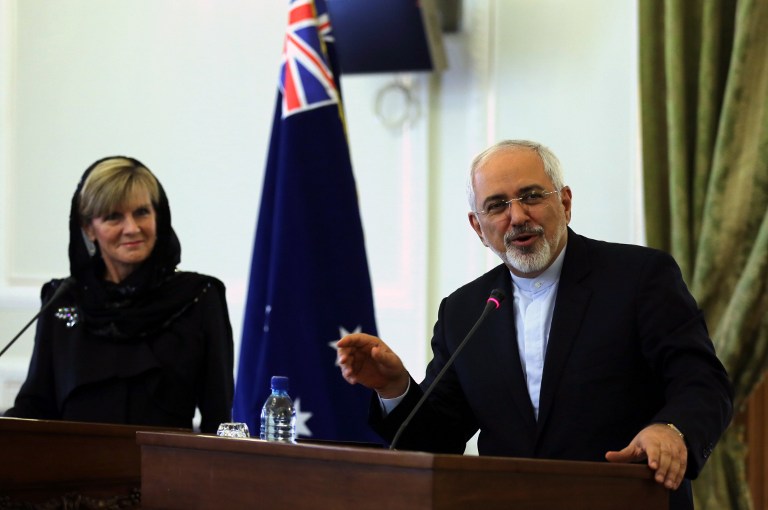
Australia and Iran will share intelligence to track foreign fighters working with the Islamic State group in Iraq, Foreign Minister Julie Bishop said Monday after a visit to Tehran.
After meeting with Iranian counterpart Mohammad Javad Zarif, President Hassan Rouhani and Ali Akbar Velayati, foreign affairs adviser to supreme leader Ayatollah Ali Khamenei, Bishop said it would be an informal arrangement.
“We have a common purpose with Iran in defeating Daesh and helping the Iraqi government,” she told the Australian Broadcasting Corporation, using an Arabic acronym to refer to the militant IS organization.
“During my discussions with the national leadership here, it was agreed that we could share intelligence, particularly on the foreign terrorist fighters from Australia who are taking part in this conflict in Iraq.”
More than 100 Australians have travelled to Iraq and Syria to fight with the jihadists, raising concerns about the threat of “home-grown” extremists.
On Saturday, two men were arrested in Melbourne for allegedly planning an IS-inspired attack at Anzac Day commemorations on April 25 honoring soldiers who fought and died for Australia.
Bishop, in the first trip to Iran by an Australian minister in more than a decade, said Tehran had a strong military presence and long relationship with Iraq, coupled with a sophisticated intelligence network in places where Canberra had no presence.
“I believe that Iran has information that we would seek and they were very agreeable to share that information with us,” she said, without spelling out what Tehran would get in return.
“I won’t go into detail of our intelligence-sharing arrangements,” she said.
“But obviously if Iran has information that will be of interest to us, if we have information that would be of interest to them, in pursuing our common purpose of defeating Daesh, then that is an appropriate exchange.”
Australia is part of an international coalition in Iraq and last week began deploying 330 more troops to train local soldiers fighting IS, joining an aerial and special forces contingent in the region.
Iran, though not part of the coalition, has run a parallel campaign using Shiite militias and military advisers to reverse the IS surge that came close to felling the Baghdad government last June.
Bishop said she made a point of explaining to Tehran that the deployment of more troops was strictly for military training purposes.
“I don’t want there to be any misunderstanding, any miscalculation or any misjudgment, and I made that point very clearly to each one of the leaders that I met,” she said.
“They must have an understanding of our role, because there’s a lot of misinformation that is flowing around Iraq and we know that Daesh is very good at propaganda.”






The Times of Israel Community.