

Festival sees Kurdish pastry embracing a knotty North American tuber
In special dishes at eateries all over the capital this week, the misnamed Jerusalem artichoke takes its place in the spotlight
 Add ToI as a Preferred Source on Google
Jessica Steinberg, The Times of Israel's culture and lifestyles editor, covers the Sabra scene from south to north and back to the center
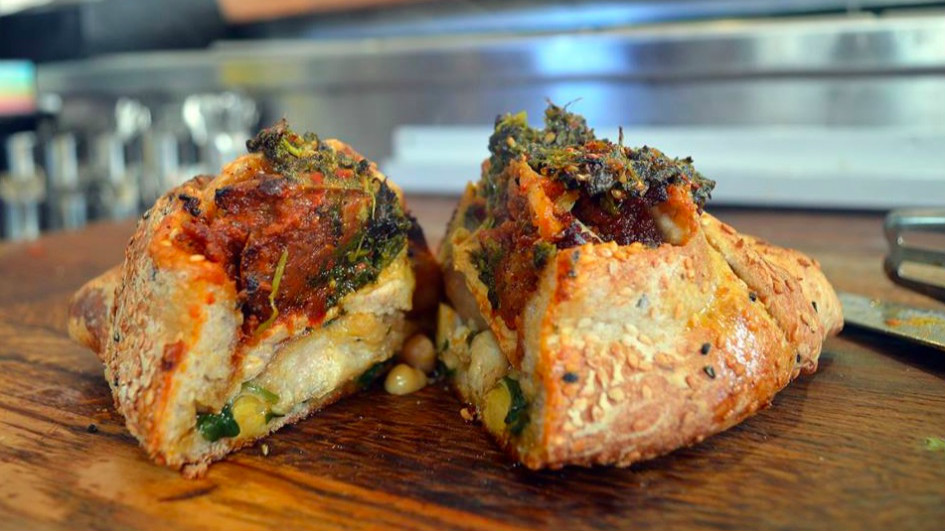
The shamburak, a seeded, crusty Syrian-Kurdish roll, the flagship dish at popular Jerusalem eatery Ishtabach, is usually stuffed with a variety of meats, like spicy kebab, slow-cooked brisket and oniony beef bourguignon.
But now, in honor of the Jerusalem Artichoke Festival, the shamburak is getting some unfamiliar treatment: being spread with creamy sun dried tomatoes and filled with chunky layers of lemony Jerusalem artichoke, along with veal sweetbreads and pickled lemons.
The January 24-26 festival is being celebrated by more than 50 Jerusalem restaurants, including Mahneyuda, its bar sidekick Yudale, Chakra, Sea Dolphin, Cafe Kadosh, Adom, Angelica, Grand Cafe, Ishtabach and many others.
“It’s not from Jerusalem and it’s not an artichoke,” said Oren Sasson, chef and owner of Ishtabach, which joined the burgeoning Mahane Yehuda market restaurant scene about two years ago. “But it’s become Israeli, probably because of the name.”
The Jerusalem artichoke, or sunchoke, as it is also known, has no connection to Jerusalem. It’s a tuber that is loosely related to the daisy family, and was called by Italian immigrants to the US girasole, the Italian word for sunflower, which appears to have evolved into the word “Jerusalem.”
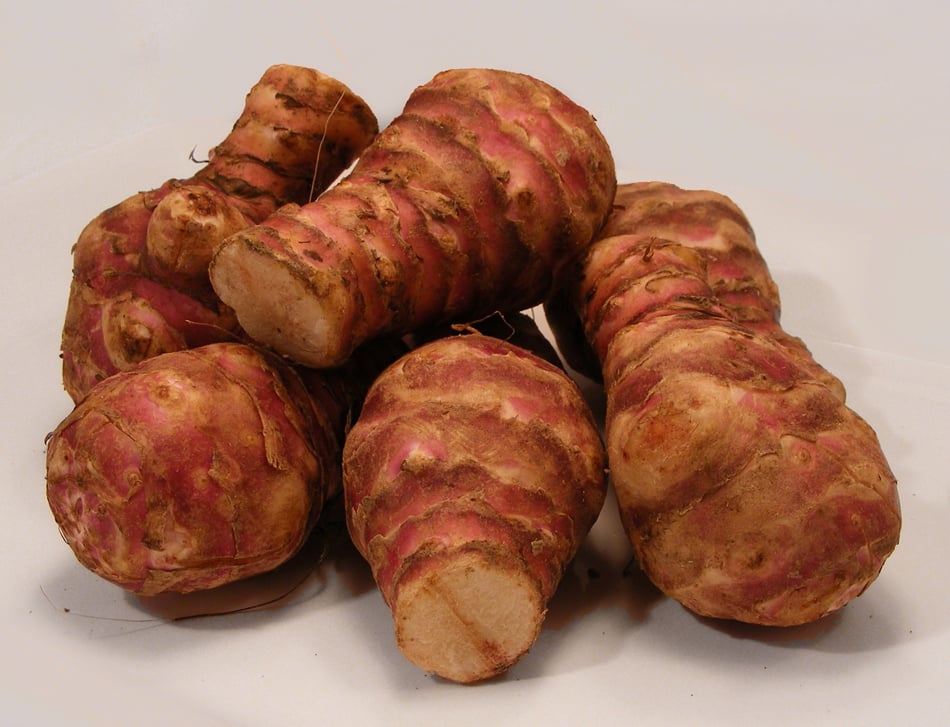
Perhaps because of the name, this root vegetable that has been heartily adapted by the local cuisine. It’s available in the late fall and winter months, when it’s painstakingly peeled and chopped for soups, mashes and roasted vegetable dishes.
The thing is, you have to know how to handle the knotty tuber, which can cause painful stomach gas if not cooked properly. It is also a pain to clean, with multiple knots and bumps on its rough exterior, so be prepared to devote some time to its preparation.
Luckily, Ishtabach’s Sasson and his cooking partner, Alon Sela, who have worked together at many of the city’s restaurants, hotels and catering halls, have years of experience with Jerusalem artichokes.
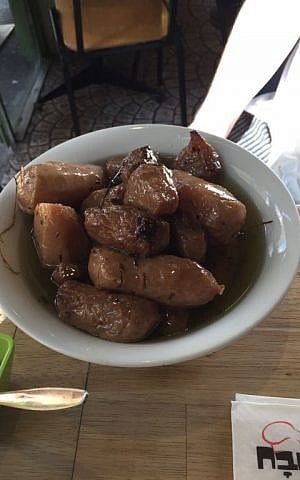
For their special edition of the shamburak, they present a confit of the sunchokes, cooking them with lemon, fresh thyme leaves, and some healthy slugs of olive oil for several hours. The confit is then layered inside the yeasty Ishtabach bread.
“When oil covers the Jerusalem artichoke, there’s no oxidation and then no gas,” said Sasson.
That’s a good selling point for what is now one of their more expensive specials, at NIS 78 ($20) a pop. Most of their other shamburaks, meant to be simple street food, range between NIS 36 (for the vegetarian version) and NIS 52 (for some of the more expensive cuts of beef).
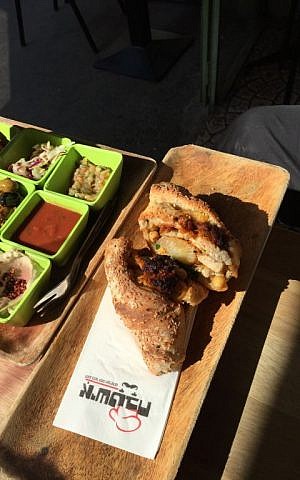
“What we cook here is what we do at home,” said Sela. “We use classic French concepts, high-end cooking but simple eating. We don’t really give silverware because we want you to pick it up and eat it.”
Some of the other restaurants participating in the festival will be offering more elegant dishes featuring the Jerusalem artichoke, for example slicing it into a cream sauce with gnocchi (Harutzim), serving it with sweetbreads (Chakra), stir-frying it with shrimp and spinach (Sea Dolphin), stuffing it with lamb (Angelica), laying thin, roasted slices on burgers (Jozef Hamburger) and emulsifying it into soup (Cafe Kadosh).
Sela is also planning on slicing and frying up the flavorful tuber into thin, crispy chips with a delightful crunch and flavor. You may just find those chips scattered over a bowl of soup as well.
Ishtabach, 1 Hashkama, corner Beit Yaakov Street, Badatz Beit Yosef kosher certification.
Jerusalem Artichoke Confit (serves 4)
- 300 grams (10.5 ounces) Jerusalem artichoke, washed and peeled
- 1 cup olive oil
- Coarse salt and pepper
- Half cup lemon juice
- One bundle of fresh thyme leaves
- Put the cleaned artichokes in a pot, covered with the olive oil, lemon juice and thyme leaves. Add salt and pepper and cook on a low flame for about an hour.
- The artichokes should be browned and soft. Strain the oil out and put aside to be used in any Jerusalem artichoke recipe.
For a complete list of Jerusalem restaurants participating in the January 24-26 event, see the official Jerusalem Artichoke Festival Facebook page (Hebrew).








The Times of Israel Community.