

Taking names, but not kicking Syria’s gas
Israeli papers rail at the UN’s inaction while Liberman points the finger squarely at Assad for ordering the use of chemical weapons
 Add ToI as a Preferred Source on Google
Ilan Ben Zion is an AFP reporter and a former news editor at The Times of Israel.
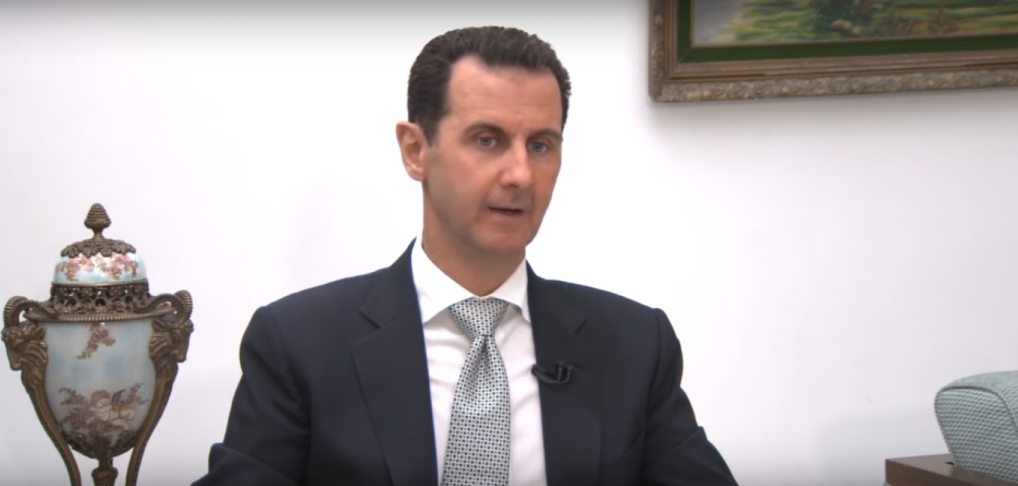
Syria remains at the top of the agenda in the Hebrew newspapers on Thursday morning, two days after a reported sarin gas attack near the city of Idlib believed carried out by Syrian President Bashar Assad’s forces. The Israeli media is still alarmed and outraged by the incident.
The story leads on the front page of Israel Hayom with a bombastic headline slamming the world (“The horror in Syria: There’s criticism, but no actions”), with American Ambassador to the UN Nikki Haley’s scathing rebuke of Russia and Iran at the United Nations leading the paper’s coverage. Israel Hayom in particular highlights her statement that when the UN fails to do the job, sometimes states need to act alone.
In Haaretz, Tzvi Barel asks whether the chemical weapons strike is the beginning of an anticipated Syrian government offensive on the rebel-held city of Idlib, and if so, why did Assad decide to employ weapons of mass destruction thus? He says that rebel forces have dug in around the city and have the strategic advantage over the Syrian government forces who seek to root them out — even with Russian air support. He suggests that the aim of deploying the gas in the countryside near Idlib was “to cause the rebels to leave their hiding places around the city and flee to Idlib itself, and thus play into the strategic plans of the government.”
Defense Minister Avigdor Liberman points the finger squarely at Assad in an interview with Yedioth Ahronoth. The paper runs a preview of the full article that’s set to appear in the weekend edition, but the snippets it offers feature damning charges against the Syrian president.
“The chemical strike in Idlib was done with direct orders and planning by Assad. I say this with full certainty,” Liberman tells the paper. He goes on to scathingly rebuke the world’s lack of response to the latest use of chemical weapons by the Assad government, but dismisses any suggestion of Israeli intervention in the civil war out of hand.
“It reinforces my certainty that the State of Israel can rely only on itself. Assad tried in the past to obtain nuclear weapons through North Korea, and the other gentlemen in the region like Hezbollah and [Hezbollah leader Hassan] Nasrallah are no different from him,” Liberman says.
One thread in common between the three papers is blaming the United Nations and the world in general for inaction in Syria. Hilly Moodrick-Even Khen bemoans the failure of the international community to act in her Israel Hayom column, and says that the more it’s silent, the more it’s silenced. Barring radical changes in international law, legal intervention is impossible.
The two liberal-leaning papers both call for action by Israel, at least in raising its voice against the fresh horrors of the civil war. In Haaretz Emily Mueti writes that the world needs to wake up, and that Israel needs to take the lead.
“The State of Israel cannot be silent. We must be the first to break the silence. The first, both because the slaughter is happening here, over the border, and because the Jewish people have a historic mission that we aren’t free to absolve ourselves of,” she says. She calls for Israel to set up a humanitarian corridor and a field hospital in Syrian territory for refugees, all funded by the international community.
But the ultimate obligation rests with US President Donald Trump, Mueti argues. “However the test of leadership at the moment is of US President Donald Trump, who has the military power and capability to muster international support and deal with Syria’s chemical weapons. But Israel needs to initiate the return of the red line concerning the use of chemical weapons and strengthen it.”
What’s become clear in the Syrian Civil War, writes Yedioth Ahronoth’s Ben-Dror Yemini, is that “neither the United Nations nor the Geneva Convention nor the Human Rights Council nor human rights organizations have succeeded in reducing mass murder. The world is helpless against the acts of Assad in Syria, just as it was helpless against the mass starvation and death and destruction by the global jihadists in Nigeria, in Chad, in Cameroon, in Somalia, in Libya, etc. etc.”
“The sad truth is that not only isn’t there will to stop the horrible and terrible slaughter, but that there’s no capability to either,” he says. The West has ignored human rights violations in Arab and Muslims states for decades and turned Israel into its punching bag, and this is the consequence, he says.






The Times of Israel Community.