

Israel-Germany ‘special relationship’ at a nadir, report says
Berlin cools ties with Jewish state over concerns about West Bank settlements and frustration with Trump administration
 Add ToI as a Preferred Source on Google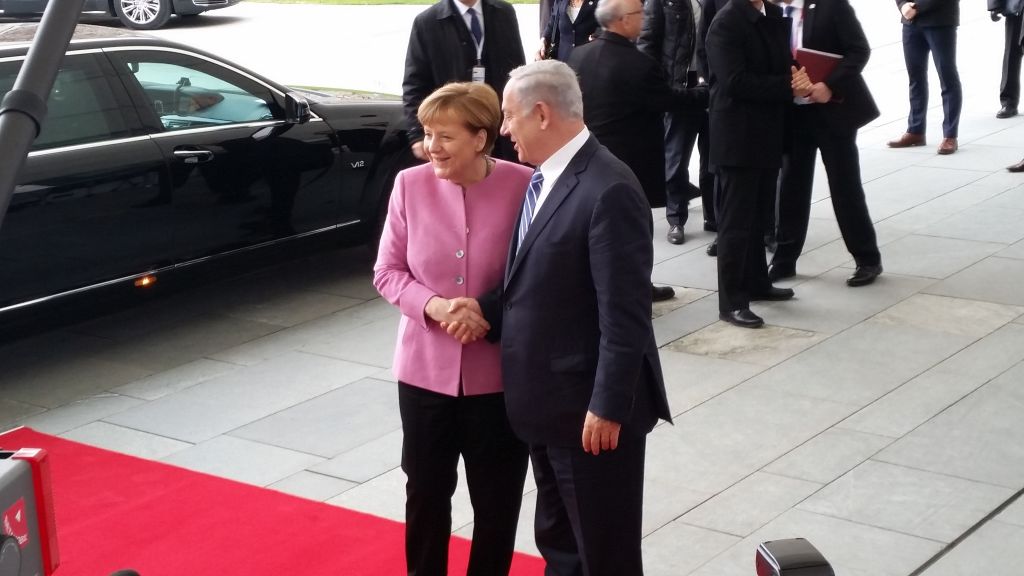
Israel’s relationship with Germany, long considered one of its closest allies, is reportedly at its lowest point in many years due to Israel’s pro-settlement stance and Germany’s frustrations with the US Trump administration.
German politicians, including Chancellor Angela Merkel, who were once very friendly toward Israel are now taking a step back as the pressures of an election year are making it increasingly difficult for them to justify Israel’s policies, Reuters reported.
“[Prime Minister Benjamin] Netanyahu does not listen to us and the situation may only get worse with [US President Donald] Trump,” a senior German official told the news agency, amid speculation that the president could give Israel more leeway to expand West Bank settlements than previous administrations.
The same official admitted that the new administration in Washington was more of an issue than Israel’s own policies.
“Germany is really angry with Trump, but they can’t afford to express it or take him on directly because he’s too strong,” he said.
The historically close ties between Israel and Germany, which took shape in the decades after the Holocaust, have also been growing weaker with the dimming of the memory of that event.
Yakov Hadas-Handelsman, Israel’s ambassador to Germany, told Reuters that “the more time that passes, the more difficult it will be to maintain the unique relationship even if there are no political disagreements.”
Yet, ties remain strong, the ambassador said, pointing to the increasing number of Israeli tourists visiting Germany and several German lawmakers who have visited Israel recently, including Justice Minister Heiko Maas and Bundestag President Norbert Lammer.
Kerstin Mueller, from the Heinrich Boell Foundation, a think tank affiliated with the left-wing German Green Party, also expressed concern that the “special relationship” between the two countries may be in danger.
“The sense of responsibility is still there but I don’t know how long it will hold,” she told Reuters. “The special relationship between Germany and Israel is not set in stone. In fact it looks right now like it may be in danger.”
She said that the main threat to the relationship was the feeling among some right-wing Israeli politicians that they will be able to push through legislation affecting the status of West Bank without opposition from the US.
“Israel knew with previous US governments that it could only go so far,” she said. “Now with Trump, the more radical elements in Israel feel emboldened.” That could lead, she said, to a serious deterioration in Germany’s relationship with the Jewish state.
An unnamed diplomat told Reuters that it is becoming harder to sell the close relationship with Israel to the German public. “Getting the balance right with Israel is increasingly difficult. If you don’t criticize you get lambasted in the media. If you do criticize you are alienating a core partner.”
Historically, Germany considered Israel an especially close ally, but it leveled harsh criticism against at over the passage last month of a bill legalizing settlement homes built on private Palestinian land.
“The confidence we had in the Israeli government’s commitment to the two-state solution has been profoundly shaken,” read a statement from the Foreign Ministry in Berlin.
In the wake of that bill, a scheduled summit between Merkel and Netanyahu was canceled. The meeting was planned to take place in Jerusalem in May, and would have included meetings between a number of senior government ministers from the two countries.
German officials informed the Prime Minister’s Office at the time that the meeting was canceled due to Merkel’s need to prepare for upcoming national elections in September, four months after the planned summit.
“We understand it’s schedule constraints of the German side,” said Foreign Ministry spokesman Emmanuel Nahshon of the cancellation.
However, unnamed German and Israeli officials told the Hebrew-language Haaretz daily that the cancellation of the meeting was due to Merkel’s frustration with the bill, as well as the announcement of some 6,000 new homes in the West Bank and East Jerusalem since Trump’s inauguration in January.
Alexander Fulbright contributed to this report.






The Times of Israel Community.