

Israel offers Gaza relief in return for captives, soldiers’ remains
Hamas receptive to idea of industrial zone and improved border crossings, but doesn’t indicate readiness to release hostages

 Add ToI as a Preferred Source on Google
Avi Issacharoff, The Times of Israel's Middle East analyst, fills the same role for Walla, the leading portal in Israel. He is also a guest commentator on many different radio shows and current affairs programs on television. Until 2012, he was a reporter and commentator on Arab affairs for the Haaretz newspaper. He also lectures on modern Palestinian history at Tel Aviv University, and is currently writing a script for an action-drama series for the Israeli satellite Television "YES." Born in Jerusalem, he graduated cum laude from Ben Gurion University with a B.A. in Middle Eastern studies and then earned his M.A. from Tel Aviv University on the same subject, also cum laude. A fluent Arabic speaker, Avi was the Middle East Affairs correspondent for Israeli Public Radio covering the Israeli-Palestinian conflict, the war in Iraq and the Arab countries between the years 2003-2006. Avi directed and edited short documentary films on Israeli television programs dealing with the Middle East. In 2002 he won the "best reporter" award for the "Israel Radio” for his coverage of the second intifada. In 2004, together with Amos Harel, he wrote "The Seventh War - How we won and why we lost the war with the Palestinians." A year later the book won an award from the Institute for Strategic Studies for containing the best research on security affairs in Israel. In 2008, Issacharoff and Harel published their second book, entitled "34 Days - The Story of the Second Lebanon War," which won the same prize.
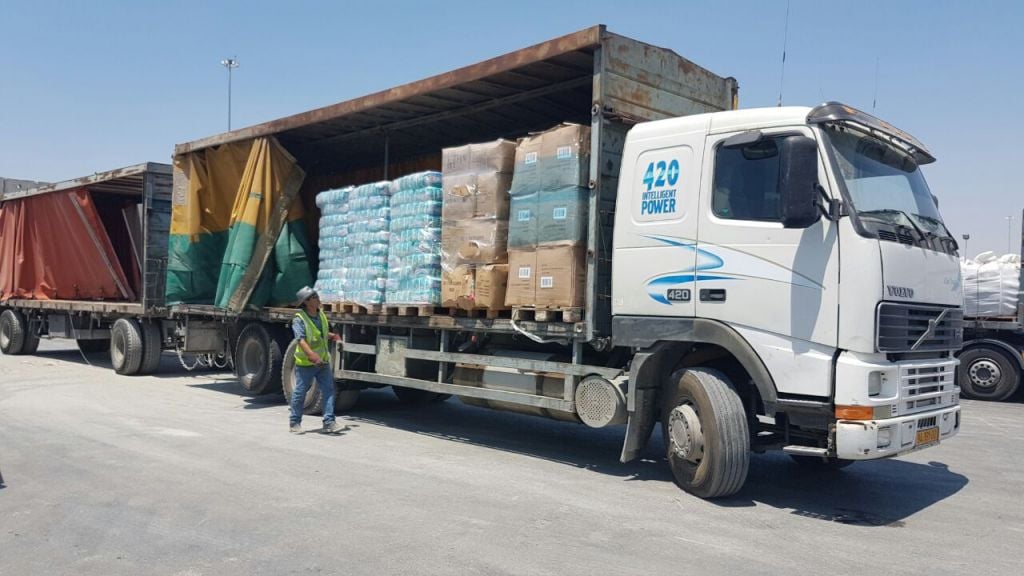
Israel has informed various international bodies that it intends to put into motion a series of measures that will improve the economic situation in the Gaza Strip, on condition that Hamas return three Israeli civilians and the remains of two IDF soldiers that it is holding, a senior Israeli defense official told The Times of Israel.
The ideas were conveyed by international officials to the Hamas leadership in the Strip, which showed interest in the economic steps.
Sources in Hamas, the Palestinian terror group that rules Gaza, confirmed that the group had spoken to international officials and agreed to the various plans presented by Israel. They were under the impression, they said, that the offer only required them to uphold the ceasefire with Israel.
Hamas is believed to be holding hostage three Israeli men who crossed into Gaza of their own accord, Avraham Mengistu and Hisham al-Sayed, as well as Juma Ibrahim Abu Ghanima, whose presence in Gaza is unconfirmed. It also holds the bodies of IDF soldiers Oron Shaul and Hadar Goldin, who the army determined were killed in action in the 2014 Gaza war.
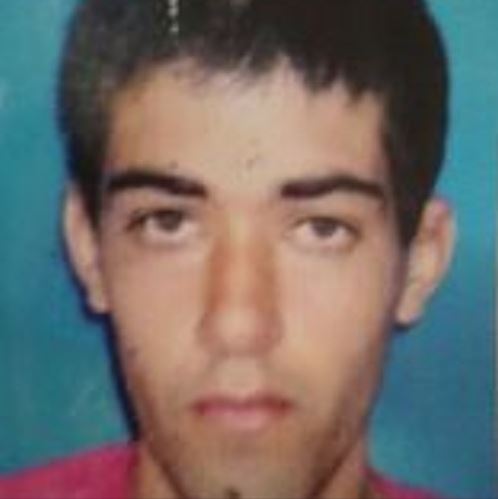
The senior Israeli official said there was no intention to move ahead with the project as long as Hamas continued to hold on to the Israeli citizens and the soldiers’ remains.
Hamas has long demanded that, before it even enters into negotiations over a prisoner exchange, Israel first release hundreds of Palestinians who were rearrested after they were freed in the 2011 prisoner swap for captive Israeli soldier Gilad Shalit.
The steps that Israel plans to take to improve the general situation in Gaza, as conveyed to Hamas by international officials, include the establishment of an industrial area close to the border fence between Israel and Gaza, in Palestinian territory, in which all the workers would be Palestinians from Gaza. Security at the complex would be monitored by Israel. The idea was also presented to various countries that donate to Gaza in an effort to convince them to contribute to the project.

Israel is also looking at allowing the entry of Palestinian workers into Israel via the Erez pedestrian crossing in northern Gaza. Together, the two projects would provide employment to thousands of Gazans who qualify for the appropriate security clearance.
Israel has also been looking to resolve the electricity crisis in Gaza, and on Sunday a Turkish delegation entered the territory to help resolve the issue. Likewise, efforts are being made to solve the problem of rapidly dwindling drinking water reserves in Gaza.
In addition, Israel supports an Egyptian idea to establish a free-trade zone in the northern Sinai Peninsula in Egyptian territory, on the assumption that such a project would improve the economic situation not only in the Gaza Strip but also in northern Sinai.
The Israeli official organizing the various projects is the Coordinator of Government Activities in the Territories Maj. Gen. Yoav Mordechai, who is in contact with international organizations, including the United Nations, and representatives of Arab and Muslim states that are interested in helping with the rehabilitation of the Strip.
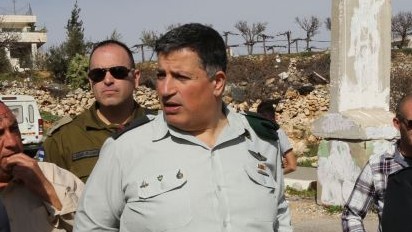
Mordechai is also in touch with the Qatari special envoy to the Gaza Strip, Muhammad al-Amadi, and recently visited certain Arab states, sources said.
Another plan under consideration, for which some preparatory steps have already been made, would be to expand the activities at the Kerem Shalom commercial crossing and the Erez pedestrian crossing, which has recently been used for the transfer of goods as well.
Meanwhile, in the last two months, Cairo has also increased the hours of operation of the Rafah crossing in the southern Strip. That coincides with a warming of the relations between Egypt and Hamas, including the leadership of the organization’s military wing. Marwan Issa, who is considered the acting commander of the military wing, was in Egypt last week for talks with the head of the Egyptian intelligence, Egyptian media reported.
Israel has for a long time been mulling dramatic steps to improve the economic situation in Gaza over concerns that another round of fighting could break out due to the increasing distress in the Strip.



The Times of Israel Community.