

Lawyer for Palestinian hunger striker says client’s health deteriorating
Mohammed al-Qeq said to be close to death after 63-day protest, but Afula hospital treating him reports no change in status
 Add ToI as a Preferred Source on Google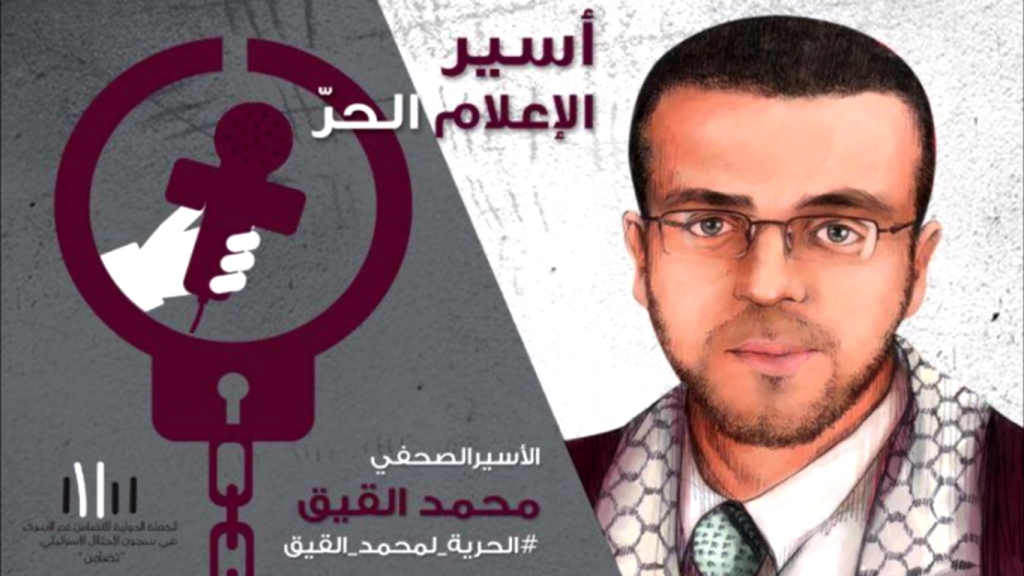
The health of a Palestinian journalist detained by Israel who has been on a 63-day hunger strike is deteriorating, lawyers and supporters said Tuesday, while the Afula hospital where he is being held said his condition has not changed significantly in recent days.
Attorney Jawad Boulos said 33-year-old Mohammed al-Qeq is struggling to speak and open his eyes while shackled to his hospital bed. “He could die at any time,” Boulos said.
But a spokeswoman for the Emek Medical Center, where al-Qeq is being held, said his condition has not deteriorated significantly in recent days.
Two weeks ago, Issa Qaraqe, the Palestinian minister of prisoner affairs, spoke to international media saying at the time that al-Qeq was “on the verge of death.”
Al-Qeq is protesting his six-month sentence without trial or charge, under a measure called administrative detention, usually employed for security reasons where a trial would reveal sensitive security information. The Shin Bet security agency said al-Qeq was arrested in connection with his alleged involvement in “terror activities” linked to the Islamic terrorist group Hamas.
ِActivists announced that a protest in solidarity with al-Qeq will take place in front of the medical center on Tuesday evening.
من أمام مستشفى العفولة الآن. #محمد_القيق #حرا_أو_شهيدا pic.twitter.com/OlHl72UsMy
— أبو فريح (@MarwanFrieh) January 26, 2016
Faihaa, al-Qeq’s wife, said she began preparing her two children for the possibility of her husband’s death.
She said her husband passed her a message through his lawyers that read, “If the worst happens that I die, please forgive me. I had no other choice.”
On Monday, the Hamas Higher Body for Prisoners threatened their men in Israeli jails would kill a prison officer in the case of al-Qeq being “martyred”, Palestinian media reported.
Al-Qeq, 33, worked as a correspondent for the Saudi channel Al-Majd and also appeared as an analyst on channels linked to Hamas. He was arrested November 21. He has been detained in the past for his activities with Hamas’s student organization.
Palestinian prisoners have used hunger strikes in the past to draw attention to their detention without trial or charges. Al-Qeq is the first journalist to do so.
Fearing that a fasting detainee’s death could spark violence, Israel has at times acceded to hunger strikers’ demands by agreeing to release them at the end of their terms of detention.
A contentious law passed last year allows for the force-feeding of a hunger striker if his life is in danger, even if the prisoner refuses. But Israel’s medical establishment has protested the law, and there are no known instances of a prisoner being force-fed.







The Times of Israel Community.