

New commission to examine Israeli election campaigning laws
Justice Salim Joubran calls 1959 legislation ‘archaic,’ urges reforms to apply it to modern times
 Add ToI as a Preferred Source on Google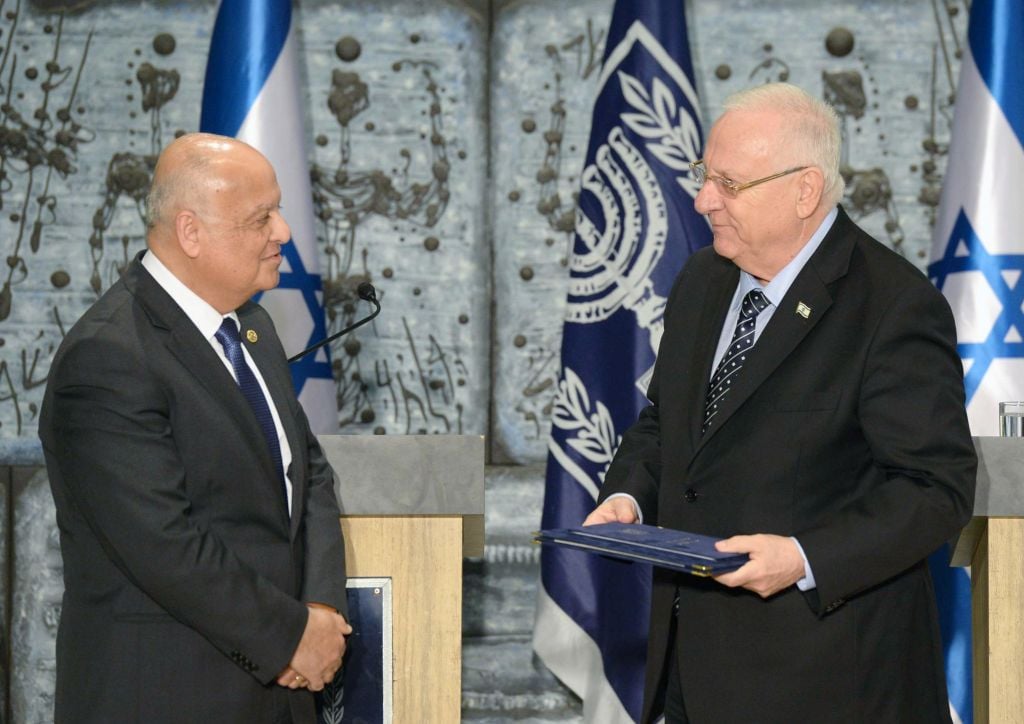
A new commission will be established to examine the introduction of a series of far-ranging reforms to Israel’s Election Law, President Reuven Rivlin and Justice Salim Joubran, who serves as the head of the country’s Central Elections Committee, jointly announced Sunday.
Former Supreme Court president Dorit Beinisch was expected to head the commission and was appointed at the request of Joubran to Rivlin, according to Haaretz.
Joubran insisted that the law in its current form was “outdated,” and has long called for the legislation to be updated in order to better apply it to modern times (Israel’s laws on campaigning date back to 1959).
During the elections last month, as a form of silent protest, Joubran made a point of ruling on violations of the law only in response to complaints by the various political parties, and avoided taking any proactive steps of his own.
“It is appropriate that the commission will include retired politicians, jurists, media professionals, senior officials from the Central Elections Committee and the like,” Joubran wrote in his request to Rivlin. He also urged authorities to establish regional election committees in Arab-Israeli towns, and called to employ members of the Arab-Israeli community at the Central Election Committee headquarters. Currently, no members of the country’s largest minority work at the institution.
The 1959 legislation, which Joubran described as “archaic,” includes such prohibitions as a ban on carrying torches while holding parades, or using projectors to cast strong light in buildings during the night hours.
Joubran complained that the law ignores “today’s most popular media tool, in general, and even more so during an election campaign – the internet.”
“In my view,” Joubran continued, “the law in its entirety needs to be thoroughly examined and its prohibitions and limitations adapted to our existing reality.”
“My predecessors, with no exception, called on lawmakers to adapt the law to the present. The High Court of Justice joined these calls in many verdicts. Nevertheless, no serious reform was undertaken and only pinpoint clauses were amended. Therefore this very important law remains more or less as when it was legislated, 56 years ago.”
The commission will examine the law and make its recommendations to the Knesset’s Law and Justice Committee, as well as the Central Election Committee.
“With a little bit of luck, the election campaigns for the 21st Knesset will be held according to a new legislation,” Joubran wrote.









The Times of Israel Community.