

New York court to rule on Palestinian terror cases
$1 billion lawsuit by families of US citizens injured in attacks could lead to landmark decision
 Add ToI as a Preferred Source on Google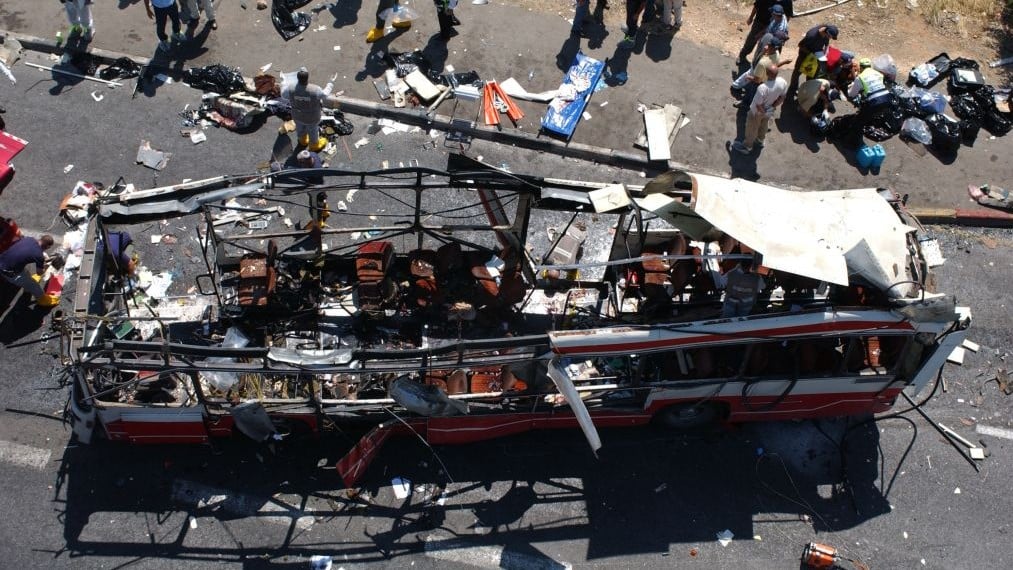
A New York federal court was scheduled to hand down a verdict later Monday as to whether or not the Palestinian Authority and the Palestine Liberation Organization can be held responsible for terror attacks that killed US citizens in Israel.
The $1 billion lawsuit was filed over a series of deadly attacks in or near Jerusalem that killed 33 people and wounded hundreds more during the second Palestinian intifada, or uprising, a decade ago. The plaintiffs have turned to the US court because some of the victims were American citizens.
At issue are several Palestinian terror incidents between 2001 and 2004 targeting civilians, including a bombing at a packed cafeteria at Jerusalem’s Hebrew University, as well as suicide bombings and shootings on busy streets.
Last week, in his closing argument, defense attorney Mark Rochon said there was no proof the PLO and the Palestinian Authority sanctioned the six attacks as alleged in a 2004 lawsuit, even though members of their security forces were convicted in Israeli courts on charges they were involved.
The plaintiffs have relied partly on internal records showing that the Palestinian Authority continued to pay the salaries of employees who were put behind bars in terror cases and paid benefits to families of suicide bombers and gunmen who died committing the attacks. Jurors also heard testimony from family members of people killed in the attacks and from those who survived but never fully recovered.
“It is not the right thing to hold the government liable for some people doing crazy and terrible things,” Rochon said in his closing argument. “There is no conclusive evidence that the senior leadership of the PA or PLO were involved in planning or approving specific acts of violence.”
A negative ruling would be a setback for the Palestinians’ campaign to seek international recognition of their independence in the absence of a peace deal with Israel.
The civil case in Manhattan and another in Brooklyn have emerged as the most notable attempts by American victims of the Palestinian-Israeli conflict to use US courts to seek damages that could reach into the billions of dollars.
The suits against the PLO and Palestinian Authority and the other against the Jordan-based Arab Bank had languished for years as the defendants challenged the American courts’ jurisdiction.
But recent rulings found that they should go forward under the Anti-Terrorism Act, a more than two-decade-old law that allows victims of US-designated foreign terrorist organizations to seek compensation.
Last year, a Brooklyn jury decided that Arab Bank should be held responsible for a wave of Hamas-orchestrated suicide bombings that left Americans dead or wounded based on claims the financial institution knowingly did business with the terror group.
A separate phase of the Brooklyn trial dealing with damages, set to begin in May, will feature testimony from victims.
The six attacks in question took place between 2001 and 2004, killing 33 people and injuring more than 390 others, including members of the 11 plaintiff families.
Times of Israel staff contributed to this report.



The Times of Israel Community.