

Press sees both sides of segregated bus debate
Nixed plan to require Palestinian workers in Israel to take transportation separate from Israelis eclipses Jerusalem attack
 Add ToI as a Preferred Source on Google
Ilan Ben Zion is an AFP reporter and a former news editor at The Times of Israel.
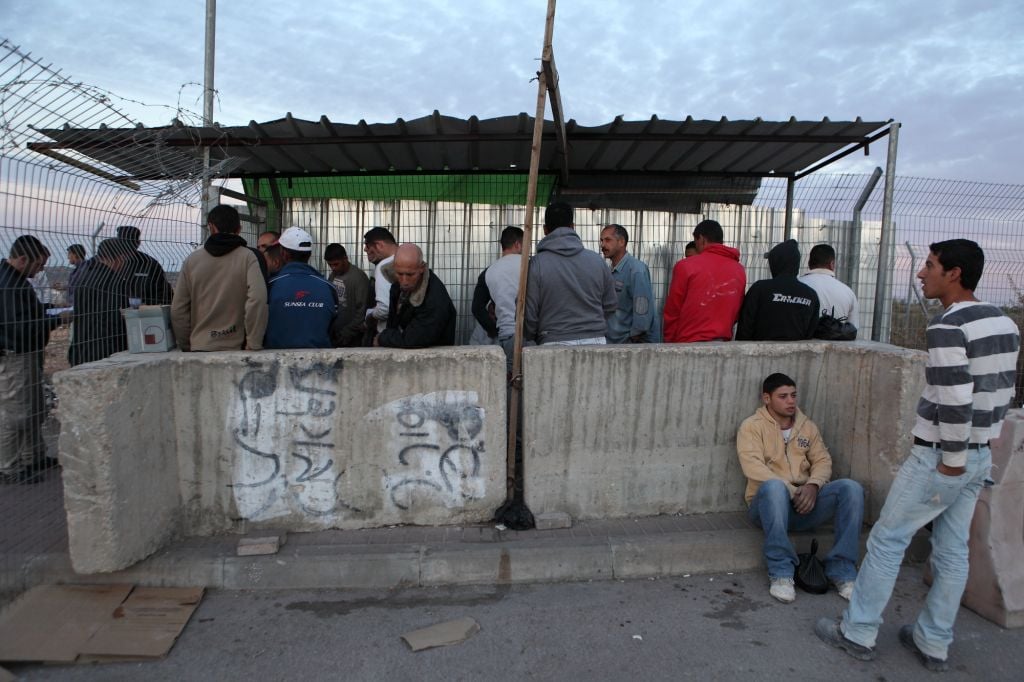
An Israeli plan to require segregated buses in the West Bank for Palestinians gets the kibosh from Prime Minister Benjamin Netanyahu just as it comes into effect. That doesn’t stop the press from talking about the what, why, how and who of the Civil Administration’s move to keep Palestinian laborers returning home from work in Israel from riding Israeli buses.
Yedioth Ahronoth calls the plan “Crossing the line” in its headline, alluding to the Palestinian workers’ need to register with Israeli authorities before entering Israel proper. It reports that Defense Minister Moshe Ya’alon never expected a response like the one he received.
Israel Hayom reports that Ya’alon initiated the proposal about a year ago, explaining that the measure was taken for security reasons — i.e., the need to reduce traffic of Palestinians who illegally enter Israel and track those who return to the West Bank. But the paper also acknowledges that Israeli settlers’ desire not to ride buses with Palestinians may have been a factor as well.
The plan drew condemnation from virtually everyone — left and right, domestic and foreign — and its pilot was shut down amid cries of apartheid. Everyone on Israel’s political spectrum, from former settler leader Danny Dayan to Joint List MK Basel Ghattas panned the move for various reasons, leading Netanyahu to ax the project, Israel Hayom reports.
Haaretz reports that among the first to respond to the report was former Likud interior minister Gideon Sa’ar, who on Twitter called the move a mistake and damaging to Israel’s stance worldwide. He was followed by fellow former Likudnik President Reuven Rivlin, who waited until the plan was spiked to praise the decision not to follow through with it.
Despite Ya’alon’s insistence that the plan would not only go forward but be expanded when finally put into effect, anonymous sources tell Yedioth Ahronoth that the chances of such a move happening aren’t high.
The pundits come out in favor and against the plan. Israel Hayom runs an op-ed by Bat-El Benjamin, who says that as a resident of a West Bank settlement she approved the plan requiring “Arabs of Judea and Samaria” — she avoids the term Palestinian throughout the piece — to enter and exit the same checkpoint into Israel. She argues that security checkpoints would have prevented incidents such as the murder of an off-duty soldier in 2013. She claims that “many illegal Palestinian residents” live in central Israel and that they’re responsible for the murder of Israeli soldiers in recent years.
She concludes that those who oppose the segregated bus measure, including Rivlin and one can assume Netanyahu as well, “are not concerned by the image created for the State of Israel because of its porous borders and the murderous terror which mercilessly afflicts its citizens.”
From the middle of the road, Yifat Ehrlich writes in Yedioth Ahronoth that there’s no hue and cry about the racist discrimination against Israelis of Jewish background who are not allowed to enter the West Bank’s Area A, which is under Palestinian Authority control, or ride Palestinian buses. “But suddenly when they ask to separate Israeli public transportation for Israelis and Palestinains, cries of ‘apartheid’ deafen public discourse,” she says.
She nonetheless says she isn’t thrilled by the plan to segregate buses, but supports the idea of private shuttles for Palestinian workers for the purpose of alleviating the crowded transportation from the West Bank city of Ariel into Tel Aviv.
“But beyond the practical need, we need to deal with a question of principle: is segregating buses really a racist decision?” she asks. She posits that because an Israeli Arab — a Palestinian with Israeli citizenship — can ride a bus for Israelis, therefore it’s not racism and it’s a matter of security based on a 100-year-old conflict.
“Instead of refuting the false claims of racism, Benjamin Netanyahu immediately caved and canceled the pilot which was supposed to allow residents of Samaria to return home safely,” she says. “Because of this it’s said that the most stable thing in a Netanyahu government is zigzagging.”
Coming out firmly against the segregation plan, Haaretz runs an editorial which says that even though the government iced a plan to segregate buses, “it’s impossible to conclude from this that Israeli policies in the territories are free of moral shame and disgrace.” The paper says that the shelved policy was only “the tip of the iceberg” beneath which “lies an established policy of separation, anchored in the very foundations of Israel’s rule over the territories.”
“This rule stipulates freedom of movement for Jews but restrictions for Palestinians; permits for houses only in specific communities, rather than an egalitarian permit system based on just and fair criteria; eligibility for social benefits and welfare services for one side only; dispossession of the other side from its lands; and of course, different legal systems for people who live in the same territory, including different court systems, different punishments and more.”
With all the hubbub over segregated buses, yet another alleged vehicular assault by a Palestinian targeting Israeli Border Police officers in Jerusalem doesn’t make a big splash. Three officers were injured and the driver was shot dead, Israel Hayom reports. Haaretz relegates the incident to Page 4, but reports that only two officers were hurt. Yedioth Ahronoth reports that the Palestinian who allegedly rammed into the police officers was the cousin of a terrorist who shot up a Jerusalem yeshiva in 2008, killing eight students.








The Times of Israel Community.