

Smoke, cockpit woes signal chaotic finale for EgyptAir plane
Leaked flight data, erratic descent point to sudden, possibly explosive fate for flight 804 over eastern Mediterranean
 Add ToI as a Preferred Source on Google
CAIRO (AP) — Leaked flight data showing trouble in the cockpit and smoke in a plane lavatory are bringing into focus the chaotic final moments of EgyptAir Flight 804, including a three-minute period before contact was lost as alarms on the Airbus 320 screeched one after another.
Officials caution it’s still too early to say what happened to the aircraft — France’s foreign minister said Saturday that “all the hypotheses are being examined” — but mounting evidence points to a sudden, dramatic catastrophe that led to its crash into the eastern Mediterranean early Thursday.
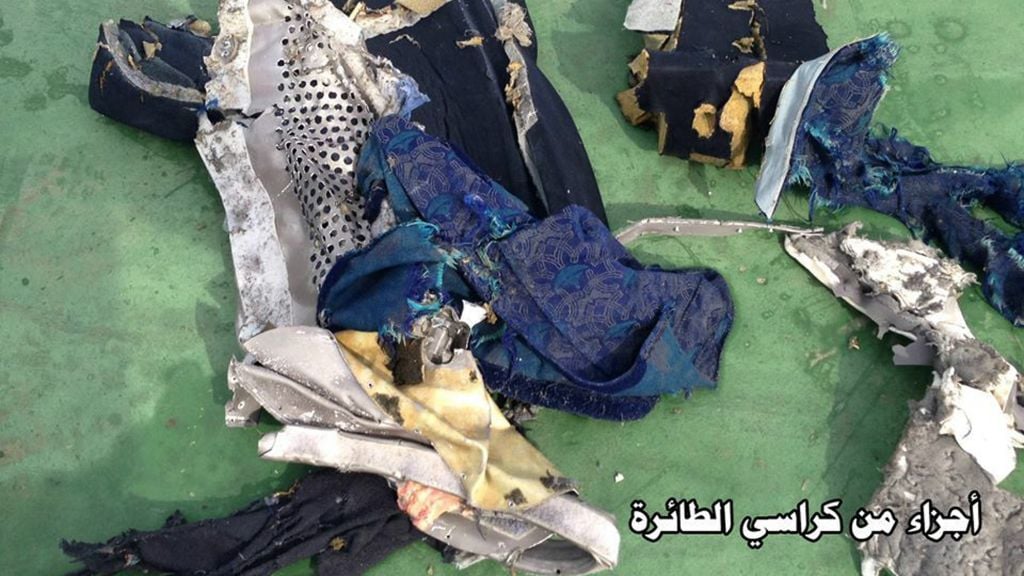
The Egyptian military on Saturday released the first images of aircraft debris plucked from the sea, including personal items and damaged seats. Egypt is leading a multi-nation effort to search for the plane’s black boxes — the flight data and cockpit voice recorders — and other clues that could help explain its sudden plunge into the sea.
“If they lost the aircraft within three minutes that’s very, very quick,” said aviation security expert Philip Baum. “They were dealing with an extremely serious incident.”
Authorities say the plane lurched left, then right, spun all the way around and plummeted 38,000 feet (11,582 meters) into the sea — never issuing a distress call.
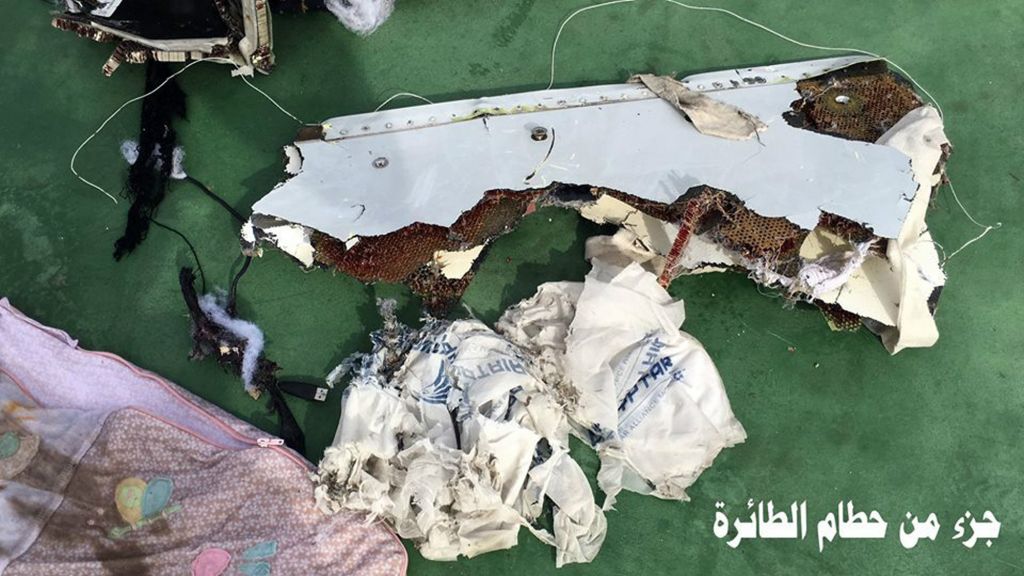
The Facebook page of the chief spokesman for Egypt’s military showed the first photographs of debris from the plane, shredded remains of plane seats, life jackets — one seemingly undamaged — and a scrap of cloth that might be part of a baby’s purple-and-pink blanket.
The spokesman, Brig-Gen. Mohammed Samir, later posted a video showing what appeared to be a piece of blue carpet, seat belts, a shoe and a white handbag. The clip opened with aerial footage of an unidentified navy ship followed by a speedboat heading toward floating debris.
Flight 804 left from Paris’s Charles de Gaulle Airport on Wednesday night en route to Cairo with 66 people aboard. Greek officials say at 2:24 a.m. local time the flight entered the Athens sector of Greek airspace. Twenty-four minutes later, controllers chatted with the pilot, who appeared to be in good spirits.
In Greek, the pilot quipped: “Thank you.”
At 3:12 a.m., the plane passed over the Greek island of Kasos before heading into the eastern Mediterranean, according to flight data maintained by FlightRadar24.
Less than 15 minutes later, about midway between Greece and Egypt, a sensor detected smoke in a lavatory and a fault in two of the plane’s cockpit windows, according to leaked flight data published by The Aviation Herald.
Messages like these “generally mean the start of a fire,” said Sebastien Barthe, a spokesman for France’s air accident investigation agency. But he warned against inferring too much more from the reading. “Everything else is pure conjecture.”
At 3:27 a.m. Greek time, air traffic controllers in Athens attempted to contact the plane to hand over monitoring of the flight from Greek to Egyptian authorities, according to Greek officials. There was no response from the plane despite repeated calls, including on the emergency frequency. At the same time, a sensor detected that smoke had reached the aircraft’s avionics, the network of computers and wires that control the plane, according to the leaked flight data.
Two minutes later, the aircraft reached Egyptian airspace. Alarms went off warning about the plane’s autopilot and wing control systems, suggesting serious structural problems. Within seconds, the plane fell off the radar (about 2:30 a.m. Egyptian time, which is behind Greek summer time). Air traffic controllers in Cairo sought assistance from the Egyptian air force to track the missing plane — to no avail.
David Learmount, a widely respected aviation expert and editor of the authoritative Flightglobal magazine, said Aviation Herald’s reported readings from the plane’s Aircraft Communications Addressing and Reporting System, or ACARS, suggested a quick-spreading fire.
On his website, Learmount wrote: “The question now is whether the fire that caused the smoke was the result of an electrical fault — for example a short-circuit caused by damaged wiring — or whether some form of explosive or incendiary device was used.”
In the absence of a claim of responsibility, it’s still unclear whether the crash was the result of a fault or an attack, Learmount wrote.
Egyptian aviation expert Hossam Elhamy Shaker said the presence of smoke on board alone does not solve the mystery.
“It just leads us into an area where smoke is a major contributor to the incident, either by destroying the aircraft’s equipment or suffocating the pilots,” he said.
Baum was skeptical that a fire alone was the reason the plane went down.
“Fires happen aboard aircraft, but they don’t usually result in the destruction of the aircraft in three minutes,” he said.
Some have wondered at the lack of a mayday signal, but Baum said that could make sense if the crew were unconscious or struggling to regain control of the aircraft.
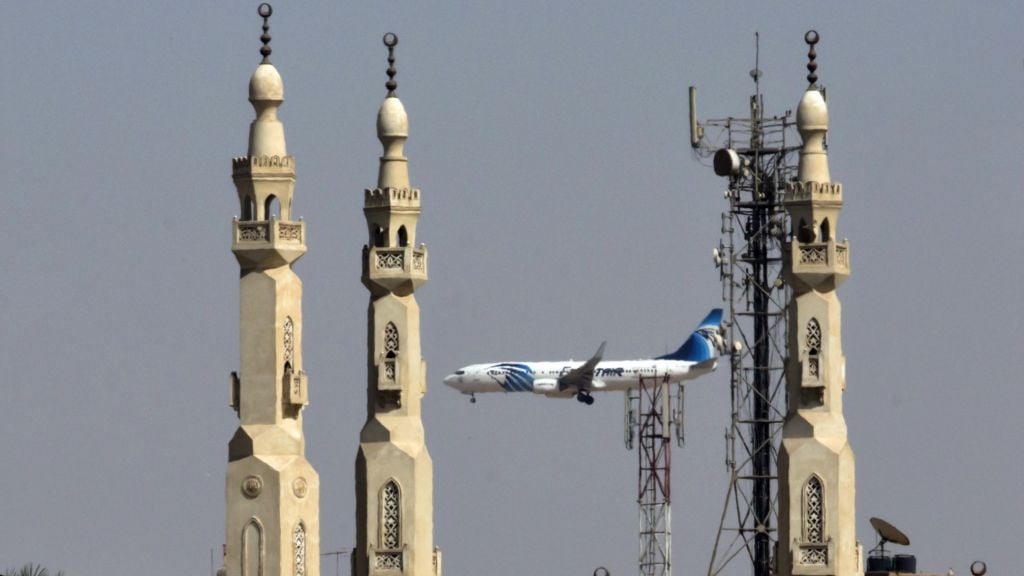
Investigators have been poring over the plane’s passenger list and questioning ground crew at Paris’s Charles de Gaulle airport, where the airplane took off. Ships and planes from Britain, Cyprus, Egypt, France, Greece and the United States have taken part searching a wide area of sea 180 miles (290 kilometers) north of the Egyptian port city of Alexandria.
The waters in the area are 8,000 to 10,000 feet deep (2,440 to 3,050 meters). Pings from the plane’s black boxes can be detected up to a depth of 20,000 feet (6 kilometers).
Egyptian authorities have said they believe terrorism is a more likely explanation than equipment failure, and some aviation experts say the erratic finale to the flight suggests a bomb blast or a struggle in the cockpit — though no evidence of that have emerged.
“All the hypotheses are being examined — none are being favored,” French Foreign Minister Jean-Marc Ayrault told reporters Saturday after meeting with about 100 family members of the victims to express “our profound compassion” over the crash.
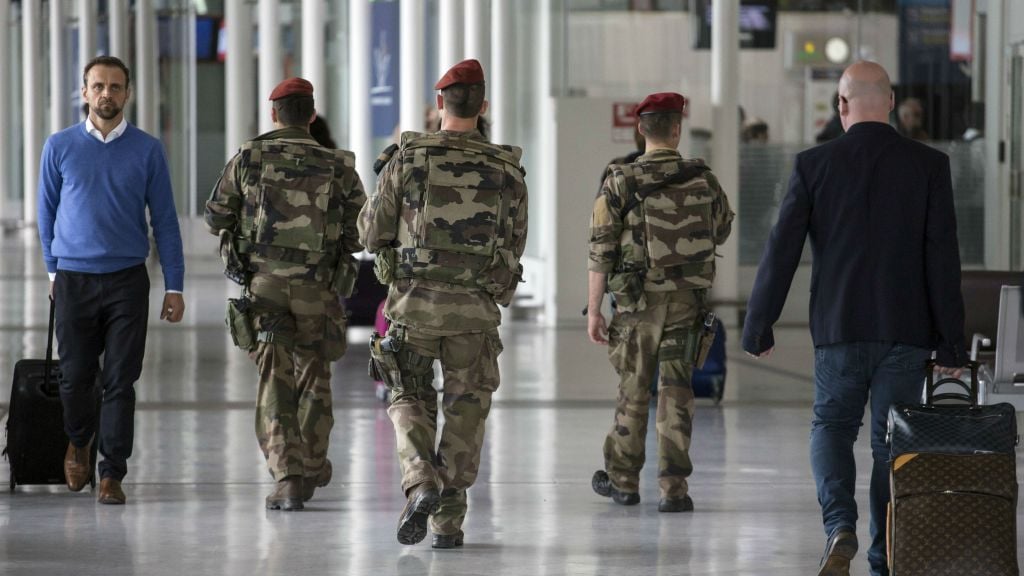
At Charles de Gaulle airport on Saturday, dozens of passengers — mostly Egyptians — queued up for the latest EgyptAir flight to Cairo. Checks were thorough but there were no overt signs of extra security in the waiting area. A French security team did walk through the plane’s aisles, however, before the aircraft took off.
Whatever caused the aircraft to crash, the tragedy deepens Egypt’s struggles to revive a battered economy. While the EgyptAir crash may not reflect directly on Egypt’s airports — unlike a Russian jet bombed in October by the Islamic State group that took off from an Egyptian resort — the country’s association with yet another air disaster may further damage tourism and the flow of foreign investment.
Copyright 2016 The Associated Press.







The Times of Israel Community.